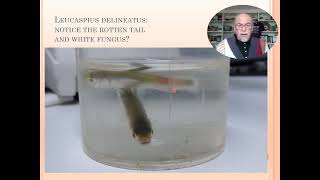
YouTube case presentation by Gerald Bassleer showing a Leucaspius (sunbleak, Leucaspius delineatus) suffering from combined bacterial and secondary fungal infection. The video documents external lesions (necrotic/rotten tails with fungal threads), microscopic confirmation (fungal hyphae/spores and many motile bacteria), internal organ pathology (gill lamellae fusion, enlarged spleen and liver, intestinal tubercles), discusses likely causes (overcrowding, poor conditions, stress), and recommends antibacterial plus antifungal treatment, improved husbandry, and supportive nutrition.
Chapters
Hello, Dear aquarist today about a pondfish. Yes, a fish for the pond, which is not a common fish, but it's a small fish, very well known in Europe, in Holland as a Vecchi. Le Caspius is the scientific name. Well, it's a very common fish because it's cheap and it's easy to keep in the pond and people like it because it's an endemic local European fish. And I show you in this case 171 Doleucaspius delineatus, a sunblig in English, a Belika, a motorliese kind of Deutsch or a veteran in Dutch with a bacteria and a fungal infection. So see my books also on goldfish, cold water fish and koi. Leucaspius. Well, here we see the Leucaspis in the tank. And you see here some tails badly damaged. You see here we pull them out. We saw the bad damaged tail here. Look at that, with some hair on it, some fungus on it, on a rotten tail. See here the tail is completely gone. There's only some fungus left, some necrotic tissue. And here we see it again on the side on those Leucaspius species. And they were suffering, they were dying. Look, necrotic tissue advanced with fungus on it. Then we took a scraping. Well, we see the fungus hairs here, all those threads. That's the skin scraping showing the fungus. And here we see the fungus laid out. Well, and here are all the bacteria around. It's a combination. Here we see the fungus spores, we see the spores inside. So they reproduce fast in the aquarium and they infect on damaged tissue, not on healthy tissue, but damaged tissue. That's where the spores can penetrate and become a fungal infection. Here we see the many bacteria moving around. We see also some fungus spores here. But here we see the millions of bacteria in the water, very small dots moving around, different kinds, maybe two different kind bacteria. And that you can bring to the laboratory to check if you want and to define what bacteria and what treatment to apply. The gills. Well, look at the fusion of the lamellae. That's not good. The fish will have respiratory problems. And also the disease also advanced internally. You see the bad spleen and here the bad liver. Well, that fish will not be healthy and suffering a lot. Some little tubercles observed here in the intestine, maybe due to that bacterial infection. Most likely. So the fish has a different problems occurring and that might have been starting already due to the bad history by overcrowding, poor conditions, stress, maybe bad feeding, bad handling, many different things can cause that. So we should avoid, certainly, first of all, overcrowding. No try to separate the fish. Create good, healthy conditions. Try to use an antibacterial and an antifungal treatment. Ask advice from your fish doctor at pet shop. There are many good products in the shops available. Or read my books. I explain a lot about those treatments you can apply. And you also can help to strengthen the fish with a functional fish food like our Dr. Basleer biofish food, forte or aloe vera. This helps in the fish protection and care. And the sooner you start acting and the better your results will be. And read the books to get the best results. So thank you for watching about this pond fish, Leucaspius, a small fish, but a fish that can get sick. And I hope this teaches you a lesson about bacterial and fungal infections. Secondary fungal is secondary. Thank you for watching.