Gerald Bassleer examines tank-raised clownfish with severe bacterial infection, showing massive colonies in mucus and pale, bleeding organs. He recommends lab culture to identify the bacteria, antibiotic treatment guided by results, and a 20-day regimen of fucoidan and probiotics to rebuild the fish's microbiome.
Chapters
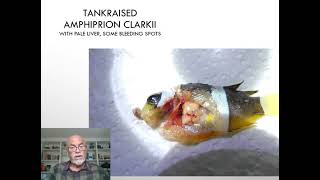
Fish Disease, case number 22 today about the tank raised clownfish, scientific name is amphibian clarkii, which we received with lesions and the fish were dying. That was a report we received from the breeder. This is how the fish looked like in the fish bag. You see the fins were damaged, lesions on the body, lesions on the fins. So this fish didn't look that pretty, you know, was a very bad shape. And then there was another one we have released here in the back. We also see the damaged tail, some lesions of the fins and on the body. So the fish were in bad shape. And well, there was a report there were some losses. So we start taking first some skin scrapings. And you could see already here a cloudiness appearance, a cloud of bacteria. Also here, the scales covered with black accumulation of colonies of bacteria. And here we see it on a video. You see the massive amount of bacteria which are moving here. Look at it. Massive bacteria here in the mucus on the scales of the fish. So really could see there were a lot of bacteria involved on the body of the fish. When we checked the gills, they were in very bad condition. And the gill lamellae were clumped together. There was extra mucus also with bacteria in between. So the gills were also very bad condition. And when we opened the fish, we found already the pale liver. And we saw red markings and bleeding spots in the organs, in between the organs. So the fish seems to be suffering also from an internal infection. So we checked out the organs and we could find in the organs a lot of bleeding areas, bleeding spots, which is not normal. This would be nice brown liver or a red spleen with an equal color or no red beaning spots. Also the intestine. So if we looked in the microscope, this is what we saw in the liver. A pale liver with bleeding spots. We saw the spleen, the spleen with all those black dark melanomacrophage centers called or MMCs also saw a lot of fatty degeneration. This sometimes happens with viral bacterial infection or feeding problems. But in many cases we see it with bacterial infections also developing. See also the intestine. Here we see the bleeding areas and next to the intestine in the mesenteria. And also what we found was some non digested food in the gut. So that means that also the microbiome of the fish is poorly developed. Now we also saw some damage here. Back here in the gut saw some damaged areas, damaged areas here. That means that also the gut was in a bad shape. So what we could conclude and then suggest for treatment. Well, we concluded that. Well, like I said, many bacteria a bacterial infection. And first of all we check or we ask for checking the water. Check your water quality, check your filtration check also the fish food you're giving. Maybe there are too many microbes in the frozen or in the live food. Check for it. You can even send it to the laboratory or ask your supplier to find out if it was well checked. For the badly damaged fish you should put asleep because they are a risk to spread more disease to the healthy fish you can euthanize with products like Narcomor plus from a Cordia muenster and the treatment of the remaining fish. You have to use antibiotics in this case because it's a severe infection after outside and inside. And the best choice is possibly find out by lab control with an antibiogram. In this case we suggested to use chloramphenicol or ferreltadone hydrochloride which seems to have a positive result on the rather healthy fish. So chlorophenol was a good choice here. Also feeding with pro and prebiotics to restore the immunity and the self defense of the fish. And therefore we recommended also the feeding of 20 days with our Dr. Besselier Baivis food Fuko and giving no other food because that would help the fish to regenerate. Because Fucoidana is a big help in these kind of conditions to restore the fish during a bacterial infection. So that was this case and more to come in the future in coming weeks. And maybe you have some suggestions. Tell me your problems, maybe I can help you. Thank you for your attention.