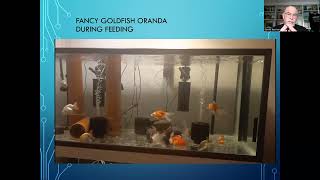
Gerald Bassleer reviews a hobbyist case (submitted by Stefanos Jensen) of fancy goldfish (Oranda) intermittently hanging and gasping at the water surface. Using tank footage and feeding clips, he suggests likely contributors: overfeeding, uptake of air during surface feeding, deformities of the swim bladder common in fancy goldfish, and excessive aeration affecting gas balance; he also mentions possible gill parasites. Practical advice includes switching to sinking granulate, reducing feeding, inspecting gills (by a fish veterinarian), moderating aeration, and using functional/immune-supporting foods. Links to Bassleer’s books and related videos are provided for deeper guidance.
Chapters
Hello, dear fish keeper. And here, dear goldfish lover. The persons that like to keep goldfish, fancy goldfish in an aquarium. Yes, there are many beautiful, beautiful ones available, but you always have to check how to take care. And here I was presented a case from somebody, a hobbyist who had troubles with his goldfish. And he shared his videos with me and I tried to help him to solve the problem, what he was dealing with. So watch my videos and the movies that I received from this goldfish keeper and you might be interested to learn. Yes. What could be the reason and maybe you have ideas and that you also can point out to me what is your experience. So it's about fancy goldfish that keep on hanging at the surface. Yes, hanging at the surface is not a place where the goldfish should be. My books on fish diseases can be helpful for you. Many chapters on goldfish, fancy goldfish prevention, diagnosis and treatment. The link is here below. And I received from Stefanos Jensen. Thank you, Stefanos. A picture of the goldfish tank. And you see most of them are swimming well, doing well, but once in a while you see them hanging at the surface and not the place where a goldfish should be. And that was his concern. Here, you see this one here? Keep on going to the surface and hanging on the surface. You see it on the corner and it's a few of these. Not all of them seems to show that that behavior problem here is another one. And that he was concerned that, well, they might get infected, they might get a disease, they might die the coming days. So I asked them to send me more videos about the feeding of the fish. And here we see he is feeding a granulate food that sinks very quickly. The better it is. It sinks quickly because they don't need to eat at the surface. Because if they eat at the surface, I will explain at the end, they might gasp, resorb air. And they cannot handle that because they are. Well, they have a strange coldfish body, a little bit deformed, sweat bladder. And that might giving a risk of irregular behavior. But you see they're all eating here. They need a couple of minutes to eat the granule food. And you can see how slowly the fish are getting after they've been eating. They're getting slower and slower and lazy. It's like we as humans, when we eat a lot, we don't move fast. We are, whoa, we are. Our belly is full. And it seems to be the case of these goldfish also. They're slowing down. This seems to be, well, can I say overfed yes, might be the reason because the activity is gone, the food have been received and now they need their respiratory still going on to get the oxygen and to get the ammonia out and the CO2 out. And that you can see sometimes you can see the gills of the fish are getting open, the fizz respiration is, is heavier. So this seems to. Well, who can I say, is it suffering? Well, suffering after the feeding. Let's see, continue. See the fish, I do it when a fast move so they pretty slowly and this is still after the feeding, the hour later. You can see some of them are still lazy and some are getting at the surface. So let's speed it up. You can see some are going to the surface like they're gasping for air. You can see it here gasping for air at the surface and that's not normal for a goldfish. That means they are suffering from something that is bothering them and particularly in the respiratory system seems to well making causing a trouble for them. See them hanging here and it's only a few, it's not all of them. So that's something you have to be aware of that. Well, what can you do about it? Well, observe your fish, see if they start to scratch, for example, check how much you're feeding. Ask the question. So I will give you my results. Below here is the accordion. Well, you can see there's a lot of water movement, a lot of air, a lot. There's a filtration here, there's a lot of aeration. And you can see them here, the goldfish in detail. They are curious, they are interested to see the camera. Some are a little bit wobbling and going away. I, I think they might be overfed but you can see the heavier application of aeration and not all the randos are hanging at the surface. So some might having more problem because they might be having a more deformity. Maybe another issue coming up, I would think here. In this case there was also too much aeration and too much aeration can cause a risk for this kind of fancy goldfish with a deformed swim bladder that it has an impact on their gas control in the body. I have several videos on that and I will show them in the link below so you can get more details on why sometimes fish hang at the surface because of usually a deformed swim bladder. I go in detail in the video which I will give the link below. During the feeding there's more risk also of taking up extra air. I didn't notice a lot of goldfish were doing That a few were gasping or grabbing the granulates at the surface. So that might be a risk. Particularly when you feed floating food or flake food. That is a bigger risk with the granules here. We're sinking here. Overfeeding could be a risk like causing all kind of obesity. Yes. And some of this had a kind of Pavlov effect. That means they are used to look for food at the surface. They might have a history at the supplier or the breeding facility. So they always come to the surface to get to the food. It's a kind of reactance. Like your dog comes to the fridge when you open it to get this bunch of food for him. So that might be also the reason why the fish are doing it. So it can be a normal behavior. Make sure that the feet is sinking. Like granulate food with nutricaments and reduce hydration. I recommended food with nutricaments to fortify the immune system. In this case you. You might also think about having a parasitic infection in the gills. Could be. Could be a case. So an examination of the gills by fish doctor might be helpful. You can help with a functional food to improve the immunity like Dr. Besley or biofish food or herbal or garlic. That is what much liked by the fancy goldfish. Details on fish diseases and treatments in my books link is below. Training on fish diseases you can get at my Patreon channel. So I hope this case which was presented to me from a hobbyist who was having a problem with his goldfish. I want to discuss what you could do about it. So you see the things I proposed and the hobbyist was happier and the fish were happier after the advice I give to them. Thank you for watching.