Gerald Bassleer examines a zebrafish outbreak with emaciation and death caused by cryptobia-like parasites, capillaria nematodes, and secondary bacterial infections. He recommends anti-parasitic treatment with FMC, followed by levamisole or praziquantel for the worms, plus antibiotics and supportive feeding.
Chapters
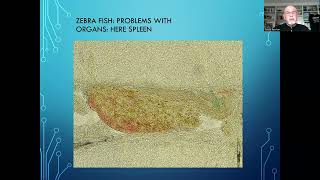
Hello, dear aquarist. Today you will see a case on a Zebraf Danio brachydanio radio with a parasitic infection. I will show you my PowerPoint and the fish in the aquarium and their parasites, which I examined with the microscope. It's my case 235. You can see or read or find out more details about prevention, diagnosis and treatment of fish diseases in my books, which are available in different languages. You will see the link below where you can get them or purchase them. Here we observe the zebrafish in the aquarium. You see the few skinny ones that are suffering from wasting away, becoming very skinny, not eating well and dying. So that is, of course, the moment you have to take your microscope and examine what you found. So we took the skin scraping and in the scraping, if you can watch it closely, particularly in a higher magnification, you see all the tiny flagellated parasites. Those look like cryptobia, in my opinion. There are cryptobia, which is a small flaglet parasite which is nearly seal to Kostia or Ichthyobodo. Here we see it at a much higher magnification. I would take 400, but it's hard to diagnose exactly without a microscope. Here we see a more detailed observation at 400. And you see all the tiny little bugs causing damage. Yes, on the fish, on the gills also. But this is on the fish. And here we see the problems in the organs. Secondary bacterial infections occur. You see the spleen, which is a very bad condition. We see bacterial infection internally. You see all the little tiny rots and little points. I think there are two, three different kinds of bacteria, well, that are infecting the fish. And usually this is secondary because the parasitic infection weakens the fish and that could become more susceptible to bacterial infection. And at the same time, we found capillaria nematode worms here on the left in the liver, a small one. And then we saw one here also in intestine or in the gut. And there already you can see some eggs getting developed on this capillaria. So parasites, cryptopia, worms, capillaria and a bacterial infection. So what can you do as a treatment? Well, first of all, do not postpone your actions. The sooner you act, the better the results will be. And treat the fish first of all against the parasites. And you can use FMC or a similar product. You can ask your pet shop the secondary bacterial infection that might be coming, a serious issue. So you might looking for an antibiotic or a similar fish medication that you can get from your pet shop or from your fish doctor. Later on, maybe one week later, you can try to treat to kill the nematode capillaria and we recommend Levamizole or Prazicatel or Fenbendazole or other similar type of medication which I describe in my books. At the same time, you can help the fish with a functional fish food like our Dr. Basleer, Baifishwood, grapefruit seed extract, moringa or pumpkin. Learn about those feeds that they can help to repair the fish during infection. More information on diseases and treatments is available in my books in several languages. You want to become a more expert, a fish doctor or somebody who knows how to identify diseases? Well, go to my Patreon channel or get my books. Well, I hope this video explained to you that a microscope was very much useful to identify three types of diseases. Thank you for watching.