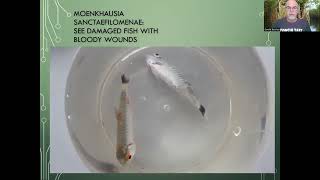
YouTube video (case #261) by Gerald Bassleer describing a severe outbreak of fish tuberculosis in Tetra Moenkhausia sanctaefilomenae. The speaker shows external lesions and internal tubercles, discusses diagnosis by microscope, the difficulty of antibiotic treatment due to encapsulated bacteria (Mycobacterium), euthanasia for severely affected fish, and prevention/control measures for breeders and hobbyists.
Chapters
Hello, dear aquarist, welcome again to one of my cases of fish diseases, already numbered 261. Yes, I had previously already 260 cases. Try to watch them, because many interesting videos I show about disease. Tetras, cichlids, discus, you call it. Many different species I've been examining during my work as a consultant. And today it's about a Mona. Mona Sani filaminae. It had serious disease signs. Those fish were wasting away and had terrible outbreaks of red ulcers. And I show you how they look like in the microscope, but first of all, how it looks like in the aquarium. So I found a serious case of fish tuberculosis. Yes, this can happen, unfortunately, when you're dealing with ornamental accordion fish. Details about fish diseases, prevention, control, diagnosis, treatments, everything you can find. And good references of other books in my books on fish diseases. And the link is below. Here we see the moncausia in the tank. And you can see some of the damaged fish are pulled out. A few. So you can watch very closely how badly damaged those bodies are. White, reddish, necrotic lesions. The fish are suffering, Popeye. They had so many different issues. Here we see them again, ready for our examination or dissection. You see the bloody part, you see the tail rod, you see the bat heavily as perspiration. You see the fish dying. So objects for examination. And then we took a skin scraping and we found in the scales, on the skin all tubercles here, quite a few here and here. On other parts, all tubercles inside the scales. That means there is an outbreak of. Of an infection on the scales and the tubercle caused by a reaction of the skin to defend itself, to encapsulate the bacteria. In many cases, or in most cases in studies that have been presented, and I discuss that quite often in my YouTube videos. In most cases, 85 to 90% it's fish tuberculosis that the laboratory can determine. We also checked internally the organs of the fish and you could see the badly infected organs full of tubercles and hardly any healthy tissue available in those organs. You can imagine the fish will die. So what can you do as a treatment? Well, not for those that are so badly damaged. You better put them gently asleep. Euthanize, like with a product of narcomore Plus. There are many more products, but that's an example that you can use. We suspected Mycobacterium. Well, we know that it's difficult to treat the bacteria because they're encapsulated in tubercles. Some people tried antibiotics, but the results have no guaranteed success due to the tubercle sort of bacteria protected against the antibiotics. Some fish that have a little infection might survive for a long time or permanently when they are kept in good condition. On the moment when there is stress or other infections occurring, they will of course come down with the disease. The breeder is the cause there. Sedaise should work on a goodbye security and a prevention in controlling the broodstock and the healthy maintenance of the water system in the tanks where they are breeding the fish. And you as an aquarist you can help with a functional fish food that helps this fish during this kind of affection. And we recommend for this kind of infection to help the more healthy fish, the less infected fish with our Dr. Basler buy fish food Fico details on phage disease prevention, Control treatment good diagnosis See my books and the link is below where you can order them. You can get training on causes of phage disease. So good diagnosis or quarantining fish when they arrive from the wild or from your suppliers marine fish or freshwater fish. All that you can learn at my Patreon. So I hope this video brought you some attention to a serious bacterial infection that you can examine with a microscope, particularly when you find the tubercles. I hope this teaches you a lesson. Subscribe to Learn More thank you for watching.