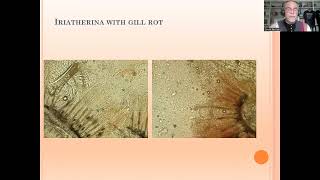
Gerald Bassleer examines a rainbow fish with advanced bacterial infection. Skin scrapings show motile black bacterial colonies at 200x magnification and gill rot. Fish at this stage rarely recover, so he recommends euthanasia and emphasizes prevention through water quality, proper food, and veterinary consultation.
Chapters
Hello, dear acrist, Dear fish keeper, thank you for watching this video on a small rainbow fish, Eriotherina Vernery, that is suffering from an advanced bacterial infection. And I hope this teaches you a lesson. When you detect too late that your fish are suffering from a disease and they are dying, that means you didn't watch properly on time when the first signs appear. And this video explains you what happens with the fish when you see the problems appearing too late for you because she didn't check your fish. So this bacterial infection was seriously having an impact on the health of this area. Charina veneri, in case 281. We have books on fish diseases, freshwater and marine, where I explain how to diagnose the fish, how to prevent diseases, and what kind of medications you should use with recommended dosages and how to apply the medications. Here we see many Ilaterina veneri that are suffering, they are dying. They have already some damage on the body and the fins, and many are in very bad shape. This has been noticed too late, and so your actions must be very drastically. First of all, we took a skin scraping and we notice a big cloud of black spots, a colony of bacteria. All those tiny black spots are bacteria. And here we show it in a video that even those bacteria can move or are motile. That's how you can diagnose at the 200 magnification with the microscope, all those tiny black spots on the skin of the fish. At the same time there was a serious gill rot. So the function of the gills is very bad. So the respiratory function is partially destroyed. Also internally we found different kind of bacteria, also including rod shaped bacteria. Here is the water movement, but you can see here also the tiny particles, the tiny spots which are bacteria, and the tiny rods which are moving, causing damage to the organs. The fish with an advanced infection cannot be cured. That's too late. You better put them gently asleep with a tranquilizer. We recommend checking the water quality, also the fish food quality, which might be the source of the problem. Apply an antibacterial medication, most likely here, in this case a good antibiotic. And ask advice from your aquarium shop, your fish doctor or your veterinarian. At the same time, during medication, you can help to improve the health of your fish with a functional fish food like Dr. Basler. Buy fish food, grapefruit seed extract, moringa or fuko. Get more details on prevention and control of fish diseases from my books or go to my Patreon, where you can get more advanced training on diagnosing and treating fish diseases. So I hope this video explained you that you have to to watch your fish on a regular basis to prevent that it becomes in here in this case so advanced that treatment might be too late. I hope this teach you another lesson how to take care about fish diseases. Thank you for watching.