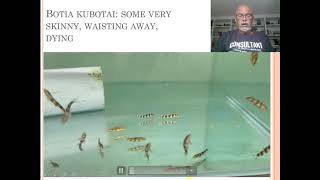
Gerald Bassleer presents case 29: Botia kubotai (a loach) infected with encapsulated metacercaria (digenetic trematode larvae) lodged in gill tissue. The larvae reduce gill function and predispose fish to secondary bacterial infections; there is no effective medication to kill the encapsulated metacercaria, so management focuses on treating secondary infections, improving husbandry, and supporting the immune system (e.g., immune-stimulant feeds).
Chapters
Dear fish keeper, today we are already on case 29 about the boccia cuboti with metaster cardia. I will explain in the following videos and presentation. The boca cuboti we saw in this aquarium. Some were very skinny looking, laying separately from the group. Here we see the observation. Others were looking fine, not so badly damaged, swimming very healthy here, up front of the corn, looking for food, looking for, well, the fish keeper who want to feed them. But some are too listless, too weak, and they are wasting away. And some were dying. So we examined one of these fish and we checked out that we found the gills, these kind of strange bodies here on the gill. Here in the gill. Here is one more, Here is one lye laying there. Encapsulated organism, which is a worm larvae, a metacercaria we call that. And they are taking part of the healthy gill. So they are taking away a good part of a good respiration organ. So the fish will have an impact on his respiration organ. So it will not function well. The guild not good in taking up oxygen, not good in taking out CO2 or ammonia. So the encapsulated metasarcaria are causing a problem. Here we see a closer magnification. You would see here the worm larvae sitting in here. And it takes up a part of the healthy organization. Here we see it in closer observation, see the organs here. And here we see in the video. We can even see in the video that some of the worm larvae, if we look very closely, they are a little animal, little larvae that behaves, is alive for a certain time. This larvae is waiting for the next host, because the fish is in the intermediate host. That means that the worm larvae is waiting there to be eaten by a bird or another bigger fish or predator fish. And then it will become a d digenetic trematode. So that's a trematode larvae. It will become a larger worm. In this case, it only sits there and waiting for a couple weeks months before it's normally eaten by a bird or a predator fish. So eventually it will die, but meanwhile the worm is dying. And meanwhile the organ is affected. You can see the guilty, she was damaged and will have bad functioning at the other end. What happens? Also that there's an easy infiltration of bacteria. So you can have a bacterial infection. Also on this vocacubotae that affected the organ. So we had a bacterial infection. Also as a secondary problem. Sometimes the fish can live a long time with it. You know, with this kind of. If it's not too heavy, they can live for life and never die and never show any sims. But if there are too many of these metacercaria, it affects the gill tissue and it affects the health of the fish. So the main problem is the loss of gill function. And the origin of these kanamidisiacaria is usually by fish who have been kept in outdoor ponds with snails or birds in the pond or around the pond, or collected from a river from the wild. The fish is an intermediate host, so it's part of the ecosystem where the worms have a chance to use the fish as a host. Unfortunately, there is no medication to kill these larvae because as you can see, the larvae metacercaria is encapsulated and well protected for any medication. So you cannot use anti worm medications. No use. But you can try to treat the secondary bacterial infections. When you can see the fish is getting weaker, you can try to use an antibacterial medication. And most fish survive well if you keep them in best conditions with food that helps their immune system to become strong, particularly with immune stimulants and pro and prebiotica like I keep on recommending in the industry, and that's my work as a consultant that I advise to use this kind of food to help the fish to survive infections, to prevent infections and certainly this condition to help the fish to live with this beta cercaria. So conclusion is many fish will survive, but some percentage will die because of the too heavy beta cercaria infection which cannot be treated. So taking care of the best way of your fish will have the best success and survival rate.