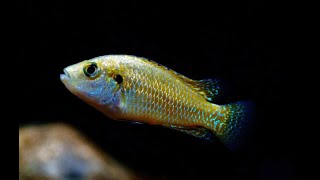
Gerald Bassleer examines Mycobacterium infection in cichlids, showing fish with massive tubercles in organs and gill damage. He estimates the disease accounts for 90% of similar cases in tropical fish and recommends euthanasia for heavily infected specimens, antibacterial therapy for secondary infections, and immune-boosting nutrition for milder cases.
Chapters
Hello, dear acrist. And maybe cichlid lover or not, it depends. But when you like cichlids, I'm pretty sure you will like this video because I will talk about bacterial infection that is becoming common in certain cichlids. Not particularly the wild cichlids, but the ones which are pond or tank raised. Today it's about a pseudo Ochrenilabris multicolor cichlids, which has a bacterial infection and many tubercles. Tubercles, something that is in the organs. I show you my findings in my books. I also talk about the cichlids, specifically. The new illustrated guide gives a lot of details and the specific diseases which are common for cichlids. South American or African cichlids. Also about what kind of medications you can use. And my books are available in different languages. But if you like more details about cichlids, you need to get the new illustrated guide which is still available in English, French and Dutch. Here are the pseudocrine labris multicolor. And some of them become skinny, they waste away and they die. Look at that fish. And that fish. Well, the other ones still look pretty okay, but this one, well, it doesn't survive the next hour. So that's a perfect example for examination. When you have a microscope that helps you or even if you have this kind of suffering, take it out, put it gently asleep if you don't have time to. Or not able to diagnose the diseases with a microscopy or with a dissection. And try to do the best for these other ones here, which are still actively swimming and not badly damaged. We took a scraping from that, the damaged cichlid, and we found very deformed scales. Look at them all. Damaged scales, badly damaged scales. And it's known that this is a sign of internal infection with Mycobacterium fish tuberculosis. Here is another scale. Well, already this damage scale teaches us well. Something badly has affected the scales and that means bad use of nutrients. So the scales are not well taken care of anymore and the fish is degenerating. Also the gills have had serious damage. I call that Gillmonia or Brachaemonia, like pneumonia for mankind. This is for fish kind Gillmonia, bacterial infection in the gills. Look at these parts of the gills here. Badly affected, not having a perfect function anymore. More Gilmonia or brachaemonia on the gills, inside in the organs. Look at here, these organs. The massive amount in the spleen on the right. And here on the left, the liver. Mycobacterium. Well, in my opinion, it's mycobacterium. It's about 90% of the cases we found tubercles. It's caused by Mycobacterium. There is a few other bacteria that can cause it, but science studies done on fish usually found Mycobacteria in tropical fish. The treatment well, the badly damaged and suffering fish should be euthanized. Put them gently asleep. Some fish might be less infected and with proper care a longer life is possible. An antibacterial treatment is necessary to heal the bacterial infection in the gills because sometimes or in most cases other bacteria also pop up. Combined with the Mycobacterium, the fish is weakened and is proneable to get infected. Sometimes parasites per year with other bacteria in the gills, you can help with a functional fish food to improve the immunity and repair the fish. I could recommend Dr. Basler bi fish food Fuko. You can also give green or chlorella to give to fortify the fish things that all help for the well being of your fish. Try to get my books if you don't have them yet available. Different language. The link is below. You want to get more training, more specific information on diagnosing and quarantining fish, etc. Go to my Patreon so you learn more and I'm happy you followed this video until the end because you learn more. Like this young man in the back here who was fishing for Little Shiglitz in West Africa. Interesting to see what kind of pelvic acromis he was able to catch. Well, thank you for watching and subscribe if you haven't done yet or give me a like so you like this kind of videos I try to make for you so you become more advanced, accurate to understand fish diseases. Thank you for watching.