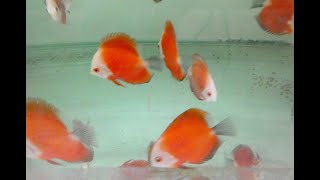
In this video Gerald Bassleer, a fish‑doctor, presents a detailed case study of a discus named Marlboro that died after becoming extremely thin. He describes the external signs (severe weight loss, rapid gill respiration) and then walks through a dissection that reveals extensive organ damage: gill erosion, necrotic liver, enlarged kidneys and spleen, and blood‑filled renal tubules. Using a microscope he shows capillaria nematode eggs and adult worms in the gut, explains how these parasites damage the intestinal wall and predispose the fish to secondary bacterial infections that ultimately destroy the gills and internal organs. Bassleer recommends an immediate antibacterial regimen combined with an anthelmintic such as praziquantel, supportive nutrition (e.g., pumpkin‑based fish food), and advises consulting his illustrated guide to fish diseases, his books, and his Patreon courses for deeper diagnostics and prevention strategies. The video ends with a call to subscribe and a reminder to check the description for resource links.
Chapters
Hello, dear aquarist, dear fish keeper, and maybe you, the discus keeper, because you selected this video about the diseased Discus Marlboro. As a fish doctor, I sometimes get specific cases of fish diseases with betta fish, with guppies, with platys. But today it's about the discus. And I know discus are important in our hobby, important in the aquarium fish industry. And that's it's worthwhile to spend time. And that's why I had many different videos already produced on diseased discus fish. And they might help you to understand the problems that can occur when you keep discus fish or when you breed discus fish. So check my playlist, go to the different videos I have. And today it's about a deceased Discus Marlboro, which had a very skinny appearance. And we found parasitic worms and the bacterial infection. A mix of problems. See my books on fish diseases. I have different books. And the new illustrated guide to Fish Diseases has many more details on discus fish, with many photographs, many information about prevention, diagnosis and what medications to use. The link is below. Here, the Discus mulborrow. And some become very skinny and very weak and they will eventually die. And some already died. They were suffering. Look how skinny this fish looks like. And some look better. That means they're less infected. You also notice the heavy respiration of this Discus malporo. That means something is troubling the gills. And some fish have less troubles, so they might be less infected or not yet, but become a risk to be affected in the coming days and weeks. So always check out this first one because it tells you a lesson that something is going on. Here we see that skinny Discus Sweet took out for examination. And the gills were stressed. There was little damage. We could see here in the middle, some damage. We could see the stressed gills. We can see more stressed gills here. Some parts were a little bit damaged, but some other parts of the gills were badly damaged. So some local infection. You can see this is completely deteriorated, rotten away by bacterial infection. Bad for the fish. That's why he's suffering with respiration. And after the dissection of the fish, we found the internal organs, not all looking so healthy. Also the kidneys were too large. But a microscope explains you more. What we can see in the gut, we found eggs. You can see all these little eggs here, which are typical for the eggs of the nematode capillaria. All those little specks here. Here we see it in a higher magnification. And that is sometimes we find back when we check the excrements of discus fish. That tells you, hey, I have worms in my gut that are producing eggs, so you need to treat me. And here is the big capillaria. We can show you. And they're probably more than one or mostly there are two or three or big ones causing a damage to the gut, causing the fish to be weak, weakening and become susceptible to other diseases, particularly bacteria. Here we see a closer examination with the microscope of that large worm and that is moving and actively and having a bad impact on the health of the fish and also on the health of the gut, particularly on the side. Look, you can see if this worm is moving here and it's damaging the lumen, the wall of the gut. And bad functioning gut is causing serious disease problems. Usually most likely bacterial infections. Internally we found the bad liver. Look at the necrosis in the liver here. Look at the spots, the melanomic centers. Bacterial invasion. More here. Healthy tissue is gone. You can see the vacuoles here. Bad tissue, bad healthy organ. Fish becomes infected. The spleen even worse. The kidney bad shape. Look not nice tubular, tubular anymore. The tubes are all filled or bloody or with Milana microfarx centers invasion of bacteria, etc. So the treatment. Well, the parasitic worms are a serious problem and can damage and weaken the discus and the bacterial infection. The gills and internal organs are most likely secondary infectious, but they are the ones that are killing at the end the fish. So apply an antibacterial treatment as soon as possible and then combine it. Or you can do it combine it with an antinematode treatment like for instance Prazikantel. In my books I give a lot of details on how to treat nematodes like capillaria. Ask your fish doctor or your pet shop for advice or read my books at the same time. A fish food can help the immunity of the fish and and repair the fish. I can recommend Dr. Basler buy fish food pumpkin. My books on fish diseases, particularly the new illustrated guide for the discus lover. A lot of chapters on discus disease. Also the discus pest, hole in the head disease. Many different things you should learn. If you want to become more professional. You. You want to become more experienced in fish doctoring, go to my Patreon channel. I have different courses for you. Also on prevention of fish diseases, diagnosing fish diseases, many things. And here is the link of my books also below in the description. So I hope this video helped you to understand why this skinny Marlboro discus was dying. Microscope helped you to show there were capillaria worms involved and bacterial infection. I hope this helped you to understand fish diseases and I'm happy you followed this video until the end. Also, subscribe to learn more and other videos to come. Thank you for watching.