Gerald Bassleer examines a molly with severe gill flukes and bacterial infection. Gill scrapings miss hidden flukes; tissue samples reveal the damage. The infection spreads to the liver and spleen, requiring prompt treatment of both the bacteria and flukes simultaneously.
Chapters
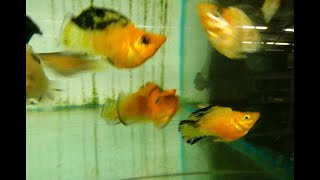
Hello, dear aquarist, dear fishkeeper. Welcome again to one of my cases of fish diseases. And today you selected one about a molly, a molly that had a severe infection in the gills and a secondary bacterial infection. And I'll show you my findings that I collected during my microscopic observation that we found in these molly gill flukes and a bacterial infection. And it's interesting to see how those gill flukes appear in the gills. Interesting to learn lessons when you take a sample of a gill scraping, that it can have a bad infect impact on what you find. Books on fish diseases can help you to understand why fish are getting sick, how to diagnose, and what medications to use. You can get them in different languages. See the link below. Here I show you the molly, Silphen molly balloon, which are wasting away and some are dying. You see they're getting skinny, some are getting weak, they're not eating anymore, they're separating from the group. You can see the one in the back. Here is another one, the black one, which is getting skinny and, well, slowly dying in the coming days. Perfect examples for examination. That's what you should take out to find out what's going on. With the naked eye, we couldn't see anything specifically except the wasting away and the dying. And when we took a sample of the gills, we saw badly damaged gills. You can see this part here completely rotten away. When we look further in the gills, we saw something in between. The gills, some organisms, it's also a little bit extra slime and mucus here. But what is in between the gills? Well, the video tells us that something is moving, and they are gill flukes. The problem is, when you take a scraping from these gills from a live fish, you might have a big risk is no gills are coming off the gills and that you find no gill flukes in your microscopic examination. That's why in many cases you need to take gill tissue to see what's on it and in between. Some parts of the gills are more obvious to show the gill flukes, like here, they're very active, but many of them are sticking in between Well protected between, and you can try to scrape it. Sometimes difficult to find something. That's why you have to be critical when you take gill scrapings and you find nothing. Maybe your observation or your diagnostic techniques are not perfect. But see the gill flukes here, all in between, and they cause damage. And that's the problem with gill flukes. They cause damage and bacterial gill rot. And bacteria invaded to the fish and kills the fish because of the gills which are badly damaged. And also the bacteria go internal and then getting into the organs and having a bad liver with necrosis, a bad spleen, a bad kidney here in this case. But this case might be not due to the bacterial infection or the parasites. You see the tubes, the tubulars are blocked. Deposits. Might be a history of treatment. Some medications or minerals might cause this problem that the kidneys are becoming blocked. Particularly medications, be aware of that. Some antibiotics can do that. Also, the spleen is in very bad condition. This is not a healthy-looking spleen. And we took samples of the internal part of the body, and you see massive bacteria. We have a lot of mixed bacteria types, rods and points, that are in the abdominal cavity bacteria. So the molly treatment, the gill flukes are a serious problem causing damage with secondary bacterial infections. So treat the bacterial infection. That must be done as soon as possible, but at the same time you can also treat the gill flukes. Ask your veterinarian, your fish doctor, your pet shop, or see my books for the details what medications you can apply. There is many different ones available in the market. At the same time, a functional fish food can help the immunity of the fish and the repair, like Dr. Bassleer Biofish Food Garlic or Moringa, products that helps the health of the fish. Try to get my books if you didn't have them yet. Try to get the training at my Patreon to become a more expert in fish diseases. So I hope this video on this sailfin molly balloon variety. Not the best variety you can get. Very weak fish, poor genetics. All those balloon varieties of fish I don't like. I see too many diseases occurring on these kind of fish. So I hope this video helped you to understand gill flukes bacterial infections on a molly. I hope it improved your keeping qualifications and your knowledge about fish. Thank you for watching.