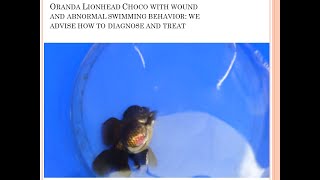
Gerald Bassleer examines an Oranda Lionhead goldfish with severe bacterial infection and tubercles in the liver, kidney, and spleen. The fish has external wounds, rotting gills, and necrotic tissue. Treatment options include isolation and antibiotics, but mycobacterial infections have poor prospects.
Chapters
Dear aquarists, today already our case number 83. And we will talk about a fancy goldfish, oranda lionhead, shoko, a kind of variety which has a shoko color. We found tubercles in the organs. And I show you here my observations of the fish, which I received with. Look, bleeding wound, abnormal swimming behavior. Cannot control its normal swimming behavior. So certainly some internal infections or maybe gill infections. You can see what we can do with an examination. Of course, we check the wound. If we find any, maybe skin flukes or other parasites that cause those wounds. No, we found necrotic tissue with lots of bacteria. So something which of course had a bad impact on the health of the fishes causing this big wound. And we have to go further, maybe it's more than just the wound of the fish. So then we go for the gills. And we saw here the gill completely bleeding, completely rotten away. So a very advanced stage of bacterial infection affecting the body, the gills. And when we did an examination of the organs, we could see here all the organs we pulled out here, the intestine, the kidney at the right. And here the other parts of the organs, all very bleeding, bleeding organs. And then we start checking what other organs look alike in a microscope. And here we found the liver. We found tubercles in the liver. You can see them here. Those black areas we found in the kidney, the same also organs really blocking and making that the kidney is not working well, not properly working well. The organs deliver, not working. Look at the spleen with those big tubercles, taking away healthy tissue. So the organs are malfunctioning. So the fish can get every disease you want. Particularly you will have other secondary bacterial infections next to what caused these tubercles here. And what you can do with such an advanced infection with this kind of fish, which is so badly showing that behavior is take it away from the group, put it aside, maybe try to treat. But if it's very badly damaged, better to put it to sleep. You can use Narcomore plus from a cardamomster, which is a very safe and gentle narcotic product you can use. Because the fish can be spread to other healthy fish. Spreading a disease. Some fish, maybe in the group, can survive for a long time when they have less infection, so the organs are less affected, so it might survive longer. You can try to treat with a specific antibiotic to help the gill bacterial infection and the skin. Ask your vet or physio doctor for consultation. What appropriate antibiotic you can use, like Feraltadol maybe, or sulfamethoxazole bi drill. I don't know. It's all something you have to discuss with your professional fish doctor who can help you. But for controlling the tuberculosis like I said in many of my videos in my previous cases and on my YouTube film on mycobacterium, it's very difficult to treat the fish with this kind of infection. You can try to fish food like I said. Again here is Dr. Basler again with food. Yes, food is part of the health and the care of your fish and I would recommend to use the professional treat or Foucault particularly because it's those bacterial infection. Check with your supplier, check with your shop. You should inform them because usually the breeder is usually the cause of this problem. So this was another case. So I would say stay tuned. More cases to come. Certainly we are going now. Today was 83 and I have more cases available for you in the next coming weeks. Thank you for watching.