Highlights on the interview with Dr. Gerald Bassleer and about functional DR. BASSLEER BIOFISH FOOD
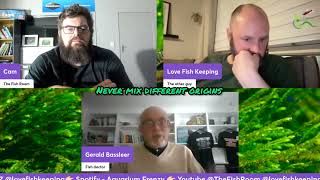
Dr. Gerald Bassleer, a trained biologist who entered the aquarium industry in 1977, developed his functional fish food after experiments in the 1990s. He emphasizes watching fish behavior at feeding time, using ingredients like garlic and probiotics to boost appetite and disease resistance, and storing food in airtight containers to preserve the coating.
Questions this video answers
1977.
1995 (probiotics applied in his facility in 1994–1995).
36 countries.
Up to 2 years if kept closed; recommended to use opened cans within ~6 months (or buy smaller cans and use within 6–12 weeks for hobbyists).
Chapters
Can you share with us how you got involved in. In fish keeping and how your journey began?
Well, in 1977, I graduated as a biologist specialized in behavior of animals. And I had the opportunity to study about the behavior of fish, about trophies, Tanganyika cichlids. And I was never a hobbyist, but a job came along in the industry that a wholesaler called Aquaria Antwerp was one of the major wholesalers in Europe in this 60s and the 70s. And he was looking for a biologist. And I said to myself, well, as a biologist, I like to work in the field. I want to get married. I want to start a family. I need money. So I did a challenge to apply for that job. And the only thing that the person asked me, what do you know about fish diseases and how can you treat? I said, I know nothing. We never learned this at school. In the 70s, there was no training on fish diseases. Even the veterinarians didn't get any training. But I told them, I know how to use a microscope. And a few books I've seen might help me to explore fish diseases and to cure the fish which arrive in the wholesale facility. Because Corey Antwerp was one of the major wholesalers in that time in Belgium, and he was bringing in a lot of fish that not able to identify the diseases. And that was my challenge as a young biologist to find a new study, finishing my. My master's degree in biology. I said, well, let's take on the challenge, study something new. And there was so little known about it. I was looking for books and information. Very, very little was known how to treat fish in the aquarium industry and how to diagnose, how to prevent and how to treat. And that's how I stepped into the industry in 1977.
Wow. I think you might be our first ever guest that doesn't have some sort of a hobbyist background before getting involved in the industry in love with fish.
Because the thing I learned, the fish cannot talk. The fish have no way to tell us, I'm feeling bad. Oh, I'm feeling sick. Please help me. So with my background as studying the behavior of animals, I quickly identified how a fish expresses his language to us, to us as humans. He talks to us. To be honest, he has a way of expressing how bad or how good it feels. And if you're a hobbyist, I'm sure the hobbyists who are watching, if you know you fish very well, you know when they're okay, and you know when they are not okay. And that's very important thing. You have to watch Every morning when you feed your fish, how are they doing? How are they swimming and reacting to the food? And that's the first lesson I teach to everyone in the first day of the few minutes you have to spend watching your fish in the morning when you feed them and see how they're doing and if everything is okay, you can go home to work or to study or relax. That's the first thing for everyone. Even in the industry, as a pet shop or as a wholesaler, the first morning is the most important part of the day, that the fish talk to you and you have to look at them and, and listen to their fishy language.
Yep, very, very true. And I think the correspondence between feeding time and the behavior is quite an important one as well.
Yeah. I mean, as a hobbyist, watching your fish is one of the most important parts in general, because if you don't enjoy watching your fish, then you know, you're missing out on the biggest part of the hobby.
Yeah.
So if you, you know, if you truly do like your fish, you're going to know every, every aspect of their behavior and using that to your advantage to, to identify when they're. They're up or they're down, and then translating that into breaking, you know, breaking that down to say, well, they're behaving that way, which is not normal. So that then means this. Or they're behaving this way, which is still abnormal, but it's different. But that means a separate thing altogether. So, yeah, it's very important.
Yeah, it's. It's very important. Particularly during the feeding time. You see the interaction of the fish and, and you see what happens between them, how they're eating. Well, those are very important lessons because that's the main problem of many of the people in our industry. They are not spending enough time to listen to their language of the fish. And that's something I try during my. Because I give training to pet shops and I give training to wholesalers and I try to explain spent in the morning, particularly in the morning, because it's fresh of the day. You have to watch live items. You have to compare it with the hospital. When you're in the hospital, the nurses come to visit you or the doctor and check how are you doing. They check your temperature, they ask you questions. That's the same thing. You know, it's like in the hospital every morning there's a check and they check if everything is okay. And that's the same thing you have to do, of course. You have to watch if your Filter is still running or the temperature is okay. So basic things you have to watch. The problem in our industry is. Or with the hobbyists. They usually see their problems too late. When it's too far advanced, they. They catch it too. Later there is a fish dying somewhere in the corner or was not eating. Well, what? Well, the first incident is and the fish is not eating. He shows that he is not feeling well. And that's the way you have to interact. And it's a lot of thing common sense, which I do not explain in my books. Because my book is all about pictures of sick fish and medications. But this is like a basic rule that every hobbyist should be aware of. And that's the guidance you should get.
You mentioned just a little bit earlier, natural immunity from wild fish. Can you talk to that a little bit and how that kind of works, behaviorisms and all that kind of stuff, please?
Well, as long as the fish lives in contact with parasites and bacteria nature, he develops an immune system that's like we as humans. You know, we live daily with bacteria and viruses and. And we have known and learned. If we have regular contact, we regular maintain our immune system. If we shut off the contact with bacteria, we disinfect all the time. We avoid any contact in social context. We lock ourselves down while we lose our contact with the natural environment and we lose our natural immune system. That is a permanent training program. And that's something that happens in nature. The fish have permanently a challenge. A challenge to fight off the bacteria and the parasites. That doesn't mean they're healthy, but that means they have a way to survive. The problem in breeding of the fish that they are in an enclosed specific environment with specific food. Always the same food, the same water and the same conditions. So their natural immune system is not natural, it's non natural. It's an artificial immune system. And sometimes what happens with the tank race fish, they come in contact in an aquarium or with wild fish or fish from another breeder. And they got in contact with bacteria and viruses they have never seen before. That's sometimes the problem when you start mixing fish from different origins. For example, the, the discus people. The discus world. The main thing I always tell to the people who keep discus because Discus is an expensive fish. Never mix different origins unless you have put them in quarantine and challenge them with the water of the other fish. But don't introduce wild fish with tankerishes from Germany or Thailand or Vietnam. You're gonna have problems. Obviously very high risk. And it's the same for humans, we travel to Africa or to the Amazon or I would come to travel to New Zealand. Yeah, I would have a risk that I get attacked by bacteria and viruses from New Zealand that I don't know in Belgium. I should be aware of that. So I have to make sure that my immune system is well taken care of. That means I rest well, I eat well, I have a good health, I do a good maintenance of my body. And I try to be natural influence. And that's a basic rule in life. People with a natural immune system to people who take care of their body necessary for fish. Take care of your fish and they will have a good natural immune system that's with good water, good food, avoiding stress. And the fish will develop and get a good natural immune system.
Can you talk about how specific or particular ingredients can help with the immune system? In particular things like garlic and paprika. And how is the studies done and conducted to prove that and to, you know, make that those claims?
Well, as you know that the in general, aquaculture has been challenged not to use antibiotics anymore or very limited. So the already for 20 years the aquaculture is looking for other opportunities what to use instead of an antibiotic, how can we prevent the disease and adding something to the fish food so the fish can take up something. And one of the things was garlic. Garlic was easily available. It's known for human health. A lot of studies has been done on that and it has been studied extensively for fish. And I can give you later on a link below at your YouTube channel on my reference studies on our fish food where you also can find all studies about garlic for fish. I will give you that link because I published that link on my website. Where did I get all my information from? Well, because I learned from other people who tried it before. Some things I tried because I weird about it. But most of the things have been studied and challenged in aquaculture industry. To be honest, ornamental fish industry means only 1% of all aquaculture. So all the money that goes into research is going to aquaculture for food fish, trout, salmon, you call it. That's. That's the big money. That's the. That's where the money goes. And that's where funding and money is available for. Not for ornamental fish, sort of. But I get my information for aquaculture specialist. And garlic is something that helps the fish by eating it. And there is a product in garlic that's called Allysin that helps the fish. It does not help the immune system. No, it helps to fight off bacteria and parasites. It's a product that helps through the gut and through the bloodstream in the fish health, helping the immune system. You have to talk about probiotics and prebiotics. That's immune system. Those two are the ones who are helping the immune system. Garlic is more like a functional food to help the fight off diseases.
Is it true that garlic stimulates the appetite of the fish?
That's an extra stronger. Yes, John, very true. When fish have a difficulty in eating, for instance eating. Difficulty eating dry pellet, granulated food, put garlic inside, they will love it more than without. Yes. Yeah, that's very true. Yes, correct. Yeah.
Awesome. Now you've just mentioned pre and probiotics. The next question that was directly under Rochelle's one is regarding that as well. So is there specific spraying strains of these that work better than others or as a general whole probiotic is just effective as. As a general rule. How does, how does that work with fish and fish health?
Well, that's a good question because probiotics have been stood studied extensively in aquaculture and the one which is most mostly studied for use in aquaculture is pediococcus. Pediococcus is a kind of probiotic which we add to our fishwood which is produced in France. One company only produces it and it's freshly added as a freeze dried bacteria coated on the granulate. But as soon as it comes in contact with the water and with the food and. And the gutterfish becomes a live bacteria very quickly. And that's. The studies have been done on that probiotic and I have the references on that also. I will share with that where you can learn about the probiotics, how it has been studied and it has been used extensively in trout and selma farming and they did a lot of research in using paediococcus. Of course, it's not the only one. There are also other companies in our ornamental fish industry using other kind of probiotics which are also commonly known to be effectively known. Not only Pediacoccus is the best. No, I tell you, probiotic is something new in our industry. Something which is not known. We didn't talk about it here 10 years ago, I think openly on the Internet. But I've been using it for 20 years because I knew it was taking care of my fish in my fish house. But now it becomes a very common word to be used in our hobby in the fish industry, in aquaculture because it prevents many diseases and it prevents the use of medications and it prevents. Well, that the fish become sick. And luckily we're getting low slowly in that process that it's more well known. And I'm happy for that that people even ask me the questions. I never received this question 20 years ago because when I use probiotics, in 1994, 95, people said, what is that? You're putting bacteria in the food. You're making my fist sick because you're putting a bacteria and say, no, no, no, no, no. It's a different bacteria. So in those days, it was very new. And we were the first to apply it in 1995. The first. Because I. I get some training from aquaculturists, we. Which were using it already for food fish, but not for ornamental fish.
There's a couple things in that I love. The first of us that you're. You're really willing to share the links on the references to what we bought everything from. I think that's fantastic. And it's not just a case of I'm saying this, there's actual proof and you're willing to show that, which I think is absolutely fantastic.
Probiotics. I. I can tell you they are very helpful because the fish are challenged during their life with stress, transport, acclimation, and that's something I promote a lot in fish foods and also for humans. You know, probiotics, because the gut is the most important preventative of fish diseases. Because if your gut is functioning well, it eliminates diseases. And no bacteria or viruses can go through the gut lumen to the wall of the lumen and go into your bloodstream. So it's a wall of defense. And it also has an interaction with your brain. Well, I cannot go in detail in that, but the immune system in the gut is something very important for humans. That's why a lot of young children die in Africa because they have malnutrition, bad water, because they have a bad gut flora. And a bad gut flora is diarrhea. And because of diarrhea, also, if fish happens, fish die quickly. They get all diseases. They get all the diseases because the gut flora is malfunctioning. And unfortunately, in our industry, a lot of people use a lot of antibiotics. And antibiotics can guild can kill the gut flora and can kill the bacteria, the beneficial bacteria, not only in the filter, but also in the gut of the fish. And that can make the fish susceptible to other infections than the ones you're treating for. And that's why we developed Dr. Basley biofish food with Probiotica. We always have Probiotica in it. Why it's an essential need for ornamental Fish. I believe in it.
We've another question from Helen here. She has read that the long term use of charcoal in an aquarium filter can cause problems like hole in the head disease. What are your thoughts on this and have you seen any studies that either prove or disprove that?
Thank you, Helen for that question. I appreciate. First of all, I do not like charcoal filtration. Why? It takes up minerals out of the water and it's only good when you want to have cleaning out chemicals out of the water. So if you water has chemicals like a medication or acriflavin or other things, okay. It clears out a yellow color out of the water and sometimes that. But charcoal as a permanent thing? No, because the problem is charcoal collects it all and it's a chemical container and it has a risk to release it. Particularly when people using salt treatments and they have a charcoal filter and adding salt to the water and to the charcoal filter, it can release all the chemicals into the water and pollute the water and poison the fish. Wow. Chocolate for me is a. A temporary practical product. Yes.
More like a water polisher than anything else.
Yes, yes. Not as a permanent, because a charcoal filter becomes after a couple of weeks, months. A couple of months becomes a biological filter, but also a chemical filter. So that is something particularly. People are keeping marine fish. I don't know. Helen is keeping marine fish. Of course, it keeps the water sparkling clean for marine fish. It's commonly used. But the thing marine fish, you know, they live. Marine fish live from drinking water. They need to drink water. Freshwater fish not. But if you have a charcoal filter, it takes out all the minerals out of the marine water and the fish lack all the essential minerals. They cannot drink anymore. And then you see particularly marine fish, hole in a head disease due to the use of charcoal filtration. And had. I was invited to the public aquarium in St. Petersburg a couple of years ago. I have good friends in Russia and I had a fish tank with beautiful fish, big fish in a tank with a lot of invertebrates. And I said, wow, this tank is beautiful. May I see the filtration? Okay, this is the filtration. He said, but we have another tank which is not beautiful with big fish tanks and angels all with hole in air disease. See how come? Let me see the filtration. Yeah, we have to use charcoal filtration here, which we do not use. On the other invertebrate tank, say. Well, here you have an exact example what the charcoal is doing to your fish. Take it out and put your food fish to Repair the holes in the head. Of course there were scar legions. It was too far gone. But that was for me a big example how what charcoal could do on a big level in a giant. I tell you. St. Petersburg has one of the most beautiful public aquariums in the world. Love. Russia has the most beautiful public aquariums in the world. I visited a lot because they invested a lot in public aquarium. Why? Because it's a cold country, it's a climate, people like to go indoors and they invest a lot of money in there.
It's.
And I had some friends there who. Who sold my book in Russian language and they were also involved in the public aquarium. So I had the chance to. To give lectures there, to visit there. If you go to Moscow, beautiful public aquaria. Unbelievable what you see there. I tell you things we don't see in Europe, things very hard to see, except in France. In France is one beautiful one. Yeah.
So how long would you leave the charcoal and after medicating, how long will you live for removing it?
As soon as the water is cleared, as soon as the water is free from the pollution, from the medication, cloudiness or the yellow color, take it out.
I just want to touch base on your fish food line. Yes. How did that come about and where was your motivation for that?
Well, in 1995, I started importing fish in my facility in Belgium. And you know, when you have a business and I was an importer distributor to pet shops in the rest of Europe. Even I was shipping fish to Japan, to America at that time. And I wanted to have fish ready for sale as soon as possible. The longer I keeping them, you know it, Cameron, the longer you keep the fish that cost money every day, maintenance, electricity, water, light, everything. So I was looking to improve the quality of the fish because all the fish I bought were imported and they were stressed, they were weakened and. And I want to condition them so quickly as possible with less medication, but more with food quality. So I did experiences with food. I had talks with people in aquaculture. Yes, aquaculture. Because there is the knowledge. I got my knowledge from those people and I start experimenting with probiotics and prebiotics. And that's the first thing I find out how much this really helped the immune system of the fish and prevented me of using a lot of medications and allowing me quicker sales of the fish. And so I involved in more different kind of foods because of different issues I have to take care of in my fish house and the demands on the market for hole and head disease or for worm infections or Bacterial infections, you call it. So that's why we developed different kinds of fish feed that, that were how I would say I liked personally. And in the first three years I didn't sell anything I didn't want. It was my secret. And then my pet shop said, well, Gerald, can you give me a little bottle? So I try my fish house. Okay, I give you some free. Some free. And that's why it happened. The pet shop start asking me for, for fish food. And that's why certainly I think, well, let's make a business out of it and finish. Finally I, I stopped my fish house and continued only the fish food. As with business that's followed the business. My opportunities are guts. And now a Corey Munster is taking that over because they're selling now to 36 countries in the world. So it's being a worldwide product because of the high quality. It's not the cheapest, but I regard it as one of the top quality products because of the functional ingredients meant to take care of the fish. That's, that's the basic idea behind it. It's about the well being of the fish.
So how have you developed being developed, not the word. How have you researched or decided the ingredients that you put inside of your food to be the right ones to go into your food?
Talk to aquaculture. I went to aquaculture classes. I talked to the people. Aquaculture, what do you use to raise salmon, to raise trout, to raise tilapia, to raise catfish. Because those people are using tons, thousands of kilograms a month. And we tropical fish people using a few kilograms a month and their experience, what kind of mixture of pro, what kind of proteins, what kind of vegetables, what kind of additives, what kind of minerals, what kind of vitamins? So I went to the professionals in the industry. I didn't go to the big brands like Sarah or Tetra. They had their own kind. I wanted to do something completely different, particularly with experience for food fish. Yeah. Because that's where most of the money has been spent on and researched. So I found a lot of good scientific reports on that particular kind of ingredients. And that's what all I used for developing my brand of Dr. Basley biofish food.
I'll slightly rephrase my question a little bit, refining it down to particular ingredients that you use. Off the top of my head, I'm not sure, other than like garlic, which I've looked at this morning, and coralia algae, I can't pronounce it with properly. So how have you specifically pinpointed these for specific things? You're looking for in the food is probably more where I was going with that.
Well, I, I found studies on these particular ingredients and I tested it myself in my fish house to see how good the chlorella was for the life bearers, particularly live bearers or algae eaters. They love chlorella because it's a very good algae that is very good. Absorbed by the fish. No waste. No, it's completely. 99% is absorbed, digested by the fish. No leftovers, which is very important when you have a lot of fish in the aquarium that you have a little waste. So, so we did a lot of studies in our fish house. Testing and trials. Testing and trials which is working. How much is the percentage we use which is better to use? Not on that. So we did trials in combination with scientific studies which are done, which I will give you in my references. The studies done. Chlorella Donna on garlic, done on lapacho. You call it matrine against white spot disease. I didn't discover the matrine against white spot disease. It's been developed for aquaculture against white spot disease and marine fish.
So what, what I'm, I'm hearing a little bit is you've done a bunch of research work, found, discovered that this can help prevent this, for example, and gone. Cool. I'm going to use this in a product for this reason or correlate the algae. A huge amount of that is taken up. Great. That's a massive tick. We're going to use it over X amount of whatever algae it is because it doesn't. And that's how that's been developed through. Is that about the way it sort of works?
Exactly, that's how it is. Yeah, that's how we went. Yeah, yeah. All slowly process because first of all, each food was tested for six months that it did not kill fish. Well, that's the most important thing, actually survive after six months, you know, and, and, and that. So I had a laboratory on the side, I had a fish house and I was keeping fish and fish feeding as long as the fish were not getting sick from the food. That was the first important thing. Or deformed or other problems, other diseases. You never know. You never know. You had something you better make sure and then you have to test it really helps us. A functional food. That's the second program.
So one of your, again, I can't say this word, one of your containers is akai aki acai. That's why. Yeah. So what is that and what are the benefits of that particular product?
Well, that. That has an interesting story. The acai is. Our product, comes from a berry from a palm tree in Brazil. And I did three trips in the Amazon, also with the University of the Amazonas, to search for fishermen, new fish areas, to collect fish, to study fish in the nature. And we came across a certain part of the river, and the fisherman was collecting fish on a certain part of that river. And we asked, why are you fishing there where there's a lot of shade and a lot of trees? This is easy. Look at my fish. They've got bright red noses. The red noses. They got bright red and blue. Color of the cardinals. Yeah, but why here and not there? And look at this. Easy. They're eating the acai falling down from the tree, the berries falling into the water, and the fish are eating it. And he said, I make such a good business as fishermen because my fish are strong, healthy and colorful. So my buyer loves my fish because I love the area where the acai trees are dropping the fruits into the river. And that's where I. I learned it from practice, from the people catching the fish. And I imported acai, put it in the food and give it to the fish. And it gives them strength. It's like a red bull. Like a red bull activity. And it's. It's very. We don't see it much in Europe or in Asia, but acai is a very popular product in Brazil. It's sold in ice creams. It's sold because it gives power to the people, gives health.
We can buy it here in Scotland, too.
That size. Yeah, yeah.
Yeah.
And it only tastes good for people when there's a lot of sugar added to it. We don't add sugar to it because sugar is bad for health, people and fish. Very bad. Sugar for avoided.
You can buy them in dried berry form as well.
Yeah, yeah.
It's nice. And yogurt, actually.
So we buy it. We buy it in Brazil from powder. Powder. Dried powder from the acai berries. And we coat it on top. On top of the granules so it maintains its active ingredients because everything that is cooked and boiled and heated loses its activity. So we are against any. That's why people sometimes complain, oh, the. The bottle is all red. My fingers are red. Yes. Be happy. It's a pure, fresh product. Yeah, but acai is floating on top of the water. Say, don't worry. The fish love it. They will eat it eventually. Even floating it to the water, even if it's not sticking anymore to the granulate. Don't worry. All those Ingredients sticking to. It's the same with the herbal. The herbal has four herbs coated on the granulates, which is a lot. So if you put it in the water, you see a lot of herbs floating around next to the ones which are eaten by the fish, but the fish still eating it, because the fish love to eat all day round, all day round they're eating and nibbling. That's all they do. What else can they do except mating or chasing each other or stressing or hiding? But then most of the fish all the day they do is eating like a horse or a cow or a sheep. That's all they do. It's. And that's why we don't mind that the ingredients are coated on the granules because it's floating into the water and fish love it. They have fun out of it.
Something, something that I took from that, which I absolutely love, is you've added an ingredient that is consumed in the wild for these fish. I'm massive on foods that include insect, lar or insects in it for that same sort of reason. And to me, that is. That is a huge development in the fish food game. It's not just we're throwing all these together to make the food. It's because this is what the fish consume, this is what they need. This is going to bring out the best health activity and qualities from it. That's a huge, huge tick for me and I think that was fantastic, that that was the reasoning behind that particular ingredient being in that particular product.
Yeah, yeah. That's the main thing we specialized in. And that's where a little bit different than the other brands of general fish food. I don't mean the other ones are bad, but just we. We created a different niche with a different opportunity for the fish. So they have something like we have here, the green, you know, the green. It's particularly meant for the. The fish that likes to eat green food. You know, Tanganyika, cichlids, Rory Day catfish on the bottom, the green eaters. And that's with chlorella and moringa, two green products that the fish really love, because they need that extra green, which is not in the basic palette. So that's the extra functional food for these kind of fish. So the people have a choice.
Yeah. I've got another question here. With the conversation of food being such a consistent one within the whole industry, what's stopping other companies from making what Braxton would consider a good food? Or maybe to the point, why is there so many substandard foods that are.
Around well, it's all about the money.
Yeah.
And marketing. You know, companies like, like Sarah Etra, I don't blame them, they have bad products, but if they don't do marketing and advertising, they have less sales. We do very little marketing, very little advertising. We use the hobbyist to talk about it. We use social media, we use different. We always say, let's the fish talk about it. I wish the fish could talk and the fish be happy. Because the way we make our fish food is very impractical for most of the companies because they want to put all the ingredients in the machine and at the end of the chain comes out the pellet or the flake. What we do, we could produce a granulate and then extra we add on the probiotics or the prebiotics and then extra we add on the chlorella or the acai. It's all manual labor. It's all manual, all of manual labor. And a lot of companies, well, doesn't fit in their program in this schedule. I understand that. So we are like an artisanal product, if you know what that means. Yeah, yeah, we're like an artisanal product. And we don't want to be the biggest, no, we don't want to supply everybody. We have a special niche for people who want to take care of this kind of product because the way we are making the product is well, labor intensive. And that's why we. Because it's needed. Otherwise you cannot put that functional food on top of it. It's like people making at home a fresh meal. A fresh meal means work. It's cutting the vegetables, it's preparing and cooking. And these days, to be honest, you know, our society has been changed in making, in buying at a pet store, prepared food in a can or in a box or in a freezer and put it in a microwave and ready to eat. That's our problem in mankind. That's why so many people these days become sick, have immunity problems or easily to get diseases. Because it's all about the way we live. Of course it's also exercise and anti stress, but it's all about, we like to buy easy food in the, in the supermarket, easy to reach. And it's also sometimes cheaper and particularly also cheaper in time. Well, that's why we say we went in that direction. Like that's how we call it. Also biofish food because it's bio, can't explain different ways. Biological, because I'm a biologist, but also the way of living according to biology of life.
Okay, so can you discuss the process of the actual making of the food because you've said a couple times that ingredients get sprayed on after the fact. So how does that process work from for making your foods and your pallets?
Well, the granules are made like any granule is made that's particularly granulate machinery. You're putting all the ingredients together and at the end it comes out. And then the granulates are made to depending on the final machine to making fine pellets or small pellets. And then it's dried and temperature controlled, lower temperature. And then the coating starts in a manual mixing process. A manual mixture. Manual supervised. And we must supply to the food authorities samples of the food before adding the functional ingredient. And after we are obliged it's rule because before it's heated and free of pathogens. That's why the heating process there that we must collect and giving samples to the government for food safety testing. And then afterwards we adding all the functional ingredients where we supply samples to the food authorities. But also we supply samples of the final food product where we coat in a mixing process. We use a mixture for that. We're adding on the dry acai or the dry chlorella or the probiotics bacteria. We mix it in a mixing system takes 10, 15 minutes and then it's finished, it's coated because the pellets are a little bit humid. There are fish oil covered by fish oil. And that attaches the functional food we're adding onto it or the functional ingredients we're adding onto it. And that's the final product. And then it goes into the bags and then it goes to the production of the food cans. Finally that's how it comes to the market. Cans with a protection against UV against heat, while not against heat, particularly against humidity. You have to keep it against humidity and against the sun. Sunlight and humidity destroys this product within a couple of weeks.
Wow.
That's why we keep it closed. Temperature also can lower the ingredients. But it can be kept for two years closed and you can feed it for six months easily. As long as you don't make it wet or leave the can open in humidity. That's all we expect. Yes. So we ask the people better, better to buy smaller cans so you feed it within six weeks or 12 weeks. Or for the people have big aquariums or the wholesalers, the pet shops using bigger cans of 1 liter cans, 600 grams. Yeah.
So like I said, I've been trying now for a month, six weeks or something along those lines. A couple of things that has really stuck out with me is a, the lid is different to any other. It's not a, a screw cap like everything else. It's a pop and it feels sealed when it closes back. I'm assuming that is to stop any excess.
Yes, that idea. Yeah, that idea came from particularly our biggest customer in Singapore.
Yeah.
He said we need really something that's really sealed, closely sealed as nothing can go inside. And I can keep that food for one year on the shelf.
Yeah.
And that's been tested. That's really safe for one year on the shelf because there's a strip you have to. Yeah, yeah.
And.
And that.
Feels like another positive change in, in the way that Fisher is progressing because like I said, when it's closed it feels really suction tight. Nothing's getting through compared to a twist cap. The other thing I noticed, I've got the small 60 gram jars and I think it's possibly your smallest granule. And they come with little spoons.
Yeah.
First open, the container's like, man, why have I got a little spoon? And then I used it. I thought, this is exactly why I've got a little spoon. A my fingers don't go in. That's quite a small lid. My fingers aren't weak going in. But like this tiny little spoon, you put it and it's perfect and it just is the right amount. The granules are tiny for small little mouths. The first time I fit it, massive ticks on both of those. I was like, wow. This is just thinking and innovation of what feels right for the animals that we are feeding. So a massive text for them. I really appreciated them as a hobbyist using them. It was. They were good.
Yeah, yeah, yeah. That question came from hobbyist for a spoon. It was not already we listened to the market, what are the demands? And they said, I don't want to use my fingers, they smell too fish food and, and I want to have a dosage. This is a dosage you can, this is a dose, you know, depending on the amount of fish you have and that you want to feed. So you know how many spoons you can give to your recording. Yes, that's correct.
Yeah, yeah, that's fantastic. And like I said, the size of the granule, I'm feeding predominantly tetras, small danios barbs, smaller fish with it. It's perfect. But there's no rolling it around, nothing like that. They just straight consumed, straight. Good. So yeah, I was really impressed with, with those particular things. So yeah, for those of you in New Zealand, there is somebody currently trying to work on having your products imported and distributed. Hopefully that happens sometimes sometime soon. Because, yeah, from all accounts, it's a. They're, they're fantastic food and fantastic products. So your fingers crossed they make it to the New Zealand market sometime soon.
More from Gerald

Sick Dwarf Cichlid Apistogramma. See link complete video. #fishdisease #apistogramma #Cichlid


Fish disease case nr. 365 Tankraised Apistogramma borelli with bacterial infection and few tubercles

Corydoras catfish worm infection. See link complete video. #fishdisease #corydoras #catfish catf

Fish disese case nr. 364 Wild Corydoras concolor with Camallanus and other worm infections


Fish disease case nr. 363 Wild Cardinal tetra, Paracheirodon, with worm and bacterial infection

Fish disease case nr. 362 Sawbwa with gill flukes, Nematodes Capillaria and bacterial infection

Sick Golden Orf with Dropsy. See link complete video #fishdisease #GeraldBassleer

Fish disease case nr. 361 Golden Orfe with dropsy or ascites due to bacterial infection

Fish disease case nr. 360 Apistogramma with 3 different parasites and tubercles in the organs