Interview New Zealand: Fish Doctor, Gerald Bassleer's career&fish diseases by The Fish Room, C.Scott
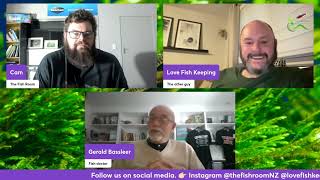
This content was created by Gerald Bassleer. This content was uploaded by Gerald Bassleer. This is a YouTube video titled "Interview New Zealand: Fish Doctor, Gerald Bassleer's career&fish diseases by The Fish Room, C.Scott" created on April 28, 2024. It features a conversation between C.Scott, John, and Dr. Gerald Bassleer, discussing Gerald's career in the fish industry, his experiences with fish diseases, and his insights on fish keeping and health. The discussion covers topics such as the importance of understanding fish behavior, the role of probiotics in fish food, and the challenges in diagnosing fish diseases.
Chapters
Good morning. Fish keepers Cam here. Robmfishroom.co.nz Done it. We've made it to Friday and we've made it to Friday on a public holiday. How good. Enjoy the four days off, people. Coffee is good today. Possibly because it's a four day weekend. Just a quick reminder, the shop itself is closed today. Both Friday, today, today and Monday we are closed. We will be open on Saturday. However, that is enough spill for me because we do have ourselves a guest sitting waiting in the wings. So I'll push the buttons again. We'll bring up John how we do Morning. And we'll bring up Dr. Gerald Basler. Hello, gentlemen.
Greetings from Belgium.
How's it going?
Yeah, thank you very much for joining us. It is much appreciated. Been trying to get this going for a little while now, so I'm glad we, we got there in the end. So thank you very much for, for being on with us.
Thank you. You're welcome.
Cool. So can you share with us how you got involved in, in fish keeping and how your journey began?
Well, in 1977 I graduated as a biologist specialized in behavior of animals. And I had the opportunity to study about the behavior of fish, about trophies, Tanganyika cichlids. And I was never a hobbyist, but a job came along in the industry that a wholesaler called Aquaria Antwerp was one of the major wholesalers in Europe in this 60s and the 70s. And he was looking for a biologist. And I said to myself, well, as a biologist I like to work in the field. I want to get married, I want to start a family, I needed money. So I, I did the challenge to apply for that job. And the only thing that the person asked me was what do you know about fish diseases and how can you treat? I said, I know nothing. We never learned this at school. In the 70s there was no training on fish diseases. Even the veterinarians didn't get any training. But I told them, I know how to use a microscope and a few books I've seen might help me to explore fish diseases and to cure the fish which arrive in the wholesale facility. Because corianthrop was one of the major wholesalers in that time in Belgium. And he was bringing in a lot of fish but not able to identify the diseases. And that was my challenge as a young biologist, to find a new study. Finishing my master's degree in biology, I said, well, let's take on the challenge. Study something new. And there was so little known about it. I was looking for books and information very, very little was known how to treat fish in the aquarium industry and how to diagnose, how to prevent and how to treat. And that's how I stepped into the industry in 1977.
Wow. I think you might be our first ever guest that doesn't have some sort of a hobbyist background before getting involved in the industry. I think that would be about right, wouldn't it, John?
I think so, yeah. Almost every single person we've had on has begun with an aquarium, either coming in the house from their. Their father or their grandfather or. And it's progressed from then, but, you know. Yeah, it comes right. The first. First time you've took the step into that world with no prior existing experience.
I have a goldfish. I received it, you know, from a marketplace, you know, where you can go to the carnival and you pick up a goldfish because you win a prize.
Yeah.
And I took it home, but it died within a week. So I was a very bad hobbyist, to be honest. I started very bad. I cannot be proud of my hobbyist career. But now I'm a hobbyist. Look, I have. Have now a nice mixed tank of fish I enjoy very much. And I learned to appreciate the beauty of the hobby because of the need as a biologist to find a profession. And I love with fish because the thing I learned, the fish cannot talk. The fish have no way to tell us. I'm feeling bad, I am feeling sick. Please help me. So with my background as studying the behavior of animals, I quickly identified how a fish expresses his language to us, to us as humans. He talks to us. To be honest, he has a way of expressing how bad or how good he feels. And if you're a hobbyist, I'm sure the hobbyists who are watching, if you know your fish very well, you. You know when they're okay and you know when they are not okay. And that's very important thing. You have to watch every morning when you feed your fish. How are they doing? How are they swimming and reacting to the food? And that's the first lesson I teach to everyone in the first day of the few minutes you have to spend watching your fish in the morning when you feed them and. And see how they're doing. And if everything is okay, you can go home to work or to study or relax. That's the first thing for everyone. Even in the industry, as a pet shop or as a wholesaler, the first morning is the most important part of the day, that the fish talk to you and you have to look at them and listen to Their fishy language.
Yep, very true. And I think the correspondence between feeding time and the behavior is quite an important one as well.
Yeah, I mean, as a hobbyist, watching your fish is one of the most important parts in general, because if you don't enjoy watching your fish, then you know, you're missing out on the biggest part of the hobby.
Yeah.
So if, you know, if you truly do like your fish, you're going to know every, every aspect of their behavior and using that to your advantage to identify when they're, they're up or they're down and then translating that into breaking it, you know, breaking that down to think. Well, they're behaving that way, which is not normal. So that then means this. Or they're behaving this way, which is still abnormal, but it's different. But that means a separate thing altogether. So. Yeah, it's very important.
Yeah, it's. It's very important. Particularly during the feeding time. You see the interaction of the fish and you see what happens between them, how they're eating. Well, those are very important lessons because that's the main problem of many of the people in our industry. They are not spending enough time to listen to their language of the fish. And that's something I try during my. Because I give training to pet shops and I give training to wholesalers and I try to explain it spent in the morning, particularly in the morning, because it's fresh of the day. You have to watch live items. You have to compare it with the hospital. When you're in the hospital, the nurses come to visit you or the doctor and check how are you doing? They check your temperature, they ask you questions. That's the same thing. You know, it's like in the hospital, every morning there's a check and they check if everything is okay. And that's the same we have to do. Of course, you have to watch if your filter is still running or the temperature is okay. So basic things you have to watch. The problem in our industry is or with the hobbyist, they usually see their problems too late. When it's too far advanced, they catch it too. Later, there is a fish dying somewhere in the corner or was not eating well. What? Well, the first incidence is. And the fish is not eating, he shows that he is not feeling well. And that's the way you have to interact. And it's a lot of thing, common sense, which I do not explain in my books because my books is all about pictures of sick fish and medications. But this is like a basic rule that Every hobbyist should be aware of.
So what are some of the non verbal prompts that you're looking for then?
What do you mean, Cameron?
Obviously the fish aren't going to physically talk. So what are some of the things that you're looking for? What are you observing in their behaviors?
Well, the first thing is to learn to understand the normal behavior of your fish. Some of the fish are swimming upside down, it's normal. But if your fish are always hanging at the surface and gasping for air, or the fish are not interacting to the food you give, they're hanging on the side and not coming to the meal you provide them. It's like your child in the morning, when you have it at the table in the morning and your child is not hungry, you're aware, oh, he's not hungry, he doesn't eat his cornflakes or his egg or his sandwich. That means something is wrong. And that's the same for our fish. That's the first symptom or a sign. Because a symptom is related to a specific disease. A sign is not related to something specific. That sign is the first sign that the fish tells you, hey, I'm not feeling well. And particularly the eating behavior is very important. If the fish joins the group to eat, they swim to the food. Because normally the fish, they go for the food, you know, like crazy. That's how it should be. Except the corydoras or the customers or ancestors, the bottom dwellers, that's a different behavior. So first of all, learn your normal behavior and try to understand the abnormal behavior. Yes.
Yep, that makes total sense.
Yeah. And the second part is of course looking at external signs. You know, fin rot, spots, fungus, lesions, things like that.
And.
That'S the next step. Usually that's the advanced step after not eating.
Well, yeah, I guess when you know.
Your fish and you know the way they behave and interact, when that changes in any way at all, it's time to start wondering what's going on.
Very true. And, and that the moment you have to start checking your water quality, maybe something wrong with your water parameters, you know, the ammonia, nitrite, nitrate or anything else, you know, maybe the temperature is failing, the heater is failing. Those are all technical issues which you can check quickly or with a quick test. You know, you can do the most important testing when you see something is abnormal and spend some five minutes, quality time. It's nothing more than that.
Hello? So for you, when checking for water parameters, obviously the big three, ammonia, nitrite, nitrate, is there anything else that you tend to look for other than the big three as far as inside the water. PH is obviously another one you'll be checking, I'm assuming.
Well, the temperature, of course, is something that sometimes people overlook because they have a heater. I think everything works automatically. Okay, well those are the most important things we can measure. You know, the other part is, and I sometimes people forget about it. How is your quality of your food? Maybe it's already exposed to a lot of humidity or water and it can become bad and you cannot measure that. That's a problem with the food. Try to get the fresh food, keep it well stored. Close the, close the cap well. Make sure it doesn't get polluted with any water, particularly with wet hands. It's bad to reach in your food can with wet hands, for example, so and then the food can get spoiled and that's something you cannot measure. That's the problem because of food can be also introducing yeah kind of problems to the fish microbes or diseases or, or, or, or bad, bad results. So that's something I'm, of course I'm specialized in due to my Dr. Basil biofish food, of course.
Yeah. That's actually a food that I got my hands on maybe six weeks ago, give or take. So I've been playing around with that at the moment out the back and in the in with some of my fish. So far so good. So yeah, so I would like to probably talk about later on as we're going through. So. Yeah.
All right.
Yeah, cool.
So I wanted to ask a question when obviously I was preparing, preparing questions prior to this live. A major part of your career involves your time at Aquarium Glazer. I just wondered how you, you know, how that came about. What inspired you to, to join a company like that and what role did you play when you were there?
Thank you for asking that question, John, because I follow challenges in my life. You know, I worked for a Corey Antwerp four years and then I went studying in Venezuela, in Scotland. I studied in Scotland at University of Sterling. Yeah, University of Sterling. I tell you, I got a private study for Dr. Roberts, which is the famous specialist on trout diseases. And I got there some technical experience and some very good training how to identify, how to learn to identify fish diseases. And then I went to study for in by David Conroy in Venezuela. I went to study for Dr. Gretcheck in, in Georgia, in Athens in USA. And there I came across people were inviting me to work for the wholesale industry in Chicago. And that time I moved to Chicago because I wanted to become a fish doctor. I learned that hardly anybody was doing. What I was doing was something very special. Everybody asked, wow, you know, how to identify fish disease, how to use a microscope and how to treat. Because I had a lot of experience in applying medications. So I went working four years for in Chicago and then a company from the Netherlands. The owner was at that time in Miami. That was Mr. Runemanns aquarium, one of the largest exporters next to Glaser. So I went six years to work for Runemanns Aquarium in the Netherlands. So I moved again from Chicago to the Netherlands. And then some things changed in a Rumens aquarium I didn't like. So I had an opportunity to work for aquarium Glaser. Because aquarium Glaser, well, you might know, is one of the largest traders of ornamental fish. They know where to buy what kind of fish and who to sell it for. And I was doing four years the international sales manager for Japan, China. I was trading the fish from all over the world and with my biology background and also I was doing some biology work in the fish house. So I, I did some combination work. And Glaser was a very volume distributor. Unbelievable. What got thousands of boxes of fish came in every Tuesday and spread around the world. Wow. That was unbelievable what they do. And they're still doing it today. Still. Today. Still. Still an amazing company because they have the contacts and you know how to handle the fish.
It's still a name that comes up when you search species. If you're looking for information on a fish, is one of the. Your souls in the top three or four and your. Your returns?
Yeah.
So I take it obviously your role as international sales manager, was that something that influenced your time at the Ornamental Fish Exporters Yellow Pages or. Or was that the other way around?
In that time, you know, I, I did some training. I went to the Chicago to the university to learn about marketing and to apply it for fish. Yeah, I, I said, well, as a biologist you can make money, but to be honest, as a businessman, you make much more. Money is beautiful, but you have to make a business to make it interesting. You know, where the money comes from. You know, you can trade fish and if you know how to trade fish, you can do it. So in that time in. When I went to Glaser people, I was already a member of Ornamental Fish International ophi. The OPHI Ornamental Fish Organization. And in. When I went to Glaser, I was already an advisor for the board of advisors. And when I went to start my own company In Belgium in 1993 they asked me to become a president because I had a lot of worldwide experience and I did that for 10 years. So due to my experience I moved into the career of president of Ornamental Fish International. That wasn't until 2013. Sorry. So that's about my career as international planning. Yeah.
Cool. So what are some of the significant changes that you've observed in the fish keeping industry throughout your career?
Well, thank you for asking that question. You know the thing what changed a lot was the Internet. How quick we can get information, how quick we can read suppliers and discuss problems. The major thing what I changed particularly was the, in the last couple of years particularly was the raise of the high cost of the freight in shipping fish. So the price of the fish really went up in comparison to the, to the years before.
Yeah, that's something that I've heard a couple of times is just the freight charges to get fish anywhere. Obviously water isn't light, fish have to go in water and that just skyrockets the export prices around the place. And unfortunately by product of blue.
And what I saw also going downwards was the supply of wild fish. Because many of the wild fish, particularly the fish from the Amazon, particularly from, from the Rio Negro or from Brazil or from Anaus, because many of those fish like the cardinal tetra, the riminos, the corridoras are all tank race now and much cheaper to obtain then getting it from the wild. I don't say the quality is better, that's another issue because the quality is sometimes depending on the breeder. I still prefer a wild fish because it has his original natural immunity. And I see that in many of the wild fish with discus or corydora cats. That doesn't mean they're free of diseases. No, not at all. But still they have a natural immunity. And I've seen the last couple of years, I have to be careful what I'm saying here, but I've seen in the last couple of years some loss of quality in the breeding. I see a lot of problems that arise in the breeding of fish. There is a lack of quality control and of course there is an interest in making money and sometimes making money in moving. A lot of fish lacks the capability of controlling quality because quality costs money. Making quality fish means you have to do install good quality control measures, have enough people available on the, on the field or on the farm to control the quality and, and acquire good medications and acquire good control measures using a microscope. A lot of people don't use a microscope or even purchasing high quality food. It's another Item because food is the most expensive deal or expensive product for a fish farmer. That's the fish food. Except when it's for energy inadore breeding. But usually for outdoor breeding the fish food is the most expensive product. So they all trying to be cheap in that matter and that to be honest, that's something. But I see going well downgrading. It's the quality of tank raised fission a little bit. I'm concerned about that and I talk about that in my YouTube channel when I talk about my fish disease cases that I see a lot of problems popping up which I don't like to see and it should be avoided. But I think in the future the industry will tell that's that's the final buyer. That's you, the hobbyist who wants to have good fish.
Yeah, for sure. Because you've brought up medications just then. We had a question a little while ago asking what are the five medications for fishes? Do you recommend that we as fish keepers sort of have in our kit what would be kind of the essential group of medications?
Okay. Okay. I also can see what can we add to the water as a preventative for diseases. Never add the medication as a preventative. A medication is only meant when you know when there is a certain disease. When you add a medication as a preventative, you risk that the parasite or the bacteria become resistant. Finally the disease would break out. The best preventative is good water management, good feeding and avoiding stress of the fish. That's your preventative medication. But as medication in general, while the most important diseases we encounter are two diseases, that's bacterial infections and white spot disease. And I think those two medications you should try to get from your local pet shop and see what they have on hand and you can ask them how to apply and you can treat easily. White spot in the beginning of the infection, when you see the first spots when it's too late, then the medication can become a stress. It's the same for bacterial infections. You might spot the bacterial infections in the first case, in the first signs. And the fish shows fin rot or red wounds or white necrotic lesions. And those are the three major signs that the fish has a bacterial infection. And at that moment you can have an antibacterial. Fungus is something secondary. Usually fungus is a secondary disease. So bacterial and white spot disease. Maybe odinium velvet, that's a copper sulfate solution, maybe that. But that's depending on the kind of fish you have. But that's about. You shouldn't have five medications. That's. That's too much. Because the most important and the most difficult issue for you as a hobbyist to identify the disease. What disease do I have on my fish? Wow. I tell you, if even I with my naked, with my eyes and even have glasses, that doesn't help. I need a microscope in many cases.
Yeah, I think very true. Using medication as a preventative is not. Not an ideal option. Yeah, that's something that gets commonly said. The regular worming and the regular parasite treatment for unnecessary needs of it. Treat it when you have it, when you see it, not to try and stop. I got to take paracetamol every day to try and avoid a headache. I take paracetamol if I have a headache.
Yeah, but it's the same. It depends if you're an importer, you know, or, or you get fishing from the wild. Well, you have to put them in quarantine and you might treat with a prophylactic antibacterial or anti parasitic medication, depending on the species you're dealing with. That's depending on if you're an importer. But when you as a hobbyist buy a fish from a pet shop, it should be a fish that is acclimated, that is ready to be put in your aquarium. Never buy a fresh imported fish. No, buy a fish that has been in the pet shop for a couple of weeks, at least seven days that has been eating well and behaving well and that's a good pet shop can recommend you from his stock which are the ones which are more likable to be purchased and that's the guidance you should get.
You mentioned just a little bit earlier, natural immunity from wild fish. Can you talk to that a little bit and how that kind of works, behaviorisms and all that kind of stuff, please.
Well, as long as the fish lives in contact with parasites and bacteria nature, he develops an immune system that's like we as humans, you know, we live daily with bacteria and viruses and we have known and learned. If we have regular contact, we regular maintain our immune system. If we shut off the contact with bacteria, we disinfect all the time. We avoid any contact in social context. We lock ourselves down while we lose our contact with the natural environment and we lose our natural immune system. That is a permanent training program and that's something that happens in nature. The fish have permanently a challenge, a challenge to fight off the bacteria and the parasites. That doesn't mean they're healthy, but that means they have a way to survive. The problem in breeding of the fish that they are in an Enclosed specific environment with specific food. Always the same food, the same water and the same conditions. So their natural immune system is not natural, it's non natural. It's an artificial immune system. And sometimes what happens with the tank race fish, they come in contact in an aquarium or with wild fish or fish from another breeder and they got in contact with bacteria and viruses they have never seen before. That's sometimes the problem when you start mixing fish from different origins. For example, the, the discus people, the discus world. The main thing I always tell to the people who keep discus because discus is an expensive fish. Never mix different origins unless you have put them in quarantine and challenge them with the water of the other fish. But don't introduce wild fish with tankerishes from Germany or Thailand or Vietnam. You're gonna have problems. Obviously very high risk. And it's the same for humans. We travel to Africa or to the Amazon, or I would come to travel to New Zealand. Yeah, I would have a risk that I get attacked by bacteria, viruses from New Zealand that I don't know in Belgium. I should be aware of that. So I have to be make sure that my immune system is well taken care of. That means I rest well, I eat well, I have a good health, I do a good maintenance of my body. And I try to be natural influence. And that's a basic rule in life. People with a natural immune system to people who take care of their body. Yes, for fish. Take care of your fish and they will have a good natural immune system that's with good water, good food, avoiding stress. And the fish will develop and get a good natural immune system. Absolutely. That explains it in that, in some.
Words I said, do you think the fish foods that you see nowadays with medicines built into them, like not antibiotics, but the bacteria colonies that's built into fish foods nowadays, the healthy bacterias. Do you think they have a good role to play in building immune systems in that sense?
Can you give an example what you mean by that, John?
Can, can you help me out?
Do you mean the probiotic type range?
Yeah, probiotic.
That's the words, probiotics. I, I can tell you they are very helpful because the fish are challenged during their life with stress, transport, acclimation. And that's something I promote a lot in fish foods and also for humans, you know, probiotics, because the gut is the most important preventative of fish diseases. Because if your gut is functioning well, it eliminates diseases and no bacteria or viruses can go through the gut lumen to the wall of the lumen and go into your bloodstream. So it's a wall of defense. And it also has an interaction with your brain. Well, I cannot go in detail in that, but the immune system in the gut is something very important for humans. That's why a lot of young children die in Africa because they have malnutrition, bad water, because they have a bad gut flora. And a bad gut flora is diarrhea. And because of diarrhea also with fish happens, fish die quickly. They get all diseases. They get all the diseases because the gut flora is malfunctioning. And unfortunately in our industry, a lot of people use a lot of antibiotics. And antibiotics can kill the gut flora and can kill the bacteria, the beneficial bacteria, not only in the filter, but also in the gut of the fish. And that can make the fish susceptible to other infections than the ones you're treating for. And that's why we developed Dr. Basley biofish food with Probiotica. We always have Probiotica in it.
Why?
It's an essential need for our ornamental fish. I believe in that. Yes. Also for humans. Think about it. It's also something very valuable, very easy to get and in fact very cheap.
Yeah.
Like you know yourself, when your, your stomach's not right, you as a general whole, you're not right. When your stomach's good, you're kind of good. So that'll totally make sense. Translating that into the, into the fish world as well. We've had another comment or a question regarding salt and it was on my we list of things to talk about. How effective is salt against ick and other diseases?
Okay, that's an interesting question because salt is a very easy and practical tool. The only thing, what salt does is diminish the growth or the evolution or the cycle of the parasite. Usually salt does not kill. Salt helps together with a medication. In some cases, for example oodinium or velvet disease. Salt is perfect to be combined with copper sulfate or Oodimore or any product that has anti velvet disease control. Gather with salt because salt helps to control the cycle of the parasite. That cycle goes bad or slowly or it diminishes the growth of this, the baby's pores or the baby parasites. But salt is not a killer. Be aware of that. It slows down the growth of the bacteria, the parasites or even the virus. It's used for virus control, but it does not kill. But it's a very important help. Yes. I sometimes recommend it for people when they bring in fission guarantee to use salt to diminish the Growth and sometimes by diminishing the evolution and the reproduction of the parasite and bacteria the fish can be cured because if he has an immune system and a few little parasites that still survive he can handle. So salt in a certain way helps but it's not the perfect medication but it's good as a, as a preventative it's good in a carotene and I would recommend it to use it in combination with a medication then you have a perfect. And of course for certain fish who like higher salinities it's a necessity to use salt otherwise they're getting. How can the salts getting sucked out of the body if they're living in too soft waters like live bearers or brackish water fish for example.
Yeah, yeah, I know at least one of the quarantine is here in New Zealand the importers very heavily use salt as I'm assuming some sort of we preventative and stuff on the way in. The problem with that is that they don't openly tell their clients their shops that they do that. So when the shops and get it and there's quite a significant change from salinity levels causes the issues in the.
Fish from there and you see the diseases develop afterwards. Cameron?
Yeah, so I once everything goes through quarantine externally when I bring them in I'll put them through for another couple of weeks because about the 10 day mark if anything is going to go wrong things go wrong and I'm assuming that's after the travel got through, relaxed a little bit more and then something sort of pops up. So I don't want to say that it always happens but around that mark anything's going to happen that's sort of when that happens and I question if it is the water transition, all that kind of stuff that goes, that goes with it as well. So yeah, yeah.
Usually what happens when you do the salt treatment and the fish are have been kept in the salt it suppresses the growth of the bacteria the parasite but as soon as the fish is moved to the pet shop or to the hobbyist in a normal water tank, well there's still the bacteria, the parasite is there not killed and has a opportunity reproduce to become an infectious disease. So that means it has not been eliminated, it just has been suppressed so it's. Well that's why I don't believe in salt as a perfect one solution treatment but as a help. Yes, of course, course.
Awesome. Can you discuss any challenging projects or situations that you've managed while working in in the industry?
Can you go in detail.
Have you had any situations where something's, like really broken out, you've been unable to diagnose properly, or some sort of massive issue that's happened while you've been in control of things?
Yes, yes. Unfortunately, you know, what I have available is, is my microscope. You know, my microscope is my tool by which I can well identify about 90 of the problems. Unfortunately, there are 10 of the problems, particularly in. In. In the time when khv, the. With the koi carbs arised and it's a viral infection, we saw some bacteria, but we couldn't see the virus. We could see some leases in the gills and in some of the organs. But we need a laboratory and the laboratory needs weeks, sometimes weeks, sometimes days to identify and before the result is no, the fish are dead. So in our industry, our problem is sending a fish to the laboratory cost money, cost time, and sometimes the whole batch of things is dead before we know the result. So a lot of those kind of issues with viral infections which needs to be diagnosed in the laboratory are not done because. Because of these reasons. And it's the same for bacteria, with resistant bacteria, which don't respond to the antibiotic, which normally works, it can happen that. Well, it doesn't respond to the big antibiotic you usually apply. And that's something you should learn, that the bacteria can change depending on the origin and depending on the experience or the history of the bacteria. So that's things I happened in my life. I had a lot of resistance against columnaris. I never expected in the 70s it was perfect to treat columnaris with oxytocitracycline. Yes. Every fish from Singapore we could cure within 24 hours. Within the 80s. Forget it. Forget it. Oxytocidocycle did not work at all. We had to move to penicillin. But penicillin could be allergic for humans, so we could not use it in the fish house. So that was a problem with that kind of. You have a question, Cameron? I can't see it.
All right, yeah, yeah. So you say in the 80s you used penicillin to combat Columnus?
Yes, people, we tried without. We tried. And now in the, in the, in the 20s we can use again oxytocicline with the fish from Asia, because we haven't used oxytocin cycle for 20 years. So now oxytocid cyclin again, is something still valuable again to be used as an antibiotic for the importers, not for the pet shops. Antibiotics are not always recommended to use, except when you have a veterinarian or a fish doctor available who can really direct you in the use of antibiotics. I always try to prevent the use of antibiotics and try to challenge the fish with a functional fish food to avoid the use of medications in general, because the fish must cure itself. Of course, the bacteria can be killed by a medication. Yes, but the fish must cure itself. A medication does not cure fish. A medication kills bacteria or parasites or a virus. But the fish must cure itself, repairs lesions. And medication does not repair lesions. That's the food and the good water and your good care. That's something people think, well, I put a medication in, within two days, the fish should be cured. Well, it can take some weeks before the fins are repaired or the wounds are repaired. You know, that's patience is necessary.
And we've been getting a lot of questions throughout the chat, so I'm gonna try and address some of what we've already got. So Rochelle's mentioned here, the brand of food that she feeds is fish science, which has garlic and paprika as the ingredients that are said to help the immune system. I've just opened up one of your containers of food, the garlic one, this morning. Can you talk about how specific or particular ingredients can help with the immune system in particular things like garlic and paprika. And how is the studies done and conducted to prove that and to, you know, make that those claims?
Well, as you know that the in general, aquaculture has been challenged not to use antibiotics anymore or very limited. So already for 20 years, the aquaculture is looking for other opportunities. What to use instead of an antibiotic, how can we prevent the disease? And adding something to the fish food so the fish can take up something. And one of the things was garlic. Garlic was easily available. It's known for human health. A lot of studies has been done on that and it has been studied extensively for fish. And I can give you later on a link below at your YouTube channel on my reference studies on our fish food where you also can find all studies about garlic for fish. I will give you that link because I published that link on my website. Where did I get all my information from? Well, because I learned from other people who tried it before. Some things I tried because I weird about it. But most of the things have been studied. And the challenge in aquaculture industry, to be honest, ornamental fish industry means only 1% of all aquaculture. So all the money that goes into research is going to aquaculture for food. Fish, trout, salmon, you call it. That's. That's the big money. That's the. That's where the money goes and that's where funding and money is available for. Not for ornamental fish.
Sorry.
But I get my information for aquaculture specialist and garlic is something that helps the fish by eating it. And there is a product in garlic that's called allicine that helps the fish. It does not help the immune system. No, it helps to fight off bacteria and parasites. It's a product that helps through the gut and through the bloodstream in the fish health, helping the immune system. You have to talk about probiotics and prebiotics. That's immune system. Those two are the ones who are helping the immune system. Garlic is more like a functional food to help to fight off diseases.
Is it true that garlic stimulates the appetite of the fish?
That's an extra stronger. Yes, John, very true. When fish have a difficulty in eating for instance eating difficult eating dry pellet, granulated food. Put garlic inside. They will love it more than without. Yes. Yeah, that's very true. Yes, correct. Yeah.
Awesome. Now you've just mentioned pre and probiotics. The next question that was directly under a shell's one is regarding that as well. So is there specific spraying strains of these that work better than others or as a general whole probiotic is just effective as as a general rule. How does. How does that work with fish and fish health?
Well, that's a good question because probiotics have been stood studied extensively in aquaculture and the one which is most mostly studied for use in aquaculture is pediococcus. Pediococcus is a kind of probiotic which we add to our fishwood which is produced in France. One company only produces it and it's freshly added as a freeze dried bacteria coated on the granulate. But as soon as it comes in contact with the water and with the food and and the gutterfish becomes a live bacteria very quickly. And that's the studies have been done on that probiotic and I have the references on that also. I will share with that where you can learn about the probiotics, how it has been studied and it has been used extensively in trout and salmon farming and they did a lot of research in using paediococcus. Of course it's not the only one. There are also other companies in our ornamental fish industry using other kind of probiotics which are also commonly known to be effectively known. Not only pediacoccus is the best. No, I tell you probiotic is something new in our industry. Something which is not known. We didn't talk about it here 10 years ago, I think openly on the Internet, but I've been using it for 20 years because I knew it was taking care of my fish in my fish house. But now it becomes a very common word to be used in our hobby, in the fish industry, in aquaculture, because it prevents many diseases and it prevents the use of medications and it prevents. Well, that the fish become sick. And luckily we're getting low slowly in that process that it's more well known. And I'm happy for that, that people even ask me the questions. I never received this question 20 years ago because when I use probiotics in 1994, 95, people said, what is that? You're putting bacteria in the food. You're making my face sick because you're putting a bacteria and say, no, no, no, no, no. It's a different bacteria. So in those days, it was very new. And we were the first to apply it in 1995. The first. Because I. I get some training from aquaculturists, we. Which were using it already for food fish, but not for ornamental fish.
There's a couple things in that that I, I love the first of us that you're. You're really willing to share the links on the references to what we bought everything from. I think that's fantastic. And it's not just a case of I'm saying this, there's actual proof and you're willing to show that, which I think is absolutely fantastic. The other thing is just completely lost from my mind. So that's okay. We'll try again a little bit later. It's literally just. Just completely gone. Oh, that's it. That the. Yeah. The probiotics is coated on the pellet after the fact that it's been extruded and gone through that process, not put into it. When I first read that, I thought that's a fantastic methodology of getting it in the water, into the fish, as opposed to just in the pallet.
You know, when, when the granulate or the food is produced, it's heated and you would kill the bacteria above 60 degrees, 70 degrees, you kill the probiotics. So you cannot produce it inside the flake food or inside the granulate. You have to coat it after the production of the granulate, when it's cooled down. So you coat it on top of the granulate. And some people say, well, I have some. Something sticking on my hands, some. Some dirt, some things like that when I use Dr. Basley Biff. Well, that's the functional food. You should be aware that's the healthy thing you give to the fish.
Right. We've had a another question just back to the salt sensitive scaleless fish. I'm thinking referring to probably loaches here and their reaction to salt. How have you found that in the past? Is there a proper correlation to that or is that just a we myth that's kind of thrown in through the fish hobby?
Yeah, that's something you should be aware of that scaleless fish are sensitive to salt and certain medications like malachite green for example, or certain anti white spot medications. The scaleless fish can be very well, can react very negatively on this kind of issue. So scaleless fish, you have to use lesser dosage. They still accept salt, but not the, the normal dosage you would provide for your goldfish or for your, how can I say, for your other kind of issue, live bearers, you cannot use 5 grams per liter. You know, that's about the thing people use as a treatment way I think for the scaleless fish, 2 grams, 3 grams. But it's depending on the species. You know, you have some scaleless fish which comes from Colombia, you know the Arius jordani, which is a catfish, he loves salt. So some of the scaleless fish which are used to live with salt accepted e more easily depending on the history of the fish and the type of fish. So I would not generalize all the scales fish.
So the first, the scale is first. Does the salt damage the slime coating on the bodies? Is that what the effect is or.
Well, because the fish has a different kind of skin, the salt can have a heavier impact on it. So sometimes the fish excretes too much mucus than normally. It can becomes a stressy situation because you know, the, the skin of the fish is a kind of osmotic barrier and we adding salt to the water, it causes an osmotic pressure. The high salinity causes zomotic pressure that it can suck off fresh water or water out of the fish. So it's something you have to be aware of that scaleless fish can be more susceptible to this osmotic pressure.
Right.
That's a little bit short. What I would explain.
And last week question until we kind of filter back into where we're going a little bit. Is there any truth behind the so called discus plague? And what is exactly is it?
Wow, Johan Rue, I know this man, he knows his fish well. Thank you for that question. Because the discus plague is, is a terrible issue for people that keep discus because the fish become very wasted away, they become dark Have a lot of mucus, they die away. Well, the discus plague, you cannot relate it to one particular disease or particular origin. And I can recommend, you know, to find out about the discus plague, because the discus plague I described a lot in my. In this book, the discus plague. There's a complete chapter on the discus plague. Because from, from my opinion, it's a discourage which does not recognize or has no immunity to certain bacteria or viruses from other fish. So when you mix fish with an origin from Brazil and you mix them with tanker from Thailand, you will get a discus plague very easily. Because you interact with diseases they never seen before. Or pathogens, I would say pathogens, they don't know how to react. And so far, the discus plague, for me it related. It started the history of discus plague. It started with Chernobyl. We know the explosion of the nuclear reactor. And we have seen discus plague evolving on the planet from Europe to America, depending on the cloud of radioactivity moving around. So I had a discussion with meteorologists in. And that was in, in the 1990. How can I say 90? What was the 1986? 87. That's when it started. That's when the disc. We never had it before, but that's when it started. And it seemed that something affected the immune system due to certain parameters in the air that had to do with high pressure and low pressure in the air. So as soon as we saw discus plague appearing at the end of the 80s, beginning of the 90s, when there was a very low air pressure and a lot of rain coming in and cloudy skies, suddenly the fish house, all the discus had discus plague, all the angelfish, all the South American cichlids, and they had no way of reacting to it. The only thing we could do is water changes. Water changes, water changes and controlling secondary bacterial infections. So I, I concluded in my book on that as a kind of allergic reaction like asthma. I examined the fish and I saw asthmatic reactions in the gills, a lot of slime, a lot of slime in the gills, on the mucus. So I saw it as an allergic reaction, maybe due to Chernobyl, maybe partly, but also due to. Well, we have also in our foods world for humans, allergic reactions, which we never had before. Because a lot of fish who get the discus plague are raised in non natural systems. They lack the natural immunity. So the wild fish very easily survive discus plague because they have an ability to survive the tank race. Fish very easily come down with the discus plague. So I made several videos on this issue on the discus plague. In my YouTube channel and I will share with the link for the people for discus I know Johandrew who has the question he knows my YouTube channel but anyway for the people who love discus I have a specific chapter of discus diseases all what you can encounter because the discus people I tell you most of the people watching my video channel are the discus people. Why? Because their fish cost money. A discus fish is a lot of money and they spend time to study about it not the people who like guppies or neon Texas of course but the discus people are very into social media looking at videos and learning more because it discus keepers that's an expensive hobby not talking about the electricity of the heating yeah.
I'm glad that you brought up your book because we've got a full line of questions regarding that what was your motivation to begin writing your your books? Where did that idea come from?
Thank you Cameron for that question because in 1977 when I started to work in the ornamental fish industry I obtained a few books which were available in German or in English small books from professors at university and I was working at a wholesaler and I had to explain to my buyers in that time all pet shops how to cure fish. They said but this book doesn't help me, it's in German or it's too little, it's not practical. So I thought to myself well, let me write a book for the ornamental industry and that my first book was well, the guide on fish diseases, the Color guide to fish diseases which were published in German originally and that was meant for the pet shops so they had a guide so they can look for the medications in an easy way to identify the fish diseases with photographs. Let me grab the book. I see, I have, I have it here. See this is the first book 1970, 1980, published in German and it. And it was all meant to make by with photographs how to recognize fish because there was no books existing with all the different diseases, all the different fish and I made a lot of photographs because the people could not use a microscope they only can use a mic, compare it with photographs and with diseases. So in that time there was no practical book for the industry available and then I said well let me gather my information. I was collecting all my disease experience on little cards. I was writing it down on cards on disease and then I made pictures and then I wrote a book in two years and published it finally in four languages also in English in the 80s. So that's came up because of the demand of the industry, not the hobbyist it was particularly meant in the beginning to train the pet shops because if the pet shops know how to take care of fish, they can help the hobbyist. Yeah, really. And if the patch up does a good job, he can give a very good hobby to the hobbyist. You can see that. Cameron, if you are a good hobbyist and you create a good business, I tell you, you can create good confidence with your buyers because you know what you're talking about and that helps your buyers because they need to have confidence in your experience, in your work and how you explain about physicistes because they don't have a microscope, they don't know what medications to use, they depend on you. And that was my goal, to train pet shops because they are the key in our industry. A good pet shop makes good business for the hobbyist, but also for the importer and the exporter. So they are the most important chain I find in our industry.
So I bought a couple of your books approximately two months or so ago, vaguely, give or take and more than one occasion since we've had them, they've been valuable to us. They sit right beside the counter, people have come in, started discussing it, something's going wrong. We've pulled the books out, we've looked together, we've just. With the photos is really helpful and just try to get as close as we can. We've got this as an option. Let's try this. And more than once people come back. So yep, cool that that's worked. We're good. So the books themselves are incredibly valuable and hopefully at some point they'll be available here in New Zealand, off the shelf sort of scenarios. So they're fantastic.
You can get the books together with the fish food. If you're bought in that, you can get it from aquarium Munster, they can supply you. That's the cheapest way to get the books into the, into your country, I'm sure.
Cool.
Yeah.
How did you research your books and what's been some of the more surprising findings whilst doing them?
Well, as you know, when I, I, when I start writing my books, of course I, I used references from other books written By David Conroy, Dr. Gretcheck, Schubert, those were my professors in that time. And, and I found that most of the books were not very practical for the hobbyist or for the industry. They were very scientific. My goal was to translate the scientific language to common language for everyone. And finally my books I finished writing, more likely also for the hobbyist, because for the whole market the most difficult part is translating science, scientific Language to common sense. And that's not the easiest thing to explain to about diseases because the most difficult challenge I had. How can I talk about fish disease when I always have to tell them you have to use a microscope to make sure your identification is correct. Well, at least the books helps in a certain way. Yes, Cameron, that's the main goal as a basic tool, but still to have a good diagnosis. Exactly. Well, it's sometimes a challenge. I'm sure it is a challenge.
Yeah. There's been a particularly complex disease that you've covered in your book and you know, has it been challenging to treat or is there, you know, are they, do you work them out fairly easy. Does that make sense?
Well, the most difficult part is bacterial infections. That's the most difficult part in the industry because the bacteria are so, so quickly in evolving to resistant strains because of overuse of antibiotics in industry, particularly at the fish farmers that develop resistant strains of bacteria. And that's the challenge. That's why my, in my recent books I explain about new antibiotics. But when can you use a certain antibiotic? When you don't know what bacteria you're dealing with? When you didn't do a laboratory testing, culturing of bacteria and you do sensitivity testing. And when I had my fish house In Belgium for 15 years since 1995, I was using sensitivity testing of the bacteria I was culturing in a little heating room so I could challenge them with antibiotics and see what I can use. And I could select antibiotics depending on the origin of the fish. Because each fish brings in a specific bacteria, because each fish came from a specific origin and in that time maybe a specific breeder and the breeder had breeds specific diseases. This is normal. Like the wild fish brings in this disease with them. The tank race fish also have tank race diseases and know exactly what antibiotics is doing. Well, you know what to do. Maybe the coming six months, maybe within a year it doesn't work anymore. Could be. But that's a permanent challenge we are facing in our industry in the use of antibiotics. And it's the same for humans. That's the problem we have as humans, the big resistance of the bacteria. We have to treat bacterial infections. For humans that's the same challenge. And I learned from there because I also study their reports to learn how can I prevent the use of antibiotics. It's using probiotics, prebiotics and a good fish food that helps the fish in an immune system that fight off bacterial infections. And that's something very important. It's good water, good food, Avoiding stress, that's the basic parameters. Because bacterial infections is a big challenge.
Yes, you've mentioned avoiding stress a couple of times now. Probably more than that. How do you avoid fish stress?
Well, it's. Try to understand what your fish can accept as parameters. That means too low temperature or too high temperature is a stress. Ammonia nitrite, high nitrate levels is not a stress for the fish living in the aquarium, but for the new fish who arrive and never had seen a nitrate level. PH levels and these things you can measure. If you all keep that in regular order has not to be perfect, but within the range of acceptance. You're doing pretty well. You know, you, you, you don't have to make very acid water. For all the discus fish, they can easily live at a ph of seven, doesn't have to be nine. Of course we know that but. And it's the same thing. It stresses also it's tapping on the glass. You know, doing water changes with too cold water or water with chlorine. Drastic changes in the environment of the fish or even drastic changes in the living room where the aquarium is standing. You know, that can also have an impact of fish. I've seen aquaria deteriorating in where people having parties, the party, the music, the loud the smoke is, the fish don't like that. I tell you, that's nothing for fish.
Yeah, very, very early in my fish keeping career I was, I was guilty of that. I didn't even think time I, I put my aquarium right beside my speakers and yeah, the next morning my aaras were not with me anymore. So I was very guilty of that. Very, very early in my fish keeping time.
At least you have experience that tells you a lot.
What's your thoughts on chasing parameters like? Not sure if it's a global thing, but definitely in New Zealand a lot of it is. Don't chase parameters, don't chase ph, just keep it stable and fish will adapt. Where do you kind of sit on that?
Well, I, I don't like very exact parameters like it's written in the books. You know, the fish needs this ph, this hardness of the water or soft water. There is a general rule, it's somewhere in between. The fish are very adaptive. You know, you'd be surprised how a fish can adapt to, to, to harder water than is normally used to. As long as it's going smoothly, not too drastically and quickly. So particularly the most important thing is ask your pet shop what is the kind of water you he has been keeping the fish in. And that is a guidance for the hobbyist because the pet shop usually had to fish for a couple of weeks before it's been supplied to the hobbyist. And the fishes are customer to that water and usually the pet shop usually keep the fish in tap water. Most of the cases I don't know. You Cameron, what kind of water do you keep your fish in?
The beast part Tap water. Yeah.
Well your customers most likely are in your region and have most likely the same tap water. So usually don't change it. That's the water the fish are used to. It only becomes a problem when people come from a long distance and have a complete different tap water. Very soft, very acid. And then they put the fish in there like a cardinal tetra and they say, oh my fish are dying. I just buy them bottom for you. Ah yes, because I had them in regular water, I didn't have them in acid soft water. You changed it too quickly to drastically. So they always should ask the pet shop what kind of water are they in? And usually I think you publish the kind of water in your store the fish are being kept in. I think usually it's advised or it's published, isn't it? I think so.
I, I definitely don't, I don't think I have walked into any shops in New Zealand that do that because some.
People keep like discus and soft water. That should indicate it to the tank.
Yeah.
They have specific water conditions. It's a kind of rule in Europe advice to be doing that. So the obvious is the where if that fish comes from that kind of water with osmotic water as you know what of kind of soft water that they are aware. Okay. This fish have to be careful with because it's adapted to a certain kind of water.
Yeah. I make it very, very clear and obvious that we do use straight tap water, water in, water out sort of scenario. But yeah, I don't think it's common practice here to, to mention that or have that advertised. What, what sort of water conditions the fish are being kept in.
Yeah, you can put it in your store, you know, you can put it on, on a piece of paper. This is the water I keep my fish in and then the people are okay, then I know what I can expect.
Yeah, it's a great idea.
Yeah.
Yeah. We've had another question. So people are aware of obviously bacterial and fungal infections. How common are viruses in ornamental fish?
Okay, good question. First of all, we don't know how common are viruses in fish. No. Because it's lacking studies, it's lacking the money. There are viral infections of the fish.
Yes.
The thing is with viral infections, it's like with humans, like with the flu or with COVID 19 recently, we can develop immunity, natural immunity. We can build up an immune system. As long as your immune system is working well. And the fish have an ability to cope with viral infections. The problem is with viral infections, when it affects the body of the fish and the health of the fish. You got secondary bacterial infections. It's like with COVID 19. People got pneumonia, got secondary bacterial infections that killed the people, not the virus. The virus was the starter to make the people weak. And it's the same for the fish that, that you should be aware. If the fish has lacking immune system, the bacteria will get there and then you have to treat with an antibiotic and you can help the fish to survive. Yes. Not you don't kill the virus? No. You didn't apply any medication for the virus. That does not. There is no medication for virus these days. There is no medication for any virus. The only medication is the immune system of the animal. That's the only fighter. You can help the immune system. You can help that the virus does not attach to the organs or to the cells of the fish. But you cannot kill the virus. You can suppress it with a salt content. They do that with spring va in cold water fish. They use high contents of salt and they control the spring viremia, which is a viral infection in koi and goldfish. And that you can control with salt code, but doesn't kill it. Be aware, as soon as the list moves to warmer water, it can pop up again. But those are issues that you should be aware. Viruses are there, but at the end is very little killing of fish, very little diseases. Well, we have kv, yes, we have springvremia, we have viral hemorrhagic septicemia in fish. But it's usually the bacteria which are killing the fish, not the virus. And, and if you're dealing with as a hobbyist and getting your fish from a pet shop, it's very rarely you will get a virus from the pet shop, except one, which is lymphocytes. You know, the little, the big nodules on the fish that you cannot cure, it goes away. When the fish has a good immune system, the fish repairs itself. Usually the physicist appears after stormy weather, hurricanes or hurricanes in the water, from the ocean, in salt water, in fresh water, because the fish have been stressed. Particularly the brackish water fish, when they have been stressed too much, they getting lymphocystis. As soon as the stress is Eliminated, the immune system is repaired. The fish can repair themselves from the lymphocystis. There is no medication against lymphocystis. No. Check yourself. There is no medication. If there is a medication, it's false. It's false. It only helps the fish to recover and fight off the virus. And that's the same for humans as for mankind. I hope that explains it a little bit.
Yeah, yeah, very much so. I'm. I'm just going to assume that the answer to this question will depend on the disease, but is water temperature being raised or lowered help combat diseases within your aquarium fish?
Well, I know Rochelle has very good questions. Thank you for asking that question. Because this depends on the. The disease. For example, bacterial infection never raise the temperature because most of the bacteria love tropical temperature. They grow faster, they evolve faster, they reproduce faster, and they kill much quicker. Your fish. So like columnaris disease. Columnaris disease loves 25, 26 degrees Celsius. But as soon as you lower the temperature, when your fish have columnaris disease, you lower the temperature to 22, 23. The fish can accept that if you do it gradually. But the columnaris bacteria hate it. They slow downward reproduction. They reside. They're still there, but they're not anymore an infection. So even a lower temperature and adding salt, Columnaris does not like salt. They don't like lower temperatures. So salt combining with lower temperature can control. Columnaris does not kill. As soon as you raise the temperature, it can come back again. So you still have to think about using an antibiotic you can get or a good drug or medication against bacteria you can get from the petroleum. So that's the thing. And for certain diseases, like discus diseases which suffer from a spiral nucleus, hexameter parasites, a hole in the head syndrome. Sometimes. Sometimes raising the temperature to 33, 35 helps the fish to overcome because it helps the physiology of the fish quicker to. How can I say. To repair. To regenerate tissues. So that's the opposite. That's higher temperature for controlling. Like parasites, like spiral nucleus. That used to be called hexameter. So that's a kind of two different opportunities. So you can choose the temperatures. Yes.
Wow. Very interesting. What's the most common misconception about fish diseases that you have kind of discovered, I suppose, with an aquarium hobbyists?
Well, the whole thing. They have fungus. My fish are having fungus disease. Well, fungus disease. You know, I always tell to the people, it's a lot of hairs growing out of the fish. That's fungus. It's molt. It's like you have on the cheese that you left in the refrigerator for six months, you have molten growing on them. That's fungus. And when you see that on the fish, that means you haven't seen the lesions before on the fish. Because fungus is secondary. Usually after a lesion, bacterial infection, parasitic infection, or by fighting a physical injury causes the opportunity for a fungus to invade and to grow. So it's a secondary. A lot of people call, oh, my fish are fungus. But usually it's columnaris disease, a bacterial infection. It's necrosis. It's white. White necrotic tissue is not fungus. Fungus is mold. It's a big hairball.
Yep.
Don't buy a medication for fungus when you have columnaris, because it will not work. You have to buy an antibacterial medication, not a fungal medication. And that's sometimes the misconception in some producers of medications. They sell a medication against fungus and it's against columnaries. They should tell exactly, hey, this is against columnaries. This is not against fungus. Fungus is this and this and this. They should be. Well, it's helping, of course, the hobbyist to find a solution. Usually the antifungal medications are in many cases antibacterial medications.
Do you think that, in my opinion, it's quite an unregulated industry when it comes to medication and even what you put on your. Any packaging within the aquarium industry? Do you think it's quite unregulated to the. To the negative for hobbyists like you were just explaining then?
Well, the problem is regulations that is changing all the time. You know, particularly in Europe, there's very tough regulations. For example, the pet shops in Belgium are not allowed to sell medications open on the shelf. They have to put it behind their counter, locked up in a cabinet. And the hobbyist must ask, I need a product against white spot disease. What should I take? What should I get? And then he must get advice from the pet shop owner or the staff. And then he can take out the medication and give it to the hobbyist with assistance and help so that the hobbyist does not take anything for granted. He needs to get advice. And I mean, this is not bad. This is not bad at all. The problem is Europe is getting very restricted on a lot of medication. For instance, we used to have Prazikantel as medication against guilt flukes. It's banned from the market. It's not available for the hobbyist anymore, not even in the pet shop. It's only available on prescription from veterinarian. And. And nobody goes or very Rarely somebody goes to a veterinarian with a sick molly or a sick guppy or a sick goldfish because most of the veterinarians don't know what kind of medications they can recommend. You know, it's very rarely fish doctors are as veterinarians to making money out of that. Except a few koi doctors. Yeah they can make more money from the koi but it's very rare. So that's, that's advantage disadvantage. You know it's, it's, but it's good. Very important for me. You know I can only recommend at the hobbyist, ask your pet shop for advice, explain your disease problem. Show a picture of your fish to the pet shop and ask him what can you recommend for me to treat. And then 50% of the solution will, might be do good water change, you know and, and, and, and check appropriate conditions for your fish and then maybe you can look for the medication that that's and a lot of problem is we want to avoid that just hobbies. Take a product from the shelf and they decide by themselves what is the best.
Yeah, sorry. A lot of the time, you know, just as a stringent water change routine, a really good quality food and consistency and instability.
Yeah.
Can help the fish battle almost most, you know, most things, most situations.
Yeah, yeah, yeah. Very correct job. I have people calling me with an emergency, oh Gerald, my face is dying. What have to do the first thing I always say, do a good water change with appropriate water, no chlorine, same temperature and then call me back.
Yeah, it is usually respond to that as well.
Yeah. Even if it's a bacterial infection or a parasitic infection. By doing a good water change you eliminate a lot of bacteria, parasites a lot. So the fish have the ability maybe to fight off by themselves. If you then give good water, good anti stress or good food and then the smaller amount of bacterial parasites are more easier to be treated with good water change.
Definitely.
Yeah.
Yeah.
Right.
There's a couple of particularly polarizing products at least here in New Zealand. Permafix and Melafix. What are your. Without trying to bash a particular brand or not. How, what are your thoughts on those particular products? Are they effective and do they do what they meant to do on as they say, on the bottle in your experience?
Well, the problem starts always, you know when you use a product like, like the ones you mentioned is how correctly the disease is diagnosed. Of course a lot of products describe it's meant for so many diseases. And the problem is the hobbyist cannot define exactly what disease is dealing with so is depending on the. So what is written on the. Yeah. On the bottle or what that I cannot say those products are bad. No. They would never been on the market on this moment if they would be bad. It's only when it's being used. When it's being correctly used. First of all correctly diagnosed the disease and. And they will do their job of. Yes. There is no company that will produce a product that is not working. To be honest. I. They will. They will lose their name. They will lose their. And those products are very popular because they worked before. It's only the application. Do you most of the thing what I see going wrong people don't read well the flyer or the brochure or the advice written to the bottle that don't use filtration, don't use charcoal or do a good water change before treating. Read the manual read really please read very carefully before administrating that medication and then you're halfway the treatment already when you follow these directions and a lot of people don't do that. So those products certainly I cannot say they're bad products. They would not be on the market. Any company will decide for themselves if the. The project is bad. We pull it out of the market because it will destroy my company. So that's. I cannot say anything against. They will certainly have their effective use. Yes.
From your book, could you share one of your favorite preventative measures against fish diseases? I've got a feeling.
You mean preventative measures.
Yeah.
Your favorite one.
The most preventative measure is like I said in the beginning of our talk watching your fish. Number two, water testing. Number three, buy a good fish food with a functional fish food that helps the fish with probiotics, prebiotics, functional food to.
To.
To. To fight off or to prevent diseases. Things like that. Those are the three basic things. And avoiding it is. This is all about avoiding stress. You know, this is. That's the main thing. Yeah.
I had a feeling that might be part of your. Your answer there.
I would give you a magic bullet or what.
Fish food. Sorry, Cam, just before we go on the next question. Fish food and avoiding stress. And was that the reason for adding CBD into one of your fish foods?
No, no, no. CBD is only meant to. Particularly when fish arrive in an aquarium. New fish. There's a lot of stress.
Okay.
That slows down. Well put the fish in a little good happy mood. How can I say it? It's. It's in particular when new fish are introduced this huge leak, some aggressivity A risk for or when, when you move fish, you move your to another new apartment or you move your aquarium, those things might help the fish to avoid. Well, if you take cbd, you know what it means in your life. Yeah, life is happy and good. So I know that's about the basic idea of CBD to, to, to avoid. Well, to lower the lower stress situations.
Okay.
Yeah.
Interesting.
Another comment from the floor. Can you comment about tank cycling starters or bacteria in a bottle? And is there any good ones out there here?
Well, there are some good ones out there. The best starter for a filter, everybody has at home available. It's your filter. Your filter. If you start up a new aquarium, take a part out of your existing filter, some ceramic balls or some part of the spot, you cut it off and there are millions of bacteria in there and that you inoculate. In the new aquarium, you have bacteria in a bottle, out of the bottle, deuce in the bottle. Well, to be honest, you know, I've been part of a study with Aquarium Munster. How long does bacteria live in a bottle? Maximum six weeks. Six weeks without oxygen. They die within six weeks without food. So if, if you have your aquarium, you shut down the biological filtration, or you put it in a bucket, you soak it in water. If you put air in there or not air for a couple of days, it doesn't kill the bacteria. It stays alive for six weeks at least a couple of weeks. The longer you wait, the less bacteria because there's no food, there is no oxygen. So we, we did a study with University of Switzerland to develop a bacteria in a bottle and a fluid. And that's Bacto Sprint by Aquarium Munster, which I like as one of the better ones that I know because it's a fluid in a bottle and in the top it is a cap with bacteria. Freeze dried, you screw open the bottle, the bacteria fall into the fluid, which is a food for the bacteria. And within a couple of minutes, you see the water bowling, changing. The bacteria come alive. You even can smell it.
Wow.
So you have live bacteria within minutes, you administer to the aquarium. Still, they need to grow, to settle down. Takes time. But this is a, a way of making a life culture. The best bacteria are the ones in your aquarium. So I started my one, my 1000 aquaria in my fish house with one aquarium, no bottles, no products, with one biological filter, which was working. And I inoculated that, embedded it in all my filters, piece by piece. Amazing.
I mean, it's interesting because, Cam, you've done the study not that long ago about cycling aquariums. And ultimately it was the taking filter media from an existing mature tank. It came out as the most reliable method, wasn't it?
Yeah. Yeah. For you, Cameron, if you want to have a hobbyist who wants to have a. A public aquarium in his restaurant tomorrow. It has to work tomorrow.
Tomorrow.
All the fish in there, 1,000 liter. Big business, need it yesterday. What, what do you do with the filter to make it ready?
You ready to go? Yeah.
Your filter from your fish house, you give them a part of your sponsors and you will be happy, no problems. As long as it doesn't overcrowd the aquarium, of course. And then that's the magic. There's no magic around it. You know, bacteria are in our, in our aquarium. Everybody has the bottle of bacteria at home. And if he buys a second aquarium, use that bacteria, some people think, well, I might transport a disease, you know, There is hardly any disease surviving in the biological filter. They're eaten by the bacteria, they cannot survive. Except some rare incidents of eggs of worms who are encapsulated. But usually they don't survive for a long time. They need a host or even white spot disease. It's eaten by the bacteria. There's hardly any parasites surviving for a long time in the biological filter. That's not there way of surviving.
Can you talk to that a little bit more? I wasn't aware that that worked that way. I was always. My only main concerns about transferring one filter to another, for example, is potential disease outbreak and snails that could be moving from one tank to another or worms and that kind of stuff. So I wasn't aware that the bacteria within the biological media would consume that. So can you talk to that a little bit, please?
Well, because the biological filter contains so much bacteria, this is not the habitat for the parasite. White spot needs the mucus of the fish, needs the gills of the fish. The parasites needs the bacteria, needs the host and the sponge biological filter is not the host. It's a temporary way of surviving. Maybe, but they are eaten by the bacteria and the biological filter they have no way. It's not their host they need. Maybe temporarily they can be sucked in, you know, by as a parasite or like particularly the eggs of gill flukes. Yes. The eggs of gill flukes can appear because they are encapsulated and that bacteria cannot, how can I say, eaten. That larvae or that worm larvae. It's the same for eggs of capillaria nematodes. Those are the few exceptions. You know that. That's why the medications recommend to treat within one week. Again, because those larvae or those eggs can produce larvae which you have to kill again with the new retreatment against the worms, against particularly guilt flukes. That's, that's a typical case. You have to retreat within one week or 10 days to kill off the larvae which might appear. But after three, four weeks, they die. They have no host. They will maybe pop out of their, their egg or their shell that will be eaten by the bacteria. There's no, there's, there's no host issue there. It's not their final host. So there is very little risk. I always say sometimes people think, oh, I must disinfect my filter, Because a lot of parasites or bacteria might be in there and that can cause a reinfection. This is not true. This is. You destroy your biological filter, you, good bacteria, they are the ones who controlling the healthy biological filter and they will make sure it's cleaned out. As long as you have a good biological filtration that is good enough, big enough to handle it all. The smaller your biological filter, the less opportunity it has. It's the same like a sportsman. A sportsman has a big heart, well developed, well trained. An aquarium must have a good developed biological filter. Big enough to handle the waste, big enough to handle the volume of fish. When it's too small, you have issues, you have problems. Ammonia, nitrite, anything. Always tell the people, the best investment in your aquarium is a big biological filter. The bigger the better. The bigger the better. Of course there's a limit, but the bigger the better. Your biological filter. And I tell you, in my fish house, I had 1000 aquaria and each aquarium 1/3. Hear me, 30% of my aquarium was biological filter. 30% after each, according was biological filtration. My prevention against diseases, my prevention against a lot of water changes, my prevention against a lot of work I could tool to make money.
So that that's brought up two things. The more biological capability your filtration has, does that mean the lesser chance of having fish disease?
Yes, certainly, certainly, certainly. Of course there are other factors that play a role, you know, temperature. But anyway, the filter, the biological filter does more than eliminating waste. It controls the health of the aquarium. Yes.
And the next thing that's brought up with me is whether it be a myth or a common belief that your filtration can only handle as much as your fish can produce. So one guppy with 10 kilos of biological filtration would then seem to be in excess of waste. Would that be correct in saying that? Or will it just Continue to copy, colonize over everything and continue to grow with what it is. Or does it need a proper element of being fed to continue to, to feed through?
Yeah, thanks for bringing it up, Cameron. You know, because the biological filter, the, the content, the bacteria only grow and colonize depending on the amount of food they get.
Yeah.
So if you have only two guppies, you will have a little amount of.
Bacteria much like snails.
Hey. Yeah.
Very similar to snails in your gravel.
Yeah, yeah. The, the thing is, you know, and then people have two, two guppies, you know, and they have a biological filter running for four or five weeks and they're putting in then five angelfish, 20 corridoras, 30 cardinals. Whoa. I have ammonia nitride. Yes. Your biological filter does not know how to handle the waste of those 60, 70 extra fish to be teached. This has to grow. Yes. John has to be balanced, so you have to give proper time. So I always tell the people, slowly adding fish let the bacteria grow with the system. Yeah.
So extra biological allows you to have more fish because there's more to colonize. However, the belief and the thought that you can over filter your tank still is applicable because one guppy and 10 kilos of bio is not going to colonize your bio correctly. That'll make sense.
I've seen an experiment in university in Holland and Wageningen. Wageningen is one of the biggest universities of on aquaculture and they did a study that put 1,000 trouts, believe it or not, in 100 liters of water with a filter of 1,000 L. And they did well.
Wow.
They did well because the filter determined how much fish you can keep. It not the water volume, of course, on the long run, 1000F, 100 liter of water. Well, the trout didn't mind because they like to live in schools, you know, they didn't mind. But anyway, it's to show there was no stress from water quality. The water quality.
I'm sure we've all, all seen the videos from overseas and in different parts of the world where heaps of fish are chucked into a small tank. But it's so incredibly strongly filtered.
Yeah.
That there's no issue with it. It looks quite ghastly, but water parameters under control because there's so much media in there to deal with all the waste that comes through.
Yeah, yeah, correct. The biological filter has, has to know, you know, the, the filter controls the capacity of your aquarium, how many fish you can keep. That's the filter. The smaller your biological filter, the smaller amount of fish that's it. Accept it. If you have a small biological filter you want to save and you buy a little can a canister, okay, be happy with a few fish. But if you have a lot of more fish keeping in there, you're going to have permanently problems, diseases. And you wonder why. Yes, because it's like a sportsman, a marathon runner cannot run when his heart is not well equipped to run the marathon. That's the same for the aquarium.
Okay. That kind of leads on to a question that we've got from Helen in the chat about. She's asking what the best or most effective form of biological filter media actually is, in your opinion.
Okay. Well, there is never the best form. Any, any form can collect bacteria. The more substrate risk where the bacteria can attach like plastic balls, you know, you have all those different materials. You know, I always worked with sponge filters. Not dense, but very coarse sponge filters. And we did a study on, on filters. As long as the media can collect a good amount of bacteria. People using wool, you know, just, just the sponge wool just collects a lot of bacteria. You think it's a dirt filter. It has a lot of bacteria. But the sponge, you can easily clean. You can maintain, you can wash it out in tank water and put it back so the waste gets out. So it all depends also on, on the maintenance of that media, how good it is. You know, I, I like sponsors, core sponsors, because you can easily handle them, take them out and clean them. That's easy. And the way to clean it is on a regular basis, depending on the amount of fish, the amount of waste, my according, which I have here, I only do once a year, a filter maintenance. Why a big aquarium and few fish and only feed twice a day? A little bit. Enough that they have food. A lot of people give too much food, so they have a lot of waste, a lot of problems. But anyway, the maintenance of the filter is important that you wash it in tank water, in a bucket, not in cold tap water, tap water, as chlorine, wash it in tap water, Just get the biggest dirt out. You don't get the bacteria out, it's the dirt and put it back in. Every couple of times a year is enough, depending on your system. So it's the media, how you maintain it and, and, and, and how it can collect bacteria. And there are so many good materials available in the industry. You know, sponges and balls, bioballs, many good things. Yes, yes. It, I think the most important thing is how you take care of that medium in the long run when you have it. That's that's, that's the most important part.
There's, you've just mentioned in cleaning out your, your filter media in tank water there's I believe there's been a study that's been done cleaning your filter media out and tep water and the biological number of bacteria, I'm not sure how they tested it was seen to actually not be affected all that much or very little. Have you done any tests on that? Have you seen any results on that sort of thing?
What happens when you wash your sponge for example in cold tap water? You stress and kill the bacteria because the bacteria used to live in tropical water but you have a tropical aquarium and sometimes tap water has chlorine, you kill the bacteria. So you can wash it in the tap water as long as the tap water is the same as the tank water. Yes. No problem Cameron that you, that you do that. As long as the tap water is the same as a quarry water. As long as the temperature because you can shock the bacteria when you wash it in temperature of 10 degrees top particularly Europe. Hey in Scotland. Hey John, how is, how cold is the tap water?
Hey, far too cold to put straight in an aquarium anyway.
Cannot clean the sponge in the tap water of Scotland. Forget it.
It's got perfect ph for fish but the aquarium is ugly.
Yeah.
So that would be saying that the back if you have a goldfish tank in cold water and a tropical tank couldn't flip them over the, the sponges over for example and then bacteria be okay. Although it could be the same similar strain. The shock of water temperatures will be enough to kill them off.
It can, it can shock the bacteria? Of course. Yes. It can shock the bacteria. They used like a fish to live in that water. Yes. Yeah. Different things than diseases for the fish doctor but it has all to do with diseases. This is the process which is I think more important than the diseases. I like to prevent the diseases by talking about these issues. Thank you. Thank you.
It's healthy ecosystems and what's going to be be for the fish that we're keeping in glass boxes at the end of the day? Yeah, yeah, yeah. Cool. We another question from Helen here. She has read that the long term use of charcoal in an aquarium filter can cause problems like hole in the head disease. What are your thoughts on this and have you seen any studies that either prove or disprove that?
Thank you Helen for that question. I appreciate first of all, I do not like charcoal filtration.
Why?
It takes out minerals out of the water and it's Only good when you want to have cleaning out chemicals out of the water. So if your water has chemicals like a medication or acriflavin or other things, okay, it clears out the yellow color out of the water and sometimes that. But charcoal as a permanent thing? No, because the problem is charcoal collects it all and it's a chemical container and it has a risk to release it, particularly when people using salt treatments and they have a charcoal filter. And adding salt to the water and to the charcoal filter, it can release all the chemicals into the water and pollute the water and poison the fish. Wow. Charcoal for me is a. A temporary, practical product. Yes.
More like a water polisher than anything else.
Yes, yes. Not as a permanent, because a charcoal filter becomes, after a couple of weeks, months. Couple of months becomes a biological filter, but also a chemical filter. So that is something particularly. People are keeping marine fish. I don't know. Helen is keeping marine fish. Of course, it keeps the water sparkling clean for marine fish. It's commonly used. But I think marine fish, you know, they live. Marine fish live from drinking water. They need to drink water. Freshwater fish, not. But if you have a charcoal filter, it takes out all the minerals out of the marine water, and the fish lack all the essential minerals. They cannot drink anymore. And then you see, particularly marine fish, hole in the head disease due to the use of charcoal filtration. And I had. I was invited to the public aquarium in St. Petersburg a couple of years ago. I have good friends in Russia, and I had a fish tank, a beautiful fish, big fish in a tank with a lot of invertebrates. And I said, wow, this tank is beautiful. May I see the filtration? Okay, this is the filtration. He said, but we have another tank which is not beautiful with big fish tanks and angels all with hole in air disease. See how come? Let me see the filtration. Yeah, we have to use charcoal filtration here, which we do not use on the other invertebrate tank, say. Well, here you have an exact example what the charcoal is doing to your fish. Take it out and put food fish to repair the holes in the head. Of course, there were scar lesions. It was too far gone. But that was, for me, a big example how what charcoal could do on a big level in a giant. I tell you, St. Petersburg has one of the most beautiful public aquariums in the world. Love. Russia has the most beautiful public aquariums in the world. I visited a lot because they invested a lot in public aquarium. Why? Because it's a cold country. It's A climate people like to go indoors and they invest a lot of money in there. It's. And I had some friends there who, who sold my book in Russian language and they were also involved in the public aquarium. So I had the chance to, to give lectures there, to visit there. If you go to Moscow, beautiful public aquaria. Unbelievable what you see there. I tell you things we don't see in Europe. Very hard to see. Except in France. In France there's one beautiful one.
Yeah.
So how long would you leave the charcoal and after medicating, how long will you leave it for moving it?
As soon as the water is cleared. As soon as the water is free from the pollution, from the medication cloudiness or the yellow color, take it out.
So just touching back on what you were saying before regarding that. I'm just guessing that that'll be why some of the cartridge filtrations that are full of carbons, they replace them every six weeks because that's about maximum time for them get rid of them, put new ones in obviously to stable tactic for them to continue to buy on Depends.
Depends on the chemicals they have to absorb. Depends on depends.
Sorry, I mean you may not have them over there but there's, there's tanks that come with the pre filters that in it with the cartridges you take in and out. And that is your filter media. That is your filter. That's your part. Yeah. And it's generally said every six weeks to remove them. And that's possibly potentially why yes, buy some more. So it looks like our tanks are still running really well.
Yeah, that's correct, very correct grammar on that because then they're working again the chart. But to be honestly it's, it's all about business.
Yeah.
About making money and selling carbon. And I, to be honest, I, I, if your water is okay, you don't need to have carbon point. You don't need to have carbon filtration.
It's my personal belief that those cartridge carbon things one of the biggest downfall for new hobbyists getting into the industry ruining their aquariums, not being successful because they're messing with it so often because the packet says so and then fish go the wrong way. That's my own personal beliefs.
So yeah, I agree with you Cameron. I agree.
Yeah. Cool. So just back to your book. Is any new updates or new findings that you're going to add to any new additions to the book that comes through that you've recently discovered?
No, I'm not writing new books. To be honest. The sales of the books are very difficult Due to the Internet. Yes, yes. And that's why I started to produce YouTube movies in my YouTube channel to talk about fish diseases, explain about diseases I found. How do I diagnose, how do I treat. Of course again, it all added to books, but to be honest, no, no, I, I, I, I'm finished writing, I'm just making publications on my YouTube or, or my Patreon. I have a training courses on my Patreon channel where people as AIST or importers can have training courses. I invest time in there because I have to use social media, I have to use the Internet. Books are much less in demand than it was in the 90s. To be, to be honest, I was selling in, in the 90s, maybe 10,000 boobs each month.
Wow.
No, I'm selling maybe 10 each month and I have seven languages.
Well, yeah, like the medicine doesn't work so well.
No, that's how it is. The Internet killed my book business.
But it has opened the door for your YouTube business.
That YouTube is, that's YouTube is not my business. I, I hardly make any money out of that. It's more for me that I have not need to travel. I can spread my message easily. Everybody can see it for free. All the movies I put up there. I have nearly 470 movies out there in four languages and, and well, it just, I would say my finishing touch for working in the industry is giving my knowledge in this way to the broad public. Some people don't like books and it's easily available and I have this knowledge. I still have daily work with this disease even I'm retired. I'm 70 years old. 7 0. I still are active in the industry because it's my hobby now. It, I never started as a hobby. Can you hear me? Well, for me the opposite. I, I did not start as a hobbyist, but I finished as, as, as, as a fish doctor hobbyist working for some people in industry, working for aquarium Munster which has delightful products which have a very good mentality to work with and they became friends for me because their positive attitude of developing the best for the industry. And I, I like this. Not only about the money. No, it's more about the attitude towards that the hobbyist has a fine product and be happy to keep his fish. That's, that's all what my concern is also as a, as a hobbyist and, and to train the people with the knowledge I can share. Yes, cool.
That's fantastic attitude on it. And yeah, I think it aligns with a lot of people. It's just doing the best that we can do for the health and the, the well being of the animals that we keep in our home for our choice.
So yeah, we have a responsibility.
100. Yeah.
Yes.
And. And I think the general public don't look at fish like that as a, as a pet, as a living animal, as a living creature. It's just, yeah, it's just a fish in a bowl which has been bought on for so many years. But anyone that keeps fish know that that's not what it is. They are, they're part of the family. They're a creature, an animal that we need to look after and cherish.
Yeah. Yeah.
I just want to touch base on your fish food line.
Yeah.
How did that come about and where was your motivation for BET?
Well, in 1995 I started importing fish in my facility in Belgium. And you know when you have a business and I was an importer distributor to pet shops in the rest of Europe. Even I was shipping fish to Japan, to America in that time. And I wanted to have fish ready for sale as soon as possible. The longer I had keeping them, you know it Cameron, the longer you keep the fish that cost money every day, maintenance, electricity, water, light, everything. So I was looking to improve the quality of the fish because all the fish I bought were imported and they were stressed, they were weakened. And I want to condition them so quickly as possible with less medication, but more with food quality. So I did experiences with food. I had talks with people in aquaculture. Yes, aquaculture. Because there is the knowledge. I got my knowledge from those people and I'd start experimenting with probiotics and prebiotics. And that's the first thing I find out how much this really helped the immune system of the fish and prevented me of using a lot of medications and allowing me quicker sales of the fish. And so I involved in more different kind of foods because of different issues I have to take care of in my fish house. And the demands on the market for hole and head disease or for worm infections or bacterial infections you call it. So that's why we developed different kinds of fish feed that, that were how I would say I liked personally. And in the first three years I didn't sell anything I didn't want. It was my secret. And then my pet shop said, well Gerald, can't you give me a little bottle? So I try my fish house. Okay, I give you some free, some free. And that's why it happened. The pet shop start asking me for fish food. And that's why certainly I take. Well, let's make a business out of it and finish. Finally I, I stopped my fish house and continued only the fish food as your business. That's followed the business. My opportunities I got. And now according is taking that over because they're selling now to 36 countries in the world. So it's being a worldwide product because of the high quality. It's not the cheapest but I regard it as one of the top quality products because of the functional ingredients meant to take care of the fish. That's, that's the basic idea behind it. It's about the well being of the fish.
So how have you developed the. Develop's not the word. How have you researched or decided the ingredients that you put inside of your food to be the right ones to go into your food?
Talk to aquaculture. I went to aquaculture classes, I talked to the people. Aquaculture, what do you use to raise salmon, to raise trout, to raise tilapia, to raise catfish. But to cause those people are using tons, thousands of kilograms a month and we tropical fish people using a few kilograms a month.
Yeah.
And their experience, what kind of mixture of pro, what kind of proteins, what kind of vegetables, what kind of additives, what kind of minerals, what kind of vitamins. So I went to the professionals in the industry. I didn't go to the big brands like Sarah or Tetra. They had their own kind. I wanted to do something completely different, particularly with experience for food fish.
Yeah.
Because that's where most of the money has been spent on and research. So I found a lot of good scientific reports on that particular kind of ingredients. And that's what all I used for developing my brand of Dr. Basley biofish food.
I'll slightly rephrase my question question a little bit refining it down to particular ingredients that you use. Off the top of my head I'm not sure other than like garlic which I've looked at this morning and coralia algae. I can't pronounce the word properly. So how have you specifically pinpointed these for specific things you're looking for in the food is probably more where I was going with that.
Well, I, I found studies on these particular ingredients and I tested it myself in my fish house to see how good the chlorella was for the life bearers, particularly live bearers or algae eaters. They love chlorella because it's a very good algae that is very good. Absorbed by the fish. No waste. No, it's completely 99% is absorbed, digested by the fish. No Leftovers, which is very important in the, in when you have a lot of fish in the aquarium that you have a little waste. So. So we did a lot of studies in our fish house. Testing at trials. Testing at trials, which is working. How much is the percentage we use which is better to use not than that. So with the trials, a combination with scientific studies which are done, which I will give you in my references to studies done Chlorella donna on garlic, done on lapacho. And you call it matrina against white spot disease. I didn't discover the mattering against white spot disease. It's been developed for aquaculture against white spot disease and marine fish. So what, what I'm.
I'm hearing a little bit is you've done a bunch of research work, found, discovered that this can help prevent this, for example, and gone cool. I'm going to use this in a product for this reason or correlate the algae. A huge amount of that is taken up. Great. That's a massive tick. We're going to use it over X amount of whatever algae it is because it doesn't. And that's how that's been developed through. Is that about the way it sort of works?
Exactly, that's how it is. Yeah, that's how we went. Yeah, yeah. All slowly processed. Because first of all, each food was tested for six months that it did not kill fish. Well, that's the most important thing, that your fish still survive after six months, you know, and, and, and that. So I had a laboratory on the side, I had a fish house and I was keeping fish and feeding as long as the fish were not getting sick from the food. That was the first important thing. Or deformed or other problems or diseases. You never know. You never know. You add something, you better make sure and then you have to test it really helps as a functional food. That's the second program.
So one of your, again, I can't say this word. One of your containers is Akai ar Asahi asai. That's why. Yeah. So what is that and what are the benefits of that particular product?
Well, that, that has an interesting story. The acai is our product comes from a berry from a palm tree in Brazil. And I did three trips in the Amazon, also with the University of the Amazonas to search for fishermen new fish areas to collect fish, to study fish in the nature. And we came across a certain part of the river and the fisherman was collecting fish on a certain part of that river. And we asked why are you fishing there where there's A lot of shade and a lot of trees. This is easy. Look at my fish. They got bright red noses. The red noses. They got bright red and blue. Color of the cardinals. Yeah, but why here and not there? Look, it says easy. They're eating the acai falling down from the tree, the berries falling into the water, and the fish are eating it. And he said, I make such a good business as fisherman because my fish are strong, healthy and colorful. So my buyer loves my fish because I love the area where the acai trees are dropping the fruits into the river. And that's where I learned it from practice, from the people catching the fish. And I imported acai, put it in the food and give it to the fish, and it gives them strength. It's like a red bull. It's like a red bull activity. And it's. It's very. We don't see it much in Europe or in Asia, but acai is a very popular product in Brazil. It's sold in ice creams. It's sold because it gives power to the people, gives health.
We can buy it here in Scotland.
Yeah, yeah.
Yeah.
And it only tastes good for people when there's a lot of sugar added to it. We don't add sugar to it because sugar is bad for health, people and fish. Very bad. Sugar avoided.
You can buy them in dried berry form as well.
Yeah, yeah.
It's nice. And yogurt, actually.
So we buy it. We buy it in Brazil from powder. Powder. Dried powder from the acai berries. And we coated on top. On top of the granulate so it maintains its active ingredients because everything that is cooked and boiled and heated loses its activity. So we are against any. That's why people sometimes complain. Oh, the. The bottle is all red. My fingers are red. Yes, Be happy. It's a pure, fresh product. Yeah, but I say. Is floating on top of the water. Say, don't worry, the fish love it. They will eat it eventually. Even floating it to the water, even if it's not sticking your mark to the granulate. Don't worry. All those ingredients sticking to. It's the same with the herbal. The herbal has four herbs coated on the granulates, which is a lot. So if you put it in the water, you see a lot of herbs floating around next to the ones which are eaten by the fish. But the fish still eating it, because the fish love to eat all day round. All day round they're eating and nibbling. That's all they do. What else can they do except mating or chasing each other or stressing or hiding. But most of the fish all the day they do is eating like a horse or a cow or a sheep. That's all they do. It's. And that's why we don't mind that the ingredients are coated on the granulates because it's floating into the water and fish love it. They have fun out of it.
Something that I took from that, which I absolutely love, is you've added an ingredient that is consumed in the wild for these fish. I'm massive on foods that include insect larvae or insects in it for that same sort of reason. And to me that is, that is a huge development in the fish food game. It's not just we're throwing all of these together to make the food. It's because this is what the fish consume, this is what they need. This is going to bring out the best health activity and qualities from it. That's a huge, huge tick for me. And I think that was fantastic that that was the reasoning behind that particular ingredient being in that particular product.
Yeah, yeah. That's the main thing we specialized in. And that's where a little bit different than the other brands of general fish food. I don't mean the other ones are bad, but just we created a different niche with a different opportunity for the fish. So they have something like we have here, the green. The green that's particularly meant for the fish that likes to eat green food. You know, Tanganyika, cichlids, rollicari, day catfish on the bottom, the green eaters. And that's with chlorella and moringa. It's two green products that the fish really love because they need that extra green which is not in the basic palate. So that's the extra functional food for these kind of fish. So the people have a choice. Yeah.
I've got another question here. With the conversation of food being such a consistent one within the, the whole industry, what's stopping other companies from making what Brexit would consider a good food? Or maybe to the point, why is there so many substandard foods that are around?
Well, it's all about the money.
Yeah.
And marketing. You know, companies like, like Sarah Etra, I don't blame them. They have bad products. But if they don't do marketing and advertising, they have less sales. We do very little marketing, very little advertising. We use the hobbyist to talk about it. We use social media, we use different. We always say, let's the fish talk about it. I wish the fish could talk and the fish be happy. Because the way we make our fish food is very impractical for most of the companies because they want to put all the ingredients in the machine and at the end of the chain comes out the pallet or the flake. What we do, we could produce a granulate and then extra we add on the probiotics or the prebiotics and then extra we add on the chlorella or the acai. It's all manual labor. It's all manual. All of manual labor. And a lot of companies, well, doesn't fit in their program in this schedule. They. I understand that. So we are like an artisanal product, if you know what that means. Yeah, we're like an artisanal product. And we don't want to be the biggest. No, we don't want to supply everybody. We have a special niche for people who want to take care of this kind of product. And because the way we are making the product is, well, labor intensive. And that's why we. Because it's needed. Otherwise you cannot put that functional food on top of it. It's like people making at home a fresh meal. A fresh meal means work, is cutting the vegetables, is preparing and cooking. And these days, to be honest, you know, we, our society has been changed in making, in buying at a pet store, prepared food in a can or in a box or in a freezer and put it in the microwave and ready to eat. That's our problem in mankind. That's why so many people these days become sick, have immunity problems or easily to get diseases. Because it's all about the way we live. Of course, it's also exercise and antistress, but it's all about. We like to buy an easy food in the, in the supermarket, easy to reach. And it's also sometimes cheaper and particularly also cheaper in time. Well, that's why we say we went in that direction. Like that's how we call it also biofish food, because it's bio. Can't explain different ways biological, because I'm a biologist, but also the way of living according to biology of life.
Okay, so can you discuss the process of the actual making of the food? Because you've said a couple times that ingredients get sprayed on after the fact. So how does that process work from. For making your foods and your pallets?
Well, the granules are made like any granulate is made, that's particularly granulate machinery. You're putting all the ingredients together and at the end it comes out. And then the granulates are made to, depending on the final machine to making fine pellets or small pellets. And then it's dried and temperature controlled, lower temperature. And then the coating starts in a manual mixing process. A manual mixture, Manual supervised. And we must supply to the food authorities samples of the food before adding the functional ingredient and after we are obliged. It's a rule because before it's heated and free of pathogens. That's why the heating process there that we must collect and giving samples to the government for food safety testing. And then afterwards we adding all the functional ingredients where we supply samples to the food authorities. But also we supply samples of the final food product where we coat in a mixing process. We use a mixture for that. We're adding on the dry acai or the dry chlorella or the probiotics bacteria. We mixing on it in a mixing system takes 10, 15 minutes. And then it's finished, it's coated because the pellets are a little bit humid. There are fish oil covered by fish oil. And that attaches the functional food we're adding onto it or the functional ingredients we're adding onto it. And that's the final product. And then it goes into the bags and then it goes to the production of. Of the food cans. Finally, that's how it comes to the market. Cans with a protection against UV against heat. Well, not against heat, particularly against humidity. You have to keep it against humidity and against the sun. Sunlight and humidity destroys this product within a couple of weeks.
Wow.
That's why we keep it closed. Temperature also can lower the ingredients, but it can be kept for two years closed and you can feed it for six months easily. As long as you don't make it wet or leave the can open in humidity. That's all we expect. Yes. So we ask people better, better to buy smaller cans so you feed it within six weeks or 12 weeks. Or for the people have big aquariums or the wholesalers, the pet shops using bigger cans of 1L cans, 600 grams. Yeah.
So like I said, I've been trying now for a month, six weeks or something on those lines. A couple of things that has really stuck out with me is a. The lid is different to any other. It's not a. A screw cap like everything else. It's a pop and it feels sealed when it close back. I'm assuming that is to stop any excess.
Yes. Yeah. That idea came from particularly our biggest customer in Singapore.
Yeah.
He said we need really something that's really sealed closely sealed as nothing can go inside. And I can keep that food for one year on the shelf.
Yeah.
And that's been tested. That's really safe for one year on the shelf because there's a strip you have to. Yeah, yeah.
And.
And that.
Feels like another positive change in, in the way that Fisher is progressing because like I said, when it's closed it feels really suction tight. Nothing's getting through compared to a twist cap. The other thing I noticed, I've got the small 60 gram jars and I think it's possibly your smallest granule. And they come with little spoons.
Yeah.
First open the container. I was like, man, why have I got a little spoon? And then I used it, I thought, this is exactly why I've got a little spoon. Hey. My fingers don't go in. It's quite a small lid. My fingers aren't weak going in. But like this tiny little spoon, you put it and it's perfect and it just is the right amount. The granules are tiny for small little mouths. The first time I fit it, massive ticks on both of those. I was like, wow, this is just thinking and innovation of what feels right for the animals that we are feeding. So a massive text for them. I really appreciated them as a hobbyist using them. It was. They were good.
Yeah, yeah, yeah. That question came from hobbyist for a spoon. It was not our idea. We listened to the market, what are the demands? And they said, I don't want to use my fingers. They smell too. Fish food. And, and I want to have a dosage. This is a dosage you can, this is a dose, you know, depending on the con, amount of fish you have and that you want to feed. So you know how many spoons you can give to your aquarium. Yes, that's correct.
Yeah. Yeah, that's fantastic. And like I said, the size of the granule, I'm feeding predominantly tetras, small danios barbs, smaller fish with it. It's perfect. There's no rolling it around, nothing like that. They just straight consumed, straight. Good. So, yeah, I was really impressed with, with those particular things. So, yeah, for those of you in New Zealand, there is somebody currently trying to work on having your products imported and distributed. Hopefully that happens sometimes sometime soon. Because, yeah, from all accounts it's a. They're, they're fantastic food and fantastic products. So your fingers crossed them, they make it to the New Zealand market sometime soon.
I hope so.
Yes. It's not easy to get the paperwork done.
Yeah, I don't see anybody selling it in the UK either, which is a shame.
Yeah, there's a few distributors in the uk. There's one importer.
Okay.
Yeah, you can, you can find this reference on the website of Aquarium Munster. I have a list of distributors and there's one UK distributor. It used to be made in hat, used to be a maser, but I stopped carrying it because certain reasons.
Yeah.
Okay. I'll have a look at that after the live then.
Yeah.
What are your thoughts on people. It's quite big over here in New Zealand to make their own fish food. Is it over, Is it large over there? Is that a thing? And what are your thoughts on that?
Yeah, well, I, I think, I think people have a good reason doing that. It's making their own mix of, of fish with grains and vitamins. Yes. Why not? It's. If they want to do that and, and particularly those who are breeders or have large volume or just have the interest of doing that, I don't blame them. It's. I have people sharing their information with me and I, It's a choice. It's, it's, it's. I tell you, it's not easy because then you have to store it or to freeze it and, and use it again. But anyway, it's, it's a choice. But I, I don't know why people putting such a lot of time and energy in it. It's just a hobby. I think it's, I think those people are really advanced, exaggerating hobbyists. Yeah, yeah, it's a choice.
Yeah. What keeps you motivated and passionate about fish keeping and, and where you are in your career and, and in your time with aquariums and stuff like that?
Meeting people.
Meeting people.
Yes. Talking like you guys.
Cool. Cool.
And, and, and, and going to meetings or have. Talking about it and it like it became a hobby for me now to be honest, it's. And, and because I, I have, I, I see there is a lot of missing knowledge on fish diseases or at least that people learn why the fish getting sick. Why are fish getting sick. And my goal is to, to spread as much information through my YouTube or my Facebook or my Patreon channel to get that knowledge somewhere when it's not in the book. It's at least somewhere there. It's like, oh yeah, I'm still like to do it because I work still together with Aquarium Munster. I will be at Interzoo within a month in Germany, the biggest trade show in the world. And I'm always there. I love it. I meet people. And the nice thing I hear that people say, oh Gerald, I'm happy you spread your news. I'm happy you Tell your information I'm happy you produce this kind of food so this return keeps me motivated to continue that's I think that's the main, that's my, my, my gasoline my gasoline that's my and my battery supplier.
Yeah yes Reflecting on your career is there anything that you would have changed along the way or you're pretty content with what you've done what you've achieved and where you've pain Well I might.
Have changed my first training that I would have gone to aquaculture industry maybe when I would have known but the reason that I I worked four years in the United States I worked six years in the Netherlands I worked four years in Germany and then I finished back in Belgium working and then studying in different countries I don't know what I would have changed I I to be honest I had a hard life very difficult life as a wholesaler importer it was 70, 80 hours a week you know with Cameron having livestock oh my goodness and as an importer fishing coming in at 2 o' clock at night from my house you have to unpack you cannot wait until 8 o' clock in the morning. In the morning so I tell you that was very difficult time cost me a lot of my energy and it hurt my back but anyway I don't think I would change anything somebody would ask me what would be the best chance to go in a career like this Start from the beginning handle fish feed the fish medicate the fish and teach yourself learn, practice and the best thing is learn from your experience learn from your failures. Yes and try to find out why you you make a failure and how can you correct it and that's how you progress in life and I had because I moved to so many countries I immigrated to around and I was 16 years out of Belgium and I, I speak now several languages do that reason but anyway I, I, I no I I don't know where I would change it maybe some more studying when I was young but I continues I'm still studying now today to be honest every day I want to two hours I do literature study on the new publications I it's, it becomes my hobby Cameron it became a hobby fantastic the.
The best part about that question is you've just answered the next two questions without me having to answer them so the next two were basically how do you stay updated with the latest research and obviously you're still researching and still reading and what advice would you give someone who's aspiring to make a career and be just keep learning keep understanding that's right.
Thanks. Thanks a lot.
Can you share a pivotal moment in your career that you think has significantly influenced your path to where you are now? Yeah.
The first years when I start working as a young fresh biologist, I knew nothing about fish and I worked in a wholesaler of ornamental fish. It's like an, a hobbyist, a fish hobbyist also starts from scratch but he wants to have fish because he looks interesting. And the same for me. The job looked for me interesting as a biologist and in those days there was so little known about fish diseases. I, I, I got influenced as a biologist to learn more about it and I, I learned that there was very little known about it, very little in 1977. So I talk about 47 years ago that our industry was in a different evolution than now. And, and in that time I, I, I learned I didn't make so many mistakes. I'm sorry, I killed fish. Applying wrong medication, overdosing. But due to the death of those fish, a lot of safe fish are now available now. So it's experience I build up there, working the hard way, knowing nothing and trying and studying. And those were four hard working years. But those were the best that give me the, how can I say the tools where we had to go for what directions to go, how to think about fish diseases. Because I studied at that time in Scotland, Venezuela, in, in, in Germany and I studied in USA during this four years I did study, studying and that's all what's about, you know, you know nothing. And that's the time it's like you have a fish, you know, I want to start keeping Malawi cichlids. What do you do? You start studying about it, you start reading about it. You don't just buy them and put them in a tank. No. And it's the same for me and that's what everybody can give as advice. If you want to make a challenge in your life, start studying, start reading as you have a goal to read something and that's in your head and in your heart, you will do it because that's it gives you the energy to take on the challenge, to study, to spend time to trial and error. And you will make it. Yeah, you will make it. I know I talked to many people in the industry who made it the same way it just go for it, believe in yourself. And it's by studying trial and error, talking to people, exchanging information and believing in your goals. And that's what I try to tell many people in the industry.
Is there any specific websites or books or people that are really worth watching, listening to, reading about. When it comes to investigation, trying to find information, trying to find help that you could recommend people to, to visit, watch, read, listen to or what have you.
I think the first thing is going to your local pet shop because those normally the good pet shops have expertise, have good staff available and that's the ones you have to have confidence in. You know, on the Internet, you know, I think Australia has a fish doctor, a veterinarian. I had contact with him, he has really nice videos, things like that. But for the rest on the Internet, it's difficult to find good, correct information. There's a lot of, well, I see a lot of misinformation, you know, people talking about in chats by, you know, there's so many Facebook groups you can join with. You know, I see a lot of miscommunication there and wrongdoing. To be honest. You know, I can say follow my channel, look what I'm doing and see what you do. Because mine is a little advanced. It's for the, it's for the more advanced accurate store. Pet shops still have parts which are for the common hobbyist. But I try to specialize to train the pet shops and the people who are studying these diseases with a microscope. Why? Because they are the ones who are keeping the hobby alive.
Yeah.
And the good future life. We need more people. I trained a lot of people in the world and there are a lot of people in the world doing things. But it, it's. I tell you that the most important part, particularly for the hobbyists which are listening, is finding a good pet shop and a good staff member who are helping you and advising you with his experience and with his kind of fish and with his kind of products where he has experience with everything on the Internet is extra info. I recommend go to the pet shop you love to care, they are the best. And go to maybe a local club or society where you can exchange information. Then going to the Internet, go to your local club and there are still clubs, there is not so many anymore. But try to deal exchange information with a group of people coming together and share your, your thoughts, your ideas and experiences.
It's a really interesting topic because it's such a hobbyist. In my experience, this worked for me type of industry because it, because it worked for me, it should work for you. But there's so many variables that can go into every single conversation. It's, there's sometimes it struggles to be a black and white straight answer of this is what, what things work or what Things don't because there's so much experience based in it, as opposed to educational based, if that kind of makes sense.
Yeah, yeah, yeah, yeah. Well, it's like what you're doing in the fish room. What are you doing today? Spending your time to share information, educating people.
Yeah.
Try to become a happy hobbyist, stay a happy. Hobbies are not making failures that you're disappointed and throw your aquarium in. In the garage.
Is there any emerging trends that you've sort of noticed that's been happening recently that you're excited about within the industry?
You mean treatments or what?
Trends?
Trends. Okay, trends. I don't see any particularly new trends. Particularly the nano aquarium has been going on. You know, with nano aquarium, particularly European, you know, and with shrimps and plants. I, I see a big change in the. That the accordion becomes a decoration in the home instead of a fish. Hobby fanatic. It's more part of decorating. The aquarium has to fit with the furniture, has to fit with the colors, which is not bad, to be honest.
Yeah.
And. And this is different decision. Before, it used to be a fanatic hobbyist who likes to have angelfish or discs or corridor. Now it's a beautiful part of decorating the. The living room. It is not anymore in the hobbyist room. It's now in the household, which is very good because it's brought for the family, for the children and the wife. And particularly it seems that the wife is becoming more decisive in your choosing.
Yes.
How big is the aquarium?
I think where it goes, what color the cabinet is.
Yeah, yeah, yeah, yeah. Logic. I don't blame. It's. It's coming part of living and it's good. I mean, this is very good for the continuation of the hobby, to be honest.
Aquascaping played a big part in that. Yeah. Development of aquascaping as part of the hobby. They've become much more aesthetically appealing with terrariums as well coming in as well. So with the advance of technology, better looking lights, quieter filtration, all these things make it more acceptable to have aquariums in the living room.
Again, if you're talking about trends, there is also a negative trend because of the cost of energy.
Yeah.
And that's a negative trend. I've seen people breeding, having a breeding room with 50 aquariums, stop breeding fish. It's too expensive.
Yes.
To maintain that breeding room, filters, lighting, energy cost, heating, particularly in colder countries like Scotland or Belgium. I see people, particularly people keeping marine fish are sometimes getting out of the hobby because of the high cost of the the lamps. Marine fish is more expensive in energy than. Than tropical or cold water, fresh water. So I would say that is a negative trend. Yes, that's. Yeah. They have to admit that there is a positive negative. So people have to be more aware about energy consumption of the aquarium. What they buy, you know, what kind of fish, how many fish, what filtration things. Yes. Be more concerned about it. Yes. Yeah.
Do you have any upcoming projects that you're currently working on in the near future?
No, I live from day to day. I. I have the interzoo project. I were there gonna be four days attending and helping people fish diseases, giving advice. And in June I will be working a couple of days at a big importer in Sweden which I love to do. That's a challenge. They helped. Please help us to become a better importer. Okay. That's my job as a consultant. You see my T shirt in the back here? This is my. Becomes my hobby profession, consulting importers. And I learned from them and they learn from me and I. I see and I work still monthly at a big wholesaler in the Netherlands. I work there two days a month just to check on the fish quality to. To try to solve the major problems. To try to select what kind of fish to buy, not to buy. To train the staff. And that's for me, like I say a hobby. I gives me. These are new things and it's daytoday coming and. And for me sometimes is finding in the literature new ideas on fish health control. Like recently I saw a paper on artificial intelligence that can help preventing fish diseases. It can help detecting fish diseases. Well, I will soon make us a critical study on that publication on that article. I. I don't know. I don't know. I don't believe so much. I may be old fashioned but I. I publish in my YouTube studies which I things which are published. I evaluate the study and discuss my opinion about it and people can make comments on it or not. So this is gonna. Are gonna soon be discussing. There's a big artificial project going on on checking fish health. They're going to check if he's got white spot or not. Okay. With a camera. All right. All right. Let's the camera do the work for us. Well, good luck.
Yeah. Yep.
These are due to new trends. Cool. So that.
That basically brings me to what the end of what we have. Is there any other questions that you've got John, that you'd like to know about?
No, I think we've kind of had a really in depth conversation about everything that was on my mind anyway. Certainly.
So cool.
We just had a question off the floor. Have you thought about creating an app for fish disease identification and advice?
Yes, yes, there is. Is an app available? Oh yes, it's called app Fish Disease.
App Fish Disease.
Yes, it's in for Apple and every, every application it's available. We developed that a good time ago. The app is called Fish Disease. It's an app particularly made to help in identification of fish diseases.
Yes, yes, you'll find that on the link that I shared earlier on to the website.
Yes. It's available in Android and app and iOS. So I, I will, I will provide you the link. I write it down, this the. The app and. Okay, no problem. I will do that. It's something that, that helps people help in the identification of fish disease. We, we developed that about 10 years ago already so that. But we tried to develop with the university in Holland in naming or in Arnam an app an identification tool of diseases specifically together with water parameters and we find out it created too many false negatives and a false negative is dangerous. That means you misjudged the fish disease. And then we came across an expert false positives so people would start treating for a disease which was not correctly diagnosed. So I said I only could write to that application. I'm sorry, I cannot guarantee this app will work. Well, I have to be fair. Some things are very difficult to do that. You know. The thing we developed with, with this book was a. A DVD rom. But then you have to have a DVD ROM which is inside here. You need to have a DVD ROM player old fashioned in your computer and that has identification tool to guide you to fish diseases on a digital matter. So. And we try to change that to the app, but it's not always so easy to be honest.
Perfect.
Never exist. Never exist. Science is never settled. And my fish disease app will never settle or never satisfy the needs of the hobby. Sorry.
Well, that brings us to the end of our structured questions then. We like to end all of our live streams with a very quick what we call a school of six, which is six very quick short answer questions. So are you a tea or a coffee drinker?
School of six. Okay.
Are you a tea or a coffee drinker?
I am a coffee drinker, sometimes tea. But you, I start with the coffee at noon. It's a tea drinker. Cool.
Fair enough. When playing paper, scissor, rocks. What's your first call?
Oh, rocks.
Rocks. Do you believe that we are alone in the universe?
Oh, as mankind. Yes.
Okay. Calling a Coin flip. Are you heads or tails Doing a tossing a coin. Heads or tails?
Heads.
Heads. If you could have a meal with someone from any point at any time, live or fictional, who would that be?
On this moment in life, anytime.
Anybody. Yep.
Anybody?
Anybody you want?
My father, if he would be. Come alive again.
Cool vehicle.
Absolutely.
Yeah. Do you have a unicorn fish that you'd like to keep or study or observe that you haven't had before or seen before?
Wow. Wow. Wow. I don't know. Wow. Wow. I cannot answer that immediately. What I haven't seen before. Studied before. I've seen so many fish. A fish that has not detected yet. I don't know. I don't know.
As many fish that you would love to have in an aquarium.
Yeah.
You've never ever had before.
Oh, seahorses.
Seahorses, yeah.
Yeah. Something special. Yeah, yeah.
And I've just recently begun adding an extra one to our school of six, so it's seven, but that's okay. Where can people find you if they wanted to find more information on you or your. Your products or your YouTube channel? Where. Where can people find you?
Facebook and YouTube.
Yes. Just under your name.
Yes. Just put my name in and you will get to my knee. Yeah. General bass.
Excellent. That is all that we have. Thank you very much for being with us. Very much appreciate it. I know that I can tell from everyone in the chat very much got a lot from this. We really appreciate you being available and it's been a fantastic time. So thank you very much.
Very interesting questions. You know, to be honest, that help. I like that the kind of questions gives me the love and energy to. To help you out in a hobby and I appreciate your interest that I can share my information with you. Thank you much for all your support for all those hobbyists in New Zealand and Scotland and maybe other parts of the world. Thank you much.
Been great. Thanks very much, Jared.
Yeah, thank you.
Thank you very much, everybody. Enjoy your Easter weekend. We'll be back on board. We open again tomorrow and then closed again on Monday and today, like we said. So have a good one, team. Happy fish keeping and catch you later.
Thank you. Bye bye.
Thank you very much.
More from Gerald

Sick Dwarf Cichlid Apistogramma. See link complete video. #fishdisease #apistogramma #Cichlid


Fish disease case nr. 365 Tankraised Apistogramma borelli with bacterial infection and few tubercles

Corydoras catfish worm infection. See link complete video. #fishdisease #corydoras #catfish catf

Fish disese case nr. 364 Wild Corydoras concolor with Camallanus and other worm infections


Fish disease case nr. 363 Wild Cardinal tetra, Paracheirodon, with worm and bacterial infection

Fish disease case nr. 362 Sawbwa with gill flukes, Nematodes Capillaria and bacterial infection

Sick Golden Orf with Dropsy. See link complete video #fishdisease #GeraldBassleer

Fish disease case nr. 361 Golden Orfe with dropsy or ascites due to bacterial infection

Fish disease case nr. 360 Apistogramma with 3 different parasites and tubercles in the organs