Gerald Bassleer (YouTube video) explains identification, causes, prevention and treatment of Cryptocaryon (marine ich) in marine and reef aquaria. He emphasizes careful examination and diagnosis (microscopy advised), quarantine new fish for 20–28 days, and searching for environmental causes (temperature swings, stress, poor water quality). He outlines the parasite life cycle (~7–10 days at ~25°C), demonstrates visual differences between marine ich and lookalikes (Lymphocystis, Oodinium, worm larvae), and recommends a combined approach: anti-ich medication (e.g., Farnamor, Protomor), Dr. Bassleer Bifish functional food containing Sophora (metrine) and probiotics, and husbandry measures (raise temperature slightly, keep lights on, siphon substrate twice daily, use ultrafine filtration/UV, adjust filter intake). For reef tanks he suggests freshwater dips, salinity reduction to ~1.015 (when applicable), and feeding the metrine-containing food exclusively for 12–20 (or 20) days to improve mucus resistance and immunity; advanced infections may require antibacterial drugs (Veromor, Ectomor).
Questions this video answers
20–28 days.
About 7–10 days.
12–20 days (20 days recommended for reef treatment).
Farnamor and Protomor.
Veromor and Ectomor.
Chapters
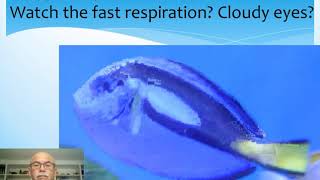
Hello. Today I will talk about fish food and fish disease in Part 7 about CryptoCrimeNC or marine ich on the marine aquarium fish. I will also give specific info for the reef aquaria. Here we see a blue tang with the white spots between the corals. And I hope you to let understand today what you can take as actions a diseased fishes marine egg. Well, first of all, perform a good examination. In this case, try to determine first the cause of the fish disease. It could be fluctuations of the temperature that the parasite can start to become an infection. A cold raft through open windows or doors, too much ventilation, air conditioning, a bad thermostat who doesn't work anymore, or a lack of quarantine stress. All factors that can cause the parricide to become an infection. But certainly make a correct diagnosis. To avoid mistakes. You or an expert should try to use the microscope because this can help you to identify the disease. We will talk about medications in combination with a functional food and that can be recommended for you to have a good treatment. But first of all, ask yourself questions and look for the cause of the disease because it could be problems around the water quality, the functioning of the aquarium, what is the history of the fish. Therefore, I do mention the carantine and the parasite Ache can be in the water or can't be introduced by new fish. Therefore, a caratine is a necessity to avoid many problems. New fish should be kept for at least 20 to 28 days in a small aquarium with the seawater, the same as your home aquarium. So he learns to live in the new environment. In that time you can watch it. And at that time you also can improve the immunity of the new fish with the help of prebiotics and probiotics, like for example from our Dr. Badzli or biffish food professional care helping your fish to become strong because he might have been traveling a long way and going through a lot of stress. So you can help him to be ready to be juiced in your home aquarium. And when necessary, during the carnitine you can see a problem appearing. You can apply antibacterial or antiparasitic treatment, especially against marine acornodinium because difficult to treat. In the reef aquarium, for example, fresh water baths are very useful during that time because then you can remove the pericytes just to dip for a few minutes in a fresh water with the same temperature and Approximately the same pH. The time you can put a fish in the fresh water path depends on the kind of fish. Can be a one minute for a very Flat fish or a few minutes or longer, much longer for a much rounder fish, like a peculiar clownfish. This results in healthier fish and much less risk of disease. Of course, important to know that when you had a good purchase of a conditioned fish, that prevents many problems. So make sure you buy from a good aquatic store. The most common marine fish disease is Cryptocaryum or Marine ich. As you can see on the picture here, all the white spots are all marine. Ick. What is typical on this Zanculus? You can see easily the below the white spots on on the black color pigment of the fish, but not on the yellow band because it's not detectable. But the white spots are there but not seen on this yellowish bar. Marine ich must be checked or detected in the first early stages of the disease. When the first symptoms appear, like on this powder blue tank, you see the few spots here and here and here. So this is the time you really must catch on to start treating the fish. But first of all, watch out. White spots are not always cryptocurrency. Here we see above here the white spots on this angelfish, its Lymphocystis, a viral infection like on this Cartaphagus. There is no treatment for this, only helping the fish with a good immune system by feeding with pro and prebiotics. And here is Oodinium on this Heniochus butterfly fish. Very fine white dusty spots. And here the few white spots or specks into the fin of this angelfish is caused by worm larvae, so looks like egg but cannot be treated like egg. So Cryptocaryan is not always easy to see. Here we see this powder blue, this Paracanturus dory blue tang. You see him. Respiration is very heavy and very fast. So the fish is somewhere suffering from. He has cloudy eyes here, but you can see now when he turn this, you can see the white spots on the black part of the body, the dark blue part. So watch very carefully because this must be treated as soon as possible. Cryptocaryon is also in the gills. You saw it on the fish with the heavy respiration and is moving around this parasite and is causing damage. This is Cryptocaryon. In a microscopic observation, The parasites cause damage, especially in the gills. And that is the cause of death of most of the fish which had an infection of Cryptocaryan. So to apply a good treatment, it is important for us to learn about the 70 day cycle of the parasite Cryptocaryum. At stage A, the trophans, that's the white spots we see on the host, on our fish, they remain on there a few days, three, four, five days, and then they drop off. And within a few hours they are on the bottom and they start to multiply and reproduce to about 200 babies. Terrans that can be released and go reinfect the fish in the aquarium. And this happens during the night at dark. So that's the stage here where we'll talk about we can try to control by our actions, which we can take. This whole cycle takes about seven to 10 days, depending on the temperature. Here it's a scale of 25 degrees Celsius. But the warmer the water, the quicker the cycle will be. But we can take actions. The first action we can take is learning about the new Dr. Besler anti ich method. It's the combination of a medication, an anti ICH medication you can get from the pet shop like Farnamor and Protomor, and that kills the juvenile parasites, the ones who are moving to reinfect the fish that you can kill with medication. And then you can add on an extra Dr. Basler Bifish food metrine that makes the mucus of the fish parasite resistant so that the egg does not adhere or will not infect or will be expelled. So a combination package medication and food. The use of Dr. Basler Bifish with metrine to help to control the marine ICH is a new type of functional fish food with granulated food that is freshly coated with plant extracts from the plant sulphura supplying the metrine. It's called in Chinese kushen. And that changes the mucus so parasites do not adhere or or are repelled. It looks like an anti mosquito illusion. This is interesting to use during quarantine period as a prevention plan. It's very commonly used for exporters and importers so they avoid the problems to occur on their fish. Scientific studies prove the function of the metrine as antiparasitic. So the parasite Crypticarion can be controlled by the application of the sulphura plant extract. And the study shows when the metrine is in the food, the fish will have less parasites. Nearly half of the parasites are remaining on the fish after medicating with the food with metrine. And the losses in particular are very low. Here is a high survival rate when the food is applied with metrine and there is no food with metrine. And after a few weeks the fish all died off with an infection of Cryptocaryan. So science help us to learn from this. There is a supplementary scientific study done on Sophora that it improves the immunity or Resistance against bacterial infections here against Streptococcus agalactice. Improved immunity. The Dr. Basleer anti ick method talks about the medication and the food that helps to control the egg parasite. And also actions we can take with temperature filter, UV siphoning and light. And I explain that in detail where we can control and help to control and help the fish to survive an anti ich or cryptocaryan infection. So the treatment of cryptocurrencies. First of all try to do it in the early stages. And special food like biffy food. Metrine changes the mucus so it controls or repels the parasites. Make sure you feed during minimum 12 to 20 days and use no other food so the food will be more effective. You can combine this with fresh water baths, lowering the salinity to 1015 depending on the original. Treat with anti ache medications such as Farnamor. But follow carefully the user manual because usually retreatment will be recommended for reef tanks. I will explain this further on, but again, like I said before, look first for the cause like a temperature fluctuations or stress if you control that first. It's important to do that because it's no use to do a treatment when you did not control the cause. What else can you do? Raise the temperature a few degrees so you speed up the cryptocurrency. But watch out for sufficient oxygen. Leave the light on for 24 hours. Best done during the first days so the cryptocurrency will not reproduce. And reinfect with baby cryptakariotomide so it remains on the bottom. And that time you can siphon the bottom and remove manually the parasite. You can do that two times a day so the carasides are removed. You can also filter with an ultra fine material smaller than 300 mut that removes cryptocurrencies. Also UV GR controls the spreading of the cryptocaryon. Other action you can take, put the intake of the filter 5 centimeter above the bottom so it sucks away the cryptocaryon. All things you can do for the advanced stage. The gill damage occurs and usually secondary bacterial effects also occur. And an antibacterial medication might be necessary to administer like Veromor or Ectomor from a cordial muenster. But sometimes it can be too late to treat in that stage. So our help is different factors like temperature and filtering and siphoning. Particularly when the parasite is at the bottom, we can remove it and we can control the baby parasites here which are reinfecting the fish going back. And that's the stage we can have an impact with medication, UV filtration and the use of the Dr. Besler biofish food. Now, for the Reef Aquarium, the Dr. Basler anti method explained for that case is of course the use of the Dr. Basler biffus wood metrine with the plant extract from Sephora. So it causes the cryptocurrencies not to attack, so it's repelled. And also this food contains probiotics paleococcus for a better gut flora. It's a better immunity important to feed only this food during 20 days. And this treatment can already be sufficient to cure the fish when applied during your early stages. So your fish will be healed and no medication is necessary, no further losses. What else can you do? Leave the light on for 24 hours, specifically in the first days. So the Cryptocaryon does not release the baby Cryptocaryan tomides. So this can of course is causing a stress to your corals. But sometimes you have to take a risk to remove that parasite. Siphoning the bottom two times a day to remove the minolated parasites. Raise the temperature a few degrees to speed up the cycle. It also can give stress to your corals or invertebrates. So you might have to add air filtering with ultrafine material to remove the cryptocurrencies. Installing a UV filter. Installing the intake of the filter just above the bottom. That sucks the way the cryptocurrencies all excess. You can take also a medication like protomor from acquarding Muenster. Can be effective in the beginning stage, in the early stage of disease. And it's safe for invertebrates. You want to have more info on fish diseases? Well, try to obtain my book. My newest book, just published a few months ago. About diseases in marine aquarium fish. The causes, the symptoms and the treatments. You are responsible. We are responsible when we keep fish. And I hope my information today helped you. Thank you.