Gerald Bassleer reviews a study of Neobenedenia, a skin fluke infecting marine ornamental fish. Researchers found it in 40 of 47 fish sampled at a Brazilian retailer, with about half carrying pathogenic bacteria. Treatment options include praziquantel baths or freshwater dips, plus better quarantine practices.
Chapters
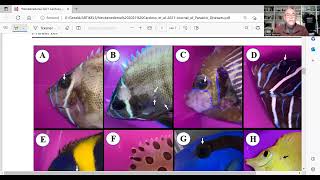
Hello, dear fish keeper, Aquarist and those that want to learn something more about fish diseases. Today I will present something different. As you know, I usually present something about fish diseases related to fish food or what fish food can help you. Lately I've been giving a lot of fish disease cases, the ones I studied during my work as a fish doctor. But what I do as a fish doctor is also reading about new publications, studies done on fish diseases and what people do to cure the fish. And that is due to my work by looking and searching on the Internet, what publications have been brought forward. So today I will show you one of the first ones I want to show with you. It's not a very recent one. It's about one and a half years old from an old student of mine, Pedro Cardoso, which is a veterinarian which I trained in Sao Paulo some four or five years ago, in the way of how to look at fish diseases, how to examine in a practical way and an easy way to help a fish importer, exporter. And now he's become a fish specialist and studying fish diseases and writing good publications. So I will show you today his publication and I will highlight the findings he publishes in there that can help you in understanding fish diseases and solving some problems. And this today is about a parasitic infection in marine fish. About Neo Benidinia. So I'll show you my. My screen that I show you the. The text which is laying here in front of me. So the Neo Benadinia can be found in reef ornamental fish pieces and they were studied at a retailer in southern eastern Brazil. Presumably it was Sao Paulo. And the possible role of a mechanical factor of bacterial infection. That means that they also can cause bacterial infection. So I highlighted here in yellow what I particularly want to show to you from this study. Wild fish frequently carry pathogens which could induce diseases after the stress of capture. And Neobenidinia is a platylmint. Well, it's a monogenetic kind of trematode. It's a platylmint that mainly attaches to the skin and the eyes of the fish. It provokes dermal inflammation, epidermal loss, skin depigmentation and reduction in the number of the mucous cells and consequently decreased mucus production and declining immunological barriers. Of course, that's a risk of getting other infections after this worm infection, a skin fluke we can call it. Also, this is part of the abstract, the monogeneum agent. Here the specimen was collected from the eye of each of the 40 fish analyzed to evaluate Possible bacterial, secondary infectious. But a total of 47 fish were examined and on 40 of them they found these kind of worms, these kind of flukes. And then they used the multi tof Ms. Identified method that 50%, 59% of the monogenia collected from the eye had bacteria and including some are pathogenic to the fish. And this led to belief that, that the ectoparasite can be possible a mechanical vector of pathogenic bacteria for fish culture and maintenance. And they discuss also the use of prazicanthal as an antiparasitic agent in the treatment. So this is about the abstract which I gonna give you the most highlighted points which I think is important for us. And when we, when we deal with ornamental fish because when we deal with ornamental fish we deal with diseases. And this particular case on a marine fish is some parasitic infection which seems to become more common than it was five, six years ago. Why? Because of lack of quarantine, because of the crowding of fish, the stress involved. So I will discuss further the results which are presented here in this, in this paper. Well, many fish, of course marine fish are dealt in an industry. And we find out that stressful environments such as high stocking density, poor sanitary conditions, low water quality, biofouling transport stress and thermal stress can lead to an animal, to the animals immunoglogical suppressant. That means weakening of the resistance of infections. So the fish become more prone to get infectious. And this can act as a predisposing factor for secondary infections. And particularly we will talk about bacteria here. The parasites has a direct life cycle and is an oviparous hermaphrodit that can produce by self fertilization. So they don't need male, female, they don't need eggs, they just are oviparous. Just the eggs are born directly from, from the fluke or the worm. So they don't need a host, they don't need eggs to get the stages. So in other words, one single Neo Benidinia can lay eggs and then disseminate the parasite to other fish. So it's easy to create infection in, in a, in a community aquarium, an inch aquarium. So I'll go further on and here I show you some of the the pictures which were presented in the article. You can see here the worms in the eye here, the cloudy eyes, which is the cloudy spot on the dorsal here. Another picture of the Neobenidinia fluke on the eye. And here's another one here we see the patches on the sea here. And that C also has of Course, a risk of showing the parasites here also in the eye. Here also in the eye, the blue tang and here the Zebrasoma. The yellow tang also has some flukes or neobinidinia. And when we go further in the details, here are the list of fish where they found all the flukes on. See, there are 40 different fish. And what was obvious here that the yellow tank had about. Well, let's see, make it a little bit smaller. Had about an average of 10 flukes or Neo Binodinia of the body. And the blue griddled angelfish, pomacanthus navarcus about 20 neobinidiernia. And here the other angelfish, the as for had about also 20. So there's quite a few worm infections were going on in that system there. So in the discussion here, I will close up here this presentation that in that shop the first clinical manifestations appeared in the angelfish, the Pomacanthidae family. And many displayed eye and fin opacity signals. And this situation was observed in the navargus and the asphalt, which presented opaque eyes and fins and higher main intensity value. The opacity is caused by damage and inflammation in the epidermis induced by the hapter. That means the hooks or the fixation structure of the that fluke, that worm together with the parasite overlapping in the tissue and infection by opportunistic bacteria. And the bacteria they found were Acinetobacter johnstonii. And they found a kind of Pseudomonas patida and Envibrio species. And those are known in the literature. They are pathogenic to marine fish and might have a high lethality rate. And here we see that high magnification of that Neo benidinia. And here we see it at 5 millimeter size, how big it can be. And here we see that heptor at the right. Here you see the hooks. That is causing of course the lesions. Well, there therefore eliminating the monogenians. It is a monogeneous which causes damage to the of the animals at the receipt of the fish. That means when the fish are imported is a control of action to prevent infection, dispersal and losses due to opportunistic bacterial infections. So the things you have to do when you import fish, you have to take actions to clean off those neobinidinea. These flukes, imported fish are often weakened and have a low immune system which can lead to the disease and the death. So you have to strengthen also those fish because they are weak because of the transport, the handling, the unpacking, the acclimation. Well, yes, you know, we recommend for that or Dr. Basley, a biofish food to help the fish. But also here in this case, a treatment is necessary to eliminate the risk of these flukes. And there are several options for a treatment. When you see this pericytes appear and they find out that the bath with Prazikanthel and a dip freshwater dip region showed high efficacy against adult forms with few side effects and large safety. That was a conclusion of the author. Of course here that on the results they concluded that feces can be affected from the wild and they can arrive in the retailer. And the monogenins or the neobinoderic can carry also pathogenetic bacteria, you know, the Acetynobacter, the Pseudomonas, the Vibrios, which can contribute to secondary bacterial infections due to injuries caused by the parasites hooks or heptor and the role as a mechanical vector. These results emphasize the importance of current time early diagnosis and treatment to control and prevent diseases and death in aquatic animals. Further studies can be seen here. Further studies have been done. Sorry, these are recent studies that the author used and further studies can be done to understand more about this problem. So this is the article I wanted to share with you. You can review it and look for the reference. I put it also in my link below where you can find this article back when you start looking on the Internet. So I hope this kind of presentation I give you in this short YouTube video on a fish disease study might help you and I will give you some more in the near future. So stay tuned to my channel, subscribe and you might see more studies presented by my work on my YouTube channel. Thank you for watching.