Study nr. 10 The risks of antibiotic residues in aquarium water on the health of our ornamental fish
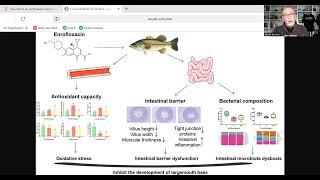
Gerald Bassleer reviews a study on enrofloxacin, an antibiotic, in aquarium water. Juvenile bass exposed to the drug for 30 days showed stunted growth, damaged intestinal linings, and disrupted gut bacteria. After medicating fish, do large water changes within 48 hours to remove residues.
Questions this video answers
270 largemouth bass
Approximately 8 grams
0 µg/L (control), 1 µg/L, and 100 µg/L
30 days
100 µg/L = 0.1 mg/L, which the speaker equates to about 10 mg per 100 L
Chapters
Hello. Dear aquarist, Dear fish keeper, Today a short review of a study that has been done on the availability of residues of antibiotics left into the water in the aquarium water what kind of effect it can have on the health of the fish. It's something important matter that I want to present to you because it means you have to take good care after the treatment that you have no leftover residues in the according water of antibiotics. It might have a negative impact on the health of your fish. So the link of the study is here below and I will share here my screen so I can present you this article that has been published in the Science Direct. So it's about the effects of endorofloxacine exposure on responses to oxidative stress, intestinal structure and intestinal microbiome community of the large mouth bass micropterus androfloxacine is also called bitril. It's a commonly used antibiotic into control for bacterial infections. And abstract to say well, we want to evaluate this study says the effect of the endorofloxacane antibiotic of environmental concentrations. That means low concentrations, what effect it has on the largemouth bass. And 270 largemouth basses which had an average weight of 8 grams were randomly divided into three groups and separately exposed to zero enterofloxacine. That means that's the control group 1 microgram per liter and 100 microgram per liter. Androfloxacine and 100 microgram per liter means 0.1 milligrams per liter. So that means if you administer the same thing as 10 milligrams per 100 liter according water, which is a very light dosage or a leftover after water change because we usually apply between 30 to 50 milligrams per 100 liter. So that's about five times more than what is left over. And this residue of antibiotic androfloxacine was left for 30 days to see what effect this has on the growth performance, the oxidative stress on the fish on the intestinal microbiota structure and the inflammatory response and structure of the intestine. And it was found that had a negative effect? Yes, it says here at the end, taking together exposure to androfoxacane inhibited the growth of the fish and influenced the intestinal health and induced dysbiosis of the intestinal microbiota. That means that the microbiota the gut flora was not doing well and had a deformation in culture of bacteria. And I show you and explain you this this graph here and that explains a little bit the summary of the study which you can find in detail here below that feeding androfloxacine permanently into the water with a small leftover dosage. That means very light dosages, even small dosages had an effect. And the more dosages there is left, the more residue of antibiotic is left in the water, the more the impact is on the health of the fish. So you have to do a proper water change after using an antibiotic treatment. And I don't talk about yet about the risk of antibiotic resistance that can be created by leftover residues of antibiotic. This means get rid of the antibiotic into the water at least within 48 hours, completely water changed and do expose the fish on a long term treatment with antibiotic in the water. I see sometimes company putting a lot of antibiotic in the water and leave it there for weeks. This is terrible, terrible for the fish and terrible for the risk of antibiotic resistance. Here it was discussed and studied for the antioxidant capacity. So that was lowered due to the impact of the antibiotic into water. The intestinal barrier, well, it was dysfunctioning because there was a lot of problems in the villus. The height and the white and the thickness all went down and the functioning and inflammation was getting worse and the the junction of the protein was getting smaller. So all things that had a problem in the intestinal wall and also the bacterial composition changed drastically. Well, those are some summary of the details which tells me that you have to be careful by applying an antibiotic and that you do a good proper water change afterwards and only leave the medication of antibiotic in the water for maximum 48 hours. See my books where I explain the use of antibiotics and do a good water change and at the same time think about restoring the gut microbiome of the fish like we do for humans after antibiotic treatment. Give them pro and prebiotics. I would recommend that to use in our Dr. Basley buy fish food where I have always probiotics into it into the food. The paediococcus that help to restore the gut flora and helps in the digestion and help in immunity and the defense of the fish. So I hope this study helps you a little bit to understand how to use antibiotics in the best way and to do good water changes. That's what the study tells me. If you have any remarks or questions, please put them down below. I would like to discuss with you your experience. It always helps us to become a better aquarist and to take better care of our fish. Thank you for watching.
More from Gerald

Sick Dwarf Cichlid Apistogramma. See link complete video. #fishdisease #apistogramma #Cichlid


Fish disease case nr. 365 Tankraised Apistogramma borelli with bacterial infection and few tubercles

Corydoras catfish worm infection. See link complete video. #fishdisease #corydoras #catfish catf

Fish disese case nr. 364 Wild Corydoras concolor with Camallanus and other worm infections


Fish disease case nr. 363 Wild Cardinal tetra, Paracheirodon, with worm and bacterial infection

Fish disease case nr. 362 Sawbwa with gill flukes, Nematodes Capillaria and bacterial infection


Sick Golden Orf with Dropsy. See link complete video #fishdisease #GeraldBassleer

Fish disease case nr. 361 Golden Orfe with dropsy or ascites due to bacterial infection

Fish disease case nr. 360 Apistogramma with 3 different parasites and tubercles in the organs

