Study nr. 14 Streptococcus bacterial infection in tropical fish: diagnosis, prevention and control
Gerald Bassleer reviews Streptococcus infections in tropical fish, caused mainly by S. agalactiae and S. iniae. The bacteria spread through water and feces, survive up to a year in sediment, and kill up to 80% of infected fish. Prevention includes quarantine, antibiotics, vaccines, and reducing stress through proper temperature and oxygen levels.
Questions this video answers
April 25, 2024.
Nathan Weisbrod (article author).
Streptococcus agalactiae and Streptococcus iniae.
24–30 °C.
Up to 80% mortality.
Chapters
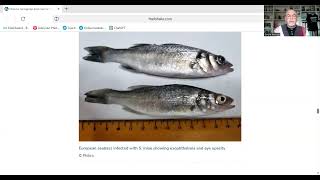
Hello Dear Akarist, today you selected a study that I want to discuss with you. It's about a Streptococcus infection in ornamental fish like tilapia or many different species which are cultivated or collected from the wild. So we'll discuss the findings from this fish health expert who published an interesting article which might give us good ideas how to properly manage Streptococcus infections. So I will share you the article in my in my screen here and what it can help you to understand what you can do with this kind of outbreaks when you're dealing with particularly me dealing as a breeder or as a fish farmer or as an importer or exporter of this kind of disease outbreaks. And it's about the Streptococcus agalactica lacti or inia. Well, sometimes different to pronounce but are the two most common devastating bacteria to impact the warm or tropical freshwater fish farming sector around the world. And that can lead to 80% mortalities. Here we will describe the bacteria. Well this author which is Nathan Weisbrod from Israel, he describes the bacteria, their impacts and how to ensure that their presence and impacts are minimized. So what can you do about it as a fish keeper, as a fish farmer, as an importer or exporter. And here we see a tilapia with a typical case of this redis exophthalmia of the eye which is well hemorrhagic symptom which is here in this case identified caused by Streptococcus. They are gram positive bacteria, they can be cultivated at the laboratory. You can do work on that. I give you the link below of the article so you will can study it for yourself in detail. And it has been known that Streptococcus inia can infect the people, the people who have immune compromised problems. Patients that have immune deficiencies when they handle the fish, when they have a wound or something like that. Of course it's with many diseases where you have wounds you have a risk to get an infection. Even working in the garden you have to be careful when you have a wound, to be careful yourself when you're immune compromised. You have to take care of yourself coming in contact with products in the nature. The problem is with this disease that this Streptococcus agalactiae has emerged as a major pet again in culture. Tilapia oreochromo species in Asia and in Latin America and in South America. The animal worldwide monetary loss due to this patagon was originally underestimated to $100 million. But China alone accounts for about 40% of the global tilapia production which is nearly 3 billion US dollar. And the Chinese producers have reported losses of 30 to 80% due to the Streptococcus galactica galactae. Assuming an annual average loss of 40% that equates to about a loss of $1 billion in China alone. Can you imagine the risk with this disease that you can identify also by those hemorrhagic wounds at the mouth, at the head, at the gills? This is our typical signs of the Streptococcus. Important to know that the transmission can be horizontally. That means through contact with the water. With newly introduced fish as being a source of infection. The pathogens can also persist in the sediment or in the water for about one year. That doesn't mean it can become an infection. I explain that quite often it only means when the fish are immune compromised. Meaning when you're weakened, in bad condition, stressed. Of course there's always some pathogens around, but it can survive these patagons sometimes. It's interesting when you have a fish farm and you had an outbreak of Streptococcus and the pond has been cleared. Disinfect the pond and and then you will be but safer. Of course there is also the fecal oral transmission that particularly when there is dead fish who died from the Streptococcus are eaten by the other fish. Well, it's a very important factor that you eliminate those dead fish, particularly this bacteria. Streptococcus is transmitted through the gastrointestinal epithelium. So it's the gut system is an important part to how the bacteria can invade the fish and also to the gills, the skin of the fish. It cannot be ruled out. So the removal of dead fish and proper water management. I'll explain that further on in this article. Is very important to avoid the transmission. The other part is vertical transmission. That means that Streptococcus can be suggested that it can be transmitted to eggs through the fertilized eggs. And that is the same thing I discussed in my presentations on Mycobacterium. That the motor fish gives the bacteria through the eggs and passes it on well to the next generation. And it's difficult to control. You might think about disinfecting the eggs, but it's only outside you can external disinfect and not internal in the eggs. So it's important to explain later on that you have a good source of fish. Well, where is Streptococcus be found in 27 fish pieces so far, including tilapia. I'm sure it's many more species in ornamental fish industry but not described yet in scientific literature. Both its pathogens are affected, the wild fish also and the farmed species in fresh water, brackish and marine water. The etiology of this disease? Well, stress is often the major predisposing factor of this disease. I explain that quite often that stress is the most important factor in my opinion that this can induce outbreaks of Streptococcus but also of many other pathogens here. In this case, Streptococcus particularly Streptococcus do well in high temperature waters, 24 to 30 degrees Celsius, in high salinity and high alkalinity. And when there is low dissolved oxygen amount and high fish stocking density, in high feeding rates as well as good harvesting practices should be installed. You know, poor netting and poor handling is a, is a big risk of causing these, risk of diseases. But I think you know when you're dealing with fish and I explain that quite often in many of my presentations on the causes of fish diseases. Well, these are all stress factors and of course also parasites. Parasites like hill flukes, skin flukes, white spot disease can also induce this pectoral infection like Streptococcus. You can see the exophthalmia here in a barramundi fish. Typical sign here in this case for Streptococcus. How can we diagnose how we can see the clinical signs in general, the fish becomes lethargic, they swim erratically or in a spinal fashion and they have well, other signs, particularly like exophthalmia. Popeye hemorrhagic eyes, they have hemorrhagic patches in the body, they have oedema fluid in the peritoneal cavity. In the intestine they have a pale liver, a dark red spleen. They have red wounds at the jaws and the caudal parts. Sometimes the fish don't show any obvious external signs before dying, but they are eating less. They're becoming anorexia, you can say wasting away. When you do histopathology you see necrosis and, and granulomatose inflammation in the organs like the kidneys. That's some part you can find this bacteria particularly bad when you make culturing. Here it is, you can do culturing and coloring with gram positive cocky in the chain. The diagnosis of the infection of you can use different methods. Well, this is laboratory methods using agar plates, you can use the API streps which is quick diagnosis which Is not always perfect, but which is a quick diagnosis that can help you to identify. And of course it's interesting that you do this testing in the laboratory because you also can do sensitivity testing. So prevention and control strategies. It's well, that is a fish health management plan. You have to do sound fish husbandry measures including biosecurity. Maintaining good water quality and proper nutrition. Particularly high stocking density is a big risk. Extreme heat, like we said. Introducing non fish which didn't have any carantine or eggs which came from a bad source. Those are all risk that it can well come a risk that you have an infection occurring in your. In your brood stock here. European sea bass with exostomia. The chemotherapy. Well, antibiotics can work. You can find it out when you do sensitivity testing of the cultures you produced at the laboratory. And that within a few days, three, four days, you or sometimes 48 hours you can find the proper antibiotic that works perfectly on your fish. Of course, just implementing antibiotics is not recommended. You should have good guidance from a fish doctor or veterinarian to what antibiotic is being used. And in many countries antibiotics are not allowed to be used. It's very restricted. Vaccines are becoming more popular and particularly the vaccines. You can read it in detail. The vaccines made from dead bacteria are the most effective ones. And it is known for mankind. Also when we use that virus material and incubate it in a vaccine, we have the best immune reaction, the most protective action. And the ones which have a modified vaccine or genetically modified from a virus is less effective. Not so good long lasting. And you have immune escape risks of the virus. We learned that from the COVID 19 vaccines. And here we can learn it from the fish vaccines that particularly the use of dead viruses like the old fashioned vaccines do properly good work in protecting the fish against reinfection. That doesn't mean vaccines like here this article says it's the 100% safety. They still can have a risk that the fish can be becoming infected afterwards with streptococci which are less resistant or more resistant I would say against the immune system of the fish. But it can prevent disease and mortality. Certainly it's a way to look for the new ways we are looking for. And I talk that quite often in my presentation is the use of probiotics, prebiotics and symbiotics. The probiotics are bacteria that improve the microbiome, the gut flora. So the gut has the very good protection against the invading the bacteria. So that the gut is eliminating that bacteria is not infecting the fish. The prebiotics help the gut flora to well be well developed, helps the growth of the good bacteria. And the symbiotics have an action of combined probiotics and prebiotics. And those are all available as nutrigaments. You can implement into the fish food like beta glucans are very helpful and very widely used like we use in our Dr. Basler biofish food with paediococcus as a probiotic and beta glucans as a probiotic, sorry, a prebiotic mannan oligosaccharides are used as. How can I say, synthetic compound, which are very practical and should be used and you can incorporate in the food. Ask your food supplier, those things are available. The most promising part for the people who are dealing with breeding tilapia or ornamental fish is that you select the good broodstock which is has a disease resistance. Because a resistance against disease is universally heritable. Which means that there is an enormous potential for selecting fish with improved resistance for key diseases. And there are a number of current methods followed for selective breeding for disease resistance and aquaculture. And these include family selection, mass selection and hybridization to prevent that this, like this barramundia has this kind of terrible infection. And of course a very important factor you deal with daily. That you have good fish health management practices and that you follow basic rules like biosecurity to minimize the risk of introducing an infectious disease or spreading it into the facility. Separating the nets, disinfecting the nets, putting the new fish in quarantine or the fish which are sick. Isolate the tank or the pond put in quarantine. Do good water quality management. Check your water levels, the temperature, the to proper water changes. Maintaining of the filter to good farm management. That means your activities which implemented to the staff that they have void to use to avoid stress on the fish, that they do the proper handling of the fish. Feeding and feeding management. I continue to tell that in my presentations that overfeeding is a terrible thing. Particularly in ponds. You don't see the leftover food on the bottom of the pond that is causing enormous pollution and enormous stress on the fish and causing a risk of bacterial bloom. And also the use of good food that is well absorbed, that has nutrients and avoiding excessive waste. So this explains what you all can do as measures. Read the article below, give you the link that you can help in disease prevention and in control when you do the proper measures. So I hope this study helped you to understand bacterial infections here. In this case Streptococcus, which is well, a devastating gram positive bacteria easily controlled by antibiotics, which should be selected through to good sensitivity testing in the laboratory. I hope this study helps you to understand something about fish diseases and what you can do about it. Thank you for watching.
More from Gerald

Sick Dwarf Cichlid Apistogramma. See link complete video. #fishdisease #apistogramma #Cichlid


Fish disease case nr. 365 Tankraised Apistogramma borelli with bacterial infection and few tubercles

Corydoras catfish worm infection. See link complete video. #fishdisease #corydoras #catfish catf

Fish disese case nr. 364 Wild Corydoras concolor with Camallanus and other worm infections


Fish disease case nr. 363 Wild Cardinal tetra, Paracheirodon, with worm and bacterial infection

Fish disease case nr. 362 Sawbwa with gill flukes, Nematodes Capillaria and bacterial infection

Sick Golden Orf with Dropsy. See link complete video #fishdisease #GeraldBassleer

Fish disease case nr. 361 Golden Orfe with dropsy or ascites due to bacterial infection

Fish disease case nr. 360 Apistogramma with 3 different parasites and tubercles in the organs