Study nr. 16 Worm infections in wild fish Geophagus, its relation to food source, season, location
Gerald Bassleer examines parasitic worms in wild Geophagus cichlids from Brazil, tracking how diet, season, and location affect infection rates. Fish that eat more detritus carry more nematodes. Diplostomid parasites depend less on what the fish eats and more on whether mollusks live nearby.
Chapters
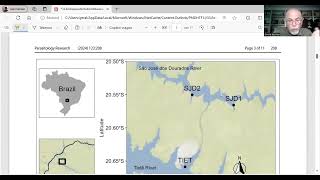
Hello, dear aquarist. I'm happy you follow again. Another study which I discuss and present to you because I received them as scientific reports and it might be interesting for you to understand some fish diseases that occur in our aquarium. Fish and today is about the South American cichlid, the geophagus. And it's about the endoparestitic helmint fauna and the diet related to the gyophagus. In rivers of Brazil. That means worm infections, internal worm infections that are related to the diet and the living conditions of geophagus. And it's interesting to understand why those parasites are available, how do they appear and what kind of seasonal influences are there. So this study was focused on non native host fish, the geophagus in that particular area to characterize the diet and the worm parasites patterns in the invaded areas. Investigating spatial and seasonal possible difference of those parasitic infections and correlating with the host diet in the river systems. Here in detail explained. Well, I will give the article below. You can see the link. You can study it for yourself. Interesting. It was that it was two worm infections that were studied. The metacercaria, the trimatode, ostrodo, diplostomum. So diplostomin is a very common variety of metacercaria. And I discuss that quite often in my fish disease cases. And also the larvae and the adults of a nematode, which is a kind of ascaris rapid ascaris. So these are the two kind of worm effects that were discussed in this study. And the details in the study they could conclude at the end that the detritus and the aquatic insects were the most consumed items by the geophagus and the detritus. Detritus is like the compost leftover that is laying on the the bottom of the river or the lake or in your aquarium. Maybe also the consumption of the detritus is positively correlates with the nematode abundance. That's where they get the eggs in the detritus. They get the eggs from the nematode. The findings indicate that factor so as artificial channels. Because one of the studies is related to artificial habitats created by water dams. And also that the influence of rainfall like in the rain season can have an influence on the resource, resource resources availability. That means that certain worm larvae or eggs are available depending on the season. Because it depends on the kind of food that is available. And that has an effect on the diet of the fish and the potential influence to the structure of the parasitic community. That's a general what is explained in the abstracts. I will not go in detail on all the factors which might be interesting for you, so you can read for yourself the article, the introduction says that the availability of the food resources and biological and physiological aspects of the host can influence the relationships between parasites and hosts and consequently change the parasite infection patterns. These studies have been done before. You can see four things here mean references here. Well, that means that. That it's already known that that has an impact on what kind of parasites can appear on your fish. And the host diet is one of the main determinants of the number of parasite species and individuals to which it will be exposed. So it all depends on the diet. So for instance, if you would give frozen or live food, it means you give a risk that the number of parasites species can appear in your fish. That's why I always tell to be cautious about giving frozen or live food to your fish. And these studies have been published before. The endoparasites transmitted via the food chain is predetermined by the food preferences of the host fish. Yes, the fish might have certain interest in certain kind of food. Well, more likely that you will also get the kind of parasites which are available in the diet. So it depends on the habitat use and available diet resources along the aquatic zones. And can directly affect the infection patterns of exposure. So that all depends what the fish is eating, where he's living. This always determines what kind of parasite you will get. So more details in the introduction here I will not discuss the study area. I will show the map later on where the study has been done and how the. Well, more details of the data are collected of the worms and of the fish food. Here is the area. It's not far away from Sao Paulo. You see two river systems here, two river locations. And here another location at another part of the river, the J River. They call this part here. So all scientific names, which I will know or difficult names will pronounce for me in Brazilian language. I will not go in detail of the sampling and data processing or the data analysis. I just will say that I will talk about the results and give you the most important details. And that of course, what food is the galvagus consuming? Here are the three different habitats, the two different rivers. And here the Teti, where the fish were in a kind of artificial environment due to a dam construction in the water. You can see the details on that. And even that geophagus was mostly eating aquatic insects. Hieronymidae, that's you can call like mosquito larvae and detritus. Those were the main food in the Diet, which are nearly about how we'd say about 80, 90% of the diet. And you can see that the diet changes in the dry season and the rain season in that particular part of the river. In the rain season there was hardly any aquatic insects, there were hardly any Hieronymia day, but there were a lot of detritus available in that part of the river during that time. A little bit different in that other part of the river. You could see here still a higher abundance of aquatic insects and a higher abundance of Hieronymi day and still also higher abundance of detritus. So detritus was much higher in the rain season in all the four different parts hit the Taiti part of the river system. Less aquatic insects in the rainy season, more in the dry season, less heatonomy day and again a high abundance of detritus because the detritus seems to play an important part. That's what the study finally will conclude and I'll explain you in detail. Here are the two different parasites that are infecting the gphagus in rain and dry season. And you can see here, that's the Beta cercaria, the Diplostomum. And you can see here that during the dry season there is a higher abundance and higher abundance in the dry season. Here is another one of this fish parasite, but hardly different with the dry season, the rain season, hardly different. We would say it's a little bit more, but it doesn't change that much during the whole rain season or dry season. And that has to do with the way this parasite, the Metasarcaria is distributed. And it's distributed because it's a little larvae that swims away from a mollusk. Seems to be that the mollusk or the little shells that are carrying the parasites are distributing larvae that swim around and infect. So it doesn't matter, those mollusks are always available. But the big changes in the in the askaris variety, the Nema toad, that in the particularly in certain seasons like here, in the certain seasons like the rain season or rain season, there's a much higher abundance. Totally. It will conclude at the end that in the rain season there is a lot of influence of the risk of the parasite Ascaris to be infecting the fish. So there is a positive correlation, that's what the discussion includes of the askaris and the consumption of detergents in all temporal observations. And the highest prevalence and main abundance values of this parasite is in the one particular sample area where the detritus was the most consumed item. Corroborated this assertation. So that means the beneficiaries depending on the detritus to have a food has more likely a risk to eat the eggs of this ascaris, this nematode. So you will more likely be infected by this. The predominant conception of detritus by the geophagus also explains the higher prevalence and more abundance of the ascaris nematode. And during the rain season in the teat the other species supporting or predicted that the variation of the host diet may influence patterns of transmitted via the trophic chain. It may change it because it can have a little impact like the details say in this spatial and temporal changes in the attributes of the El Mint fauna or the worm fauna of gfagus were reflected by a corresponding D shift from aquatic insects to detritus. So think about it. In the detritus in the river particular seasons, it's more abundance of this kind of food available and the fish will look what you can get. I explained that in my what kind of food the fish will need. I explained that in detail in my presentations in my YouTube channel that you will understand that the fish has a need to eat fish and doesn't know how to select. It just has to select and has no chance to look for something else. He has to take what is available. The absence of association between the abundance of the a compactum that means the compactum is the metacercaria and the food items may be related to the life cycle of the parasite which infects its host through the active penetration of cell carrier released by the infected mollusk. So that has nothing to do with the feeding, it has to do with the availability of mollusks in that area. So it's a quite different parasite that will be available all season around which we could see that during with the details presented previously. In conclusion, the availability of resources may drive the spatial and seasonal changes in the diet of the G and influence the structure of the endoparasite, the nematode or other worms community. And that's why you have to be reasonable in your thinking. When you get wild fish, you get wild diseases depending on the river, where they collected, what season, what kind of diet. They have its rain season over its dry season. So you might have a complete different kind of infection that is going on during the collecting of the fish. And it might appear during your acclimation of the fish, because during that time, well, the fish might be weakened due to transport, weakened due maybe secondary bacterial infections. I explained that quite often. So think about it. Worm infections are quite normal to get from wild fish and a way to control is maybe be careful when to collect or always use a good guarantee procedure thinking about kind of worms can appear on your fish. Thank you for watching and I hope this teach you also an interesting lesson on how parasites can appear on wild fish, depending on the habitat, the season, the kind of food. Thank you.
More from Gerald

Sick Dwarf Cichlid Apistogramma. See link complete video. #fishdisease #apistogramma #Cichlid


Fish disease case nr. 365 Tankraised Apistogramma borelli with bacterial infection and few tubercles

Corydoras catfish worm infection. See link complete video. #fishdisease #corydoras #catfish catf

Fish disese case nr. 364 Wild Corydoras concolor with Camallanus and other worm infections


Fish disease case nr. 363 Wild Cardinal tetra, Paracheirodon, with worm and bacterial infection

Fish disease case nr. 362 Sawbwa with gill flukes, Nematodes Capillaria and bacterial infection

Sick Golden Orf with Dropsy. See link complete video #fishdisease #GeraldBassleer

Fish disease case nr. 361 Golden Orfe with dropsy or ascites due to bacterial infection

Fish disease case nr. 360 Apistogramma with 3 different parasites and tubercles in the organs