Gerald Bassleer summarizes a Brazilian study by veterinarian Pedro Cardoso that examined parasites in ornamental freshwater fish from five Brazilian states. The study sampled 333 specimens (48 species from 10 families) collected between November 2018 and March 2019 and found high parasite prevalence (70.6% of fish infected). Parasites were mainly attached to gills (47%) and scales (43%), with ~9% intestinal. Fortaleza (a major producing region) had notably lower infection proportion (~23%) attributed to better indoor facilities and biosecurity. The video emphasizes stress, poor handling, and inadequate water management as drivers of parasite outbreaks and calls for improved farm monitoring, industry-wide hygiene, and further molecular studies to refine parasite identification.
Questions this video answers
333 specimens.
70.6%.
48 species from 10 families.
November 2018 to March 2019.
About 47% on gills, 43% on scales (skin), and ~9% in the intestine.
Chapters
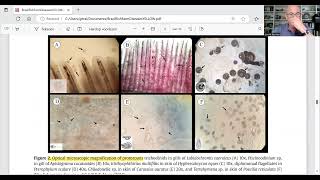
Hello. Dear AIST or fish keeper, Today I will show you a fish study that I received from a Brazilian veterinarian, fish doctor Pedro Cardoso, which published an interesting, interesting article on the diseases of farmed fish in Brazil. So I will share you the study and I will have highlighted the most important things I want to share with you. In this study. It's about the parasitological diagnosis in ornamental freshwater fish from the different fish farmers of five Brazilian states. And let me emphasize, it's only about parasites, it's not about bacteria, because bacteria should be interesting also to find out, because that's the most common problem in ornamental tropical freshwater fish. And this is originally published in Brazilian language, but I here have the English details I share with you. So highlighted the yellow parts which I really read out for you. The abstract of this study. This study aimed to research parasites in 333 ornamental fish from five Brazilian states, Sierra, Minas Gerais, Sao Paulo, Varana and Santa Cantarina. The fish were sent from eight fish farms located in the municipalities of Fortaleza, paratosino do Murillo, so Francisco, etc. Etc. You can read it for yourself because below I will give you the link. All the fish received were anesthetized earlier to euthanasia procedures and and after the search for parasite, it was verified that 70%, sorry, 70.6% of the fishes were infected by at least one type of parricide. Being in total 12 types of parasites that were identified. Monogeneous, Digeneid, Metacercaria, Sestodes, Nematodes, Lernia, Trichonid, Pisinodinium, Ichthyophtherius, White Spot, Diplonomat, Flagellates, Ichthyobodo, Helodonella and Tetrahymena. And the proportion of infected fish among the farms is compared through the statistical test. Besides, animal handling adopted in each farm is also discussed the importance of ensuring fish health in order to make the ornamental freshwater fish industry economically viable and reduce losses in production is highlighted. Well, as a fish doctor, I can only agree that is in most tropical areas so important when you start farming fish in outdoor facilities or indoor facilities, that it is important to discuss what is the best practices you can do. And that's what we here discussed in this article. Also we can say in Brazil that it's important to discuss the fish and the fish industry. Because 2.8 million houses have something to do with or with with a pet and as fish keeping as a fish, as a pet, 20 million houses. That means at least 20 million aquariums are in Brazil and the main producer of fish is Minas Gerais. It is a tropical area with a lot of outdoor ponds and and the intensification of aquaculture in in Brazil because of the higher demand, because of the 20 million households who keep fish. Well, the intensification of aquaculture is responsible for the occurrence and the dissemination of parasitological diseases. As the result of an imbalance between host parasite and environment, which raises disease outbreaks ratios. With intensive fish farming, stressful situations may occur causing an imbalance of of this triad. The imbalance may be due to excessive amounts of ammonia or nitrite or high amounts of nitrate, low dissolved oxygen, water eutrophication, lack of control of the water temperature, frequent ph imbalance and inadequate handling of the fish. This is all causing a stress and making fish susceptible to infectious and parasitic diseases. Well, you can see in my presentations on fish food and fish health, how important is it to avoid stress on the fish? And here you can see it's the stress that it's causing that parasites come onto the fish. So the lack of correct hygiene handling practices and failure of proper water treatment equipment installation cause severe sanitary problems because of inefficient pathogen control. The monitoring of fish health status must be one of the most important activities in farms, wholesalers, stores and importation and exportation holding facilities. So that's important for everyone who deals in this part in the chain of the industry, from the breeder to the exporter, importer and even the pet shop. Well, in November 2018 until March 2019, during one year, 48 species of ornamental fish freshwater fish were studied. And there were came from 10 different families. And in total 333 specimens were collected. So let me go further down and give you some other data. These are the families which are discussed. You know, Tetracichlids, cobidity, the carp, Cyprinidae or the goldfish, Roricari, day rainbow gouramis and live bearers. And the results I will go right away down. You can read more details in the article which is the link below. Because most of the fish examined in the study were parasitized in totalizing 70%, 70.6% of infected specimens and about 47% of the parasites were on the gills, 43% on the scales, so outside of the body and 9%, nearly 10% were located in the intestine. So that was in general the conclusion and the findings. And here we see all the details of the parasites, ichthy of the Ichthyo Bodo, the Monogeneans and all that. And this shows some Nice pictures here. Here you can see the. The metacercaria and the gills. And here the clenostoman type trimato as white yellow crop on the fish. You know, the. The internal worms, here the nematodes, here the car and here outside the lernia or the hookworm. So that is things which were all observed in the fish. And if you go further down here we found all the gills, the different kind of parasites, you know, ich or trichodyna, tertahymena, helodonella, etc. And here we see the proportion of infected fish in each municipality analyzed. This is the Fortaleza area. And I've been lucky. I visited three large fish farms in Fortaleza about two years ago. And you can see the incidence of infectious of proportion of diseases were much less in Fortaleza than all the other areas which were examined. And this is mainly due because I see in Fortaleza it has more indoor facility, it has more adequate control, more biosecurity, more knowledge, more experience, et cetera. That makes a big difference in its found. So the producing region, Brazil, particularly Fortaleza, had the lowest proportion of infected fish, only 23% while the other ones had 60% or 50%. So it's a big difference. So to discuss and finally that the results demonstrate there's a great diversity of parasites currently affecting the ornamental fish from Brazil. From the main attached to the gills and the skin, that's the main of them. So they can easily be detected, observed if everybody takes the proper measures. Well, as a conclusion that we can say, or the article says that ornamental fish commercialized in Brazil have a high infectious ratio. Yes, I've seen it in pet shops. I see that wholesalers that there is a problem to have healthy fish and that so many fish coming from the local fish farmers causing a serious problem. So luckily this moment there is a lot of works going on, a lot of more input from universities, particularly the University of Natal. There is a specifically training course on ornamental fish culture and about the prevention and the control of fish diseases, where I'm part of it to give education on examination and fish disease control. So because this conclusion, this study was that it is necessary to improve handling and maintenance of the fish and in the field in wholesaler facilities and in the pet stores. So in the whole chain, not only the breeder, but also the wholesaler and the pet stores. And I showed in. Showed in this study a few fish presented signs of infection when they were in the farm. So it looked like on the first glance of the Fish that only fish didn't suffer with seriously, but they start to affect even though that they had or they had no parasite or very little. They might not have developed any clinical sign, but they were diseased and the disease was of course increased in infectious ratio when they were stressed and transported and coming to the distributor or to the pet shop. Therefore, the monitoring and treatment of diseases in the farms where the problem starts. It's essential to prevent the spread of diseases in the aquatic trade chain in Brazil and to prevent a from abandoning this hobby due to decrease on the availability of healthy animals. Yes, I've seen it as a problem that a hobbyist complain in Brazil about. Well, the poor fish which are available, which are cheap and available from the fish farms in Brazil, but the lack of quality. So more detailed research, including the use of molecular biology to identify parasites that can affect a range of ornamental fish threshold fish is necessary to enrich this initial study. In addition, this study can serve as a basis for new research that has a more adjusted design. So more ideas will come up in the future. Because I learned from this study what they can do. And I can recommend also to read the acknowledgments, I mean the references. And particularly Pedro Cardoso, which is one of my students which I trained in Sao Paulo. He published interesting publications and studies on diseases of ornamental fish, freshwater and marine. So that I can recommend. Of course, there are also other interesting articles. So this is a study I made of this publication on about the ornamental fish farming industry in Brazil. What problems can be, but also what we can learn from it. So stay tuned and be informed and subscribe. Subscribe. Oh, it's this. Subscribe to my YouTube so you can learn more. Thank you for watching Muy Obrigado.