Study nr. 35 Evaluation of 5 years phytotherapy in aquaculture; References Dr. Bassleer Biofish Food
Gerald Bassleer evaluates five years of using medicinal plants to treat disease in farmed fish. He discusses how herbal medicine works for fish health, the regulatory hurdles it faces, and the development of his Biofish Food product.
Chapters
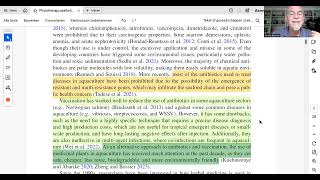
Hello Dear Akarist, welcome again to one of my studies of fish diseases or fish solutions. Well, maybe this is the first study that you are looking at that I try to present some well input on published material that might interest you as a hobbyist or you as a breeder or importer, wholesaler of ornamental fish. And many people know me because I'm dealing with fish diseases, diagnosis, prevention, how to treat and while some studies are interesting, like this one on phytotherapy, that means the use of plant materials for the disease control and aquaculture. We get our information mostly from aquaculture, food, fish aquaculture, because that's where the money is at. It's where people can get sources and resources or funding to try to study interesting material. And this here is a study done, a review of five years study which is long a five year study done on what is used as phytotherapy in the control of diseases and aquaculture. And I will give the link of this study here below of this large study. It's a big paper so I will not give everything. I will emphasize what I think is interesting for you to point out to you and if you look for certain solutions or certain products, please go in detail in the PDF that I will give you in the link below in the description. So the abstract explains that intensification of aquaculture practices brings about disease outbreaks resulting in high mortality in farmed species and great economic losses. Everybody who is dealing with breeding wants to avoid economic losses once they avoid avoid losses of fish because that makes the risk that you lose your business. So healthy fish is what makes your profits in order to prevent huge economic losses. Various types of antibiotics have been used for the treatment of infections and the frequent use of those synthetic antibiotics leads to an increase in resistant pathogenic bacteria against those antibiotics and also have a risk of water pollution or residues of antibiotics leaving behind in the water. That's why the herbal medicine appeared to be an alternative for hemotherapy replacement due to its characteristics of being eco friendly, having a high tolerance in animals, being less toxic to the environment. The current research on the use of phytogenic compounds to combat some pathogens that cause diseases in aquaculture raises great worldwide interest due to their capability to act as immune stimulants, antibacterials, antioxidants, antiparasites and antiviruses. So this paper reviewed the last five years on the usage of herbal medicine in disease mitigations, their mechanisms of action, the effectiveness of various dosages and routes of administration during the application in several several Aquatic species. The potential toxicological effects observed during the application of medicinal plants also were discussed. Yes, sometimes overdoses or wrong application can have an impact. Like with any medication. Too much Malachi Green. Too much of everything is bad. They only did this study on five years results. Well, there are more interesting studies before 2019 published. And at the end I will show you my references that I used to develop our Dr. Basler biofish food with the application and the use of nutrikements or phytotherapy through the fish food. That means adding on ingredients from plants, extracts, pure powder or algae extracts. Everything that can help for the fish health, prevention and control. And I explain that one of the problems we see currently in the industry is. Well, we are looking for medical treatments. The problem is they're not all allowed. There are regulations prohibiting some of them to be used. And we are one of the companies Basler Biofish that had to take off Dr. Basler Bifish food matrine from the market in Europe because it's a medicine medicine must be registered by the food safety authorities. That means you have to pay for a big study at University for 50 to €100,000. And then you might maybe get an approval that it can be put into the food. Well, think about big pharma controlling this big money game. But anyway, let's go to this article about the use of antimicrobials is governed by laws and policies, but also herbs. I tell you also the herbs will be controlled that you cannot commercialize anything that is working good for the fish, forget it. But as you as a breeder, you can use it, buy it at your supplier and mix it in the food. You can help your fish, but you're not able to sell it. Most of the antibiotics, when we're talking about antibiotics used to treat diseases in aquaculture have been prohibited due to the possibility of the emergence of resistant and multi resistant genes which may infiltrate the seafood chain and pose public health concern. Well, not only the seafood chain, the food chain. And that is something that happens when too much antibiotics are used in the wrong way. Just as a prevention, without any control of bacterial infection. That better water management would be the best prevention to avoid bacterial infection and good food practices. And too much use of antibiotics, well, is of course a risk that it has an impact. Vaccination. They also talk about vaccination that it can reduce the use of antibiotics in some aquaculture sectors. But they explained clearly by studies produced by other specialists. They are below. In this study, like this one from Professor Y. There are some Drawbacks in the use of vaccines because there is a need for highly specific technique that requires a precise disease diagnosis. The problem is to diagnose a viral infection where most of the infection aces is against viral infection, some also bacterial. It needs to have a proper laboratory diagnosis. And also the cost of producing a vaccine is very high and they are not very useful dysfunctionases for tropical emergent diseases or small scale production and have a long lasting negative effect after injection. This is what the article says. They can have a long lasting negative effect after vaccination. And that's what a lot of people don't talk about it while just giving vaccination it will help preventing diseases. Well, we learned it from the C19 recent vaccination programs that it has long lasting negative effects. The reports are coming out, thousand scientific studies are already on the market talking about the negative effects of some vaccinations, not all of them. But that's why we need proper studies examination. At the same time, vaccinations like for fish, they're also ineffective when there are multi agent infections where co infections are frequent in aquaculture. Well, we know in ornamental fish that when there is a bacterial infection there is usually sometimes the cause of parasites like gill flukes. Gill flukes cause damage at the gills and a risk of infiltration and infection by bacteria coexisting infections. The same for skin lesions. Sometimes you see a heavy Columnaris infection which is due to the parasite Ichthyoboda or Kostia causing skin damage and the infiltration of the bacteria which are always around in the water. So if you have poor water conditions, dirty water, high bacterial load and paraxito that vaccination will not help if we don't prevent it. And take care of water management and proper care of your filtration. But still, let's go on this article here further it says that alternative approach to antibiotics and vaccination is the use of medicinal plants and has received much attention the past decade because they are safe, cheap, less toxic, biodegradable and more environmental friendly. A lot of interesting things to think about. Unfortunately Big Pharma doesn't like it that you use plants because it takes away their income of selling vaccines and drugs anyway. Well, the activities of medicinal plants and their mechanism of access is explained what it all can do and for instance a growth promoter. I don't go in detail and some plants really help the growth of the fish of course, helping the immunity, helping different factors. It's explained in detail. I will not go in detail up for you to look for it like the use of. Well, many different sinks. Allium yersinia. Control of bacterial infections, we can call it. I will not go in detail. You read it for yourself. It can be used as an immunostimulant and an antioxidant. An immunostimulant is a substance that increases the ability of a defense mechanism, thus making living organisms more resistant to infection and disease. This is something I worked very hard on since 1995 in producing a fish food like our Dr. Basler Bai fish food forte to help the immune system of the fish that is usually weakened. Particularly I was a wholesaler importing fish and the fish were weak due to transport handling stress. And we have to help the fish to overcome a risk of infection by making the immune system stronger so it has more resistance to infection and disease. I will go in detail, tell you more later on about it. Well, more topics that phytocomponents, plant materials can be antibacterial, antifungal into food, into the water. Different actions are possible. Read it for yourself in detail. Depending on what you need and what you're looking for. It can be used as anti parasitic against protozoa, against worms, everything. So many different products are here explained from the last five years. But I used for Dr. Besley Biverfoot studies which have been done 20 years ago, which are still very valuable. Unfortunately, they are not discussed here like white spot. I have new ideas here. What Zingiber can do about it. Well, look at it might be interesting. And Melaleuca is here used, which is a leaf extract used also in commercial medications in the pet shop antiviral. Currently, the majority of viral diseases I culture are not treatable by drugs. Let you know. Viral infections cannot be treated with drugs. You only can. How can I say? Make sure that they don't attach to the membrane or to the cells. Yes. So think about it. Against a virus you cannot treat with a drug, you can do some disinfection and control the aquaculture environment. The results are not encouraging. According to several researchers, medicinal plants may engage in a number of mechanisms before exhibiting their antiviral potential. That means suppressing the virus, making the fish immune, you can say, or more protective against viral infections. This is explained in this article. You read it by yourself. What it can do not only for fish, but also for lobsters and shrimp. Because there is a lot of viral effects. Also there the technology of application of the medicinal plants and aquaculture. Well, mostly commonly used are powdered plants. There's plants which are finely grinded as powder and also ethanolic extracts. That's the two most important parts are used in aquaculture also. That's what we are using. And here they are all explained in detail. I will not go in detail for you. It's up to you. But you can select from this article. The solutions with concentrated bioactive molecules may somehow display toxic effects on the treated fish. That means the ethanol extracts because they are concentrated molecules oils, certain oils can be a risk. So the use of dried powder plants is cheap compared to extracting them. But they end up having low biological activity due to the presence of indigestible and anti nutritional compounds. That's why you have to select the powder plants which had shown to be beneficial which we used. And some of those plants here in this article also explain they really work well, not all of them will work because they're not having the good elements in their in the compounds. They are having also anti nutritional compounds in the powdered dried plants. So you have to select the ones which are doing the right job. I'll give you the references later on what we used for our Dr. Besley Baifish food There are a variety of ways to administer medicinal plants to aquatic life, including injection, bathing or immersion. And oral essential oils are normally dispensed via bathing or as dietary supplements for aquatic organisms. We see now in our ornamental aquatic industry that essential oils have been produced for commercial medicines for fish. Yes. And proven to be effective. Think about it asking your pet shop or aquarium shop. Herbal extracts in powder form are typically given orderly by mixing with feed pellets. Oral administration is the most practical and favorite method, particularly in extensive aquaculture. Because it's stress free and suitable for fish of all age sizes. Yes, that's why it's most commonly used in aquaculture. And that's why I also produced the biofish food. Because as a wholesaler importer I needed to make a practical easy administration of a product that helped the fish health. And some products putting it in the water were not taken up by the fish. The only thing is the fish have to eat. If the fish don't eat, they have another problem. Then you have to look for the medication in the water because the food has a potential good health product. But when it's not eaten it's not taken up. But it's mostly used as prophylactis, most as prevention, as diseases, as taking care of the health of your fish in general. The toxicological studies of medicinal plants in our culture. Yes, Numerous studies have indicated that plant extracts can have a toxic effect on aquatic organisms, if an overdose has been taken, well, that's with everything. Too much sugar, too much salt, too much Coca Cola, too much alcohol, you call it. And there are studies. Well, still many studies are lacking. We don't have enough funding to do a lot of studies. But there is a risk when giving too much of the extracts too much of the food is something different. That is very little risk. Conclusion and future directions Medicinal plant treatment is recognized as an alternative against disease with little adverse effect. It requires the establishment of safe concentration or dosage for administration. That's the only thing it has to be studied well, particularly when you use concentrations like extracts and adding it to the water. Herbal medicine products need to be standardized globally and comply with the drug regulatory framework. Well, I have my questions here. Who is gonna determine that herbal medicine needs to comply with what? Currently, European food safety authorization is really under control of Big Pharma. And I don't like that. Plants which you take out of your garden or you buy in the shop and you make it in a fish food and you sell it. It's not allowed, but you can use it. Think about the products you can use yourself when you are a fish breeder. But herbal medicine products, they will be severely controlled in the future. I wonder who's going to allow what and who is going to be the expert to. Well, to say. Well, the study which is done by Professor Gotto on the use of matrine and oxymatrine in the food has a very beneficial effect in the health of fish when they have a white spot infections. Not accepted by European Food safety authorization. Well, this professor supplied something which is a risk that it can have a negative active effect because the matrine in the water can be toxic. You have to prove it. You have to study that. Well, it has been experimented for more than 12 years, you know, aquaculture with great success and also by many hobbyists who bought our Dr. Basler biofood matrix. Well, tell that to the European Safety Authority. Don't accept that. They just are bureaucrats looking at their sponsors, which is the Big Pharma Medicinal plant feed supplementation may greatly improve fish health and their survival rate. Yes, but it's not yet all accepted by the food safety authorities, unfortunately. Okay, the article is here below and I want to share with you another article. It's about the references which are available on our website Baslier.com I will give you the link also below and it explains all the different studies references that I used to know. What can I test? Because all the products were test for six months for mortality, survival rate and anti disease control. Some general books I listed here which you can buy. Nutrition and fish health is a very good book by Lemon Webster but there's many other articles. I wrote several articles and that but about the Probiotica paediococcus. There are many interesting articles published. Forte yeast extracts better glucans together with vitamin C Very helpful in helping the immune system of the fish. The use of matrine studied in two studies by Professor Gotto 2015. Two studies have been published for control cryptocurrencies in two different studies. I also made several publications on that. Not allowed in Europe anymore, but still outside of Europe. Check with aquarium minster, they are still distributing and producing it. Aloe vera known as a good repair for tissues. Garlic, good for the microbiota. A good response for well making sure that there is a difficulty of parasites like flukes to attach or even control of spiral nucleus. Garlic has many different potentials. Chlorella, a functional ingredient A good algae. The herbal treatment which is well treatment. The herbal mixer of Menta thymus, mugwort and stellaria chickweed as a mixture which I recommend to use where you don't know what's going on and your fish are suffering. It's a very good mix for people who are importing fish in a way of controlling the health of the fish when they have a disease or viral or bacterial infection. It's a mix of herbs. Acai, very good to health for the fish. Particularly because it came from freeze dried berries from the Amazon and has. Well, a lot of. How can I say. Potential of giving strength to the fish, power to the fish. It's a red bull for the fish. I would say pumpkin to be help Pumpkins for anti worm help together with medications. I will always say my fish food or like pumpkin is not medication. It's a help Try always combine a medication. But you can use it as a preventative. Then you don't need to have a medication preventative when you suspect that the disease might pop up or you have experience with it. Grapefruit seed extract. Antibacterial Moringa, very broad leaf, particularly for algae eating fish or green eating fish. It helps particularly in the skin and the gills. The mucosal immunity, the mucus protecting the mucus. Lapacho while it's known to be used in the Amazon against internal parasitic infections. And also known as for fish diseases like spironucleus hole in the head disease. Hexameta big help for cichlids. Discus cichlids Foucault an extract from Fucoedan which helps in the control of bacterial infections. It's explained in all these articles here. The professional care and the treat is a mix of products, particularly for the professional user. And for the Lori Cary day there is some recommendations. Well, I shared you my personal references which are available free to look at at my website. I give the link below. So I hope this gives you some insight in the use of medical plants and looking at large study from the last five years and looking all references. Maybe some things you can use. You can mix yourself when you are a breeder aquaculture program with ornamental fish that certainly interest you on a large scale. Or buy your Dr. Basley biofish food which has the perfect mix of good proteins, vitamins and medicinal plants. Thank you for watching and your interest to take care for your fish.
More from Gerald

Sick Dwarf Cichlid Apistogramma. See link complete video. #fishdisease #apistogramma #Cichlid


Fish disease case nr. 365 Tankraised Apistogramma borelli with bacterial infection and few tubercles

Corydoras catfish worm infection. See link complete video. #fishdisease #corydoras #catfish catf

Fish disese case nr. 364 Wild Corydoras concolor with Camallanus and other worm infections


Fish disease case nr. 363 Wild Cardinal tetra, Paracheirodon, with worm and bacterial infection

Fish disease case nr. 362 Sawbwa with gill flukes, Nematodes Capillaria and bacterial infection

Sick Golden Orf with Dropsy. See link complete video #fishdisease #GeraldBassleer

Fish disease case nr. 361 Golden Orfe with dropsy or ascites due to bacterial infection

Fish disease case nr. 360 Apistogramma with 3 different parasites and tubercles in the organs