Study nr. 4 Mycobacterium marinum and tank granuloma: case of 66 year old man badly diagnosed!
Gerald Bassleer reviews a case of Mycobacterium marinum, a fish-tank infection, in a 66-year-old man misdiagnosed for seven months with carpal tunnel and polyarthritis. The infection caused nodules on his hand and forearm and required prolonged multi-drug antibiotics including clarithromycin and rifampicin before clearing. It's rare in the US but spreads through contaminated water entering wounds.
Chapters
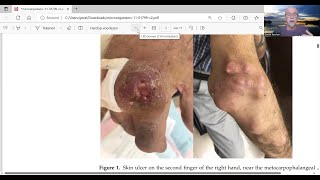
Hello dear Akarist fish keeper or the ones who are interested to hear something about Mycobacterium fish tuberculosis and the risk of a zoonosis. That it can have an impact on mankind, that it can cause lesions, wounds. So I will discuss a study and present to you what I've read and present the facts that are shown in a case of somebody who became sick from dealing with fish. And as a consultant I'm someone who does precision guesswork based on unreliable data provided by those of questionable knowledge. Well, this might not be questionable knowledge, so it's can be discussed. But I show you the study that I came along and we will evaluate the most important issues about a case of Mycobacterium marinum. A case based narrative review of the diagnosis and treatment. In the abstract I highlighted the most important parts in yellow. I will give you the link below of this article so you can go more in detail if you want to learn more or you want to explore more details about this person who became sick from fish. Tuberculosis, mycobacterium skin and soft tissue infections caused by non tuberculosis mycobacteria. Yes, those mycobacteria from fish are non tuberculosis because tuberculosis is a human tuberculosis. Here we talk about fish tuberculosis which is something different than tuberculosis. They are occurring more frequently in the recent years. Why you suspect more in the recent years? Because we have more aquarium fish and more people keeping fish. And that is really going up in the years. And that's also beats studio more more evaluated by laboratories than by doctors. However, the chronic skin and soft tissue lesions present a challenge for clinicians. Yes, for doctors. As the diagnostic work up. Work up. You know the diagnostic work you have to do and to make a definitive diagnosis require knowledge and available laboratory resources. That's why mistakes are made and that's why I present this article that the diagnosis must be correct. We present here a case. So I discuss here the case of a 66 year old male patient who presented with painful abscess like nodules on his right hand and his forearm which worsened after treatment after an antibiotibacterial treatment. Acknowledging the complexity of diagnosing and managing infections by non tuberculous mycobacteria. So in this case, especially Mycobacterium marinum which is common in our aquaria, we provide a review of current epidemiology, clinical characteristics, diagnosis and management of that Mycobacterium infection. So I will go more in detail so I start how to introduce this problem. The investigation of chronic skin disease is always challenging for a doctor. Or a clinician or a nurse. Especially if an uncommon infection is suspected or the patient is immunocompromised, that means his immune defense system is weakened by any reason, by a disease, by medication, what else? In this case, or in that case, the difficulty in reaching a diagnosis is not unusable because of the need for biologic specimen acquisition, the nature and the microbiology characteristics of the implicating pathogens and sometimes the special laboratory equipment needed for an accurate diagnosis. Mycobacterium arena is a rare cause of chronic skin and soft tissue lesions. So I repeat, we're talking about here a zoonotic disease, but it's rare. I will tell you at the end how rare it is. But this infection is is very rare. And because of the lack of experience and the lack of studies, there is making a lot of failures in diagnosing correctly some matter if you have encountered this, that it's in the beginning wrongly diagnosed until the problems did not heal. So I wish explain this also here in this case, see most cases of human Mycobacterium renal infectious are limited to the skin. Although cases involving deep tissue and systemic illness have been described especially immuno immunocompromised host. So that means that the people who are particularly having a problem with immunity or defense, having these six sick by other diseases, they most likely can catch this kind of infection because their defense system is weak. I noticed in the past people who are drinking a lot of alcohol, people who have heavy smokers are more pronable to catch this disease. So those are the accurist I sometimes encounter. I ask them, well, I have been uncareful in my life. I've been not living healthy. So you're more probable to catch a disease like this. The treatment can be challenging and usually consists of a two or three drug combination. We will explain that later on. And here in this case we talk about a 66 year old male patient. He was referred to the department for evaluation due to painful nodules on his right hand and forearm. And the patient reported no systemic symptoms, no fever and denied pulmonary or gastrointestinal symptoms. He also denied recent travel and reported no animal contacts, no chemical or no erosive agent exposure and no sick contacts. Well, talking about no animal contacts, you'll be surprised later on. Listen further on. He had contact with aquatic. So here I show you well how it looks like. It looks terrible, you know, this is already advanced. This person came in too late. That's where it started. He had a wound here and then it goes up to the Lymph nodes here in the elbow. This is advanced. This takes months. This is not going for one week. This takes many months to develop in this case. And when you have a wound and you're an agorist, you have to take care of a wound like we do when we work in the garden. You disinfect, you clean. And if you're getting serious, you go to the doctor and you just tell the doctor, hey, I'm keeping aquarium fish. Let us think about mycobacterium fish tuberculosis. And let's do a proper examination in the laboratory, because most of the laboratories can do it. But I explain what we found here. In this case, this person present illness began about seven months ago when he was accidentally injured on the fourth finger of his right hand while he was cutting a diseased palm tree. So people were thinking, well, here he had a wound caused by cutting a diseased palm tree. He reported that the wound healed quickly, but later developed a painful ipsilateral hand swelling. He received empirically a short course of antibiotics consisting of these kind of glamin without improvement. So they applied to treatment because they thought, well, an bacterial infection without any proper diagnosis. They just give them a broad spectrum antibacterial treatment. And it didn't improve. So two months after the initial injury, he consulted orthopedic surgeon due to the swelling on his right hand. And the patient was diagnosed with carpal tunnel syndrome. Yes, which is something else for which he was operated. That was two months after he had the injury and the patient was diagnosed. Then consulted a rheumatologist who diagnosed polyarthritis. So he had arthritis and prescribed corticosteroids and other drugs. Again, no improvement. Why? Because not real. The problem was examined. What is the wound? Take samples and send to the laboratory. It's look at that. That's a three doctors who make a bad judgment of the case. And during the next months, with all the drugs received and three doses. Well, three months, no deals and the right time. The deformer extending up to the elbow, it progressed, although all the treatments was given. So the disease increased because was not properly diagnosed. And some of the les automatically drained purulent material and fluid specimens were sent for microbiological biologic examination, which could have been done earlier because of the wound at the finger, the first wound. The problem was with this diagnosis, the gram stain and culture were negative. But the acid fast stain revealed many mycobacteria like organisms. So it revealed the. The PCR test for Mycobacterium tuberculosis was negative. Yes, because this was not Mycobacterium tuberculosis. This was another type of bacterial because the institute had not test available. So the doctor did not send the sample to a correct institute. Then he was admitted after months to a hospital and was started a combination of antimicrobials for non tuberculosis mycobacteria causing skin and tissue infections. So they were thinking, well, let's treat for Mycobacterium that people can get for the fish. And initially he was giving, you know, the Imipinim, the cestin intraven intravenously introduced in combination with calithromycine orderly and later on doxycycline and amicacine were added due to the slow response. So the first response was not good. So they give more antibiotics, five antibiotics. While re examining the patient's history, he recalled. So listen, he recalled that an artificial pool containing fish was located around the palm tree he was cutting. So that means there was a suspicion now, after many months, about one year of Mycobacterium merinum infection was therefore highly likely. Although the culture remained negative. Yes, they have to make a culture of it. The antimicrobials were switched then to a Tambito and claritomycin and the initial sample was sent to a reference laboratory. Yes, a reference laboratory. That's a laboratory who knows to deal with zoonotic diseases. For instance, for whole genome sequencing analyzed, which revealed the Mycobacterium marinum. The culture became positive after eight weeks in a medium and the PCR test revealed Mycobacterium ulcerant strains. However, epidemiologically, the strain was the least possible because of the extensive genomic similarity between Merinum and Ulcerans. The spismos was sent again for a whole sequence sequencing and the final analysis revealed Mycobacterium arenum, which was sensitive to all the antimicrobials tested. The clinical response was slow and therefore they used now rifampicin 600 milligram once daily orally was added to the treatment. Over the next few months, the patient has close follow up. The lesions improved until they disappeared and had no recurrence. He received triple therapy for approximately three months and then clarithromycin has monotherapy for another two months for a total duration of treatment of seven months. Much too late because a wrong diagnosis. Also the patient did not get right questions. Did you work with fish or with a pond? Have you have contact? So interesting in this article they also discussed the literature which exists on this matter and this might be interesting for you as a a There are some articles published and they are below. I will talk about it shortly and I report here a few items which I think could be interesting for us as aquarium fish keepers about the risk of a zoonosis. First of all, the Mycobacterium arenum infection is uncommon. It was first described as a zoonotic disease in fish back in 1926, so about 100 years ago. It's nothing new because mycobacteriums exist in nature. I have articles on that. I will show a YouTube link on Mycobacterium infection in fish, so you can follow that link below in my YouTube details. International the first human infection was reported in 1951. That was the first human infection. The first report of zoonosis. International Data concerning the incidence and the prevalence of the infection are limited. The estimated annual incidence in the USA we have data from that is 0.27 cases per 100,000 adult patients. So you know how small that percentage is. It's.000027 risk. It's needy like corona. Fairly small risk if you can die from it. Very small risk. Unless you're a patient that has immunity problems, for instance, or another disease. Okay, something else. Pacibacterium renum is acquired from fish bites or contact with contaminated water, fresh or salty, especially if the skin barrier is not intact. That means if you have wounds, you have major risks that the bacteria can get into it. So if you have a wound, well, you have to take care of that wound, protect yourself, disinfect, use soap after working in the aquaria, particularly when you scratch yourself. You have a wound, particularly when you clean filters, clean the aquarium. So as a result, major risks are occupational or environmental exposure, contact with fish tanks and aquariums, or injuries from tools or other equipment, for example, fish hooks. Involved in these settings in the literature to describe the Mycobacterium infection is like fish tank granuloma or aquarium granuloma is the most accurate. Well, exposure from working with fish is a risk. You have to think about the fish. The aquarium is a dirty water. It looks like clean water, but it's shitty water. It's water full of excrements and full with bacteria. Although you have a biological filter, it's a biological system and the biology has life items in it. And also Mycobacterium. So think about it. The great majority of human cases described in the literature, the Patagon causes skin infections and most commonly located in the upper limbs, especially on the hands and the arms, like we show here. It starts with the finger and then can spread later on. Infections occur in both immunocompetent and immunocompromised convidavilles, although the clinical course may be different. So not every case is the same. But when you have a root immunity it's more likely. So there's some articles at the back, I will show them. You can get more details from. And here we talk about the clinical course and the complications with this man of 66 years. Well, Mycobacterium arenium infection in humans is primarily limited to the skin compromising for clinical presentations. And the most common that means about 60% of the cases is the cutaneous form. So the skin lesions in this form infections present a superficial cutaneous skin or hand infection, usually papillonocular, nodular or the upper extremities involving hands and fingers. About 95% of the cases are just hands and fingers. One of my sons also had it because he had a mosquito bite and had a skin infection. I presented that picture in one of my books on fish diseases. It can start with a mosquito bite that you keep on scratching on, keep on scratching on. And of course that makes it probable to get the bacteria penetrating. In less than 1/4 of the cases it spreads to the lymphatic vessels so it can give nodules in the elbow. And that is in much lesser case, 25% because it has not been treated properly on time. Most cases of the infection are associated with aquatic exposure. 80% the hands and the fingers are most frequently affected. But 95% and the risk of infection increases owing to the higher exposure when handling aquariums of fish. So when you're a cleaner every day working with fish in a wholesale or in a pet shop or an exporter, of course you have more risk because you're permanently working in contact. So you have to be aware. In addition, this risk increases as low temperatures favor bacterial growth. The risk increases as low temperatures favor bacterial growth. I would say high temperatures because it's particularly in tropical waters that these incidences occur and not in low temperatures. This is my critical thinking about it. Particularly tropical waters. Mycobacteria is more available also in tropical fish more than in cold water Fish. Fish. Fish tank handling leads mostly to contain this form of action. Like I said before. In contrast, marine activities like boating or fishing, think about fishermen, if you go fishing, are associated with deeper infection resulting from puncturing wounds with the hooks. You can have also this kind of risk. Well, let's go further on. More details you can read in this article. Let me get through the End one Because there is so many interesting information here, but I expose you to the most important things now about the treatment and prognosis that it has been shown that prompt evaluation of the clinical presentation exerts a prognostic role and could dictate the optimal treatment plan. So that's very important, a good evaluation. The Mycobacterium infection is rare and as such no comparative trials of skin and soft tissue infections have been carried out today date so up to now there are no comparative trials. Well, you can imagine it's unusual to do trials in an uncommon infection to try maybe to infect people with mycobacterium to have a control group. Who's going to do that? Well, anyway, there is no comparative trials. The choice of an antimicrobacterial regime depends mostly on the choice and and the experience of the treating physician rather than on hand evidence. So your doctor I can recommend if you go to your doctor ask that he consults his friends or other doctors or go to a reference laboratory or particularly to a laboratory that works with zoonotic diseases or with faculty that has dealing with tropical diseases. Yes, tropical diseases. So he should consult other medicines medical or physicians in this matter if he isn't sure. So be critical yourself. You have a diagnosis with a wound on your hand. As long as you're aquarium keeper or a fisherman. There are no purpose transport randomized control tries Regarding the optimal treatment. So there is no optimal treatment. It is not clear which is the optimal treatment for immunosuppressed patients. Although interruption of the immunosuppression along with dual or triple treatment consisting of ethambutol and rifampicin plus another one like minocycline or dicus toxicycline seems logical. So that's something the doctors who know when you have taken already medication against your immunity suppression problem. There are some studies published here about patients across French hospitals or a study on patients 50 in Denmark and the references are below in the end of this PDF. In summary, no different conclusions regarding the optimal treatment regime can be drum until control trials have been carried out, which is difficult due to the rarity of the disease. So think about it. The zoonotic disease fish tuberculosis is a rare it's not a major scary issue with now everybody in the news tried to talk about in one health to try not to keep tropical fish because it's a dangerous you can get a zoonotic disease, it is rare and if everybody is well informed keeping fish and have a wound to take the good precautionary measures, it becomes even more rare. It's just better of information. That's why doing this, giving this information. Treatment duration is one to two months after the symptoms resolution. Treatments with a single drug regime can be administered in mild cases which involve only the superficial structure. So when you. You can treat the wound locally? Yes, you can use a nice doctor's advice. You can use like good. Maybe some antibiotic ointment or some disinfectant. So that can help. Either teptracycline or claritromycin seems reasonable choice for this case. Regarding combination treatments with clarithromycin or and together with intambital seems to be reasonable option. And the refampin may be combined with caritomycin or added to the above regime in patients with deep structured tissues due to its best penetration. So there are some suggestions that people have good results with. That's a good start already. Surgical evaluation and treatment should be offered by to patients with deep structure and extensive disease as an adjunct to antibiotic treatment. So sometimes you need an surgical removal of the the pus and the bad wounds to clean it. So most small ulcers, ulcers or nodules are self healed without treatment in the first one to two years. The prognosis of treated mycobacterium infection in immunocompetent pages is excellent. Treatment failure is uncommon. 5 to 13% is the treatment failure. And it's mostly due to deeper tissue infection and ulcerative skin lesions rather than to the antimicrobial resistance. It's usually because it's detected too late or too advanced. That's the reason why sometimes it's more difficult to treat. It's like with fish, you see too late to the infection, you start to act too late. It's more difficult to treat than to cure. Same for mankind. Skin localized infection often resolves after one to two and a half months of antibiotic treatment. So we don't do two months. You can be cured. Well, this man took a year to two years. In contrast, deeper tissue takes significant longer time, up to 18 months. Look at this man, what he had. I think it was about 18 months. It is evident that as the time to diagnosis increases, the burden of disease is greater. So too late detected. And this can result in repeated office visits, prolonged antibiotic treatment, repeated surgery with concomitant immobilization and the need of hospitalization. So don't get it come so far, take action. So to conclude, first it has depicted the importance of taking a detailed history so talk to the doctor. Explain you're working with fish in an aquarium and that you have a risk. In this case, the rates of clinical suspicion of Mycobacterium renum will correctly guide it to a good diagnostic workup because they know what to look for in the laboratory. And it has illustrated how demanding the laboratory confirmation of Mycobacterium marine can be. As classic methods may be needed to be coupled with novel molecular and sequencing techniques. Yes, we have good new techniques to diagnose in the laboratories. So despite a slow response to treatment, a combination of appropriate antibiotics are effective and most frequently result in a complete resolution of the even if potential extensive cutaneous manifestations so it can be treated it is rare. A proper diagnosis is necessary. Here are some four interesting references you can look up if you want to know something about Mycobacterium from fish to people so this is what I can conclude from this study as a consultant in my work I work with fish and I work with fish people in the industry and I sometimes notice they have a wound. So I try to explain during my training. Take care when you have a wound. Clean your hands after you work with the fish. Use soap. Disinfect your hands like you work in the garden. You do the same thing. You clean your hands before you go eating. You you wash your hands when you have a wound. You protect yourself. So be smart. But realize fish tuberculosis causing tank granuloma by people from our aquarium or filters the water. The fish handling is very rare, very rare and should not put our ornamental aquarium industry out of business or keeping you fish out of our hobby because it's a risk. Well, I tell you there may be more risk just by working in the garden. Thank you for watching. If you have any comments, please comment like my videos and follow my studies because they might help you to understand other problems and see my Mycobacterium video on fish diseases. Thank you for watch.
More from Gerald

Sick Dwarf Cichlid Apistogramma. See link complete video. #fishdisease #apistogramma #Cichlid


Fish disease case nr. 365 Tankraised Apistogramma borelli with bacterial infection and few tubercles

Corydoras catfish worm infection. See link complete video. #fishdisease #corydoras #catfish catf

Fish disese case nr. 364 Wild Corydoras concolor with Camallanus and other worm infections


Fish disease case nr. 363 Wild Cardinal tetra, Paracheirodon, with worm and bacterial infection

Fish disease case nr. 362 Sawbwa with gill flukes, Nematodes Capillaria and bacterial infection

Sick Golden Orf with Dropsy. See link complete video #fishdisease #GeraldBassleer

Fish disease case nr. 361 Golden Orfe with dropsy or ascites due to bacterial infection

Fish disease case nr. 360 Apistogramma with 3 different parasites and tubercles in the organs