Gerald Bassleer reviews a recent study (originally on human wastewater treatment) to show how biofiltration can remove waterborne pathogens and help prevent and control fish diseases in aquaria. He explains that biofilters function via attached microbial biofilms and that media with high surface area (activated carbon, zeolite, sand, sponges) enhance pathogen removal; indigenous microbes in biofilms compete with and consume pathogens. He maps wastewater-treatment methods to aquarium filters and recommends maintaining and protecting biofilms to reduce outbreaks.
Chapters
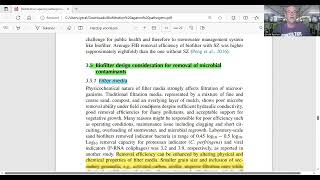
Hello, dear aquarist, welcome to this study on something else than fish diseases, but it's something about prevention of diseases. And I came across this study which might be interesting to understand how important biofiltration is for aquaria. So here in the back are many aquaria and I tell you biofiltration is so, so important in preventing and controlling fish diseases. So I'll share you this study, which was published recently and I discussed the different, how can I say different part of this study that I enlightened with yellow, so you can go through it for yourself. I'll give you the link below if you want to learn about the biofiltration technique for the removal of waterborne pathogens. Well, you know, we work with fish, they live in the water and the pathogens are many cases also waterborne, while sometimes they're in the food and they're in the fish. But it's here about the possibility that the fish can spread diseases to the others in the aquarium. And a biofiltration can be a good technique in helping removing of those pathogens which are swimming around in the aquarium water. And particularly the thing I want to pull out of this article is the biological property refers to the presence of various types of microbes and pathogens, especially viruses, bacteria, algae, protozoa, nematodes and insects and their protein propagus. Well, the other kind of types you can say, which can be eliminated by biofiltration. Waterborne disease refers to outbreaks or cases of disease of which pathogenic agents spread through the ingestion of water. Well, the lif fish inner aquaria ingest water or live in the water. And here they talk about the human excreta. Well, think about fish excreta here. The fish excrements, which can produce parasites like spironucleus used to be called hexameter or nematode worms or eggs or gill flukes or skin flukes, bacteria, viruses, and they can contain a wide variety of pathogenic agents. Like I said, protozoa, bacteria, viruses, which can contaminate the water source, can contaminate the aquarium water. And the ingestion of that polluted water with pathogens can cause infection. There is a risk, particularly like I explained in my videos, when the fish are stressed or have a bad immune system or badly taken care of. And sometimes the infection can be symptomatic, that you can clearly see syndromes or observe signs of disease, or asymptomatic, that you don't see a clinical manifestation, but that might be already an infection going on internally, which only pop up maybe after months or years. Many Bacteria and viruses that cause asymptomatic infections. May spread directly in person via food or water. And may result in an epidemic condition. That is something which I explain in my videos on Mycobacterium, for example, which can be a risk. So this is something to think about when I talk here about this study. And this study is done on wastewater from humans. And fecal or excreta from humans. And what it can cause a risk in drinking water. But anyway, this study can help us to understand what it is need for our aquaria. Here they talk about a pathogenic agent for waterborne diseases that are viruses for humans, like hepatitis or Rio virus. Or bacteria like Salmonella or Legionella vibrio protozoa. You know, the Giardia, for example Seanobacteria and worms helmets. You know, those kind of things that nematodes that can cause for humans. But think about fish, about spiral nucleus hexameta. Think about the nematodes, worms, bacteria. The biofiltration is applied or sole process to make the raw water potable in remote areas. For humans. Well, this is can be for fish. Also applied that the water water in the aquarium should be treated with the help with a filter. Granular activated carbon or sand filter. Is a common form of biofilter in wastewater treatment. Well, in our aquaria we also have those kind of sand filters. Or particularly activated carbon. Is something that we often use to clean the water. And it helps. It also explains here in a part. We also have other kind of filters. Or artificial foam filters. Or sponge filters, which are very helpful. Also they. They are not discussed here. Because they are not applied in this kind of system. But still they can be listed as a biofilter. And the biofilter, like many different types can be defined as any type of filter media which with attached microbial community on the surface in the form of a biofilm. Performing at least one essential function of treatment process. Like we say in so many instances that the biofilm in the aquarium also on your decoration on the. On the sides of the aquarium, the glass in the tubes. And in the particularly in the biofilter in your foam, your sponges. That is very important that biofilm it can be destroyed. May you disinfect a lot when you use antibiotics. So you have to be aware that you have to create a good biofill. It's very helpful for your aquarium. Nowadays, various kind of filter media rock rock stones, gravel, sand, granulated activated garment and synthesic plastic media. Well, that's the ones we have for aquarium have been successfully applied for Treatment of wastewater. I call aquarium dirty water, polluted water with the excrements of fish wastewater. There is trickling filters. There's slow sand filters used for human purposes. Many different things. You can read about it. You know, the pathogens removal efficiency here explained the rapid sand filter things. We don't apply so much stormwater biofilter. It's not what we use not applied for our things. But some things we can learn from this kind of article. That the biofilter design consideration for removal of microbial contaminants at the filter media can be efficient. It can be enhanced by altering the physical and chemical properties of the filter media. Like the size of the media and occlusion of secondary geometry like the activated carbon. So you have your sponge medium or your sand filter. Then you're adding on activated carbon or zeolite. Zeolite is something which is rather becoming popular in our aquarium. Hoppy improving filtration rates, things like that are helpful in the filter media. And high surface area and exceptional sorption capacity makes the activated carbon granulates a better medium for contaminant removal. Well, we know that particularly for chemical removal. But also it creates a chance for facilitate microbial growth and potentially leaching out leaching in the course of intermittent flow. Well, it can have a good biofilm. Also the activated carbon. Think about it, when you replace it, you take it out. You taken out a part of your biofilter. Think about the activated carbon as a part of a beneficial product. I don't always recommend it as a permanent one. But if you would replace your activated carbon, put a sponge or put another medium which is a good filter media where the biofilm can regrow on it. So therefore the formation of the biofilm in the porous spaces on the collector grains is very helpful. And also the zeolites are a porous aluminosilicate minerals are commonly used absorbent because of the exceptional absorption and ion exchange characteristics. This is an effective absorbent for chemical compounds owing to the high specific surface area of porous surfaces. So it's used for microbials removal at the same time. So zeolite an extra addition to your biofilter. The biofilm plays a significant role in removal of microbes. Think about that. The info infauna. While we don't have that much, sometimes little worms like micro mesofauna, protozoans and nematodes and you filter are a type of grazing organism in the biofilter. And they are composing the microamaso fauna are composing of micro mesophauna but they help in cleaning the water and the wastewater, taking away other nematodes or little guilt flukes or kill flukes, larvae or the skin flukes, things like that. Vegetation is helpful, particularly vegetation. When you have a outdoor pump filter, for instance, people use vegetation. It's more practical for that. Well, go further to the end here of the article of the conclusions that indigenous oligotrophic microbes of biofilm pose competition to pathogens, release antimicrobial agents, feed on pathogens and assist in transportation and filtration process. So think about that. That biofilm is a very important thing in a biofilter helping in the cleaning of pathogens. And here in those biofilter here discuss we're able to remove efficiently like yardia, Cryptosporidium, salmonella. So that means flagellate, spuricides and bacteria. So things that are very helpful for you when you're dealing with a biofilter. So for this reason I brought up this article because it also studied for human wastewater and for producing drinking water. You should apply for this system like creating a very good biofilm and a biofilter helping with activated carbon zeolites, etc. That the biofilm is helpful in a good healthy system for your fish. So there's less parasites and less pathogenic bacteria or maybe less worm infections. And the better and the larger your biofilter is, the better your water quality will be. It will be better for the health of your fish and prevent heavily infections, heavily spreading. So it all helps. A good biofilter is a good prevention tool in controlling and controlling fish diseases. Thank you for watching this and watch more of this kind of videos if you want to be informed.