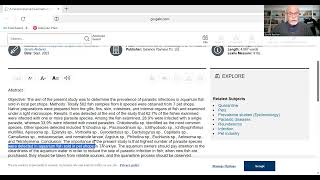
Gerald Bassleer presents a parasitology survey of 502 aquarium fish from seven Turkish pet shops. Nearly 63% carried parasites, with about 34% infected by multiple species at once. The study found protozoan and metazoan parasites across gills, skin, and organs, pointing to gaps in water quality, quarantine, and sourcing practices.
Chapters
Hello, dear Aquarist, thanks for listening to this study. I'll present you which I found interesting to share with you. It's about parasitic infections of the fish in pet shops in Turkey. Now share you this study. I also will share you the link below to well explain you what we can find as problems in fish that are available in our pet industry. So it's the parasitological examination of carnivores salt in pet shops in Kirikali, that's in Turkey. And the object of the study was to present. The study was to determine the prevalence of parasitic infectious in aquarium fish sold in the local pet shops in Turkey. And in total, 502 fish were sampled from eight different species from seven pet shops. The preparations were made from the gills for examination from the fins, the skin, the intestines and the internal organs of the fish. And they were examined with a microscope? Yes, like I do in my studies and my cases, I use a microscope because we can detect the most important problems and the diseases of our fish. What they find out here in the study of the fish sample from the seven pet shops, that 62.7% of the fish that were examined were infected with one or more parasite species. That's a lot. That means nearly 63% of the fish had an infection. And among the fish examined, about 29% were affected with a single parasite, whereas about 33.9% or 34% were infected with mixed parasites. Yes, like I explained, in my cases sometimes there is a mix of parasites or infectious. And I even hear in this study they don't even talk about the bacterial infections because bacterial infections usually occur together with the parasitic infections. And here in the pet shops in Turkey, Hylodonella was identified as the most common species. Hylodonella is a ciliated parasite. Other species were Trichodina, Oodinium, Ichthyoboda or Costia ichthyophteris. The white spot disease, Apiosoma. I'm sorry, Apisoma and Epistylis vorticella. The gill flukes and the skin flukes. Capillaria nematode worms, Caballanus nematode worms, Meta Cercaria, nematode larvae, Argulus, etc. Etc. Tetrahymena. The conclusion was the importance of the study is that the highest number of parasite species were detected in acornific salt in pet shops. Well, this highest number is disturbing because the aquarium owners they should pay attention to the cleanness of the aquarium water in order to reduce the rate of parasitic infection. I would say the Aquarium pet shop owners, they should be aware that they should have a way of keratin procedure to be installed. Not the aquarium owners, but the aquarium pet shop owners there should pay attention to the cleaning list of the water. Because yes, that's important, that the water is clean in order to reduce parasitic infection. That means, yes, water management in the pet shops. And when the new fish are purchased, I mean, they arrive from a particular supplier, they should be taken from a reliable source. So they should check their supply. Maybe some shops buy directly from Asia. And well, that of course, the guarantee procedures should be observed. And that is something which I pay very much attention to. And I made a special program for that on my Patreon. That guarantee process is very important when you import fish or you receive fish from Asia, South America. When you're a dealer in fish and you have import a direct supply. Well, this explains the importance that even a pet shop should be aware that install good quality measures, good water quality methods, prevention of diseases and control of diseases during quarantine procedures. And maybe that should select a good source. And a good source is usually a local wholesaler where you can check the fish, you can buy the fish as a pet shop and you can select the quality. Or you can ask if they did guarantee procedures and what procedures, so you have less problems as a pet shop. But this is an example of seven pet shops in Turkey, which doesn't look good because lack of good water quality, lack of good care, routine matters lead to these kind of problems. And you as a hobbyist should not have these kind of problems in your home aquarium. You should have good shop fish from your pet shops. Thank you for watching.