Gerald Bassleer (fish pathologist) narrates his 44-year career in the aquarium industry (starting 1977), his training in fish pathology, and the founding of a fish house/quarantine in Belgium in 1995. He describes developing Dr. Bassleer Biofish food through trial-and-error over ~25 years to improve fish strength, reduce medication, and prevent disease; the feed is granulated and formulated with Scandinavian wild marine fish, krill, seaweed, cereals, vegetables, vitamins, phytobiotics, probiotics (Pediococcus), and prebiotics. He emphasizes nutrition’s role in immune function, claims functional benefits for controlling parasitic diseases (including ich/white spot via a named method), and points viewers to brochures, books, and social media for more details.
Questions this video answers
1977
1995
44 years
25 years
Pediococcus (referred to as Pediococcus acidactic in transcript)
Chapters
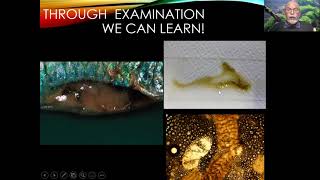
Thanks for watching my videos and because of the requests I've been getting about me Gerald Gerald Basler, why did you become a fish doctor? How come you developed that fish food, that special fish food? Dr. Basler by fish food let us know. So explain in the short video. So well, I compiled a video with some details, no secrets, but some details about my history in the field of fish research and about the development of our Dr. Basleer Baiju food. And our food is the story of working with fish. And that's why we produce this kind of food, because of training, study and experience. And I started in 1977 as a young biologist working at a wholesaler in Belgium, Akora, antwerp. That's already 44 years ago. Afterwards I went to Chicago, working for a wholesaler. Afterwards I went to work to Runements According in Moldfort in the Netherlands. Then I went to work for Aquarium Glaser in Frankfurt, Germany. And I studied meanwhile with different specialists on fish diseases to get my training on fish pathology. Why there were hardly any books available. And the books I could get were the people I was trying to get in touch with like Dr. Schubert, Dr. Gradcheck, Dr. David Conroy, Dr. Roberts, which are really some fish experts in those days, in the 70s and the 80s and there were hardly any books available. That's why I start, look at me here, reading one of the first books which I could get. In that time there was no Internet, no social media. But now I hopefully having more opportunities to give lectures and speeches about my knowledge. And that's why I trained myself. And in 1995 I started my fish house in Belgium with 1000 Akoria all with individual filtration, supplying the local pet shops also in the Netherlands and in Germany and in France we were supplying many pet shops. We were also shipping some fish to Japan and Asia, some special fish which are tank raised in Europe. And meanwhile look here, older guy, bald hair. Look at this. This is experiencing, working with the microscope because the microscope was giving me lessons and teaching me how to take care of fish. With the training I got at different parts of the world, Venezuela, America, Scotland, Germany. I I obtained experience by talking to hobbyists, talking to breeders, helping me a lot with explaining what. What to do with these diseases and how to prevent and how to control and well, that training and consulting I still do now every day when I can, I travel. This is some lectures I'm presenting with some dissection and training to people in Asia or in Brazil or where I can come to share my knowledge after 44 years. Well, you gather some knowledge and experience. And I luckily I have been training people at fish farms where the fish are produced. So I see the local problems and I can see what I can contribute for the fish health or industry. And that's why eventually I came to develop my books and my fish food. The books was collecting my information by photographs I collected during my research and my experience with study and training. And the fish food is, well, that's a separate story because the fish food came along when I started my fish house in 1995. And it's all about trial and error and studying, making errors, trying out different kinds of fish food that so far we had a difficult time when we had fish that come in from, that did come in from Brazil or from Nigeria, Congo fish were weak and they were susceptible to diseases or they were already carrying diseases when they arrived in the fish tank. So my, my way was to find a fish food that could help my fish to become stronger in a short time. And in the way that I could prevent the use of a lot of medications so I could prevent treatments, so I could have a chance to make the fish stronger. That means to do better in captivity. During the time they were in my quarantine station in Belgium, in my fish house since 1995, so I could do a lot of testing with my fish food, adding on some supplements so the fish could become, how can I say, stronger and healthier for the fish market. So my customers were happier. They were buying more fish for me. And that, of course, was giving me a good business and a good profit. Because, as you know, less losses, it's less losses of money, it's less work, it's less medication because you have less diseases and it's a lot of more profit for your company. So it's a very beneficial factor if you do a good effort on fish health management with prevention and control with fish food. Because my question was always, why do the fish become sick? And you see the cloud loach, you're swimming with barbs. Well, you know, this is not a perfect mix of fish. So there's food competition. So there is a stress factor like the skinny pleco. Why is the pleco getting skinny? You know, when, when you see fish fighting here, like the cichlids between each other in a fish tank, you know, there is something not correct. It could be that the habitat is not well decorated, lack of hiding places, but also the food could make fish aggressive. And if I was doing my trials of feeding, like here at the pleco People say, well, we have to give the pleco green food, cucumber salads, spinach. Well, I tell you, my fish food with the bi fish food granules, I had much more success to keep these fish alive, to give them a belly and a healthier way of surviving infections or fish diseases. So that was my main goal, is trying out fish foods. Because the origin of fish diseases are factors we all know. It's parasites, bacteria, it's water quality, it's the stress of packaging, temperature, aggression, overcrowding, all stress factors. But the main thing that's the unknown factors, which I would like for me to emphasize in my life as a fish pathologist, is what is bad food, what is poor feeding practice? Because that is giving a food stress. And the food stress is a very important origin of diseases for you as a hobbyist or as a fish breeder or a fish farmer. Through my examination as a fish pathologist, I could check the fish and I could check the internal, the organs, how fatty the organs were like here. This combative had very fatty degeneration. Look at the fat in organs. That means there is not adequate good food supply to the fish. And there was a lot of fluid in the stomach, in the intestine. So things we can learn by examination of the fish. What I try to teach during my work as a. As a consultant, is that the immune system of the fish, like it is for mankind a very important way to defend itself against pathogens, microbes, viruses, and that the food is an important part in helping to stimulate the immune system. Of course you have to avoid the stress, but the food and the way of life of the fish and the healthy environment is important for the immune system. So the fish has a better immune system. So that's why we developed a product with natural ingredients which are suitable for freshwater and marine fish. And particularly we made it that it had a balanced blend of ingredients so the fish would be staying much healthier and grow better. And we used therefore, specifically ingredients of Scandinavian wild marine fish, which are sustainable carbs in a way that we don't damage the environment. It's under control. And we use for our ornamental fish food the leftovers, which are not consumed by human. So it's maximally used. In this case, we combine it also with krill, seaweed, cereals, vegetables, vitamins, phytobiotics, probiotics and prebiotics. It's forest is a good food we believed in because we had a good success in our fish facilities. And why did we choose granulates? People ask me that Often. Gerald, why do you use granules? Why? Because it contains much more quality than a flake food. Can contain much better ingredients than the most of the frozen fish feed or live fish feed. And the granulates a big advantage. We can select different sizes appropriate for each mouth of the fish and for all the different levels where the fish are living in the aquarium and on the granulates. We can easily coat probiotics and phytobiotics and prebiotics after the production of the pellet, after the cooling down of the pellet. So we have maximize the quality of the extra nutrients we adding on. And we learn lessons from aquaculture, because aquaculture only uses granules, because it's guaranteed that it's free of germs. So feeding granulage teaches lessons like here we can keep rainbow fish together with the clown load as long as the food is floating and sinking. Otherwise the clown loach would have a hard competition with the rainbow fish. You need more information about my work while we collected all these details in a fish nutrition brochure which was made together with my son Baron Basler, who was also biologist and helped me out to make the second edition a better quality brochure. And the fish food can be more than good, it can also be functional. And that's what he explained in the brochure. Because of functional feed have a healthy promoting factors that prevents diseases with the additional glutamines. And what do we have while we adding on plant extracts or algae extracts like garlic, matrine, thimus, grapefruit seed extract. But you can all learn that in our brochures and on our website. We have probiotics, which is the bacterium Pediococcus acidactic improves the intestinal flora, which is a good and important defense system. When the good flora is in perfect health, your fish will have a much lesser chance to become sick. And the prebiotics are substances that help to stimulate the immune system and also the bacterial flora in the gut. Extracts like chlorella, aloe vera and yeast extracts better brew cancer. All these kind of important substances. Like I explained in my lessons on ICH of odor fish diseases. Here we explain clearly that our biofish food matrine is a very great help in the control and sometimes in the prevention of ich. Therefore we called it the basilar anti igg method. And this is for marine and fresh water. We can apply a fish food that helps the mucus of the fish to defend itself against parasitic infections like white spot and oodinium. Well, I have an example here my home tank here. My 12 year old Cardinal which I've only been gotten during those 12 years or Dr. Basler biofeed. You can see our food available in the shops and other distributors which are growing every year with a lot of interest. Thanks to you the hobbyist who is interesting in a different quality food and together with my wife we developed our food for 25 years and we were happy to announce this last year. So already 25 years of dry fish food is on the market. You need more info? Well I recommend you to study my books on fish diseases which are available on our website on freshwater and marine fish diseases and you're looking for more info? Well look at the links here. I supply on the well on this slide here on my PowerPoint the food for different fish pieces are brochure and you can follow me on Facebook where I give regularly updates also on fish diseases. So this is the info. I can explain you why Dr. Besley buy fish food and how Gerald became a fish pathologist by starting working as a young biologist in the aquarium industry. So this was my fortune to have a good experience alive during this 44 years and to share that with you and I hope you can enjoy learning more from the works I produce on my YouTube channel. Thank you for listening and I wish you good luck in your hobby and all your fish keeping. Bye bye.