What are causes, how to prevent fish diseases: The Germ theory versus the Terrain theory
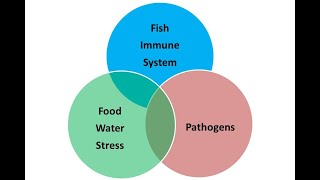
Gerald Bassleer explains why fish get sick using terrain theory: microbes are normal, but stress, poor water quality, and temperature swings trigger disease. Prevention means good filtration, probiotics, and supporting immunity rather than fighting germs.
Chapters
Hello, welcome to my video channel on YouTube and I hope this video will bring you the information you need to keep your fish in the best condition. And therefore I will share a PowerPoint and at the same time I will have some other people talking and trying to explain you some ideas about infections our fish become sick and how we can cure them. So I will share my screen and and I hope that with this today, the germ theory versus the terrain theory in diseases and of course in our case it's about fish diseases. As a flying fish Dr. It's something important. I explained quite often to my people and the germ theory versus the terrain theory is already in 1800s developed and talked about specifically here. Claude Bernard Dr. Said the microbe is nothing. The terrain is everything. And the terrain means the environment, the body, the nutrients, the stress and everything. The microbe of course is. Is there. But does it mean something important in disease? And therefore I will let you let it be explained by Dr. Sam Bailey from New Zealand. In four minutes he will explain to you the germ theory versus the terrain theory.
Anyway, the debate about whether germ theory is a satisfactory explanation for disease has been going on for quite some time. The following piece by Professor H.C. bastian appeared in the British Medical Journal in 1875 where he raised his concerns about the rising acceptance of germ theory. Keep in mind that this was written over 130 years ago, so the science was at a much earlier stage. However, there was already enough knowledge for Bastian to point out that the alleged causes of disease microorganisms may be actually introduced in into the blood vessels of lower animals by thousands without producing any deleterious effects. In a large proportion of the cases, bacteria, if not actually to be found within the blood vessels of healthy persons, do nevertheless habitually exist in so many parts of the body, in every human being and in so many of the lower animals as to make it almost inconceivable that these organisms can be causes of disease. Bacteria are the creatures of circumstance and modifiable to an extraordinary degree. The last position is even admitted by Professors Sanderson and Lister. The former acknowledges that they are the lowest organisms and that they are much more under the influence of the conditions under which they originate and are developed than organisms of any other class. In his paper you will note that Bastian never denies the association of bacteria in diseased tactics tissue. However, he states that this condition does not come about by bacteria invading healthy tissue and causing disease. On the contrary, the tissue is already unhealthy and the changed conditions allow the bacteria to take the upper hand, but they certainly don't instigate the disease themselves. At the time of birth, we can see that the germ theory already runs into a bit of a problem. Just a few. A few hours after arrival, all of a newborn baby's mucous membranes have already been colonised by bacteria, which perform important protective functions. Without these colonies of billions of germs, the infant, just like the adult, could not survive. But key proponents of germ theory, such as Louis Pasteur, believed that bacteria should not be found in a perfectly healthy body and that microbes floating through the air were responsible for diseases. Flaws in Pasteur's theories were shown long ago, in the first half of the 20th century by experiments in which animals were kept completely germ free. Their birth even took place by caesarean section. And then they were locked in microbe free cages and given sterile food. After a few days, all the animals were dead. So we have a situation where billions of microbes are inside us and, and all over us and have been proven to be essential for life. A team led by Jeremy Nicholson remarked in 2004 that humans can be considered superorganisms with an internal ecosystem of diverse symbiotic microbiota and parasites that have interactive metabolic processes. Additionally, our gut is estimated to contain around 1 kg, or over 2 pounds of microorganisms. It makes you wonder how much of a healthy human body is human and how much is foreign. Maybe these terms are not actually appropriate at all. And that's why we have another, much less known way of thinking, known as terrain theory. Microbes are found in an environment or terrain and the microbe is nothing. The terrain is everything is the phrase attributed to Claude Bernard, one of the best known representatives of a holistic approach to health. Terrain theory, which is also known as cellular theory, holds that the body provides the environment, or terrain for microorganisms. If the body is healthy, it remains in balance with the microorganisms that colonise it. If the body is compromised, those same microorganisms respond to the environmental changes and cause what we know as disease.
Well, as you can see, that is the information we get from doctors and all the research done in medical science. And it helps me to understand how I can work with fish disease and to understand why the fish becoming sick. So I will continue with my PowerPoint to explain you what it all happening with fish. You know, it's something that we should realize that if we want to teach you to be alerted. And that's the thing I want to tell you that you should be alerted that the fish can become sick when they are weakened by stress or other causes that weakens their immune system. So if the fish is in a bad bowl, well, of course we don't like to keep goldfish in the bowls. You try to give them a treatment, well, he will jump out because the water is bad. So there are a lot of germs.
Yes.
And you try to treat. It's no use. It's better to have a good clean tank. So the germ is causing the disease or is it the environment or the immune system? And I'll explain you more that in detail because in the case when the fish has a very poor immune system, has no use to apply treatment because the treatment will have no result and the immune system is weakened or destroyed. So you have to think about working on the immune system because the origin of disease is a fish with a weakened immune system which is appearing in a system with stress. Stress, I will explain shortly after this slide. And there are microbes, of course available, bacteria, viruses or fungi in the water or in the fish food. And with the stress and a low immune system, the fish gets sick. The stress factors we know well those you know, of course, commonly because you test your water. Well, I hope so that you test your water often because it's important to check the water parameters to avoid any stress caused by high nitrite or too too hard water or too soft or too bad pH, etc. Of course there are also unclear stress factors, factors we just cannot test for and that you have to ask yourself questions. What happened with the fish? Has it been reasonably transported packed? Has there been a feeding problem? Maybe aggression, water changes? Or has the feeding practice you performed be very bad? So the fish never get decent quantity of food? Or was the food poor quality antibiotic treatments or over medications? 2 are all causes that can happen. And a common problem I often see in the hobby is that aquaria have too small filters so there is no adequate filtration or the filters are badly maintained and too dirty and not working properly. This dirt is not killing the fish, but it will make it possible that not enough good bacteria will be settled down in this biological filter. So think about proper management of your biological filtration. Well, now George Carlin will tell you what germs and immune system can do. It's funny, I like George Carlin because he is specific. He's very hard, you know, and is talking. But maybe you enjoy it. It's just one minute. I enjoy it.
You think you have an immune system for. It's for killing germs, but it needs practice. It needs germs to practice on. So. So listen. So listen, if you kill all the germs around you and live a completely sterile life, then when germs do come along, you're not going to be prepared. And never mind ordinary germs. What are you going to do when some super virus comes along that turns your vital organs into liquid shit? I'll tell you what you're going to do. You're going to get sick. You're going to die, and you're going to deserve it because you're fucking weak. And you got a fucking weak immune system now, God damn it. Hey.
All right.
Let me tell you a true story about immunization, okay? When I was a little boy in New York city in the 1940s, we swam in the Hudson river and it was filled with raw sewage, okay? We swam in raw sewage, you know, to cool off. And at that time, the big fear was polio. Thousands of kids died from polio every year. But you know something? In my neighborhood, living, no one ever got polio. No one ever. You know why? Because we swam in raw sewage. It strengthened our immune systems. The polio never had a prayer. We were tempered in raw shit.
Now, this is a different way to explain about germs and the immune system, but. It's funny, but it. It's reality. Reality we should think about when we talk about diseases and how they can affect our body. Well, let's go more again into detail on our fish here.
Thank you. Those.
George, go back. Now, I go back here to the diseased fish.
Well, here on the left, you see.
A fish which was badly damaged, but it was due to ammonia poison.
And to the right, we saw longirostrides, a butterfly fish.
Red wounds. Bacterial infection caused by very bad handling and transport. So the disease came for a certain reason. Still. That's why I want you to think about strengthening the immune system, because that's the defense of the fish. Of course, you have to avoid the stress, not badly handling the fish, but if the fish have a good immune system, he will do better. And the immune system is different parts of the body, and it starts with the skin and the gills. And when it's sufficient, that system can protect the fish from pathogens like viruses or bacteria and parasites. And if it's weak, well, even a small amount of pathogens can cause lethal consequences to the fish. So when this immune system is working well, well, it can prevent you from the fish from infectious and prevent medications. And that's all we want to have is a healthy fish and not treating with medications.
And the immune system, you can see in two different parts. There is the innate immune system and the adaptive immune system. And innate immune system, we can work on that with ingredients in fish food like immunostimulants. And the adaptive immune system is a system that learns to deal with infections. It needs some time. It can take a couple weeks before that adaptive immune system is working efficiently. But the innate is already there and that's working immediately, like protecting the fish on the skin against peculiar parasites. And that's a very important system where we can, as people help our fish with. So the prevention is avoiding stress and giving a good food with probiotics and prebiotics and giving of course good water. So the pathogens have no chance because the immune system is working properly. The most important immune system is the gut, the intestine. We can help to repair the immune system. When fish had stress or badly transport of ammonia etc is is introducing a lot of beneficial bacteria. So on the sides of the gut wall there is many beneficial bacteria and they can compete against the pathogenic bacteria. So there is no locating sites, no attachment sites for the pathogenic bacteria. So that's defense, first line defense. Another case I can show here is white spot disease or ich. Usually this is caused in most incidences I see in my work as a fish doctor. That's temperature fluctuations and that causes stress like cool drafts causing that air, open windows, a failing heating system, cool water changes. And that has a big impact on the fish. That it has a negative influence on the feeding behavior. The fish will eat less and also causing the immune system to be to fail. And the fish are in that case more easily attacked or infected by the white spot parasites. Ichthyophteries in freshwater or in marine, the cryptocurrency. So take preventative actions. You can do it with food, but also in a good way of keeping your fish. We can help the fish to develop an immunity for ich. We can help that because we can with the help like matrine, we help that the fish surface is well protected. Because the fish surface is a local system that can help the fish to fight off the parasites and it can adapt. It's a local system and an immune fish surface you can call it. So the Terrence invades and escapes. But also the central immune organs like the head, kidney and the spleen, they can develop an immune system that's a systemic adaptive immunity. So we had fish in order Aquarium who had white spotter. You will see many weeks or months later they have a resistance and have an immunity against white spot disease. That's why you have to keep them in good conditions. Because if you keep them in bad conditions, the immune system will fail. And of course they can get again white spot disease. But like I explained, we have a fish food Dr. Besselier Biffy food Metrine that helps you to control the white spot infections. Of course, treatments are important with medications. So some golden rules for prevention is good water management. Like I explained. Have a good system, good filtration and good care. Do proper water changes and testing. Make a prevention plan. Avoid contamination, avoid spreading, avoid importing diseases. Avoid poor handling and other stress. Try to identify the pathogens. It's something important. You know, we're talking about diseases and people tell me, oh my fish have heavy respiration. Might be gill flukes.
Well, I'm not particularly sure.
Make sure you can take a gill scraping and make a good identification possible. But try to think also about prevention of diseases with good food that you how you can control. So use the efficiency immune system as a way of preventing treatments and preventing diseases. And the natural diffuse the defense system can be stimulated. But you should avoid two clean systems too clean systems like two hygienic systems too clean waters is not teaching the immune system to work properly. This is the same for fish as for mankind. So the use of probiotics and prebiotics and immunostimulants in the fish food help together with essential amino acids and essential micronutrients to give the fish a proper feeding. So he has a good defense against diseases. So to finish off to be alerted for you that the fish can become sick because they can be weakened, they can have a poor immune system and that a vaccination or a medication will not help. Since you have to avoid first of all the causes the stress. And you have to think about repairing the immune system. And then you will have good success to keep your fish in the best condition. Well, I hope you can enjoy your hobby and maybe replace your TV with daily news that you don't like and replace it by an aquarium. And enjoy relaxation because relaxation is a good stress and gives you a happy life. Study my books, see my videos on my YouTube channel, Vasnier Biofish. And I hope that this brings you to some knowledge, some extra care, some understanding of germs. They are there, but the terrain is important. Think about preparing a good way of keeping your fish in the best condition so you will have better luck in your hobby. Thank you for your attention.
More from Gerald

Sick Dwarf Cichlid Apistogramma. See link complete video. #fishdisease #apistogramma #Cichlid


Fish disease case nr. 365 Tankraised Apistogramma borelli with bacterial infection and few tubercles

Corydoras catfish worm infection. See link complete video. #fishdisease #corydoras #catfish catf

Fish disese case nr. 364 Wild Corydoras concolor with Camallanus and other worm infections


Fish disease case nr. 363 Wild Cardinal tetra, Paracheirodon, with worm and bacterial infection

Fish disease case nr. 362 Sawbwa with gill flukes, Nematodes Capillaria and bacterial infection

Sick Golden Orf with Dropsy. See link complete video #fishdisease #GeraldBassleer

Fish disease case nr. 361 Golden Orfe with dropsy or ascites due to bacterial infection

Fish disease case nr. 360 Apistogramma with 3 different parasites and tubercles in the organs