YouTube talk by Gerald Bassleer explaining that visible 'white spots' on aquarium fish are often misdiagnosed as Ich (white spot disease). The speaker reviews multiple lookalike conditions (including Neoich, parasites, metacercaria, Lymphocystis, fungal-like infections, sporozoans, and Odinium), emphasizes microscope-based diagnosis, and points to further resources and training for correct identification and treatment.
Chapters
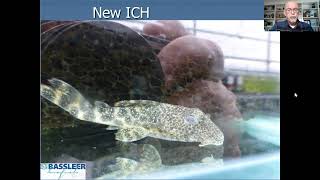
Hello, dear Aquarist or fish keeper, we know when we keep fish that we can have problems, that we can have diseases. And one of the most common diseases is white spot disease, or ich. And of course, when it's so common, we are used to identify so quickly, so rapidly using a medication against white spot disease, because our naked eyes gives us the impression we did a correct diagnosis. Unfortunately, in some cases it can be wrong. It can be another disease which is not cured by the proper ICH medication that you get from your shop or from your veterinarian. And that sometimes you have to wonder after one week of treatment when it's not successful, did I do a correct diagnosis or also ask you the question, did I use the medication in a good way? Did I follow well the directions which were explained in the leaflet or in the brochure? Well, today I will show you different cases of fish which were suffering from white spot disease symptoms. And I'll share my PowerPoint which will hopefully explain you what we can learn from it. Because white spots on our fish are not always ick. We know these white spots like on the crown loads. Well, these were identified as the real ichthyotherias, same as on the tail of this fancy pearl scale goldfish. Those are ichthyophtherios cases like here on the puffer, this African puffer. And this is the microscopic observation of the white spot disease, Ichthyophthereus. But then there is a new white spot, the new ich, scientifically called Neoichithiopterius, already eight years amongst us in the aquaria and causing serious problems because a proper normal treatment with an anti ich or a white spot treatment is in many cases not successful. And I explained that in my link below in the text of this YouTube film where I give you directions how you should approach this kind of more difficult to treat white spot. As you also see, the white spot looks quite different. This one look looks different on this loricardidase, more yellowish color, has a much larger view here, more yellow yellowish on this discus fish. And here on this blue Ramirezi. And here we see this new neo ichthy of theories, Schlotafeldi, with a very strange nucleus. That's how you can look at it. It looks more darker. It looks different in the microscope. So I will explain that in my video separately on the white spot disease cases, which is the link I share you below. But in some cases we find these white specks on wild fish. Here are the Lipurinis from Colombia, and those are encapsulated worms, Metacercaria which are genetic trimatode larvae. And those larvae here are in a capsule. It looks like white specks. Yes. No medication will work here. And eventually when the fish is eaten by a bird or another fish or predator, the worm becomes an adult worm. Over the time this larvae will die on the fish. So wait for time, don't use any particular treatment. Just wait and have patience. This is a typical feature for wild fish, Odinium. In some cases it's misdiagnosed as white spot disease. Here you see the fine white or pepper looking specks on the kissing gourami. And this is how it looks like in a microscope when you take a skin scraping or you take a piece of the tail. Well, the microscope tells you clearly that this is not white spot disease. Lymphocystis infection like on this Chanda, causing white spots. In the beginning, a few white spots on the fins or on the body. And in the microscope you see these enlarged cells which are blowing up because there's a virus which you cannot see in the microscope. But the virus is enlarging the cell, making these giant cells and they look like white spots. And then here we have a false fungal infection which is at the beginning looking like white spots. White spots on this Borlea Malawi cichlids. And if you take a scraping, we see those stalact ciliated parasites which are sitting here together and causing this white spotting appearance. So this is also for a different reason because it's not white spot disease. And here we have a case of a sporozoa infection on this pangasius, you see the white spots here. Well, it looks very similar to a white spot. But if we take a skin scraping, we see those capsules with thousands of spores and incorporated and cannot be cured with a proper medication. So these are all cases which are identified by the use of a microscope and that can give you the necessary information that you might apply a different treatment or not a treatment for a white spot. And I give more information on diagnosing and treatment on my YouTube channel. The links are below or on my training channel where you can train yourself to become a physiognet, my Patreon channel. Also, many of you maybe know already my books on fish diseases which are available at our link Basler.com and they are available in different languages and also books on marine fish diseases. So I hope this information enlightens you why some of the white spots you encountered could not have been cured with the normal medication or maybe you misused or wrongly used the medication that's also something you have to think about. Well, this enlightens a little bit more the problems I face as a fish doctor when I receive cases of fish diseases and when I see those cases presented on social media where people send around pictures, oh, my fish have ache, please help me. Well, identification through social media, I tell you in most 50% of the cases is wrongly diagnosed, at least 50%. And this is of course a risk of killing your fish or wrong medication. So be aware when you want to keep fish in the best condition that you do a proper diagnosing of the fish diseases and somebody with a microscope can help you. A pet shop, good pet shops have microscopes or you can have a local vet who can help you. So use good tools to help you to identify the real cause of the fish disease. When we talk about white spots, try to identify properly. Thank you for watching.