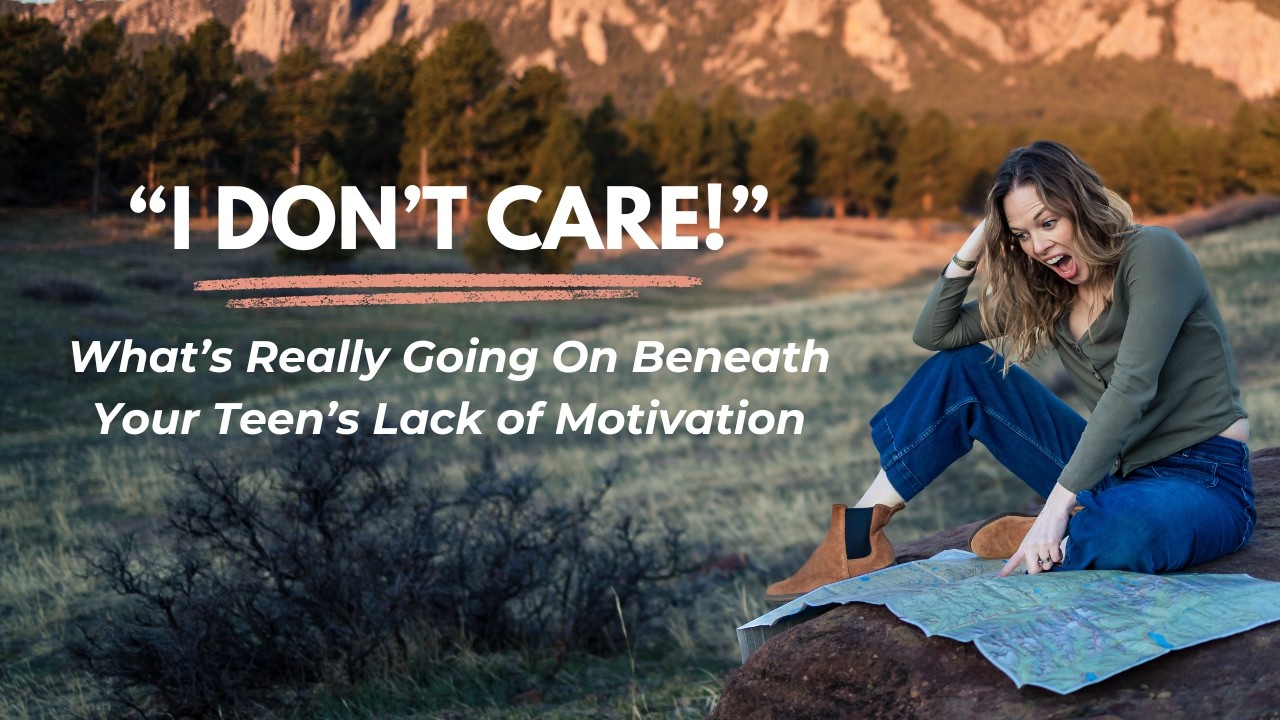
In this solo episode of The Teenage Guide Podcast, host Ashley Chandler challenges the common belief that unmotivated teens are simply lazy. She explains that teen low motivation is often a symptom of overwhelm and chronic stress, which overloads the nervous system and shifts the brain out of problem‑solving mode into fight, flight, freeze, or fawn responses. This physiological state blocks executive function and motivation. Chandler outlines how adolescents are in a critical identity‑formation stage (ages 11‑21), developing subconscious and conscious beliefs that become their self‑story. When stress triggers a narrative of “I’m not disciplined,” the teen’s behavior reinforces that story. She argues that motivation follows identity, and identity shifts through relationships—not through more pressure or study strategies. Using a client case, she demonstrates how a mother changed her own regulation (breathing, tone, energy) before approaching her son, replacing accusatory questions with supportive inquiries about overwhelm. This parent self‑regulation softened the home environment, allowing the teen to regain momentum voluntarily. Chandler emphasizes that parents must first regulate themselves, create a supportive environment, and act as energetic guides rather than homework managers. She invites listeners to a free class, “Confident and Connected,” which teaches how to move from pressure to partnership and build executive‑function skills at home. The episode ends with a call to action to share the content and a reminder that the most powerful influence on a teen is the quality of the parent‑teen relationship.
Chapters
The belief that parenting a teen is destined to be terrible is outdated and it's unhealthy. These years can shape identity, resilience, and healthy, strong, joyful relationships that last well beyond adolescence. Hi, I'm Ashley Chandler, here to guide you to the soul-to-system support you both need to thrive from the inside out. This is The Teenage Guide Podcast. Hello, beautiful human. Welcome back to The Teenage Guide Podcast. I am Ashley Chandler, your host, founder of The Teenage Guide, and I'm so grateful that you're here. It is late February and a lot of the cracks start to show when it comes to school for teenagers. A lot of grades, behavior, things can start coming to the surface and you know what, hitting the fan, and it can cause a lot of stress For families and parents especially are left, you know, wanting to pull their hair out because they don't know why their teen isn't motivated. I remember one of my clients and sitting across from her and she just looked completely defeated. And she said, I've repeated the same sentence 14 times this week. Why don't you care? And I don't even recognize myself. I feel angry all the time. I feel so defeated. Her son wasn't failing school and he wasn't in trouble at school, but every single afternoon and early evening turned into a battle. He'd put his headphones on, one-word answers, half-finished assignments, a lot of late work, a lot of missing work. And as the mom, she wasn't hovering over him, but she would come to find this out because she would see the grade portal as we're all used to right now, right? The internet tracks our kids' performance and grades, and the grades were plummeting in the portal. And what scared her and hurt her most was he used to care. Here's what was really going on. Nothing had gone wrong. Her son wasn't lazy. He wasn't becoming irresponsible. He was overwhelmed. And to be honest, so was she. Because when a teen pushes you away or pulls back, your nervous system doesn't interpret that Automatically as, oh, they're stressed. It signals fear. It interprets it as they're slipping, they're failing, they're doomed. I'm losing control. This is gonna cost them their future. I have to fix this and right away. So you push because you care and then they pull away harder. And now you're both dysregulated just in opposite directions. We think motivation is about pushing. We need more consequences. We need more pressure. Just try harder. But And I'm going to repeat this. This is really important. Soak this up. Stress kills motivation. Stress kills motivation. There's many different layers of stress that I talk about when I work with clients privately and inside my membership. For now, it's really important to realize that there's something underneath the surface. When a teen's nervous system is overloaded, whether it be socially or biologically, or academically, as examples, the brain literally shifts out of problem-solving mode and goes right into fight, flight, freeze, or fawn. And you can't access motivation. In other words, you can't access executive function skills from that place. So what looked like, I don't care, was actually, I'm stuck. I'm scared. I'm overwhelmed. And if I try and I fail, it's gonna feel way worse. What I like to say on repeat is that behavior is always information. It's not the problem itself, but it's always communicating something. Low motivation is a signal. It's not the character flaw itself. It's a signal that something's off. So as you probably know, but if you don't, I want you to understand adolescence is this peak identity, development stage, meaning when we are in adolescence, which runs from 11 to 21 on average, we are developing what our beliefs are separate from our parents. What makes me special? What's my significance? What do I value? And what's the purpose of life, of any of this, right? And so we individuate from our parents and develop those beliefs subconscious, meaning we're not even aware we're having those beliefs, and conscious beliefs that become our identity. They run the show. So when we enter a stage or a challenge of low motivation, if we're not careful in how we approach it as parents, the story for your teen becomes, might as well not even try. I'm just a person who can't do well in school. I'm not disciplined enough to achieve my goals or to do what I need to do, or I disappoint my parents. The thing about how our brains and our nervous systems are wired, these are our operating systems as human beings. The brain will protect that subconscious identity at all costs because the brain values consistency. It values what it thinks is normal, which equals safety, over improvement, which equals change. And to the brain and to the nervous system, anything that changes can feel scary. So this keeps us stuck. So if I'm a kid who doesn't try or who isn't disciplined or who disappoints my parents becomes the story, the behavior will follow the story. Because motivation is not about tasks. It's not about a better online thing that you can buy on Amazon. It's not about a better planner or more structure at home to start. It follows identity. And identity shifts in a relationship, not through lectures or more pressure between you. But when you both shift your identity, and the way that we change our identity happens in my specialty, which is our relationships, our relationships with ourselves and our relationships as parents with our teens. And if teens, you're listening to this, it happens in the relationship that you have with yourself and the relationship that you have with your parent or your caregiver. So how did this mom and I work together? Well, we did not start with study strategies. We didn't with getting a more refined, better, fancier planner. We started with her, her tone, her energy, her stress level, her timing when she walked into the room to approach her son because the relationship is the intervention. Through our work, she would practice regulating herself without even saying a word first. And what that looks like is As she's walking up the stairs to approach his room, she paused. She noticed her energy. She took a really deep, long breath. She shook out her stress. She rolled down the window in the car before she had a conversation with him. She'd soften her voice and slow it and lower it intentionally. And not like a fake calm. I'm calm. See, the thing is, is like teens feel our bullshit. They know when we are full of crap and they love to call us on it, right? So if you're practicing this, you're not going to try to fake it till you make it. I'm not a big fan of that saying. You are genuinely going to practice getting yourself into a balanced energy. And this doesn't mean that you have to be calm or happy or positive about the fact that you may have just seen some not great results in the academic portal, or you're watching them, you know, sloth away again. It's not that you're happy about that, but that you aren't personalizing it, that you are able to become the master of your own energy in the approach to collaborate with them. So going back to this story, instead of, Why don't you care? She replaced that with, what's going on? I can see that right now this work feels like a lot. How can I support you? Where do you think you need to start? One question assumes a character flaw. What's going on? Why aren't you doing what you need to do? Assumes there's something wrong. That becomes the narrative. And the other makes the assumption of overwhelm or stress. Which immediately diffuses. It wasn't instant magic, but the temperature between them and in the home really softened. It lowered over time. And within weeks, he started initiating these quick work sessions. He started initiating his own momentum, not because she pushed harder, but because he felt capable again. Motivation didn't get Forced in. It was a natural consequence when the environment at home supported it. So before you approach your teen tonight about homework or anything they need to do, ask yourself, what state am I in? Practice regulating your own self, and then you approach them and meet them where they are. Even a 60-second pause can change the energy in the entire room. You are not responsible for carrying their motivation and doing it for them. In fact, that's the last thing you wanna do. to do. You don't want to do it for them. You wanna become the energetic guide first, the regulated guide. You want to support them in the environment and the conditions. Another way to think about this is your responsibility is creating an environment where motivation can grow, which leads to such an amazing, vastly different experience for both of you. So if this situation feels familiar, There's nothing weird or wrong with you. Your teen isn't broken and you aren't failing. You might just be trying to push or motivate before you regulate. In my free class, Confident and Connected, I show you exactly how to do this. I walk you through how to shift from pressure between you to partnership, how to regulate your own emotions, and how to truly build the executive function skills that you would love For them to practice inside your own home without becoming their homework manager. You don't need more strategies or information. You need steadiness and you need support. And that is my expertise. You can sign up for the free class in the show notes or visit my website, theteenageguide.com. And as I end this episode, I invite you to sit with this. What if your teen's low motivation isn't laziness? What if it's their nervous system asking for support, asking for safety? This kind of shift can change everything. I know you have limited time and energy, so thank you for being here and kudos to you for investing this time in yourself and your team. If you enjoyed this episode, please continue the ripple effect and like, subscribe, review, you and/or share with a fellow parent who could benefit so more people can find my content. Remember, the number one way that you have influence in your teen or your young adult's life is in your relationships with yourself and them. So never doubt how much power you have because you are the teenage guide too.