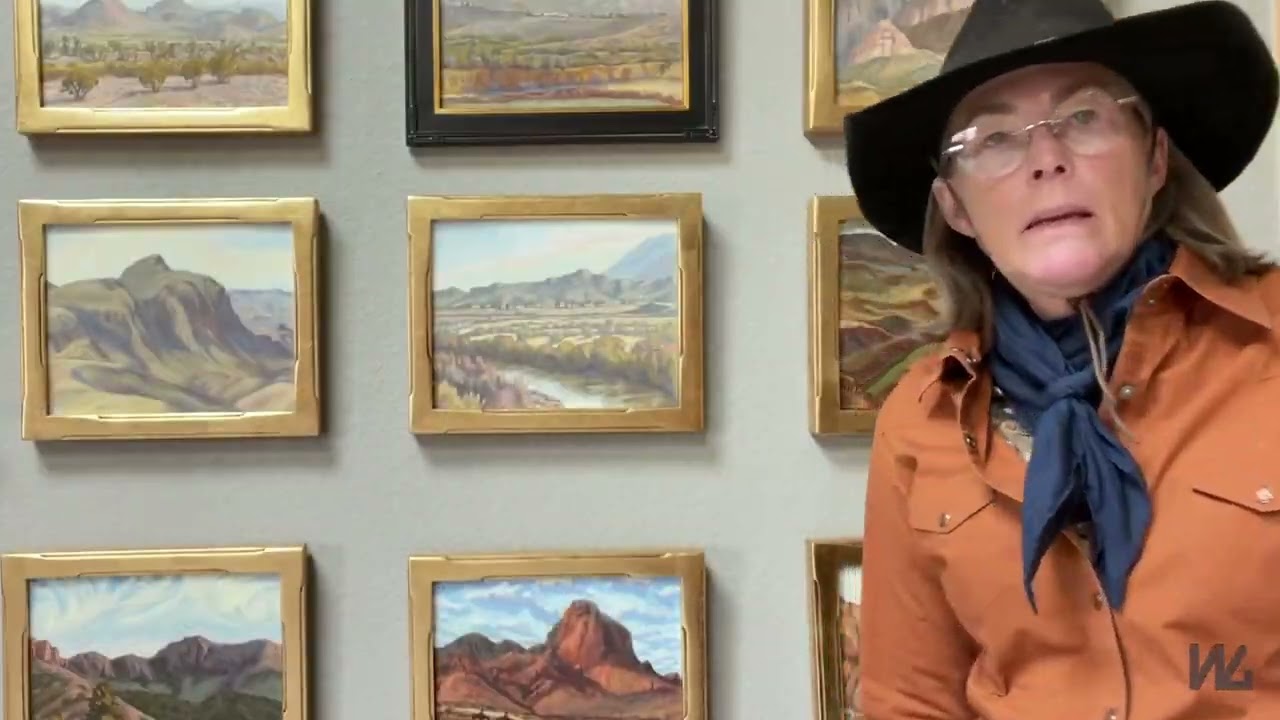
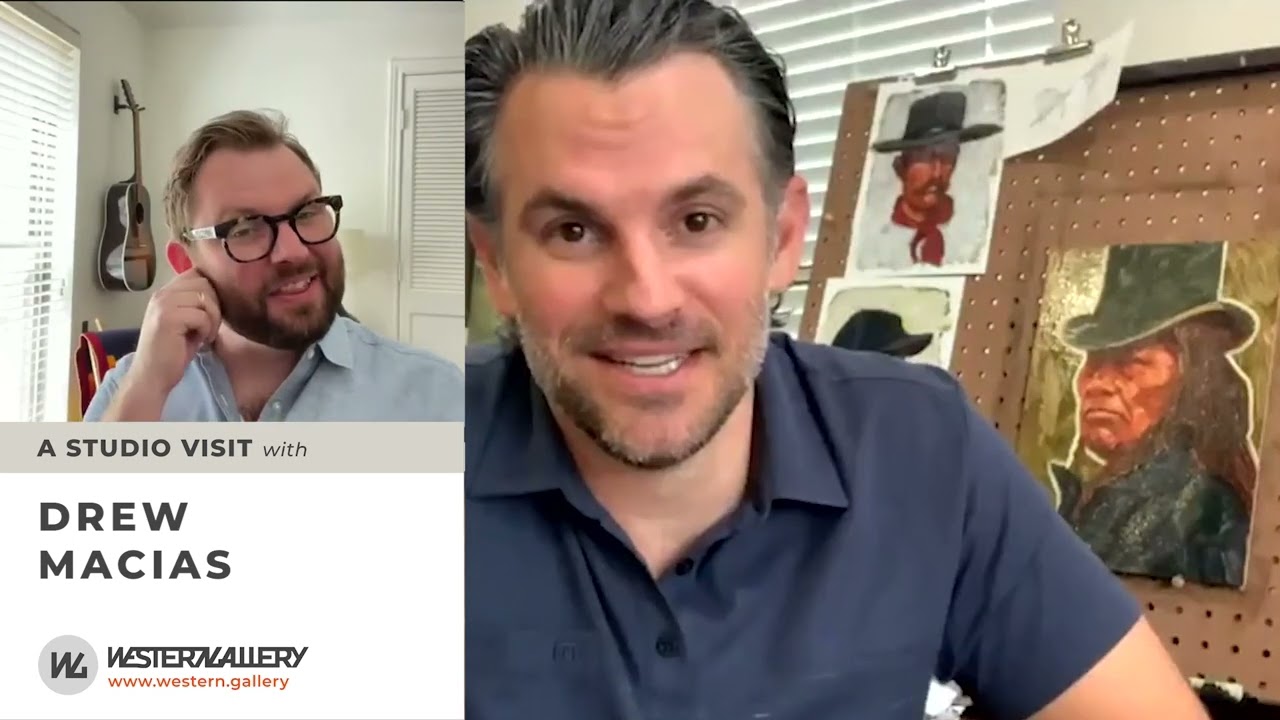
This content was created by George Irwin. This content was uploaded by George Irwin. This is a YouTube video titled "Artist Studio Visit with Sari Shryack" (created 2022-06-02T17:24:20+00:00). It is an interview/studio-tour in which a host (SPEAKER A) talks with painter Sari Shryack (in Austin, Texas) about her backyard 12x12 studio, daily painting practice and larger bodies of work (e.g., magnolia, Ring Pops/popsicles), materials and techniques (acrylics, priming, layering), social media/live streaming (Instagram, TikTok, YouTube collaborations), teaching (Not Sorry Art School), and balancing motherhood and art.
Chapters
Hello out there! Today's guest, uh, we're talking with Sari Schreik in Austin, Texas, who is a talented daily painter, um, working in bright colors with a variety of different subjects. So I'm going to invite her. Oh look, she's already got it. She's got— so we're going to talk and she'll show us around her studio, I believe. Um, hey there. Hey, Siri, how are you?
Good, how are you? Hi there.
All right.
Oh, thanks for— oh, did Siri go off?
Yes. Yeah, I don't ever talk to, uh, Siri.
Disable it in all of my devices.
Yeah, I'm trying to figure out how do I mute that. Oh yeah, I don't know. How to do that. That's okay. Maybe—
no worries. Okay, sorry, happens a lot actually.
No problem. Yeah, um, well, I'll just avoid saying your name and, uh, and we'll be okay. Um, thanks so much for coming on to chat today. Uh, I've been a fan of your work for a while and watched, and you know, kind of watched your career develop a little bit and You are doing so many different things, um, but I guess, you know, first and foremost, why don't— since this is a studio tour, would you mind kind of just showing us around your space? I can see a color wheel in the background and some, some work.
Oh yeah, yeah, let's go. Okay, so obviously I have a skylight battling light with me right now, but let me see if I can turn you around and show you kind of from the, the entrance. So yeah, it's in my backyard. Oh, awesome studio we had built So we moved in last year around this time, and then we had this little guy built in August.
Oh, fantastic.
It's 12 by 12. It's nice because I can paint at home, but I have just enough distance from the kids that I— yeah, have some space here. I'll show you from the outside a little bit. But yeah, it's 12 by 12. It's a little bit busy in here now. I just ordered a bunch of canvases, so I have— sure, this wall is a little bit taken over. But if you come in, you have my skylight up here, and then the front has a lot of nice natural light. So this is really, really kind of the star of the show. It's— yeah, Texas, so we have the air conditioner.
That looks familiar. Yep.
Yes. Um, this is my front desk. I do a lot of filming here just because the light is really nice. It's one of these good old IKEA tables. It's nothing too glamorous, but it has really good light and it's white, so it's a good surface. Um, this is my setup right now just because this morning I did a live And so this is where my, my paint is at the moment, but I actually have several places I sort of sit and paint. But here's my Stay Wet palette. I paint mostly in acrylics, so I, I have this that way I don't waste very much paint. That's kind of the downside of acrylics, obviously, is that— yeah, it can be pretty wasteful.
Dry fast. Yep.
Yes, exactly. And here's my bucket. I've had a lot of this stuff since college. A bunch of my brushes, they need to be cleaned out and stuff. But, um, this is my setup. It's actually— this is where I put my iPad when I'm filming towards me, but I do have this guy for when I'm filming overhead. So it's a little bit of a hodgepodge of some stuff that I actually bought and some stuff that I'm sort of just figuring out how to—
yeah. Can I, can I stop you for a second? And sure, um, for like, for my, my audience who's not as familiar with you, I know you do, uh, some live painting and other kind of like, uh, live and recorded video stuff. Can you tell me a little bit about— do you— are you on Twitch?
No, I do most of my stuff through either TikTok or Instagram. Um, I do have a YouTube channel, but, um, yeah, going live on here is great. Instagram has done a really good job kind of, um, taking in all the newer features from different apps and putting it on Instagram, so I'm able to sort of keep my large audience kind of focused that way. Um, but yeah, I do lives on TikTok and Instagram. Those are kind of my two favorite apps. And, um, it's a really good complement to kind of the more like static part of Instagram where you just sort of post something and let it—
oh yeah.
Um, but yeah, um, the lives are great because it's really interactive. I can answer questions, um, with my audience and sort of have a more direct dialogue. And then also a little fact, if you go live, um, it boosts your, um, the content in the algorithm. So it's a good thing to keep in rotation as a content creator. Interesting.
Yeah, I didn't know that. Um, that's cool. Um, so do you do— ever do like a split screen thing? Do you know how to do that?
No, I would love to figure that out. I thought about doing that for, um, for YouTube, of really trying to get like a little bit more of a cinematic thing. That's kind of like the downside of doing lives is that you're a bit limited and how you can arrange things, right? But I would love to do that. I think it'd be really fun to do, like, to be able to talk to the camera, sort of like a 2021 Bob Ross thing where I can talk and show the painting. But I, I'm not that tech savvy. But if anyone ever wants to reach out and show me how to do it, I'm all ears. Cool.
Um, let's see. Oh, so speaking of doing live painting, I saw, like, the— I picked like something from your Instagram feed to put up on the stories a few minutes ago, and, um, it looks like that was from something you did with David Long. Oh yeah, you guys do like a collaborative live paint?
Yeah, he has a YouTube channel and it's called— he calls it his Paintcast, and it's a— it's an amazing idea. So basically, um, he does a split screen with, uh, he paints alongside of another artist and he allows the other artist being featured to pick the subject. So he He's done like still life and all kinds of stuff. Um, but yeah, we just painted. I had just come back from Big Bend, and so it was the Santa Elena Canyon, and we just painted and talked art. It was really fun because you could kind of talk shop and get a little bit nerdy with like, you know, painting stuff. But yeah, isn't that a cool idea?
Yeah, it's really cool. I have to check out that whole thing if I can somewhere. It's on YouTube, you said?
Yeah, and he's interviewed a ton of really, really awesome artists.
So yeah, awesome. I've seen his, you know, his work come up on Instagram frequently over the years too, and really like a lot of what he does.
Yeah, he's awesome.
So, um, all right, let's jump around a little bit. You mentioned also that you— your studio being in the backyard has enough space, um, or separation from the kids. You have a pretty new second kid, right?
Yeah, um, my daughter is I guess not quite 8 months old, some change. But yeah, we had her in August, so that was kind of the impetus for getting the studio built, is the extra bedroom was going to be her room, so I needed to, I needed to build something. But yeah, 2 kids.
Congratulations!
Thank you. Yeah, I love them, they're awesome.
Um, I know you've talked a little bit before about like, I guess like how being a mother and, and an artist like work together a little bit? How has that, um, changed, I guess, since, since having your daughter?
Yeah, I mean, it definitely makes things a little bit spicier. Um, I mean, it's, it's, it's— I don't know, my— so my other child, so my firstborn is— he's 5, he's almost 6. So there's enough of an age gap there that, um, you know, he, he's kind of just now becoming independent. So I feel like I— if I had them closer together, I probably would have a different answer for you. Um, but, um, yeah, it's, it's just a reset. I've had to step back a little bit with some of my goals and things like that. But, you know, they're only young so long, and I, I've always really wanted to be a mother. So being able to balance the two, you know, the way I always think of it is like, you're going to have problems in life, and trying to navigate two of my biggest loves, like, if that's my problem, then that's a good problem to have.
So That's a really nice way to look at it.
Yeah, yeah, yeah. It's not to say that it's not all easy, and most days that my hair isn't fun and I, you know, I haven't showered in 3 days and it's, it's not cute, but, but I, you know, I enjoy it and they make me really happy and they kind of pull me back if I'm kind of getting in my head with my art and really, you know, just having a hard time connecting. They sort of bring me back. And then, you know, vice versa, if I'm having kind of a tough time with them, you know, just everyone's at the end of their rope and I just come out in the studio and sort of recharge. So it's a good balance. I like it.
Yeah, that's awesome. I definitely relate to that. I have a 5-year-old, uh, also.
Oh yeah, awesome.
And a 2-and-a-half-year-old.
Um, yeah, sweet.
Cool. Well, um, so you've got your Houston Magnolia pieces in the In Rainbow show, and when I was putting this together— there it is in the background— when I was putting this, um, show together, I thought about you just because you have always struck me as like a rainbow painter. Yeah. Um, would you mind giving us kind of like a close-up view of the, of the painting back there?
And let's see, flip you around again. There we go. Yeah, so it's, let's see, I think it's 24 by 30. So here we are.
That's beautiful.
And thank you. Yes, it's acrylic. It was when I was in Houston. I was just we were walking around, I think looking for a restaurant, and I saw this big magnolia. And what I loved about it were the little seeds— or I think seeds, I'm so ignorant when it comes to that— but they were sitting inside the leaf, and it was just really beautiful. And I remember there being like this almost opalescent quality to it. Oh yeah, doing some botanicals. And so anyways, I just— it was kind of like love at first sight, and I pulled it into the studio, and I, I think I got it almost as beautiful as it was in real life. So that's, that's always like the threshold, right, to Yeah, you really got the, you know, the light, um, and the contrast on the leaves are really nice. Yeah, yeah, this was a really fun one. Yeah, yeah, a lot of interest in here. And what I love about it is when you get up really close to it, and this is always the hard part that doesn't translate on Instagram, I love that it like, it really does kind of fall apart on you, like, right, quite know what you're looking at. That's, that's why I wish I had, you know, there was more of an opportunity for artists to put their stuff out in person. And, you know, social media is kind of dominant right now, but it's— if you can go see art in real life, a lot of times you'll find the artists, even the ones that do well on Instagram, there's something else about their work that kind of does more in person.
Oh, definitely. I've, you know, I've, um, been running this— I guess what it was, an Instagram, and then now it's an online art gallery. And I've only ever heard, um, people talk about when they receive a work of art in person that they ordered online, how much better in person it is than, than they expected.
Night and day.
Yeah, I'm experienced buying art online too, you know.
It's— oh, totally. Yes, yes, definitely important to, if you can— sorry, I'm flipping you guys around.
That's okay.
If you can, you know, see art in person and look at art in person and touch art in person, it's definitely a payoff. I mean, that's for certain, you You know, I can say that about my work, but I know that when I look at other people's work, that always happens. The scale is so much different, and, you know, the texture is so much different. And just looking at art on a screen, it just— it's not the same thing.
Yeah, it's not the same thing. I mean, you can definitely, um, get an impression, but it's not the same as— yeah, as being in a physical space with it and being able to spend some time looking at a different angle.
Yeah. Are you— I have a question for you, if I can ask. Yeah.
Yes.
I know this is— you're doing the show now and online. Are you planning on maybe post-pandemic doing more like in-person type shows or in-person events?
Absolutely. I really hope so. I think I have like some ideas for some initial events, possibly as early as this summer, but not as— I mean, not like— not to the scale of like a full art show or anything. Um, and then following that, I'll probably do some pop-ups.
Okay, cool.
And then, you know, ultimately I'd like to really have a full gallery space, but I don't know where or when that's going to happen.
Yeah, because you're in Austin, right? Or right outside of Austin?
I, um, no, I'm in Dallas.
Oh, okay, okay. I don't know why I thought Austin.
I lived in Austin for a long time, so— okay, apparently that connection stays with you.
Yeah, once an Austinite, always an Austinite.
Yeah, definitely. Um, yeah, so, uh, I don't remember what we were talking about.
Sorry.
Oh yeah, yeah, you asked me a question about events, and yes, I hope so. I hope to do in-person events in the not too distant future.
Very cool.
Yeah, yeah. Um, I guess— oh, I was going to ask you a little bit about your process and kind of where you, where you start I guess this is a bunch of questions at once. Kind of, where do you start? And, you know, how does your, your paintings— how do your paintings develop? And then is it different for kind of like your daily painting practice versus a larger piece?
Yes. Yeah, so to answer the latter part first, I do— I feel like in my mind I sort of have two bodies of work. Um, you know, on one hand, I sort of You know, and it doesn't— it's— one's not less or one's not better. There's not really a hierarchy. But on one hand, um, I have content that sort of feeds the beast of Instagram. I, you know, I have some kind of daily content. And a lot of times I play with like smaller ideas. Like if I'm curious about making a bigger series, I won't, um, figure it out on the big canvas first. I'll see how I like it on a smaller wood panel. So if you can see in my studio Um, I have a bunch of these already primed and ready to go. Um, I just do that because it's just easier, and then I can grab one. You know, with kids, like, it's just a matter of— yeah, I only have an hour in the studio. So anyways, but, uh, yeah, I have those, my little wood panels, and I'll try out ideas on that. Sometimes they, um, are just kind of silly and they're one-off, and it's a conversation with my audience, and, um, you know, it's kind of more for fun. And then I have my, um on this side of the studio, you know, kind of my bigger canvases and stuff. And those are more bodies of work that are a little bit more thought out, and they have a purpose. And I, I'm seeing like they're for a show, or I have some kind of an end goal that's a little bit bigger than just content on Instagram. Um, and how I come to those is totally different. So the little wood panels, it'll be something like I'll go on my morning walk or run and I just see something, you know, I snap a picture, or I think of a meme, or really anything. Anything goes, the threshold is low. Um, and I'll sit and paint it, and I'm a quick painter, so, you know, sometimes it's 20 minutes, sometimes it's 2 hours, but it's always like within a day. And then I have my larger work, which, um, you know, will take a month or a couple months to work out, and there's usually a lot more thought process. A lot of times I'm doing reading with it, or I'm looking at other artists, or it's, you know, the real deal, the real like intellectual heavy lifting that comes with the Mm-hmm. Um, and so the inspiration for those, um, a lot of times if I have an idea that works out on small wood panel and I'm still interested, um, then I'll start to do sketches and studies. Like, you can see my— one of my studies right here. It's, um, the Ring Pops.
Is that the Ring Pop? And then you're working on the one? Yeah.
And over here it's massive. Um, again, I'll just pan over to it, but it's— there's two of them right there, but it's 40 by 60, I think. So Um, so it's huge. Um, and, uh, yeah, and as far as that, it's, it's just a lot more like, you know, that takes a few hours every day for about a month, and then I have, you know, that body of work. So for me, it's definitely two separate bodies of work in my mind anyways.
Yeah, I mean, I guess I see that the Ring Pops, um, and like the popsicles— and were those things, uh, like daily paints to begin with?
Yes, exactly. So like the popsicle, um, one for sure was— I remember I, you know, Knox was like maybe 3 and we were outside playing with popsicles and it just reminded me of how much it had him growing up. And it sort of formally ticks all the box for me. It's like translucent, it's colorful, um, it just kind of fits into what I'm doing. The light catches it interesting, uh, in an interesting way. And so I painted A couple times I painted it on a small wood panel, and then I was like, hey, there's really something here. I'm really interested in this. And then I realized that I had like kind of a more personal kind of connection to them. And so I started painting them larger, and I really like how it functions as a large piece, a larger-than-life piece. And it kind of took off. And I think that the Pop Ice was kind of the impetus for like the, um, these, like the Teenage Girl series. I wish I was displaying them better. I'm sorry. But it's that same sort of translucent and like, what do we do if we take easily recognizable consumer objects and sort of tease them out into their more basic forms and elements and arrange them and do stuff with the negative space? So that's kind of what I'm playing with there. But you can see how one thing kind of will feed the other, kind of. It's a good relationship of two different bodies of work, I guess.
Mm-hmm. Yeah, that's cool. It's almost like I mean, it's almost like your daily paint is kind of like your sketchbook.
Yep. Yeah, that's a good way of thinking about it. Yeah, it's a sketchbook that I can sell and that helps me buy paint. So it's a very beneficial, yeah, sketchbook.
Fantastic. Um, so when you start, uh, I guess either, you know, you can take either path, right, with this. When you start your work, you start with like a bright lime a brightly primed, uh, panel, or, or do you always work on panel?
Um, for my smaller ones I work on panel just because it's easier to ship, but my bigger ones are usually on canvas or—
okay, yeah, yeah. And then you just start like sketching, or, or do you just start in with the paint, or what do you do?
Yeah, so I, I also prime them with a brighter color. I usually use like a hot pink, as you can see, kind of like that one. I have a— right, sort of starting over there. Or like a lime green. And then I do my drawing, which is just— because they're larger, it's a little bit hard. I usually freehand everything. I don't grid, not that there's anything wrong with it, I'm just lazy that way.
And you look like they were actually in kind of a drawing phase, right?
Yes, yes, yes. So, so that big one, I actually— it's big enough, I will— I'll grid it out a little bit to give myself kind of— it just, just so I'm not overdrawing, you know, several times. It's just easier easier. So I'll start those in a drawing, and sometimes I'll start a bunch at once. I do this kind of— so I have the Big Ben series and a couple teenage girl still lifes that I'm starting at the same time. I know there's no rhyme or reason to it, but I'll just— because I have this, my small wood panels that I have to keep up with content, I sort of will do that, and then whatever time I have left, I sort of put into that because I only really paint maybe 3 or 4 hours a day just with kids. I mean, that's, that's all, like, that's all I have. And so it's just, I'll kind of pivot between the two until I start getting some steam. And honestly, whichever ones I want to work out, like the ones that are more fun in my mind, will get finished first. And then, you know, I'll have to bring up the rear at some point. But, um, but yeah, and then I do a blocking-in phase. I take Liquitex acrylic, the basic series, so the, the less high-quality paints because they're a little bit more like plasticky, so they, they go on a little bit smoother. I do my base layer with that, so it's just the general values and mapping and stuff like that, and I keep it really informal, no detail. And then I'll go back with my nice, like, Golden paints and really start to slowly bring out more and more information. And as I work on a painting, it'll start to kind of become realer, like more realistic looking. Sure, I guess.
Interesting. Yeah, yeah, you know, I always think about painting in layers like that with acrylics, but I never thought about doing like different quality acrylics to achieve, you know, different, different results for different parts of it. That's cool.
Yeah, well, it's two— it's one, it's because it's more plasticky, so it's smoother, but then also because, um, I painted on such a budget for such a long time, um, you know, my business only really became became like truly profitable in the last 2 and a half or so years. And this year my husband actually was able to step away from his job to help me full-time, so it's really picked up recently. But for the first 2 and a half, 3 years, it was just enough to sort of pay for itself.
Yeah.
Um, and so I— all of my techniques kind of come from really working on a budget. And so the acrylics, um, the low-grade ones are only like $10 a tube, and you can buy them like on sale. Um, and so because, you know, the canvas is really— yeah, it'll like soak up your paint. And so I just do my first layer with the really cheap stuff, and the value is close enough so I'm not trying to have to go for like opacity. I'm just going for refinement of color and value. And then I can use the, you know, higher-end stuff, um, a little bit more sparingly. I don't have to do that as much anymore, but it's, you know, old tricks die hard.
Yeah, I don't— I mean, and then, yeah, it's like you found something like a technique on accident that, uh, that's kind of unique to you, probably.
Yeah, yeah, yeah, it works.
Um, cool, Sari. Uh, so I was also wanting to ask you about your teaching and how you got started with that, or what, um, if there's anything about that that you'd like to tell us, or, um, yeah, I don't know.
Have you—
what have you learned from teaching? Maybe is a good question.
So much I've learned from teaching. I had an excellent college painting professor. Um, so I went to school for, um, it was just a liberal arts university, so I took like all kinds of classes, but I majored in graphic design and fine arts. And my painting professor was a rock star. He was so generous with his time and with his approach to painting, and everyone can paint. And on top of that, he was like showing in Europe. He was a very successful painter. And so I just admired him and looked up to him so much. And so when I got out, I started doing my own thing and people started asking me questions. It was very natural for me to just like give and share and all that. But one thing, I don't know if you've kind of encountered this, but the art world can be a little bit like weird with like everyone, you know, like with secrets and like teaching, like everyone can be a little bit, I don't know. There's like a lot of smoke and mirrors in the art world.
Envy for sure.
Yeah, it's just— and it's so— and the way I became familiar with painting was so generous, and you know, his way of teaching was so open and everyone is welcome that it kind of just struck me as like, oh, I need to clear this up. Like, I need to help out as much as I can because, you know, it's the stuff that I was being taught. Like, it's not— I don't know how to— it's not super proprietary, it's just basic information, right? So, um, I started teaching sort of in my comment sections or in my direct messages, sort of just like, yeah, I'll help you out. This is what I do. Let me share what I know. And then it became very exhausting. And I was like, okay, I've got to figure this out. And so I started teaching workshops in person, and I loved it. I absolutely loved sharing and people telling me their story. And everyone has a story. I know that's so cliché, but You know, and art is such a wonderful way to sort of process everything you're going through and share with the world. And it just felt like— it just felt really good, basically. And so, um, then the lockdown happened and I was no longer— I had to cancel some in-class, in-person workshops. And, um, I sort of just seized on the moment. I said, this is a really good time to finally get— you know, I've honed my craft as a teacher a little bit. And so I, um, I reached out to the a video editor, and he and I work together. We are partners on Not Sorry Art School, and basically it's an online art school. It's not just a workshop because it's really, really big, and it's all of the basics that I learned in those painting classes, like, synthesized down into, into Not Sorry Art School. So the basic one, like the intro course, is like 5 and a half hours of like all the basics, like how to draw with paint, how to map value, color, saturation, all the basic terms and ideas you need to know to be able to paint realistically. And, and yeah, we've just been adding on. So we were in Big Bend and we filmed a plein air segment. So now people know how to paint, and now they— and now they're learning how to plein air paint. So I'm showing all the tips and tricks and everything like that with, with people who want to learn how to paint. So it's really fun. I love it.
Well, yeah, plein air, um, angle I can see being really valuable to people who have not done it before because there's so much that you don't think about. You're like, oh, okay, I'll go outside and paint.
But yeah, it's right, then you get eaten by bugs and your paint dries in 5 seconds.
Yeah, exactly. The wind is blowing around. You've got—
yeah, yes, totally.
That's a totally different kind of thing than than studio painting.
Yeah, yeah, totally. So it's, it's been really fun, and I've, I've, I guess I— to get back to like what I learned about it, I've, I've honed— I've had to hone my craft and be more accountable, and I've learned that I think everyone's an artist, you just have to put in the work.
So yeah, fantastic. Um, uh, we're coming up on our time here, I guess, but is there anything else that you'd like to share with everybody before, before we say Could you?
Yeah. Oh gosh, you're putting me on the spot. Um, yeah, I mean, I guess thanks, thanks for watching, and, um, thanks to you for having this platform. I, I love your podcast. I love the work you feature. I found so many amazing artists, and, um, I really am glad for what you do because I feel like sometimes Western artists and like, um, you know, plein air painting and stuff can get a little bit pushed outside of the more, um, you know, academic type gallery setting of art, which is really unfortunate. Um, and so I think what you do is really important because you're sort of pulling all that rich history.
Thank you.
Um, um, into the forefront. So I appreciate what you do.
I appreciate it. I appreciate that. Yeah, I mean, I feel like there's a lot— like, like what you're saying, I feel like there's a lot of, um, artists who are not necessarily represented in more like kind of like the, the contemporary art space that fit both like the Western perspective and kind of like the fine art world in an important way. And so that's, yeah, that's exactly what I'm trying to do. That's awesome.
Yeah, yeah. So thank you.
I think that, um, all right, well, sorry, or wait, sari.studio is your website?
Yes.
Y'all all know where to find her on Instagram at @sariart. And thank you so much for talking today, Sari. And I, um, I'm excited to show your magnolia painting and in rainbows and have you work with Western Gallery a little bit. And best of luck to you.
Yeah, thank you so much. Thanks for having me on here. All right, thank you.
More from George


Leslie De Leon discusses her Lotería series, her painting practice and inspiration with WG