Anastasia Salichou interview: the Akashic Records, advice for soulpreneurs, the first 100 clients
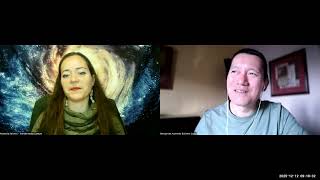
A recorded interview on YouTube where Anastasia Salichou (a Greece-based transformation coach) discusses her work using the Akashic Records and energetic coaching tools, how she applies those tools to personal healing and business strategy, and concrete advice for solopreneurs at different stages. Key practical takeaways include: heavy early practice (many pro bono sessions), clear boundaries for volunteer work (six-session blocks), session lengths (1–1.5 hours), experimenting to find values-aligned niche and offerings, protecting energy to avoid burnout, and planning whether to scale or keep a small/audience model. Anastasia has shifted from health coaching into broader energetic/mental/emotional work and intends to experiment with group offerings going forward.
Questions this video answers
Athens, Greece.
Six sessions (per volunteer client).
One hour or one hour and a half.
She stopped health coaching three years into that work.
Chapters
All right, I'm excited to be here with Anastasia. I'd love for you to first introduce yourself a little bit Anastasia to our audience. And you've been a solopreneur for a little while, and I just wanted you to kind of pick your brain on what kinds of lessons you've been learning. I love that you have done some YouTube videos, you've done Facebook posts, you've done a lot of client work. We were talking about the the other day, and so, yeah, I think a lot of lessons to teach both beginner, intermediate solopreneurs, and maybe even some advanced folks can learn from you as well. So let's start with, well, tell us where you are in the world and tell us anything you like about your work.
Hello, George. I'm very glad to be here. I live in Greece, so I'm based in Athens in Europe. And thank you for pronouncing my name perfectly. My name is Anastasia Salihu. I know it's difficult for some people, and I call myself a transformation coach. So I help people bring the transformation they want into their life, their relationships, or their business. And I use energetic tools to do that. Energetic and coaching tools to do that. And I work through what we call the Akashic Records, which is a field of information. So I work in a psychic way to bring the information that's needed and ground it into the here now and help people make changes in their lives so that they bring more of what they want.
Yeah, that's great. Great. I love the concise and very meaningful introduction there. And so, gosh, so many things I want to ask you. So, first of all, I think some people listening or watching might not have heard of the Akashic Records or they may have heard of it, but I'd love for you to say a bit more about what it is from your point of view, since that is a one of the tools. And if you want to name any other energetic tools that you use might be interesting for people to know about. But let's start with Akashic Records. What is it from your point of view and how do you use it?
Yeah, the Akashic Records. Otherwise, Book of Life or Library of Souls, it has had many different names from different civilizations around the world. It comes from this ancient knowledge that information is kept in an ethnic way in a database that's called the Akashic Records. So the Akashic Records hold information about all souls from their inception, from their creation till now, and also possibilities for the future. So when I go into the records I use several different tools and modalities I've learned over the years in the Akashic records. And I retrieve information that's needed for people. Some of this information is shown skills, specific traits we bring into the world. And if we use them, it's like investing in our talents. And most people don't do that, by the way. And some other information is about blockages, energetic blockages that we have created. So when we bring this knowledge, awareness and consciousness into people's lives, they understand how they have been doing things that are not working. So that's. It's like breaking the spell in a sense. They understand how they are doing things and they change, they cross correct in order to be more aligned to who they are.
That's great. I love that. So you're kind of a. Kind of a spiritual librarian. You help them find the right records, something like that. That helps them to unblock and to make progress. That's more efficient because they're using their talents. I love that. How do you use, or do you use the Akashic Records for your own business? Maybe strategy decisions, understanding. Anything you'd like to say about that?
Yeah, I use it for sure for my personal healing in order to see where my blind spots are, for sure. When I saw what my skills are as a soul, as a person, it helped me become more concise in my business. And now I know what I'm in a general term, what I'm supposed to be doing. Of course it can change a little bit, but the essence is the same. And then I periodically, I use it to see blockages that are coming up or energetic enmeshments or attachments I have created that I don't want to hinder my progress. And then they do help me a lot with strategy. So there are ways to check whether specific strategies are more helpful than others. They can bring more of the outcome of what we want, but it's, it's. The Akashic records are a very useful tool, but at the same time kind of difficult to use because we have to be very precise in what we're asking, very precise in what we are looking to create, and very non attached to the outcome of what we're getting. So it is a. It's a process that takes diligence, discernment, a lot of effort in a sense, especially when we're doing it for ourselves. But yeah, it can help me in several different ways, for sure.
That's great. So when you said doing the first. So it sounds like it might be easier when you're working with somebody who can access those records, then it might be kind of easier to bounce ideas with each other and find the more accurate or.
Yeah, sometimes these I have.
That's great.
Yeah, I, I do. Sorry there's a lag probably. I do work with some practitioners sometimes to help me. Yeah. See my blind spots again and help me.
That's great. That's great. Okay. So I, I guess I'll. I'll ask you kind of a general question and we can dive more specific into that. So, you know, folks who are listening here watching are what I call solopreneur. So this is perfect for what you're talking about. I, you know people who, solopreneurs who are building a business or a true livelihood from work that fulfills a, that really is an expression of their soul or fills their soul. And they obviously would like it to be financial. Most of them would like to be financially thriving as well and not just a hobby. And so given that you have been, you have worked with hundreds of clients, you have created lots of content, both videos and social media posts. What. Let's talk to several groups of people here. Let's talk to the beginners. And then so let's talk to the beginners, people who are just starting. And then later I'd love for you to talk with somebody who is maybe a few years in, so maybe like your earlier self. Okay. And then finally we'll end with what advice might you give to someone who is at your stage of business development? So you know, and, and you could keep your answers as short or long as you'd like, and anything that comes to you is, is great. So let's begin with the beginners. So, and if, if it's easier for you to imagine yourself at the very beginning of your, your, the career that you have now or the business that you have, then you can, you can use that as a person. Or you could, if you can think of a, a client or a friend who is at the very beginning what guidance, encouragement. Yeah. Strategy or, or insight. Might you. Might you offer them something that kind of. You wish you knew or that you, you really want them to know?
Yeah. Generally or as far as social media.
And could be, could be whatever is coming to your mind that you think is. Is important to share.
I think that if I went back to my past self that she was starting or was like 1, 2 years old in the business, I would say experiment as much as possible and make sure you know your values. And that's. That, that's something I actually did, like, experimented a lot. Experimented with different modalities, with different clients, with different aspects of their lives, from health, physical health to emotional, mental, business, anything I could get my hands on. So I understand what brings light to me and what's easier for me to help them with. So experimenting and knowing their values so that they, because the world of business and social media, it can be, I won't say deceiving, but it can make people do things that they don't want to do because they think they have to. And then they might burn themselves out or they might go in a direction that doesn't work for them. And I've seen that a lot with people I've worked with. Like people that came to me, they were totally burned out. Burned out. And although they love their business, they didn't want to work on it anymore because they couldn't. So that's, that's a, that's a bummer if this happens. So keep their energy. I guess maybe that's a lot of information, that's a lot of guidance. But yeah, expectation, values and preserving your energy.
Yeah, yeah, really good. I mean, it's true when you're at the beginning and you're learning about business, it's, I mean, you come across, you know, 12 different strategies and oh, yeah, okay, I gotta, I gotta learn everything so that I can find the right one. Let's, let's talk a little bit about that. Actually, I'm curious, like, because you're saying to experiment a lot, some people might feel like a little bit overwhelmed and think, oh my gosh, how much do I have to experiment with? So I, I like that you said experiment with the type of work you're doing with your clients. Right? Like, oh, am I going to help them with their relationships or their career or their, simply their spiritual path or their health or whatever it may be. And you kind of experiment with these different issues, presenting issues that, that you are willing to work with and saw which ones you found most impactful from your, from your modalities. What about experimenting with getting clients? And if you want to share anything that was useful to you in the beginning, and I don't know if it's still applicable today with today's, you know, technologies and whatnot. But, but anything in terms of marketing or getting clients, that, because there's the, there's a universe of strategies, so many different things, what might you advise the beginner to be calm and choose something and, and, and how might they actually get their first couple of clients?
Any, any suggestions There I will speak from my experience. Yeah, I show it to work with people that I worked for free with a lot of people.
Oh, interesting. Now how did you announce that? Or was that just you. You started to post on your Facebook or how did you even get your first couple of volunteer clients?
I guess, yeah. To be honest, the first volunteers were through my school. I studied health coaching and yes, your classmates. And yeah, they said do eight practice sessions. I did 100. So, okay, this is, this is huge. Everybody gets my hands on everybody. Yeah, I really wanted to become really good at it and learn how to do it. So I did as many as possible. And then I started working with friends for free. They got results and they told their friends and when they told their friends, I started charging. But I did a ton of work for free. For sure.
This is, Yeah, I really, I really appreciate hearing this. I actually didn't know that about your, your, your past and I am delighted to hear it because I think it's like one of those hidden, hidden parts of a lot of people's successful coaches stories. Because we typically, a lot of, maybe a lot of beginner coaches have this idea that, oh, I'm just going to, I got my training or something, I've got some certification and I'm not just, I'm going to post about it and my friends and family are going to get me clients or, or social media will somehow find my writing so interesting. And so, and I'll just get, get paying clients right away. I'm going to, I'm going to start by charging, you know, $200 per procession because I'm worth it, you know, and they probably are there. I mean, I always like to say, I don't like to use the word worth in connection to pricing because we are worth infinite. But there is such a thing as market rates and what the market perceives of your services and what the market perceives as the right pricing at the current time. And so I, I have this thing I call the tapering strategy, which I recommend everybody might look up tapering strategy for getting clients which is aligned with what you just said. Like, you got, you got a lot of work in a lot of practice. Right? And it was true. I mean, they called the practice sessions and they said 8 and you said, well, why stop at 8? I'm going to keep practicing. And I love that you will first help your friends. Of course. That makes sense. You know, your friends are, are already reachable by you easily and, and they're probably curious what you're doing and and they're very generous to support them for free. And, you know, now question there, when you help your friends, did you have some kind of boundaries that you had to set in terms of like, okay, I'm, I'm giving away one free session per person or how did you do that?
Yeah, yeah, for sure. Boundaries are important. In this case, I usually said six sessions, and then they would get a lot of. Out a lot of outcomes from the six sessions anyway, so successions was enough. Like, it wasn't too little. Like, too little. Like, in a sense, we started working together. But then I'm leaving you, so I wouldn't feel good. It was a complete package. So, so it was six sessions, and then if they wanted to continue and some of them wanted to continue, they.
Would have to pay an amount that's really, really generous. Six sessions. I was expecting to say, you know, two or three or something like that, but I, I, and, and probably some friends didn't need all six sessions, I imagine. But, but that's very generous. And, and the sessions were what, half hour or one hour or how long were they?
They were one hour. And again, I'm talking about health coaching. So we had to take them through a process of detoxification. Like, it takes time. Yes, it takes time for the detox. So we, the sessions. My, my sessions are either one hour or one hour and a half.
Okay, wow. And, and they weren't necessarily once a week. They were maybe some time every other week. Every other week. Ah, got it. Okay, very helpful. And then once your friends got results, of course, you know, having a coach like you and helping them, you know, apply things. And, and by the way, did you also frame these volunteer sessions as, like, case studies or, like, how did you frame it so that they, they took it seriously or they really valued it? They really did. What homework you assigned them? I mean, especially, especially health. I imagine changing health is not easy. It's one of the hardest habits to change. Right, so how, how did you frame it so that they actually wanted to do stuff? I mean, this is true not only with free volunteer clients, but also paying clients. How do you, how did you frame it so that they actually wanted to do? Because if they don't do, and our clients don't do anything, they can't expect results. It wouldn't be fair. Right.
So, yeah, yeah, that's a very good point, because especially when people get things for free, they might not value them. And I've had that happen to me too, which is frustrating. But I knew that this might I didn't know beforehand when I was there, I was like, okay, this person is not valuing it because they are not investing in it. And that's also with bad clients. Right. As you said, some people, some people find the sessions very expensive and they be like, okay, I have to try to do as much as possible. And some other people find it like, oh, okay, whatever, it's another session. It can happen. I'm trying to phrase it as precisely as possible at the beginning, so, so that they know what to expect. They know how long it takes for them to actually see changes and that they will have to work. But I tell them through email and verbally that their progress is directly proportional to how much they work outside of our sessions, not only during the sessions. So that's very important. For sure.
Yeah, that's really good framing. So bringing that. Let's bring the stage of business more towards the present moment. And let's say you had you have a friend who is in, at your stage of business right now, at your stage of development, what advice, you know, encouragement, guidance might you, might you offer them if there's, hey, Anastasia, what I'm, I'm, I'm here in my business and you're like, oh, I recognize that. What would you say to them?
Well, I think that one important thing to remember is to have our priorities straight, like what we actually want to. Because there are some people that they want to create a little bit of income in their business and some people want to create an empire. So it's important for us to know where we are and not again, not be influenced by everything that's going on with the idea of make six figures in six months and follow me and three step strategies and all these things, which is a lot of noise because I see a lot of people that don't have the capacity to create an empire, but they think that's what they need to do and that creates a lot of misalignment and a lot of pressure. So it's important for people to know where they want to be, how much money they want to make, how many clients do they want to have? Like how much time do they want to spend in their business? Very, I think that's very important because everybody has a different threshold, different needs, different desires, and they have to know what is theirs.
Yeah, I really appreciate that.
That's very important.
Yeah, yeah. I recently wrote a blog post called Tiny Audience, Great Business and I encourage folks to look that up. You can Google it, probably find it. And I am returning to that Because I had some years in my business where I thought I was going to build an empire and kind of, I was like kind of on the way there and then I realized, nah, actually I much prefer something much more intimate and I enjoy it. It's much simpler, less headache. And I make enough money, I make, you know, and, and that's, that's, that's just a happier end, more fulfilling life, more spaciousness also, so that I can think more deeply and create more intentionally. And so I really appreciate you saying that because I think most of the business allowed business sort of content out there is about scaling, scaling this, scaling that, you know, Anyway, so. All right, I'd love to. We're starting to close in on the completion and I wanted to hear more about your evolution going forward or what you're intending going forward because you mentioned in this conversation that you did a lot of health coaching in the past, but you are, I think you're evolving away from that or evolving to something different. Tell us more about what you're intending your client work to be much more about going forward.
Yeah, I stopped doing health coaching three years into it because I found it was, I mean, it was amazing and people were getting a lot of results. And it's important to start with the physical health, in my opinion. But I realized that mental blockages and belief systems were very important for people and they wouldn't change if this didn't change. So I started working on learning more about it and studying the Akashic records and working more on the energetic, emotional mental support. So now my business is not about health coaching. If my clients have health issues, we can work on that energetically, mainly. But I do run some detoxes because I think they are very important. But most of my work is the people's relationship with themselves, their environment and what they want to do and create in their life. That's where I'm focused. So it's a lot of hand holding, a lot of tough love, a lot of mirroring back to them what's not working and what they're doing that it doesn't work for them. And in the future. So so far I have been working mainly one to one. So I would like to maybe work, create some spaces where there's more group sessions happening and experiment with that and see how it goes, how it is. For me, I've done that. And I love the group setting because people get a lot from sharing and a lot of transformation themselves when somebody else shares or understands something. But maybe to make it a little bit more scheduled out, a little bit more programmed, and a little bit more grounded in my business.
Great. That's great. Yeah, absolutely. It starts from the mindset and the heart set. And you are well qualified to kind of support people in, in that transformation, given what I know from you. So is there anything else you want to share as we conclude this, this conversation for now?
Yeah, I guess. One last thing. If I can give one last thing as an advice for people, business is a marathon. It's not a sprint. So keep working as it is, as if it is a marathon. Not like you have to do everything now and create everything now and lose yourself in the process.
Yeah, that's excellent, excellent advice. Along the way of that marathon, there are supporters like Anastasia to cheer you on, coach you, help you through the difficult patches. So please reach out to her if you have any. If this conversation was interesting and you want to maybe explore working with her, I'll put the links below. So thank you so much, Anastasia, for your work and your heart and what you bring to your clients and your. And your audience.
Thank you, George. Thank you for having me and I really enjoyed this conversation.
Yeah, thank you so much.









