Authentic Business Success? Prioritize Your Inner Life in These 3 Areas ✨
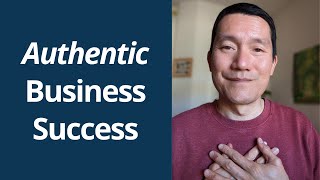
George Kao reflects on his entrepreneurial journey (starting in 2009), burnout from chasing external markers of success, and a 2014 restart that reoriented his priorities. He argues that sustainable, authentic business success comes from focusing on internal metrics rather than externals like money or followers. He highlights three internal areas to prioritize: (1) mastery of craft (measured by student/client improvement), (2) ongoing spiritual/personal growth (his ‘‘spiritual Alphabet’’ and weekly practices), and (3) balance between work, rest, and hobbies (scheduling and recovery). He contrasts scarcity-based external metrics with abundance-based internal growth and notes his business stability since about 2015.
Questions this video answers
2009
Around 2012–2013 (three to four years after starting in 2009)
2014
Since 2015
Low six figures—about $200K–$300K per year
Chapters
I remember having an exploratory call with a potential client and I asked this person, well, tell me about your goals. And what they said back was, well, I want a business beyond my wildest dreams. Doesn't everybody? And you know, I always remember that because that energy of chasing wild success was the same energy I had when I started my business. And I'll say when I was maybe less sophisticated about the truth of the entrepreneurial journey. Not that we can't achieve wild success. I feel today, I mean, looking at where I was back in 2009 when I started and today, I would say if I looked at my business today, I'm like, that's, that's pretty successful. But the chasing is what I want to talk about and what I'm doing differently over the years with that chasing. And I guess maybe what we're talking about is the definition of success. I think it's really important to continually return to how we consider ourselves successful or not successful, because a lot of us are unknowingly defining success based on some kind of meeting of our parents expectation, perhaps, or some other family members expectation or to try to compete with our friends, our colleagues, to say, well, look, they're, you know, maybe it's, you know, high school friends, college friends or, or, or just people we've met, you know, in our, in our adult years and say, well, that person can do that. Well, I can, I can do that. I should be able to. I should be. It's either, well, I can do that too, or well, look at them. I sh, I should be farther along by now. And if you ever have these thoughts, I want to encourage you to let them go when you, when you catch them, let them go and replace them with something that is more uplifting for you, something that is more encouraging. Because any of those thoughts of competing with others or chasing after an external metric because you should be further along, is eroding this authentic power that you have to actually create with your unique genius. And so basically I burned out when, when I started my business in that way, Learning from the 6 Figure 7 Figure 8 Figure Gurus who are putting those thoughts in my head of success means a certain lifestyle. Usually it's on the beach a lot, you know, usually just they look like they're on vacation all the time and they have big houses, you know, fast cars and you know, just they, they look successful, whatever that means in the maybe Hollywood or media sense of things. And I burned out after three or four years of chasing that. So 2009 to 2012, 13. I kind of burned out in that time and I restarted my business over because I said, you know, I, I'm doing business in a way that doesn't feel true to me because I'm chasing after those metrics. And I started off back in 2014 trying to be. Find my humility, find humility again in the face of, you know, my, my divine source and believing and, and remembering that in some mysterious, magical way. Number one, I believe we're all taken care of. Our souls, at least, are all taken care of for eternity. And number two, I believe we're here in this life not to experience, well, sure, experience pleasure, that's fine. And to experience success or ambitions, that's fine. But I feel like the something deeper for this life is something more along the lines of spiritual growth, you know, expressing our soul's purpose, loving one another, loving ourselves. All these deeper metrics, you might say, is what I recommitted to when I restarted my business in 2014. And so I made a decision that I'm going to be. I, I'm, I'm happy being average in the external metrics, but to lead from the internal metrics. Let me say that again, when it comes to the external metrics of followers, how many followers I have on the different platforms, how much money I'm making, the external things that humans measure success, I just want to be average. I just want to aim to be average. Now, truthfully, I, I think the amount of money I'm making is actually above average for people in my industry right now. But it's not seven figures. It's low, you know, low ish. Six figures, 200, 300K a year. It's. But it's. So I guess, depends on who you compare it with. I think based on the kinds of success metrics in my industry, I am average at best. Okay. And definitely based on the followers of my industry, I am below average. Maybe if you wanted to say what is a successful business mentor or business coach, I would be below average in the. In terms of followers. But here's what I'm happy about is that the stability of my business is above average. I just heard today from a client of mine who said that she had worked previously with another business coach who made big promises and, you know, ran a pretty good program, but their business went under, the business coach's business went under, and they couldn't keep their promises and their guarantees even meet the guarantee. I'm like, that is so common in my industry that people just have these blips they look really successful, but you don't realize that, you know, they're, their business is not stable. They like, are not able to fulfill the promises to their customers and their students and their groups and their clients. Whereas I have been stable in my business since 2015, I restarted in 2014. I kind of started my group programs again in 2015. And I've been stably growing since then, both in my money but also in, in my ability to serve my clients and my audience. And it's, that's really hard to. It's surprisingly hard to come by. There are a handful of people in my industry whose businesses have been stable for more than, you know, three, four, five years. So the key, in my opinion, the people who are able to be stable and not flaunt their wealth and success and show, you know, look like their life is always on vacation. I think the key is to prioritize the internal metrics. That's the secret of success in a sustainable and authentic way. Prioritize the internal metrics and just be happy with being average in the external metrics. Now, average, of course, depends on who you compare it with. But just to be as happy as possible with whatever our external metrics are, but to prioritize the internal ones, let me go ahead and share with you. Well, what are the internal metrics that I am prioritizing and that you might want to consider how this aligns with your own chasing after success or your own prioritizing every. For your annual goals, for your monthly goals and your weekly goals, and your daily sense of whether you're making progress or not. So let me, let me share this with you. There are basically three major areas that I prioritize and I kind of let the externals take care of themselves, the external metrics will take care of themselves as I take care of these three internal ones. So number one is to become ever more masterful at my craft. And some of you already do this. You are taking courses to improve your coaching skills or, or your mentoring skills or your healing or your facilitation or your technical skills or whatever it is that you deliver to clients. You know that, that. So for what I deliver to clients is the ability to teach better, to coach better, particularly in specific areas like, you know, advertising and productivity and how to, how to frame our message, wrangle all of our ideas into a framework and to launch courses, to self publish books and to, to do net caring. So I, that's sort of like my sort of quote, quote unquote technical skills that I'm Continually working to improve, to become better at, based on what I notice works with my clients and myself and learning from other people, other mentors, and noticing, you know, my, my clients, what they're trying, what's working out. Am I gathering all this stuff to continually refine my body of work, essentially. And if I get better at my craft, all of my students benefit, right? All of my clients benefit. And when they benefit, it encourages me to, to get even better at my craft. So there's this virtuous cycle. So rather than the typical vicious cycle of chasing success, finding that it doesn't really fulfill, so you got to chase the higher numbers after that. Oh, that's not really fulfilling either. Chase higher numbers of money and followers and status. No, it's like with, with the internal metrics. Instead of a vicious cycle, it's a virtuous cycle because the more we grow on the inside, the more the people we, we touch in our lives grow as well and are aided and benefited by our growth. And that encourages us to grow even more on the inside. So to mastery of our craft is the first internal metric that I continually work to improve. And the metric that I use, you might wonder, well, how do you measure that in the mastery of your craft? Well, I, I, I'm, I'm getting better about that too, right? The, the, the learning how to measure the internal. So the way I measured it is like at the start of my courses that I've been teaching this year particularly, I have a start of start of course assessment to say, okay, tell me how, how confident you are about these different sub areas. In this course, I have my students score themselves, and then at the end of the course, I have them score themselves again. And I see the improvement or the lack of improvement in certain areas. I go, okay, that's where I'm doing. Okay. This is where I can improve my, my, my ability to teach in these areas. And, and so I measure the level of growth of my students and my clients as a way of measuring whether I'm mastering my craft. So that's, that's Area number one is the mastery of our craft. Area number two is the awareness of our inner qualities in terms of how our personal growth, the areas of our personal growth that touch our business growth. So for me, I believe that all business is really a stage for spiritual development. That's, that's really my, my secret intention is to bring more spiritual or personal growth into business. You think I'm teaching you LinkedIn ads or how to launch a course, but secretly I'M hoping I also infuse into you the desire to grow in awareness or in compassion or in courage or in perseverance and all that stuff, because I think that's really what's what life's about. The launching the course, making enough money, making more money. That's just, that's all just a stage to practice or, or a tool to practice our awareness, our ability to see the blessings of our life and to find compassion. Abc, right? Abcdef. I actually have. I've been writing about my spiritual Alphabet. A, B, C, D, E, F, G, H, I. 26 letters, each representing a particular virtue or value that I'm practicing. You can find that over at my Soul Gym Facebook page. If you want to search Soul Gym on Facebook, you'll. You'll find my posts there about my spiritual Alphabet. I'm publishing a book soon about that too. But anyway, that's my second major area is my spiritual Alphabet. Every week I focus on one more letter, one more virtual value. This week is. Happens to be the the letter X represents exhale X X. So it's like being aware of my breath throughout the day and how, you know, when I am, you know, working intensely on a project, I find that I'm like sometimes like stop breathing as I go focus on the breath again, breathing joy and gratitude into the task at hand. You know, practices like this that I focus on one practice each week and it's just one. It's wonderful. It makes my. Well, this is why I'm able to be stable in my business, calmly stable and growing year after year. It's because business isn't about the ups and downs for me. It's not about oh my God, successful launch, all sad, bad launch. Oh, successful, all sad, bad launch that I did that already. First couple years of my business and I just, I burned out doing, chasing those externals and focusing so much on that. Now I'm like, it doesn't matter if it's up or down. I'm focusing on the practice, my spiritual practice this week in my business. And I feel like if we each do that, whatever your spiritual practice is, if you focus on that then business can be joyful, can be. It's just a state. Whatever the numbers are, we show up consistently day after day or whatever days you work and just focus on the spiritual practice within sending this email or fixing this tech problem or prepping a client or doing our bookkeeping or planning our business or writing our content or making showing up on video or overcoming the fear of showing up on video or whatever it is we're doing. It's just spiritual practice, just showing up for it. So it's not about whether it's successful or failing successful. The numbers tend to take care of themselves if you show up consistently practicing courage, practicing graciousness with others, practicing compassion towards yourself and towards others as well. Right? So that's the second major area that I really prioritize to focus on, is these spiritual practices and the inner life continually, every single week, focusing on something. And then the third major area I focus on, third internal aspect that I want to become a leader on to really lead others to really compete. You know, these, these three. Let me say this again. This is where I'm competitive. I don't care about competing on the how much money I'm making and the followers. I don't care about that. But I want to compete with all of you and with my peers and whether we are really focusing on the internal growth. I want to compete there, compete in the good sense that I let others who are, who. Who are infusing that kind of presence into their content and their offers and the way of doing business. I want to. I want to be inspired by what's possible and try to rise that level as well. Just as I am hoping to inspire you with my internal leadership and, and inspire you to continue rising up to a higher level that, that I know you can. So the third area, okay, as I said, the first area was mastery of my craft. Second area is to practice my, you know, personal spiritual growth every day, my business. And third area is to practice balance, is to continually optimize the balance between work, rest, and hobbies. And by the way, family life kind of weaves into all that. Sometimes family life is part of rest and part of hobbies part of work as well anyway, but work, rest and hobbies, these three kind of core areas that most of us have, isn't always continually needing to be balanced, right. Have you noticed? Because work always change, keeps changing, and your need for rest keeps changing and you keep forgetting to rest enough, right? All of us do. All of us keep forgetting to take enough breaks throughout the day to be aware of recovering ourselves and our spirits and our bodies and our minds and our hearts and our emotions, regulating them also to. To work on our hobbies. Because hobbies, whatever hobbies you do, brings more creativity and fun into your life, which of course spills into your work as well. It allows you to be. To think new thoughts and to see in a new way. So work, rests and hobbies, I'm always like working on, you know, and the practicality of that is working on my schedule to make sure my schedule incorporates enough of these different areas. So I hope that this is inspiring or at least reminds you again to bring the daily focus back to internal metrics of success which are which all of us can grow forever, whereas the external metrics we all bump up against each other. It's like if you're growing in followers that means someone else. It's like attention is limited, money is also limited, right? People can only spend money on a certain number of things. So like as someone makes more money that people spending money on their stuff, there's less money to spend on someone else's thing, right? So like the external stuff truly is limited and it's like competing there's. It's like it's a scarcity game, whereas the internal is abundance game we can all get grow more and more without competing, without taking away from anybody else. So I hope this is helpful and I look forward to your thoughts and your comments below. Thank you so much for joining me.









