Avoid these misleading marketing tactics (for small businesses)
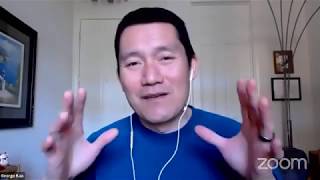
Speaker George Kao advises small-business marketers to favor authentic, relationship-centered marketing over short-term, manipulative shortcuts. He critiques lead magnets and sales funnels for bringing low-quality subscribers and forcing an "indoctrination" experience, and recommends instead posting valuable content publicly, offering clear "start here" guidance, and using one-to-one caring to attract suitable clients.
Chapters
To grow your business. You don't want just to have more people who buy from you. You actually want to have more of the right people buy from you. Because, well, if you've already gotten some clients, you know that there are some clients that are a joy to work with. They are kind, thoughtful people. And there are probably some clients that are not joy for you to work with. They are very. They either have a fantasy about what you could do for them, they think that you can solve all their problems and you know, in just one session, or they just aren't very, they didn't really read carefully what your thing was about. So they're not very thoughtful people, right? Well, I am grateful to have a community of people, a community of students and clients who are very thoughtful and kind people. And I surveyed them about what kinds of marketing tactics that turn them off and I want to share a couple of them with a couple of those tactics with you in this video in hopes that you'll be more attuned to these things not to do in your own marketing so that you can do the things that are a better alternative to, so that you can attract people such as my clients, kind, thoughtful people who are a joy to work with. Okay, so the first one that was mentioned a lot was one that's kind of surprising, I think to might be surprising to you, which is lead magnets. Do you know what a lead magnet is? It is where you go to a website and they say, oh, get this wonderful free gift, wonderful report, video bonus, whatever it is. Just putting your email address to get that download. Maybe you have it on your own website because your marketing coach told you to. You know, and I understand it is supposed to build a bigger email list, but what marketers who are not that experienced don't understand is that it builds a very weak email newsletter subscriber list, which means your open rates are lower, which means the rates of people clicking a spam is higher, which means fewer people actually get your emails percentage wise. And you actually have a, you pay more for your email list because you have more people that are actually not that ideal. And you don't, you just, you just know that your email list is not that healthy. It's just not a good feeling for. It doesn't motivate you to want to want to write more emails to your subscriber list so you don't have to use lead magnets anymore. You know, you never really had to. It's just marketers try to get clever and do things that are, that seem to work, but they're a shortcut that are not good for the long term. And that's really what all of these tactics to avoid are, is that they are shortcuts that appear to bring you profit faster or followers or subscribers faster, but haven't thought through the long term implications of what does that do to the relationship with that subscriber or the relationship with that customer, client, et cetera. Okay, so lead magnets just stop using them because it doesn't build you a good email subscriber list. And a good one is what you want. It'll motivate you to write to them because they're getting responses, a high open rate. The email deliverability, meaning how many emails get into people's inboxes instead of spam, that's much better. Lots of reasons not to use a lead magnet. So instead of a lead magnet, why don't you just create content, Put it out there, whatever you're going to put as a lead magnet, you can either create a product out of it instead of giving away for free, why don't you create a product out of it? If it's so valuable, make it a product, or if it's something you still want to give away for free, just post it online. Just post it online. Because if it's really that good, people are going to share it. Are you afraid it's not that good? Is that why you are forcing people to give you their email address? You don't have to, all right, just post it online. If it's really good, people will share it. People will notice you. They will go to your website or they will follow you on social media. There is no need for a lead magnet. So stop. Lead magnet. Stop using them. Okay. And I'm going to again, like I said, be one of the few people who are few marketing experts telling you about these things. The second one that's surprising to a lot of people, but a lot of my students and clients don't like it at all, is sales funnels. Sales funnels. Now, if you take any marketing trainings outside of what you learned from me, you're almost certainly, except for a few of my colleagues that I really align with, you're going to learn about sales funnels, meaning, oh, somebody is brand new to you. So you use a lead magnet to get their email address. And then once you have their email address, you design a series of emails sent to everybody who signs up. It's a series of emails that's designed to take them from not really knowing you're about your Business to becoming a buyer. That sounds so great. Why wouldn't everyone do that? Why? Well, basically because everyone is different. Every person who joins your email list, yes, you know about their demographics and you know about their psychographics and all that, but still very few people enjoy being converted, you might say. And whether it's a video series or an email, that thing what happens is you think people are going to read every single one and they're going to become more and more educated or converted into your, your doctrine. Indoctrination is really what they call it actually. But it's, people don't usually read those emails. Well, then you need to write better emails. It's. But the thing is, you know, as the one doing it, that you have a carefully scripted forced experience that is supposed to bring them from one state to another state. And if, if it doesn't happen, then you manipulate them further by trying to write better emails or trying to write more emails or fewer emails or include videos or whatever, whatever it may be. And it's, it's basically a forced experience that doesn't respect the autonomy of your new subscriber or your new potential client. So instead of that forced experience, what have you allowed them? You have them sign up for your email newsletter. They get the next thing that you're going to send to everybody, which basically gives them a taste of what you do. And they can of course go to your website or social media to look at other things of what you do. Okay. And you might have a section on your website that says start here. Right. Which is a great idea. Or here are my best articles, which is what I do. I have a here are my best articles. Just go ahead and read them. You know, choose the ones that you like. Some people have a start here and start with this article first or start with this video first. And then here are some other ones you might consider instead of expecting that they're going to go through a whole series of emails and be converted or be, you know. So the only, the only exception that I would offer to what I've just said is if you have an email course, say, okay, this is a five day email course and you're going to learn these specific things rather than a sales funnel that's typically done is it's not transparent. It is, they sign up for this free gift and then they are automatically put into essentially a indoctrination process that they didn't expect to be in. And that's really maybe the core of what's wrong with these marketing tactics is that if the end user, if the potential client or the subscriber knew what was happening, they wouldn't say yes to it. You see what I mean? They wouldn't have said yes to oh, I would like to be indoctrinated by you in the series from From Zero to buying your first thing. I don't think I would enjoy that process. Why don't you let me just explore your best articles or explore whatever thing you want me to read and then give me your links to your products and I'll make a decision myself. Why don't you give me that autonomy? You see what I mean? But I don't trust my subscribers. They are busy people. They are, you know, distractible. And so I must force them through a thing. Do you want me to treat you that way? It's always a good question. Do you, do you, right, want me, George Kao, to treat you as a distractible person who's too busy and therefore George Kao, should force you into an indoctrination process to go from wherever you are to buying my thing, you must buy my thing. And I must design this indoctrination process such that you will absolutely buy it. It's. Yeah, as you can tell, you wouldn't want that. I don't want to be someone who experiences that. So ultimately it comes down to the golden rule. The golden rule is to do unto others the kind of experience you want to have done unto you or don't do unto other people what you don't like being done unto you. It's very simple people, just authentic marketing, marketing that works so well for the long term and often for the short term, but not always, not as well as these persuasive, manipulative tactics. They usually work better in the short term, but terrible for long term relationships. But you want a long term business that gets easier and easier and easier over time. And that's the experience that I had, that I've had in my business now and I'm so glad because your business is going to go for another years to decades and you want the business to get easier over time instead of harder. And if you use manipulation upfront, your business will just continue to be hard. And if you don't use manipulation upfront at first, you're going to have to do a little bit more caring, a little bit more content creation, but then it gets easier and easier and easier over time. And if you want sales faster, if you want, oh, I need clients now, then you need to do more one to one connection. You need to do more one to one caring. Finding out what people really want and seeing if whether it's your product that's they need or service that they need or whether it's somebody else's, it's, you know, true caring one to one brings you the most true clients in the short term. So that's what you probably need to do to get more clients now, but also at the same time, be building a business that's going to bring you joy for years or decades to come. And that's authentic marketing. Well, even the short term one to one connections of caring, that's authentic marketing too. So there's short term authentic marketing, there's long term authentic marketing, but it's all about caring about the relationship with the subscriber or the potential client more than you care about their money, more than you care about your profits. You care about the person and you care in a scalable way, in a sustainable way. You don't spend an hour with each person, but you look at your time and you can spend time with the people that are most interested in your content. So a little bit of a tangent, but I hope this was helpful. There is a blog post associated with this that goes through some of the other tactics that you should avoid if you want to attract kind, thoughtful clients. And so I hope you'll take a look at the blog post. Those of you who don't know me, I'm George Kao. I love talking about authentic business building, authentic marketing. If you like this, you'll probably like my other videos too. And in fact, I'm going to give you a moment right now to comment if you want to add any comments or questions you have for me, which will also give me a chance right now to look at my Facebook Live commenters. So here we go. Okay. All right. So I want to thank those of you who are joining me live for this video. Dorota, Karen, Amanda, Steph, Marco, Heather, thank you so much. Thanks, Heather and Dorota, for your comments. Those are the ones I'm able to see here. Yeah. So I hope you will commit or recommit to authentic marketing because it is better for your relationships with whomever you're marketing to or with, really. It's also better for your heart. You know, it feels good to you. You feel proud of how you're doing your marketing. You actually get this. Enjoy as you do authentic marketing more. You end up enjoying the marketing process, which means that it's more sustainable for you, which means it taps more into your genius and your playfulness all these good things. And Tom, hello as well. All right, everyone, I wish you a wonderful day forward and I'll see you in the next video. Take care.









