How to be a conscious influencer? Authentically grow by supporting your audience's sovereignty 🌟
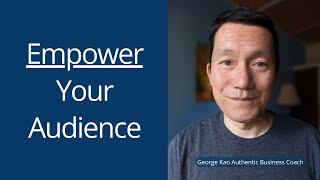
George Kao (YouTube, May 13, 2024) explores how creators can grow social media engagement authentically without resorting to manipulative "guru" tactics that erode audience members' sovereignty. He critiques projecting authoritative certainty (which encourages followers to relinquish their inner authority), then proposes an alternative approach: create content that prompts deliberate self-reflection and reconnects people with their inner power. Practical strategies offered include: speaking against mainstream assumptions in your field, addressing the audience's hidden yearnings, and relieving unnecessary burdens (e.g., perfection pressure). He closes with an Alan Watts quote and an invitation for audience feedback.
Chapters
I talk to a lot of solopreneurs about how their business is going and one of the top requests is how to grow one's engagement on social media and to do it authentically. Because typically when you learn how to do social media growth and get your audience to engage with your content more, you learn things like how to get people's attention, hacks to get your, your audience to engage with you. And all of it is so, I don't know, Machiavellian or it's very means to an end driven where it's like, oh, the thing I'm doing in the middle which is like things like visual interruption and you know, using various hacks to get people to comment or something like that. All those things feel shallow to many of us, feel inauthentic. And it's supposed to get things done so that we can then do our authentic work. And it's, it's always this thing about marketing which so many of us, you know, avoid naturally, which is I don't want to have to do something that's not meaningful and deeply aligned in order to then be able to do something that's meaningful and deeply aligned. It's the means to it, it's the age old problem of means to an end. So I want to talk in this video today about how do we some ideas to grow social media authentically without resorting to mainstream tactics. So let's set aside chasing algorithm trends and using hacks or whatever and let's talk about another common way of growing social media engagement that seems authentic and yet it actually in my opinion, takes away from the audience's sovereignty. So the method is to take on a confident air of authority and tell the audience this is why what you're doing isn't working and you should do this and you'll get these results. And the reason why this works, I mean you can, you can try it if you want to. It's this projecting of guruship essentially onto the audience of saying you should listen to me, you know, you don't know what you're doing. I know what, what you should do, do it this way and then you'll have great results. And this is not really, you know, restricted to social media. The gurus and you know, teachers have been doing, preachers have been doing that for thousands of years. And it works on social media also, right? To get people. The reason why it works on social media is because many people have lost their inner authority, especially in these days when there is so much confusion, so much overwhelm, okay, there's so much noise and there's also so much being in touch with other human beings and, and you know, kind of getting our permission to do this or not do that from other human beings. Because we are tribal creatures, we naturally think of what is right or wrong based on what we notice what's, you know, what other people are doing or saying. And so with all this overwhelm of information and connectedness with other people, especially on social media, it's easy to lose our own inner power, our own sovereignty because we just go along with what is popular or what someone tells us to do because we need things simpler for ourselves. So we say, well that person seems like they know what they're doing. I'm just going to, gonna give my authority over to them. So I've been thinking about this because I have the tendency like most, you know, confident teachers and social media influencers, which is, by the way, this is the, the path of the typical, one typical path of the social media influencer is to, is to build a cult following essentially to be a guru. I mean whether you're doing spiritual stuff or could be any other topic like it's essentially you're, you're building a cult following of people who just do what you say, which is profitable. Right. Because if they do what you say, then you can say oh, buy this, I have this thing, buy this, they'll buy it. And I, I've been thinking about this because I have that tendency and I have to recognize that within myself and I, I genuinely wish more teachers and experts would recognize within themselves the tendency or possibility of cult like you know, building to become a cult leader. And it's no, it's no joke. I have personally been part of several cults, you know, religious cults, but also business cults. Right. Multi level marketing is often kind of a business culty feeling and I'm sure political cults too. And it's so at first so subtle, you know. And by the way, I know some of you might take issue with the word cult because there's maybe a particular definition of, you know, an organizations that's trying to, you know, disconnect you from your family and friends and. Yes, but I guess what I'm, I'm using the term in a, in a looser way to talk about the loss of the audience member or the members sovereignty and inner power, like the erosion of that. So I apologize again, I'm not, and this is not a authoritative video about cults, but I, I invite all of us who are building an Audience to be aware of that dynamic within ourselves. Because it's the easy path. It's the path of least resistance to, you know, puff yourself up on the inside in order to project this kind of authority figure onto your audience so that you can, you know, get them to do what you want them to do. And so how do we still grow an audience, though, without resorting to that kind of cult building? And I'm really open to what you might think about this, actually. Please, of course I want to build your sovereignty. And you notice this is what I often do. I mean, this is essentially the path of a good coach. Right? This is where I think coaching is beautiful. Because coaching in the official way that it's taught these days, I'm grateful, is to help the client find their own answers by encouraging them to reflect on certain questions and noticing what. How they are finding their inner power and encouraging that. How they are learning to tap into their highest wisdom and encouraging that. And that's what I often try to do in my teaching. It's like I notice in my videos, I say, all right, before I go on, before I bias you with my answers, pause the video. If you would like to comment below or journal on your own, it's up to you. It's not. I'm not saying that so that I can get more comments on my videos, of course, that's always nice, but it's. It's more for you to spend a moment, to reflect before I, quote, unquote, give you the answer. It's not the answer. It's just my opinion. Right. So same here. Question for you. If you want to pause the video now and. And reflect on how do we grow an audience without eroding their sovereignty. What do you think? Okay. All right. Okay. I'm assuming you've paused the video and reflected. Now I'm gonna share what. What my current thoughts are about this. Essentially, it's to create content that encourages them to self reflect. Self reflect with a capital S, you know, reflecting and connecting again with their higher self, with their inner power, with their ability to create answers on their own. And as I think by doing this, you create gratitude because the viewer or the reader is encouraged to look within themselves to find that spark of divinity or their conscience or their higher self's ability to generate creativity and responses, answers and responsibility. Self responsibility. And I think that creates gratitude by the member because now they have. They have a. They're stronger, they're more independent. And therefore, you know, they. Well, they become more powerful in their lives and they will probably talk about you actually. Right. Because you were, you were a positive influence helping them to become more capable. Okay, More capable. That's self generated rather than, oh, I became more capable because I did exactly what that person told me. And you know, I couldn't come up with my own answers. I had to have someone tell me exactly what to do. Now, I'm not, I'm not saying this is always right for every setting because there's all, there's sometimes technical information that, you know, someone can't self generate just in the moment on the. Unless they study for months or years. And that's true as well. And, and, and I'm, I'm not saying you should never give information and knowledge from your training or your experience or your studies. Yes, do that. And at the same time, how can you encourage sovereignty? That's my question. Right. That's the authentic way of supporting one's audience. Okay, so what are some. So I'm going to just give you a couple of content ideas when it comes to supporting your audience's sovereignty. And I have some notes here. I'm going to, I'm going to take a look at this. Okay, so one of my favorite ways is to give content that is against the grain. Meaning think about your field, okay, Whatever field you are creating content in, maybe it's a field you've been trained in or studied in, or you, you're serving your clients, your field. Okay, what is a common mainstream idea in your field maybe that you disagree with? Okay, what's a common mainstream idea in your field that you disagree with? For example, in my field of, you know, online marketing or business building, a common idea is you have to create a sales funnel. And you may have heard this right? You have, or, or another one is you have to create a lead magnet which is, you know, go to, you, they go to your website and you know, oh, download this free PDF down. You know, access this free video by putting in your email address or whatever. Download this free checklist. Okay, I'll, I'll start there. I'll talk about that. And I really don't like that. I, I really dislike it as a consumer myself, as someone who serves the Internet and I really dis, I really don't believe in that for authentic marketing. I don't use it myself. I used to, but then I came to see that it builds a shallow email list. It builds a newsletter subscriber, you know, community of people who. It's not a community. It's really people who wanted that freebie and wasn't truly intending. And looking forward to your ongoing emails, I have another video that you can watch about why I don't like lead magnets. But this is just an example of saying something that's against the grain that I truly believe in, but it's not. It's something that the audience typically hasn't heard. And maybe the audience would agree with you if once you say it, then they just didn't have the words to put to it yet. And when you say something that's against the grain, it gets people thinking outside the box. And anything that gets people thinking outside the box or reflecting is a good thing because it, it makes them, it wakes them up a little bit to their sovereignty. Again, it's like, oh, I don't have to follow along with everybody else, you know, Especially if it does somehow does something doesn't feel right. Okay, that's one idea. Another idea is to speak to their hidden yearning. When we, as we lose our inner power, we also start to suppress some of our deepest yearnings, desires, vision for what life could be like. Because we, as we, as we go along with what everyone else wants of us and what everyone else is doing, we lose our inner power and we suppress our. We have to suppress our yearnings because it's not what other people are doing or other people are supporting from us. And so if you can speak again or for the first time to the hidden yearning of your audience, and it's, it's got to be something that's authentic to you, right? It's something that you have woken up to within yourself and that you are activating that hidden yearning. And you are, you are doing something about that yearning, and you speak to that within your client, within your audience member. You wake them up to that, say, wow, is that really possible for me? Yes, it is possible for you. And what will you do about it? Okay, it's. It's a, it's. It's empowering to, to. For them to reconnect with that again. Another idea, relieve them of a burden. Okay. A lot of times as we go on, you know, in society, growing up, trying to fit in, trying to have a good life, essentially, and oftentimes that's, that's about fitting in so that you don't cause trouble or cause drama or have other people, you know, to, to have other people like you, we take on burdens, obviously, we take on burdens that other people, we, we. We either other people tell us we should do this, we should do that, we have obligations, or we sense that we're supposed to, to be this way or do that. So, for example, I mean, I'll say something from my field. It might seem weird, but it's true. In my field, one of the, one of the unnecessary burdens that I try to relieve people of is showing up, being polished, right? Okay. When you make a video, you have to make sure you don't have ums and odds or pauses, and you gotta get, get rid of those pauses. You know, video editing software can get rid of the pauses, or you just have to be as polished and perfect as you can with when you're making video. And I, I teach a course on authentic video making. It's called YouTube mastery. It's because YouTube is such a big thing for video, but it's really a course about making videos authentically and how to succeed on YouTube. So I tell people, no, let your pauses be there if it's authentic for you. Let your ums and oz or whatever, verbal tics be there if it's authentic. Now, I'm not saying those are good, but you can gradually, if you want to practice saying less of them, if that feels authentic and empowering for you, great. But essentially the message is, can you lean, can you sense what your authentic expression is that you feel very, when you feel really alive? Okay. Like when you're with a supportive person, friend, colleague, you know, kindred spirit, heart, heart, bosom buddy. When you're with someone like that and you're feeling really confident and alive and you're talking about something, what is that energy? Can you show up with that kind of energy on video? Regardless of whether or not you're following the Toastmasters rules of being a good speaker? Okay, So I relieve people of that burden and they go, oh my goodness. Yeah, you're right. I, I, I, I had these hidden obligations and, or burdens in my mind for making video, and now I don't have to have them and I can come alive more. And that, that gets them more in touch with their authentic expression of their inner, inner power. And I love seeing that. So what about for you, for your field? What might be some hidden burdens that your clients or your audience have? They're assuming they're supposed to take on certain obligations in order to have a good life. As regards to your field, what does that mean for you? What might be a hidden, unnecessary burden? Maybe, maybe it's because the world has changed, maybe because there's new information that they don't need to take on that burden anymore. Okay. If you can do that, you're helping to empower their inner, inner authority. So that's. That's the message today. I hope this is helpful. I. I really hope that you'll. You'll take this to heart and reflect on how that's true for you to. How can we build an audience that empowers them rather than makes them dependent on us? And I'll end with this, this beautiful quote from Alan Watts, who said, the task of a liberated person is not to scold the world and preach to it, but to delight it back to its senses. To delight the world back to its senses. I hope that we can do that for our audience. And if we do, just like Alan Watts, your following will naturally grow. But it's going to be a community of people, a community of sovereign individuals that are grateful to you for helping them reclaim their inner power. And therefore, these are people that you can really connect with as peers and collaborate with and really enjoy supporting. So I hope this is helpful. I look forward to seeing your comments below. I know I can learn a lot from you as well. And so I wish you a wonderful, wonderful day. Take care.









