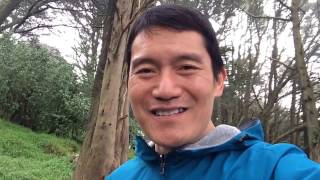
George Kao shares why free content should be casual and easy to consume, while paid offerings go deeper. He found paid workshops get 92% attendance versus 15-35% for free webinars, and he's made roughly 100 videos a year to test what works.
Chapters
3 years ago I posted on social media that I believe all content should be free. You know, if content were all free instead of locked away and paid webinars and paid expensive training courses, then humanity would grow faster. You would be able to attract your ideal audience more because of your free content and you would actually be more creative because of the how prolific you are in putting the content out. Well, now that it's been three years and I've been putting out a lot of free content, in 2015 I made over 100 videos like this. In 2016 I think I also made about a hundred and 2017 I'm continuing three videos a week. My thoughts about that have continued to mature and I'll tell you where I stand now with it. I believe that free content needs to be easy to consume. Easy, easy for the viewer or the reader to consume and hopefully also easy for the creator to just create and put out there. When people are consuming something for free, by and large they're not ready to put a lot of effort and time and thought into implementing this particular idea or applying this framework to their life. They just want something that's kind of quick and easy tips to to make some kind of benefit or to be entertained in some way. So now I recommend that your free content to put out the stuff that's again easy and hopefully entertaining for the person to consume and hopefully easy for you and casual to make like the videos I'm making like this and then your more in depth content, the stuff that takes students more thoughtful implementation to apply to their lives. Make that a paid thing. It's either a paid workshop, a paid ebook, or something like that. Because when people pay for something, they're much more energetically willing to invest the thought and effort it takes to make that thing apply to their lives. So for example, with free webinars, the attendance rate for free webinars are somewhere between 15 and 35%, whereas my paid workshops get a 92% on average attendance rate even if it's just $25. So one more thing I'll say is that I do also believe that over the course of your life make an effort to turn all of your even your in depth stuff into bite sized pieces that are easy to consume that you could eventually give it all away for free throughout the rest of your life. But for now just give away the stuff that's easy to consume and then sell the stuff that's more in depth and takes thoughtful implementation. So, and one more thing I'll say is I said three years ago that I don't believe in copyrights. And honestly, I still don't. Even my paid stuff, I don't have a copyright and like, I'm not afraid of people sharing it, except for the privacy nature of my online workshops. Don't share my online workshop videos because there are other people who are part of the workshops and that's not fair to them. But just in terms of the ideas themselves, I don't copyright my stuff. I invite people to share it. If they want to attribute it to me, wonderful, I'm grateful. But even if they forget to or whatever, it's no big deal. I do want humanity to evolve more quickly by having ideas available out there. And so that's still my belief. I think the effort of protecting our content is. Actually a lot of effort goes into that. And honestly, I think a lot of effort is wasted because oftentimes it's useless anyway to try to protect it because people will find ways to share it. And when you don't try to protect it, you free up your energy for creativity instead. So anyway, I still believe that. I hope this is interesting helpful until the next video. I'm George Kao. Always open to your questions and comments, and I wish you free and casual content that brings you your ideal audience and uplifts humanity. Be well.