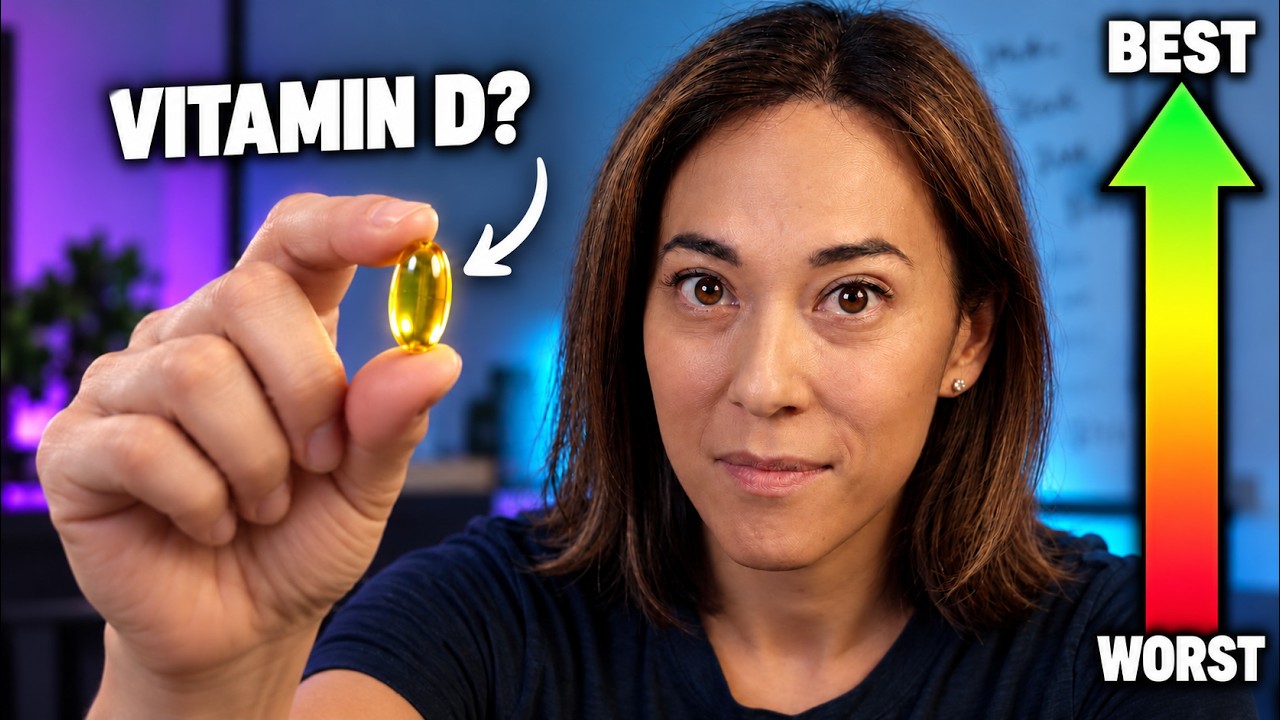
In this concise, doctor‑led video Dr. Ashley Frazee explains what creatine is, how it works as a cellular energy buffer, and why it benefits both muscle performance and brain function. She cites research showing that 4‑12 weeks of supplementation can add 10‑24 lb to lifts and can reverse sleep‑deprivation‑induced brain fog. Frazee outlines dosing: 3‑5 g/day for typical muscle benefits, 10‑20 g/day for cognitive effects, and warns that higher doses may cause water retention, bloating, or gastrointestinal upset. She clarifies that creatine is not harmful to healthy kidneys but can falsely elevate serum creatinine, complicating kidney‑function tests, and should be avoided in advanced kidney disease or severe fluid‑retention conditions. The recommended form is creatine monohydrate, the cheapest and most studied. The video concludes that, for most healthy adults, creatine is a safe, inexpensive supplement that can enhance strength, focus, mood, and possibly ease age‑related decline.
Chapters
One of the safest, cheapest performance upgrades in existence has been on the shelves for over 30 years, and 95% of people who could benefit from it still aren't taking it. Some even think that it's bad for your kidneys. Even some doctors think that. And I'm a doctor, and I get asked all the time by my patients, should I be taking creatine? So I've dug into the research, and in just a few minutes, I'm going to show you exactly what creatine does for your muscles and your brain, why it's not bad for your kidneys, and how to take it so you actually see results. So let's start with what creatine actually is. Creatine is something that your body actually already makes. It's made by the liver, the brain, and the kidneys. And we also get it by eating protein, mainly meats. Your muscles store creatine as something called phosphocreatine, and it's basically a backup battery for your cells. It helps you regenerate energy. And the more creatine you have, the faster you can do that. That means if you lift weights, you can do more reps than you normally would, and you can recover faster between sets. And over time, if you do that long enough, you build more strength and muscle mass. Studies have shown that just 4 to 12 weeks of taking creatine can actually add 10 pounds to your upper body lifts and up to 24 pounds to your lower body lifts. So that's why people take it for their muscles. It's just as simple as that. Now, your muscles, they need a lot of energy, but can you guess what part of the body needs even more energy than that? You've probably guessed it, your brain. And this is why creatine has been getting such a big buzz lately, because we've figured out that the more creatine you take, the better your brain functions. So if you give the brain more creatine, and especially if the brain is under more stress, depression, anxiety, trauma, times where it needs to focus, creatine actually helps it do all of these things better. It's like flipping a generator on when the lights are starting to flicker. Something wild that we've learned is that it's possible that creatine can actually reverse brain fog that's caused by sleep deprivation. There have been studies where they deprive people of sleep for an entire night and then given them megadoses of creatine the next day. And these people are actually able to do better on tests that require a lot of focus. Like subtracting by 7s or just tests that required a lot of focus. After they were given creatine, it was almost as if they hadn't been awake all night. So what's a big dose? Let's go through the actual recommendations of what a normal dose versus a big dose is. If you're a healthy person, 3 to 5 grams a day will benefit your muscles. And yes, it does depend on your size. So somebody like me who weighs 120 to 130 pounds only needs about 3 grams a day. If you're a bigger guy, 5 grams a day will do. But anything beyond that in the 10 to 20 grams per day range will actually spill into your brain, and that's where you might see benefits in focus, resilience, and mood. Now, just in the last couple of minutes, I think I've given you enough reason to want to take creatine, but I'll just give you one cautionary statement. If you have something like advanced kidney disease, creatine is not going to be for you, and here's why. It's not actually bad for your kidneys, but it can really muddy the waters when it comes to testing your blood work to see how well your kidneys are functioning. See, if I do blood work on somebody and their kidney function comes back abnormal, I'll usually ask them if they're taking creatine because the byproduct of creatine metabolism is something called creatinine. And creatinine is what we measure in your blood to see how well your kidneys are filtering your blood. So it can be falsely elevated if you're taking creatine just as a byproduct. And so if you have actual kidney disease and we're using that to measure how well your kidneys are functioning, it's going to be really confusing. And if you're somebody who deals with a lot of water retention and swelling, creatine is probably not for you because it does pull more water into your system. So it might not make it worth it for you. And one more thing, if you take too much creatine at once or you load it really aggressively, you're probably gonna notice a lot of bloating and digestive discomfort. Some people get a lot of stomach cramping or diarrhea with it. So just be careful, start really low and increase it slowly, or split the dose up into multiple times a day. Really hydrate and consider not mega dosing it right out the gate. And if you wanna know about the form, creatine monohydrate is the safest and cheapest. It's been the form that all the studies have been done on, so go ahead and use that. You don't have to get fancy with it. But bottom line, creatine is actually one of the most safest, most effective And cheapest supplements that we have. And as long as you don't have serious kidney disease or issues with fluid retention, you probably have a reason to take it. It can keep your muscles strong, your brain sharp, and maybe even make aging a little easier. So that's the down and dirty. I'm Dr. Ashley Frazee. If you want more talk from a doctor who prioritizes health over health insurance, like this video and subscribe to my channel. I'll try to keep making videos that are relevant. You guys have a good day.