Dr. Ashley Frazee documents a personal investigation into five peptide vials purchased from Chinese gray‑market suppliers. Independent lab testing in the United States revealed that none of the vials contained the labeled peptides (BPC‑157, CJC‑1295, MOTS‑c, etc.). The video uses this case to expose systemic problems in the unregulated peptide market: inaccurate fill weights, outright compound substitution, and forged certificates of analysis. Frazee interviews Raphael Mazier, CEO of Finric.com, which crowdsources free peptide testing and publishes results, highlighting three major failure categories—supply‑chain competence, product substitution, and unreliable documentation. The discussion contrasts these issues with the rigorous quality‑control processes of regulated compounding pharmacies, illustrated by Sean Nourian of Empower Pharmacy, who explains FDA‑mandated sourcing, testing, and licensing. The narrative also covers high‑profile scandals (e.g., Paradigm Peptides), the growing regulatory push to move popular peptides back into pharmacies, and practical safety advice for consumers navigating the gray market. Frazee concludes with a call for better regulation, informed purchasing, and offers educational resources for clinicians and consumers.
Chapters
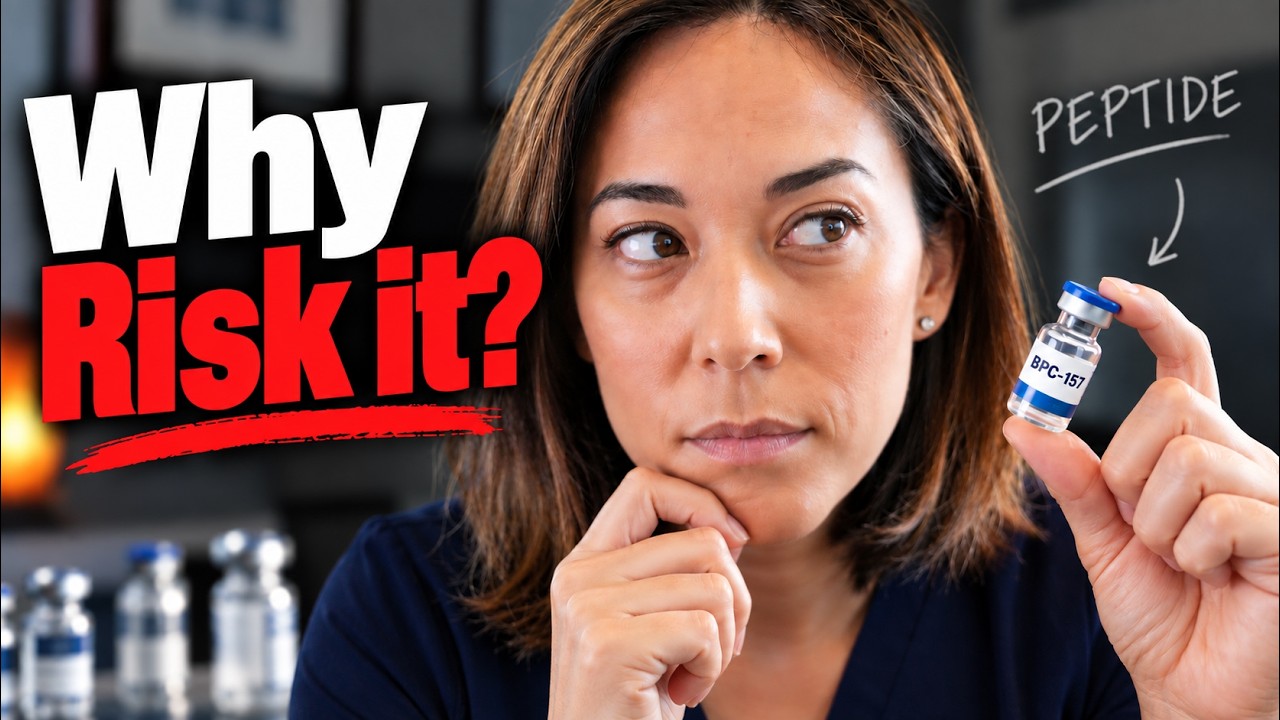
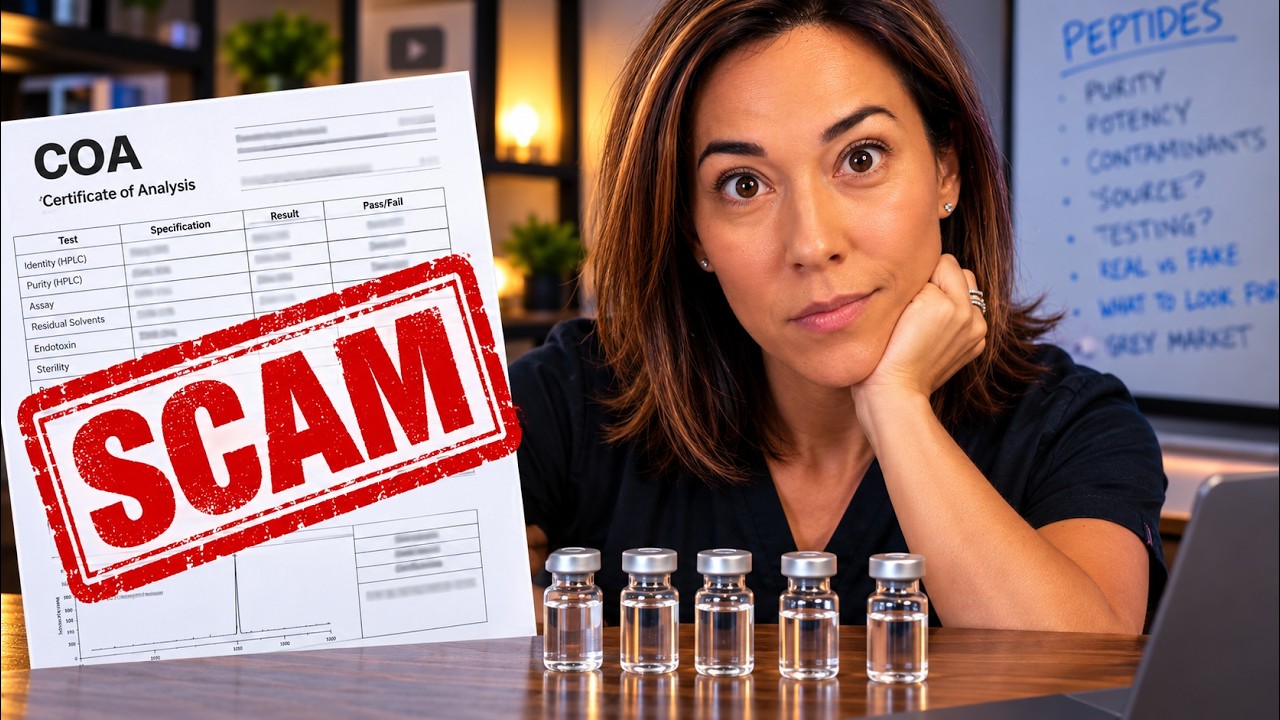
This is a peptide I bought straight from a supplier in China. And this is a certificate of analysis for this peptide. This document says that the peptide in this vial matches the label on the container it came from. But this is one of 5 certificates I received when I sent a vial from this same batch to a lab in the United States. There is no BPC-157 in this vial. Or CJC-1295 in this one, or MOTS-c in this one. I did this with 5 different peptides, and all 5 of them failed. And quite honestly, I was shocked, not only because every vial I bought has to go in the trash now, but getting these tested was expensive. And even though I bought these peptides to prove a point for this video, whether they tested accurately or not, because I honestly didn't know what would happen, was going to share the data with you anyway, I still got scammed in the end. In this video, I want to share some scary details about what's happening in the peptide market with you. See, the difference between what a lot of people think is happening in the gray market versus what is actually happening is very different. Because with rising peptide popularity, the problem is not getting any better. It's getting worse. And honestly, it's getting worse than I thought it would. I'm Dr. Ashley Frazee, and And I'm pretty pro-peptide. Most of the videos on my channel up to this point are about peptides. I love understanding how these things work at a cellular level and sharing it with people. But I'm also incredibly concerned. Open up social media and you'll see all kinds of posts and advertisements around peptides. People with piles of peptides and cases they got from China on their kitchen counter. I even see advertisements with my face and my videos on them using my content to sell peptides that I have no connection with. So needless to say, it's just getting really fishy out there. I mean, for a while you could even buy peptides in a convenience store in New York City, and their advertisements went viral. But they got busted because a journalist sent 4 of their peptides in for testing too, and all of those failed. Now I paid over $600 to get my peptides tested, but the journalist from Wired sent their peptides into finric.com to get tested for free. which was probably smarter, but I didn't have a whole lot of time. But I actually reached out to finric.com and got in touch with their CEO, Raphael Mazier, because finric.com is a website that I already knew about that's become a major hub as an online database for peptide verification, meaning people are free to send in any vial and have it tested for free. And Finric posts the results on their website. So I asked Raphael, what are people not realizing when they buy peptide vials off the gray market? And he actually pointed out that when you buy peptides online, You're actually entering an environment where consumer protections simply don't exist.
When you start saying, hey, I am not actually comfortable with the traditional setup where I'm gonna go to a primary care doctor under the auspices of my insurance company, things will get approved, not approved, whatever. I'm gonna go then to the pharmacy with a prescription. There's a whole bunch of assumptions that the public is making in that context where you just know for a fact without examining the question, That whatever was in the prescription is indeed the correct product. And when you go and fill that prescription in pharmacy, like, the identity of the product is never in question.
And really what you need to know is this: the problem with peptides isn't whether a company can be trusted. The real problem is that there's no accountability at any level of the supply chain, not from the manufacturers or the retailers And definitely not from the people buying peptides straight from the manufacturers at lower prices. Regardless of whether it's your friend, someone you follow on TikTok, your gym, or your med spa, there is a large gap between what you think is being verified and what's actually being verified. That is the problem, and it's only getting worse. And I asked Raphael whether the mainstream surge in popularity of peptides. This new demand was forcing the market to clean itself up, he actually told me the opposite. With new distributors piling in, it's actually getting wilder. And the data Finrick gathers exposes at least 3 major failures with the unregulated peptide market. The first failure is basically supply chain competence and fill accuracy. And this means that a vial that's labeled to have 10 milligrams could actually have 13 milligrams in it or 8. And if it's 13, well, most people think that getting extra in a vial is a bonus, extra product for free, right? But from a medical standpoint, this is a huge red flag.
I'm of the school that says, well, look, if you sell me 10 milligrams and 13 show up in the sample, that is not a good deal. I did not get 30% for free. That is a signal that you do not know How to control your supply chain. Is it easy? Of course not. Of course not. Those are really small quantities in really large batches that are being produced industrially. Of course it's hard, but that's the whole point. You know, if it's cookies, I'll be happy to get 30% extra. But if it's something that I'm going to be considering injecting, yeah, thank you very much. I would rather it match what's on the label.
Raphael also told me that Fenwick has also exposed some companies trying to pull off outright compound substitution, giving you a completely different molecule or medicine because it's cheaper to produce. For example, several people sent in vials of retatrutide from a very popular peptide company only to find out that it was actually semaglutide in the vial. And Rafael said, okay, if you do this once or twice, we understand. Maybe it was a bad batch or a failure at the quality control level. But when it happens over and over and over again, well, now we've caught you. And a third failure or major red flag that the data that Fenrich shows us is this sense of a paper shield certificate of analysis, meaning how do you really trust that a document posted online is representative of the product in your package? Like, should I have just trusted the certificate of analysis that I got from the Chinese supplier of the peptides that I bought? And all of this data doesn't just live on one website. In fact, one of the biggest scandals around this came from a very reputable company called Paradigm Peptides that was forced to shut down recently. The company had very professional branding, a high reputation, and their data on Fenric was actually pretty good. They also had certificates of analysis on every product, the whole package. But then someone who bought some testosterone-boosting supplements from their site experienced steroid-induced psychosis, and they found out that it was because the supplement had actual steroids in it. So Paradigm was investigated, and on the peptide side of their brand, they admitted to using fake or forged certificates of analysis. So here's the lesson around that: a certificate of analysis posted online can't be automatic proof that a product is legitimate. It's a PDF. And a PDF can be faked. And even when a company actually is paying for third-party lab testing, how can you know if they're doing it for every batch, every time? I also reached out to the CEO of Empower Pharmacy, Sean Nourian. Empower is the largest compounding pharmacy in the country, and he gave me the rundown of what it takes to produce pharmaceutical-grade products.
There's a difference between a regulated market and an unregulated market. Regulated markets like compounding pharmacies and 503 outsourcing facilities, we have to abide by all the rules and regulations that the FDA and state boards of pharmacy require of us. And to do that, it is quite a process, especially for a sterile drug, a drug that's being made to be injected into other humans. First, it starts with the API, the active pharmaceutical ingredient, and that has to be sourced from FDA-registered suppliers and manufacturers. And the FDA goes in and inspects these suppliers no matter where they are— China, India, United States— and they use the same standards to ensure that these chemicals that these companies are manufacturing meet good manufacturing practices. And they meet the highest quality standards in the entire world. What does that mean? That means peptide purity content. It means endotoxin sterility, making sure that the active pharmaceutical ingredient doesn't have any residual solvents. Or heavy metals. We then go and we qualify the vendor before we can even order chemicals from that. And that means going through their quality systems, making sure that they are registered, that they have been inspected by the FDA. We then do our own testing on that chemical to make sure that supplier indeed says what they say they're going to do. We look at their certificate of analysis and we do our own testing on top of that.
So now you have a glimpse into how a pharmacy ensures that you get the product that you paid for. But the peptide market is just not the same. And this is the same problem that Rafael discussed too. Even if someone is paying to get their batches tested, there's no guarantee that every seller is actually doing it on every batch. In fact, he also pointed out to me that single brands aren't always sourcing from the same suppliers. Some source from multiple countries and multiple suppliers depending on pricing and supply. In fact, every shipment could come from a completely different facility. And then there are the people selling these through gyms and spas and TikTok. I mean, open up TikTok right now and type in peptides. You'll get an incredible amount of people talking about them, selling them, and literally showing you how to get them. I've seen videos where sellers are filming the back room of their gym and they're giving you instructions on how to tell the front desk person to go to the back room to pick up your peptide order. And honestly, they should be more careful because that's how the bodegas in New York got caught. So I'm just saying, when you buy a peptide, how do you know the person or place you got it from actually paid the $150 to $400 per batch to get independent verification? You don't. And sometimes they didn't. Another thing I've seen personally that makes me question some of these vendors is that I had a patient send me some photos of several different nasal peptide sprays that he had bought online, very expensive ones actually. So he wanted me to tell him how to use these safely. So I looked at the peptides he bought and I realized that most of the compounds he got, even if they were legitimate, would not be able to physically be absorbed by the nasal mucosa. And I told him honestly, I would just toss these out, not just for the fact that they might not work But why would you trust a company that's selling a product that couldn't physically work? And I don't think that vendor was making a mistake. I think they knew. They knew that these peptides can't be absorbed nasally, or they shouldn't be selling them in the first place and they don't know anything about peptides. Or is it that they know that many people don't like injections and needles, so they knew that a nasal spray sounded better than a subcutaneous injection, so they sold it anyway? And this just proves what the CEO of Fenric.com warned me about, because just because something is expensive, that doesn't mean that it's quality.
If I buy from Apple, I have a set of expectations that are based on, you know, previous experience and price point and the belief that price point correlates with quality. This sort of way of thinking does not really translate into gray market peptides. We have seen a number of US-based players where Typically, you're gonna have your face of the brand that is loud, that is a big profile on social media, and somebody in the back that's doing the supply chain, the logistics, the commercial part of the operations. And they'll have success for a little while, and they'll come out and say, we wanna be the best of the best. We want to have 100%, 110% purity, so on and so forth. And they potentially do that, maybe not 110%, but still, they do that for a little while. And then something happens. And the question is, do they catch it? Does the product, does the batch, does the failed batch actually make it to the market? Are their operations solid enough to weather this kind of event? And are they commercially in a position to just go like, we made a promise to the public, this batch is coming back. You know, if it did get started, if it started getting distributed, do we pull it back? Are we capable of pulling it back? Do we have the logistics? in place to pull it back. And I think this sort of effort, just as a regular person you would assume is part of the qualities that a brand would, would carry, this all has to be built in gray market peptides.
Now compare all of this chaos— backrooms of your gym, forged papers, broken supply chains— to what legitimate pharmaceutical preparation looks like. So Sean walked me through what real compounding actually requires. A licensed facility, DEA registration. The sourcing materials get verified against multiple standards, and there's also in-house quality testing plus third-party verification on random samples. You could get investigated by the DEA at any time, or the FDA. It's not fast, it's not cheap, but at least it has accountability. So if something goes wrong, there's a license on the line, there's a pharmacist There's recourse. Now listen, many peptides have legitimately improved the quality of life of probably millions of people. The science and the mechanisms are real, and I'm here for it. It's just that if you're going to be using something, you should be using something that actually is what it is without having to question it. And there are a lot of people working to get peptides back into the hands of pharmacies and prescribers. There are other clinicians like me who see these major safety concerns and are saying, okay, this is enough, like we have to regulate this in some way. So the FDA hosted a meeting with a committee who voted to get at least 6 very popular peptides put back into compounding pharmacies. We don't know if it will happen or when, but that was what they voted on. So there's a gap, a regulatory gap between what the science suggests is worth exploring and what's actually legal to prescribe. It's just that when that gap exists, people get desperate, so they go to the gray market and they take a risk that they shouldn't have to take. The problem with this is that when people are desperate, a lot of scammers like to exploit that. And when I talk to people about wanting peptides back into compounding pharmacies, the number one objection I hear is control and price. Won't bringing this into pharmacies just make it outrageously expensive and harder to get? And maybe that will happen. I mean, I talked to Sean Nourian about that too, and he basically said, I think that will happen for a minute, but as it gets more competitive and these things are more accessible to people, you can take the GLP-1s as an example. They were really expensive for a while, but the price is getting really competitive basically because, because everybody wants in on it. Right. So I'm not here to try and scare you into never getting peptide curious. I love peptides, but I also need to be direct about something. If you're watching this and you already know how to navigate the peptide market, if you have a doctor who understands this space, or if you know which suppliers to vet, or if you know the forums where people test and share their results, you're in the educated minority. Because for every one of you, there is at least 10 or more people who don't know how to navigate the gray market like you, who don't have access to a doctor who can talk to them about safety, who don't know what peptide goes with what problem. See, everybody's reality is different, and some people are just more susceptible to whatever the market is offering. In fact, some of the most popular peptide companies, the ones that were showing up at the top of Google searches until Google wisened up about this and stopped it, are not always good at having quality product. But most people don't know that. So if they Google BPC-157 and they see a company with a professional website, professional branding, then they think, okay, this must be legitimate. It's ranked very high and it's easy to find. But what they don't see is the private Reddit threads and the underground forums, the Finric data that says do not buy from this company. We've tested their stuff and half of it's garbage. So the most visible doesn't mean the most reliable. It just means that those companies are the best at marketing, and not everybody knows that. But the science behind a lot of these peptides is genuinely amazing, and I've made plenty of videos exploring it. So people who are serious about sourcing, who are testing products, who are asking the hard questions, and some who are working with doctors, they're finding legitimate product, and that matters. I even have a course for people who want to know where all the hype on peptides come from, whether it came from a petri dish study or actual human studies. And I think that it's important that people have that objective information, especially the prescribers. So if you want to learn, take a look at my course. So anyway, right now the regulatory landscape is shifting. The FDA is considering moving several peptides back into healthcare and back into pharmacies. But until then, please be safe. Because right now, if something goes wrong with a gray market product, say I use these peptides instead of getting them tested, well, there's no one to call. There's no one to blame for it. I mean, how are you going to sue a factory in China? I'm Dr. Ashley Frazee. If you liked this video, please hit like for me and subscribe to my channel, and I'll keep digging into stuff to give you the full picture on things. And I hope you have the best day.