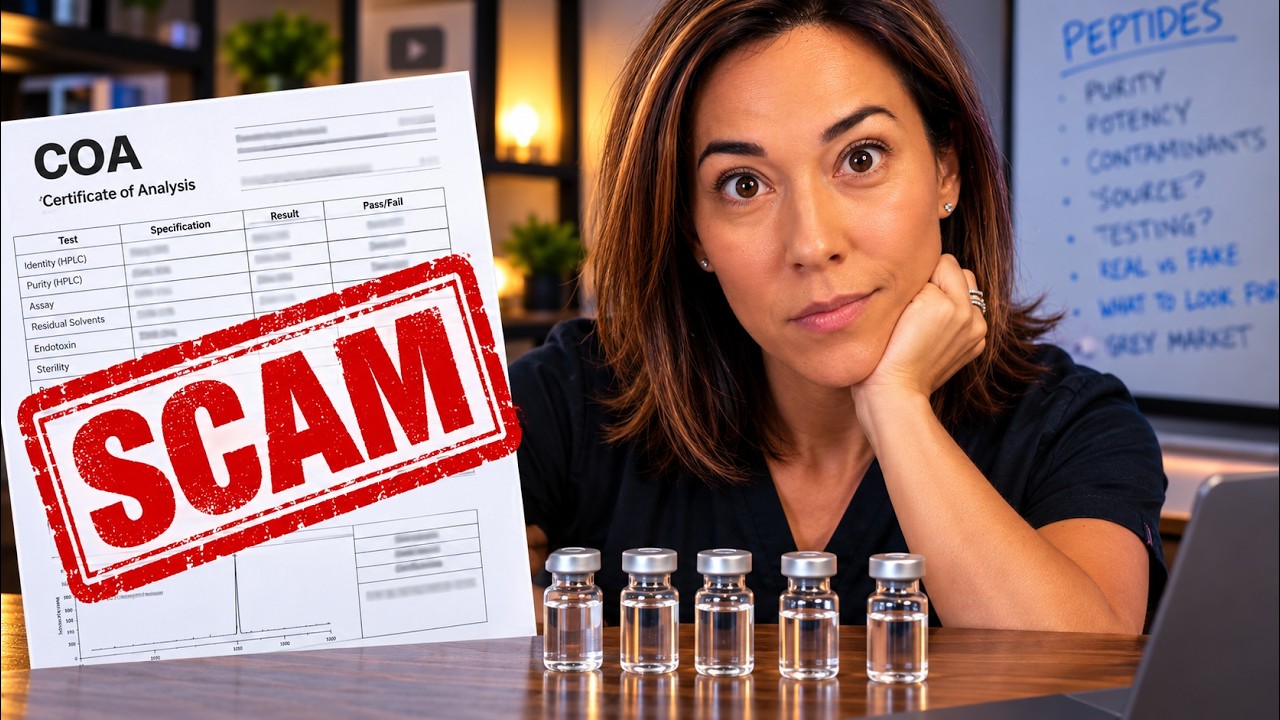
In this solo, Dr. Ashley Frazee (direct primary care physician in Mesa, AZ) contrasts platelet‑rich plasma (PRP) injections with the peptide BPC‑157. She opens with personal experience, noting she has administered over 500 PRP injections across various joints and even hair, claiming an 80%+ success rate based on her observations. She then explains BPC‑157’s origin as a fragment of the body‑protecting compound found in gastric juice, summarizing that animal studies show healing benefits but human data are lacking, and that the peptide is unapproved, sold only as a research chemical, making it off‑limits for prescription. The bulk of the video details PRP: how it is prepared (centrifugation of autologous blood), its mechanism (platelet‑driven inflammatory cascade that jump‑starts healing), robust human clinical evidence (e.g., tennis elbow, knee arthritis), and the notable pain associated with the injection, which she frames as a trade‑off that sometimes predicts better outcomes. She shares several patient anecdotes (shoulder pain resolved after one injection, dancer’s adductor injury healed, post‑lumbar‑fusion weight‑loss patient experiencing rapid relief). Dr. Frazee then directly compares PRP and BPC‑157, emphasizing PRP’s established safety, regulatory status, and accessibility versus BPC‑157’s promising animal data but uncertain human efficacy and legal gray area. An “honorable mention” on stem cells notes their higher cost, complexity, and mixed results, positioning PRP as the first‑line regenerative option. She concludes by inviting viewers to share their experiences, mentions her clinic (East Valley Direct Primary Care), and encourages trying PRP while remaining cautious about unregulated peptides.
Chapters
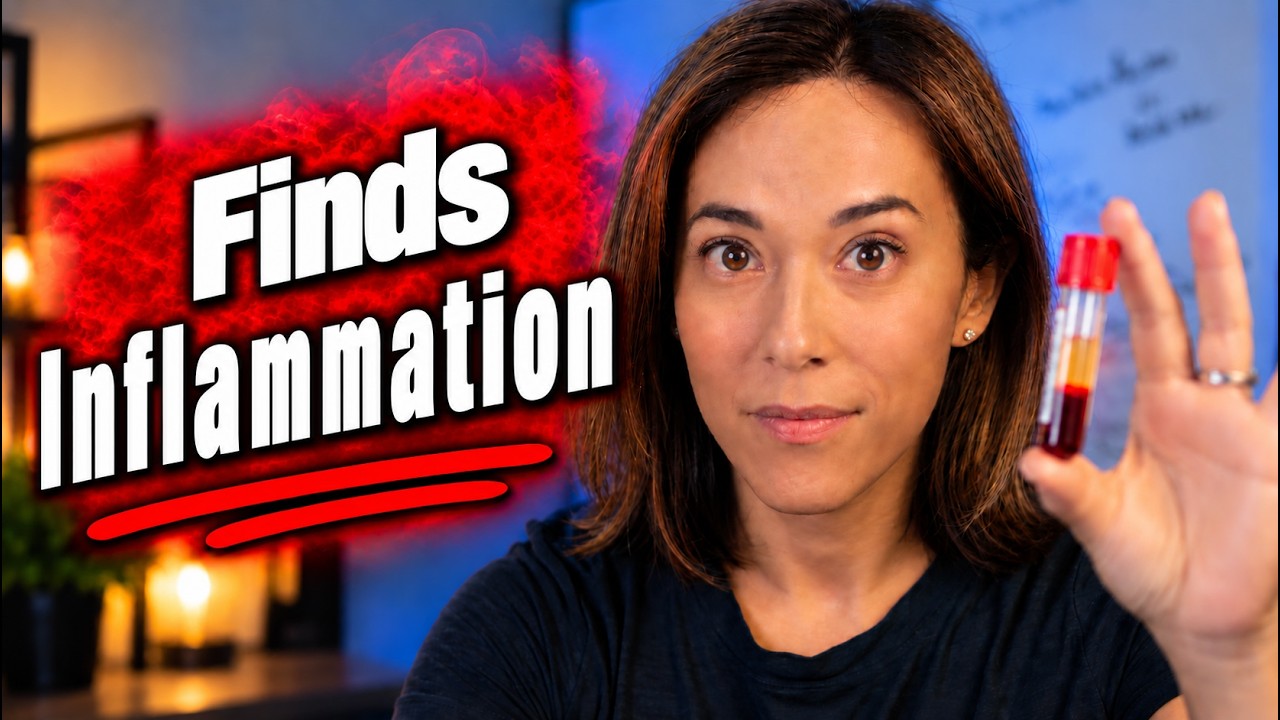
This is plasma. Don't worry, it's mine. Now, if you were to take your own plasma and inject it into an area of your body that needed to be healed, some pretty magical things could happen, especially if that area has inflammation, scar tissue, an injury, or just needs to be healed for whatever reason. If you haven't tried it, you should, and I'm about to tell you why. Listen, I'm a real doctor, and I've injected over 500 patients with plasma or platelet-rich plasma— shoulders, knees, elbows, feet, I've even seen it regrow hair, and I can confidently say that over 80% of those injections— and I'm being conservative here— have had some sort of healing, if not healed completely. The very first plasma or platelet-rich plasma injection I did was in a guy who had some shoulder pain, and he couldn't do pull-ups because of that pain. One injection later, and the next week he was back to doing pull-ups pain-free. It's been over 5 years since we did that injection, and he hasn't had any problems since. But after doing that first injection, I've been sold on platelet-rich plasma injections ever since. So when people ask me things about BPC-157 and other peptides, yeah, I've heard the hype, I've played with them, and we've been talking a lot about peptides on this channel because let's be honest, they're really fun to talk about. And I've had mixed feelings on BPC-157 in particular, but I got a ton of flack for it and I got a lot of commenters on it saying it changed their life for the better. And I've met people like that too. It's just that not everybody has the same results. I'll just say this. It works for some people, but not for everyone. And it works for some injuries, but not for everyone. Is that fair? Just don't expect your experience to be that of your neighbor Joe. But hear me out. What I'm telling you is that there are alternatives to peptides. There are other ways to heal injuries and inflammation. And I just thought that I would give you a comparison here. So if you clicked on this video to learn a little bit about BPC-157, even though I'm talking to you about platelet-rich plasma injections here, that's okay. We're going to talk about both. Let's start with BPC-157. BPC-157 is a peptide, a chain of amino acids that is a fragment of something called body protecting compound. Body protecting compound is found in your gastric juices, and body protecting compound's main function seems to be to protect the gut and accelerate healing within it. And so BPC-157 has been designed for healing. Now we know that it does this in animal studies. I just can't make any claims about humans because we don't have the data, and that's why I can't prescribe it. I'm not even supposed to be recommending it. Dumb, right? It's because it's not FDA approved. It's in a gray area. It's only sold online as a research peptide, not for human consumption. And as a physician, I just can't prescribe it unless I'm conducting some sort of research experiment, and that's just not my jam. Bottom line, there's lots of hype around it. Lots of people use it anyway. It's got a great track record. Listen, I'm not naive, and I'm not ignoring the fact that a lot of people have had life-changing experience with it. I actually believe that the nature of the injury or inflammation and your genetics heavily influence whether or not it's going to help you. Is it worth trying? I can't tell you to try it, but I've tried it. Would I try it again? Yeah, probably. All right, let's switch gears here and talk about something that I have way more experience with— PRP, or platelet-rich plasma injections. What is it? It's plasma derived from your own blood. There's really nothing added to it. Now, to make plasma platelet-rich, you just have to centrifuge it or spin it really fast to get the platelets to concentrate to the bottom of the vial. Now, if you want to get nerdy with this and understand why we do this, It's helpful to know why platelets can induce inflammation and healing. You see, platelets, when activated in the body, and activation just takes injury, they basically set off a cascade of pro-inflammatory signals. All this starts the natural healing cascade. The way I like to put it to my patients is this: when you inject platelet-rich plasma into an area of the body that's having trouble healing for whatever reason, again, scar tissue, injury, it's just been a long time and the brain kind of shut down the healing to it, and you go in and you slug some plasma into that area, it's like activating new blood flow. Now we're injecting a whole syringe of this stuff, not just a droplet or 2 like you would get from a natural injury. And so when we do that, the brain and the body thinks that we've just massively injured you in that area. It's a great fake out, but then your body goes in and does a better job healing that area than it was already doing. Now here's the best part. PRP has a lot of data behind it showing that it works. We've got a lot of studies on tennis elbow and knee arthritis in particular. So this isn't just hype. There's actual data backing it up. Why we have studies on platelet-rich plasma and not BPC-157? Because it's not a drug. Beats me. And I'm not hating on peptides. I have 4 videos on peptides. It's just that I'm not allowed to encourage you to take them because human data is lacking and the FDA doesn't want us doing it because it's unregulated and not safe. So PRP has way less potential risk, I guess. It's coming from your own body, so that makes sense. Now I have to warn you, there is a downside to platelet-rich plasma, and that is it's pretty painful. Everybody asks me, are you talking about the needle or the injection itself? No, I am talking about plasma itself being put into your body will feel like a hot poker and maybe the most intense cramp you've ever had in your life. Injecting pure plasma into your body will make it think that it's being freshly injured, and massively so. But it's fake. Don't worry, it's not real. You're not actually getting a new injury. It's just the stuff that your body would naturally set off in an injury in order to get healing to get set in motion. And in my experience, sometimes the worse it hurts, the more you needed it, and the better the outcome. This is just what I've seen. And so now, yes, there are ways to make PRP less painful. They exist and I've used them and it does still work. It's just that in my experience, it just doesn't work as well. And listen, I'm not sadistic. I don't enjoy watching you go through pain, though many of my patients think that's the case. It's just the trade-offs. And I'll throw a couple more stories in here for you just so you know I'm not blowing smoke. In addition to the guy with the shoulder, I also had a lady who used to be a dancer and she could not dance anymore because she had an adductor It was stiff and painful. Anytime she tried to do something like the splits, she just couldn't because it hurt. She couldn't even stretch it out. She'd been to physical therapy. She had tried rolling and stretching and all of those things. So I thought, hey, it's worth a try. Let's PRP it. We did the PRP injection. I think we only did 1 or 2 of them and she was healed. She is dancing again. I even had a patient who had had lumbar surgery. She had like a fusion in her lumbar spine, but she wanted to lose weight and all she wanted to do was walk around a certain mall in order to do that, to, you know, get some exercise in. And I thought, why not? Let's try PRP. So I go to put the injection in this woman's back, and I had planned to do 2 injections, one on each side of the spine in the muscular tissue. And we got one injection in, and the pain was too much for her. We said, let's just do the one injection, and if you get any benefit, come back. And I kid you not, 2 weeks later she was back in my office for the second set because she had so much relief. I can't make this stuff up. I have hundreds of stories. All right, so I've given you the case for both things, and let's just stack them up against each other side by side real quick. Platelet-rich plasma, we've got actual human data. It's safe. It's a little more regulated. It's being used in clinics every single day. Personally, I've got a huge track record with platelet-rich plasma injections. Now, BPC-157, we've got incredible animal data. I like it. I think it works, but not for everybody and not on every problem. I'm not saying that PRP also works on every problem. It's just that I've seen it work more often than not. And while I wish I could tell everyone that BPC-157 is something you should try. As a doctor with a responsibility to do no harm, I'm really not allowed to. It is what it is. But PRP is something that I can actually put in your body today if you come and see me. And I just wanted to make a video on it and tell you that it works and it's really worth a shot. Pun intended. All right, just an honorable mention here about stem cells, 'cause you're gonna ask me about 'em. Every time I talk about PRP, somebody says, well, what about stem cells? Should I try that instead? And stem cells are exciting, no doubt about it. But here's the deal. They're way more complex, they're harder to do, and they're way more expensive, like thousands of dollars. And I'm just not one to sell people things that are thousands of dollars, especially if you don't know if it's going to work or not. I've done so much PRP and had such great results that it's always worth trying that first because I've only been able to talk to a handful of people who have tried stem cells and it's really like 50/50 on whether it works or not. In my opinion, PRP is worth trying first. It's less expensive, it's easier to get, it's your own body's substances. If you've got something that needs healing, try it out. But I'd love to hear from you. Have you tried BPC-157? Have you tried PRP? What happened? I literally have a patient who does both, like, all the time. I've injected so much plasma into this man's body, but he believes in it because it helps him. Again, drop your story in the comments. I'd love to hear from you. But just remember, what worked for you isn't always going to work for your neighbor Joe. And that's exactly why we need real stories and science to guide us. I'm Dr. Ashley Frazee. I'm a doctor who doesn't take insurance, so I get to talk about some really cool things like this. I guess I have too much time on my hands. Okay, really, I'm just obsessed with studying things that actually improve people's lives. I run a direct primary care clinic in Mesa, Arizona. It's called East Valley Direct Primary Care. If you wanna know more, there are links in my description. You guys have the best day.