In this single‑speaker presentation Dr. Ashley Frazee, a primary‑care physician running a direct‑primary‑care clinic in Mesa, Arizona, argues that traditional risk factors such as BMI, blood pressure, and standard cholesterol panels often miss patients at high risk for heart attack or stroke. She outlines five specific tests that can better identify hidden cardiovascular danger and guide preventive treatment, especially the use of statins. The first test is apolipoprotein B (ApoB), which captures all atherogenic lipoproteins and serves as a more accurate surrogate for “bad cholesterol.” The second is lipoprotein(a) – a genetically determined, highly atherogenic particle that is not reduced by diet, exercise, or statins. The third is high‑sensitivity C‑reactive protein (hs‑CRP), a systemic inflammation marker; the 2008 JUPITER trial showed that individuals with hs‑CRP >2 mg/L benefited from low‑dose statins, halving risk of heart attack, stroke, and all‑cause mortality. The fourth is lipoprotein‑associated phospholipase A2 (Lp‑PLA2), an enzyme released by inflamed arterial plaques; elevated levels signal an active, rupture‑prone plaque (“volcano”) and often prompt statin therapy. The final test is coronary artery calcium (CAC) scoring via CT, which quantifies calcified plaque burden; a high score (e.g., >300) predicts imminent events. Dr. Frazee also mentions AI‑enhanced “ClearScan” that detects non‑calcified soft plaques, offering a more sensitive imaging option for about $800 self‑pay. Throughout, she emphasizes that these tests empower patients and clinicians to intervene before catastrophic events, while reminding viewers to discuss results with their own doctors. The talk is framed within the philosophy of direct primary care, where the doctor‑patient relationship is free from insurance constraints, allowing deeper conversations about true health priorities.
Chapters
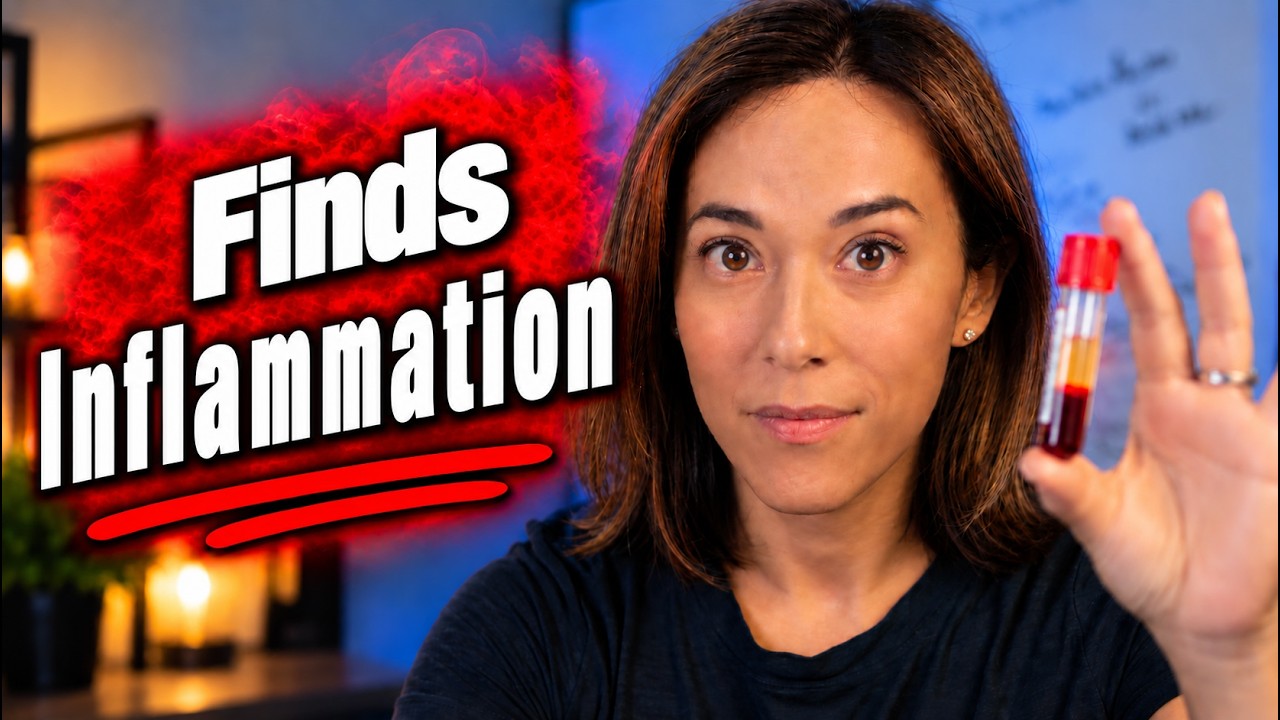
Hey, I'm a primary care doctor and I work directly for my patients, meaning that we have conversations that have nothing to do with the influence of their insurance companies. This allows us to spend time on the things that really matter the most. And what's more important right now in health than heart attacks and strokes, things that can kill you in an instant? Listen, I've had patients that need cardiac bypass surgery, and the only way to know that was to get them into the cath lab with a cardiologist, only to find that their heart arteries were blocked off. And we didn't know based on their BMI or their blood pressure levels or even their cholesterol levels. So I've worked really hard on coming up with 5 tests that you should get if you're concerned at all about having a heart attack or stroke. Test number 1, apolipoprotein B. I know that's a mouthful, so we actually use the term ApoB these days. ApoB has actually become the new LDL, the bad cholesterol that we talk about, the one that we're most concerned about using statins to lower. Well, it turns out that LDL is just a subset of all the lipoproteins in your bloodstream that are part of your cholesterol that are all marked by an ApoB. And so getting an ApoB level is actually better than just measuring one of the bad lipoproteins that can stick to your arteries and cause plaques and atherosclerosis, heart disease. So think of ApoB like a uniform of the opposing team. If anybody on the opposing team is wearing that uniform and that uniform says ApoB, that's what you want to look out for. Those are the bad guys. So LDL, or your bad cholesterol, has ApoB on it. Lipoprotein little a also is a particle that floats around in your blood that's part of cholesterol that has APOB tagged on it, and I'll talk about that test as well. Now, all of these lipoproteins— LDL, lipoprotein little a— they float around in your blood, and they can slip into damaged areas of your arteries, trigger inflammation, and form plaques. Plaques are what causes stiffened arteries, or atherosclerosis, which is a leading cause of heart disease and stroke. So the more APOB particles you have in your bloodstream, the more at risk you are for having Heart attack or stroke. So test for it, but talk to your doctor about what's right for you. So ApoB was test number 1. What's test number 2? Well, I just mentioned it— lipoprotein little a. This is a genetically inherited sticky type of inflammatory cholesterol. It is a bad deal. It's very atherogenic, as we say. It's sticky, more inflammatory, and more pro-blood clot forming than LDL is. And the worst part about it is that diet, exercise, and even statins don't lower it. It's very genetically inherited. If you know of Bob Harper, the He's always been very athletic, very fit, and kind of the picture of health. And yet when he was in a gym, he dropped from a heart attack. And it turned out that he had a high genetic predisposition for having a heart attack. After all, he had very high lipoprotein levels. Moving on, test number 3, high-sensitive CRP, or C-reactive protein. This is actually a popular thing to test, but it's good to know why people are getting it, right? And also, how does it tie in for risk of heart disease? Now, hs-CRP is a marker of whole body or systemic inflammation. It's actually a very highly sensitive test for any sort of full body inflammation that you could have really anywhere. And basically there was a study in 2008 called the Jupiter trial, and it looked at, I think, 17,000 individuals and measured their hs-CRP levels. And if they had a level over 2.0 milligrams per liter, I think it's the measurement for hs-CRP, which you don't really need to know. Any level over 2.0 was associated with a much greater risk of heart attack stroke, and something we call all-cause mortality, or basically risk of death from any reason. They ended up giving these people statin drugs. I know statins are kind of like this bad thing that we want to avoid. I even made a video on it. But when they gave people with hs-CRP levels over 2 a low-dose statin, it actually cut their risk for heart attack, stroke, and all-cause mortality in half. And so you can see how using something that might not be great for you ends up having more benefit than risk in the long run. And so if I had an hs-CRP level over 2 or maybe 3, Would I consider taking a statin if I couldn't get that level down? Yeah, probably. But all in all, what I would really want to do is take the steps necessary to get my levels down. And I've had the privilege of watching patients do this, and it's amazing. Okay, and if you thought that was cool and maybe a little too vague, let's get more targeted with things. All right, this next test might be the most important one of them all when it comes to heart attacks and strokes. This test is called Lp-PLA2, or lipoprotein PLA2. This is an enzyme that's actually released by inflammatory plaques in the walls of your arteries, or oxidized or inflamed LDL. So if you have any of these bad team lipoproteins, these lipoproteins that are marked with an ApoB, right, and they've slipped into your artery walls and they've formed a little plaque, and that plaque's actually inflamed for whatever reason, or at risk for rupturing and causing a heart attack or a stroke, then they're going to put off the enzyme Lp-PLA2. So if you measure your Lp-PLA2 levels in your blood and they come back high, that tells you that you are at very high risk. It's like having a volcano in your arteries that's about to erupt. Wouldn't you want Would you want to know that? I would. If your Lp-PLA2 levels are high, you've got to do something to reduce your ApoB levels. Because remember, having high lipoproteins, anything marked with an ApoB level, it's kind of like putting gasoline on a fire that's already in your arteries. It's putting the gas into the volcano, just waiting for it to erupt. And if your Lp-PLA2 levels are high, this is where I, as a doctor, break down and tell you, hey, it's probably time that we put you on a statin. And maybe that's just for a time while you're working on getting your risk factors lowered. But statins are bad. Statins actually have this great way of stabilizing these inflamed plaques, of lowering the inflammation and cooling down the volcano so it's more dormant. And if I had high Lp-PLA2 levels and it was keeping me up at night wondering if I was about to have a heart attack or stroke, I would take the statin too. So those are the blood tests that I get on people who I'm worried about having heart attack or stroke. And this last test, test number 5, is actually an imaging scan. And you might have heard of this. This is called a coronary artery calcium score. This is a CT scan of the arteries in your heart that feed your heart muscle. And it literally shows if you've built up calcium in the arteries of your heart, which calcium is part of those plaques. So you get a CT or a series of the x-rays of the coronary vessels that feed your heart muscle, and if they've got calcium in them, if you've got a score of say 300, you're at high risk for having a heart attack. And I've sent a lot of people to cardiologists for this reason, and if they have a high calcium score, they almost always end up in the cath lab, but it saves their lives. Now, some people are using something else called Clearly scans, which are basically using the power of AI to read these coronary artery scans because not all plaques actually have calcium in them. They get calcium in them and harden after a period of time, but there is also something called a soft plaque where the plaque's there, it's just not built up calcium yet. And so now we have these tools. This Clearly scan can actually find the soft plaques that don't have calcium in them yet, but you're still at risk for having these problems. And so a Clearly scan is Very advanced. It does cost about $800 self-pay, but if you're concerned and you can afford it, then why not? So there you have it. Those are my 5 top tests for keeping you out of the scary danger zone of heart attacks and stroke, or catching it before it happens. And if you want to know more, please talk to your doctor about it. This is not meant to be medical advice from me to you. You have to have that conversation. You have to know your risk. But I just wanted to empower you with the tools that you can use to give you more information or give you more peace of mind. This is never meant to make you more anxious. I'm Dr. Ashley Frazee. I run a direct primary care clinic in Mesa, Arizona. Direct primary care is where you take insurance out of the conversation between the doctor and the patient so that you can have talks with your doctor about things that really matter to you versus what the insurance companies want to talk about. If you want to know more about direct primary care, there are a couple of links in my description. You guys have a good day.