In this solo educational video, Dr. Ashley Frazee critically examines the popular "Wolverine stack"—the combination of the peptides BPC-157 and TB-500—by outlining what each peptide is, how they are thought to work, the animal research supporting their effects, and practical considerations for their use. She begins with a disclaimer about the lack of FDA approval and the unregulated market, then defines peptides as short amino‑acid chains that trigger cellular pathways. Frazee details BPC-157’s origin from gastric juice, its unusual stability that permits oral dosing, and its proposed role as a “healing traffic controller” that coordinates inflammation, angiogenesis, and tissue remodeling across multiple injury models (tendon, ligament, muscle, nerve, gut, liver). She then describes TB-500’s derivation from thymosin‑beta‑4, its actin‑binding mechanism that enhances cell migration, and its systemic nature. The video compares delivery routes, emphasizing molecular size limits for skin and mucosal absorption, and argues that oral BPC‑157 is plausible while oral TB‑500 is unlikely to be effective, making injections the most reliable for TB‑500. Frazee discusses the practicalities of mixing the two peptides, noting pH sensitivity and potential accelerated degradation, recommending separate refrigerated vials for stability. Safety concerns are addressed: both peptides promote angiogenesis, which could theoretically support tumor growth, but no animal or human data currently link them to cancer; they are not FDA‑approved, and users with active malignancies should be cautious. The presenter concludes that while the stack is not magical or guaranteed, it can meaningfully modulate the healing environment in certain contexts, and encourages viewers to consider the evidence before use.
Chapters
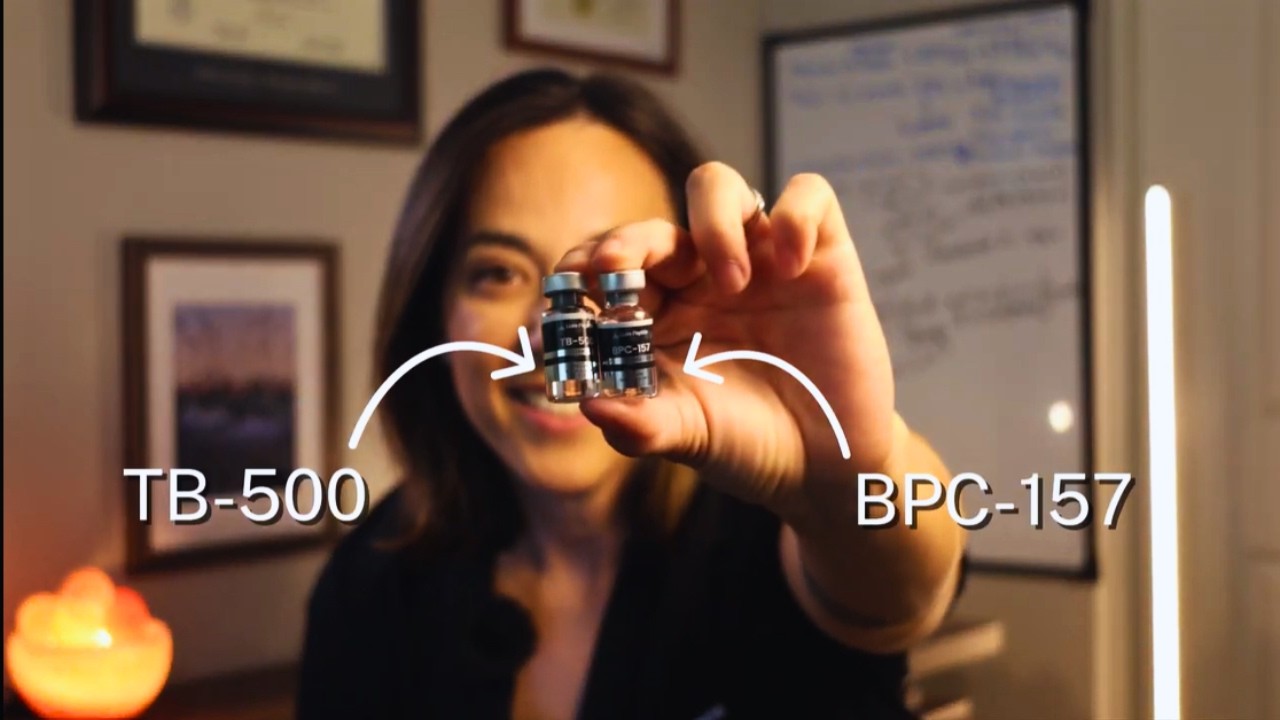
This is the Wolverine blend, the most popular peptide pairing in the world. But is it worth all that hype, or are you just getting scammed? I thought that for a long time. That is until I learned how it really worked. And all of a sudden I'm telling people it might be the best thing since white bread. So in this video, I'm going to give you everything you need to know about this peptide stack. I'm going to make it so undeniably clear for you, you'll feel like a peptide master. Today we're covering what BPC-157 and TB-500 are, how they work, When they work, and some really amazing research you ought to know about. Stick around to the end and discover the science that proves that this isn't a scam, but a revolution in recovery. Now, just a quick disclaimer here. I am a doctor on YouTube, but I am not your doctor. Please do not take anything I say as medical advice. And just so everyone's on the same page, neither BPC-157 nor TB-500 are FDA approved for human use. So if you are getting an injectable version of either of these, just know that peptides sold online are unregulated by FDA standards, and And that's where a lot of the fear around them comes from. And there's also the issue of whether they cause cancer too, but don't worry, we'll cover that. Now that that's out of the way, let's start with the basics. What's a peptide? I've said this in most videos I make, but just so you know, peptides are chains of amino acids made in labs designed to hit receptors in the body to trigger a natural cellular response. That response can be hormonal, mitochondrial. It can set off healing cascades like we're talking about today. But how? Let's start with BPC-157, the golden child of the peptide world. BPC-157 is a 15-amino acid peptide fragment derived from a protein called body protection compound, which is found naturally in human gastric juice. And here's why that matters. The cells of the lining of your stomach heal insanely fast. Your stomach is literally a vat of acid and digestive enzymes, and yet it doesn't digest itself. And the lining regenerates constantly. We believe that healing is in part due to body protecting compound. Honestly, the story around this is pretty cool. Back in the '70s, researchers wanted to know why the stomach lining heals so fast despite the acid and enzymes that are in there. So the scientists started isolating proteins in gastric juices and testing them in animal injury models. So came the discovery of body protecting compound and the protective peptide number 157. So we started doing research on BPC-157, the fragment of BPC that does the healing. Something also very interesting is that the 15-amino acid version, BPC-157, is extremely stable. It survives acidic environments even better than the larger parent compound, BPC, which is why it's one of the few peptides that can be taken orally. When researchers tested BPC-157 beyond the stomach, they found effects far outside GI tissue. Now, this is all based on animal research, but the researchers found accelerated healing in tendon injuries, ligament damage, muscle trauma, nerve injuries, intestinal reconnection surgeries, and toxic liver injuries. So we basically figured out that BPC-157, it wasn't just a local Stomach protectant. It appeared to enhance and accelerate the healing response itself. The research suggests that it helps coordinate the healing environment itself, improving blood vessel signaling to damaged tissue, guiding repair cells to the right location, and helping damaged tissue rebuild in a more organized way instead of in a messy collagen bundle that you can get with scar tissue. See, normally when tissue gets injured, your body immediately launches a repair program that happens in 3 phases. First is inflammation, the alarm system, and sometimes the body struggles to move past this phase. And when inflammation doesn't properly resolve, healing can stall. The second phase of healing is repair. This is where your body sends in rebuilding cells, lays down collagen, and grows new blood vessels to restore the tissue. And third is remodeling. This is where inflammation shuts down, excess scar tissue gets removed, and the tissue reorganizes to become strong again. Failure at this level can cause fibrosis, chronic tendinopathy or tendinosis, and perhaps things like IBS symptoms in the gut. Any one of these phases can mess up, leaving you in a pickle. And here's why BPC-157 is so cool. The research on BPC-157 suggests that it behaves like a healing traffic controller, helping inflammation, blood flow, and repair signals happen at the right time and intensity. Said another way, it might help the body heal in a more organized way. You know, imagine rebuilding a house after a storm comes through. If everyone shows up at the wrong time, the repair can end up messy, even if you have plenty of workers and help. But BPC-157 can come in and act as a foreman at the construction site, coordinating everything so that healing happens in the right sequence. And one leading theory is that BPC-157 isn't just healing individual tissues or injuries. It might be improving the communication system that tells several tissues in the body how to heal all at once, improving blood flow, which improves signaling, which organizes the repair. Now let's talk about TB-500. TB-500 comes from a naturally occurring protein in the body called thymosin beta-4. It was discovered while researchers were investigating the immune system and wound healing. Back in the '80s, scientists noticed that certain immune cells released a protein that showed up every time tissue injury occurred, whether it was skin wounds, muscle damage, inflammation, that protein was present. And that protein is thymosin beta-4. And what caught the attention of the research was that it didn't just help tissue heal locally. It seemed to help repair cells move throughout the body toward areas of injury. Later on, scientists identified the active region responsible for many of these effects, and that smaller fragment became what we now call TB-500. And if you need to be nerdy with it, the way TB-500 does this is it binds to actin. Actin is basically the internal skeleton of a cell. It's what allows cells to change shape and physically move through tissue. And since healing requires repair cells to migrate into injured areas, anything that improves actin dynamics can improve how efficiently those cells reach damage. So here we have BPC-157 acting like a construction foreman organizing a job site to make sure that things get rebuilt correctly. And then TB-500 basically improves the roads to the construction site so that the workers can reach it efficiently. And now let's clarify some of the most common questions over these peptides. There's a common myth that you have to inject BPC-157 and TB-500 directly into or close to the site of an injury. And let's be real, there's no data to prove that. All we have is animal data showing systemic effects of both peptides, meaning no matter where you put them, they should act throughout the body. BPC-157 specifically has demonstrated benefit when given orally, injected subcutaneously or peritoneally in animals, and administered intramuscularly away from the site of injuries. TB-500 is also largely systemic by nature. It circulates and responds to inflammatory signals But thymosin beta-4, its parent, is released and upregulated at sites of injuries. Injecting near an injury may slightly increase local concentration, but it is not a GPS-guided missile. So you do you. Do most people think there's any harm in injecting near an injury? Probably not. All right, let's talk about the way that these peptides are delivered. Oral versus injectable versus topical versus nasal delivery. Well, BPC-157 is unusually stable. Studies show that it can survive gastric environments for extended periods. Oral BPC-157 makes biological sense, and honestly, there are so many people out there who have had some pretty incredible life-changing healing gut stories that it's become a tool that I feel comfortable suggesting in certain cases. And if you want a link to an oral BPC-157 that I personally endorse, there's one in the description. TB500 is different. It's a much larger and more fragile peptide, and peptides this size are typically broken down in the stomach before they can be absorbed. So oral TB500 is unlikely to reach meaningful systemic levels, which is why injectable delivery is generally theoretically considered more reliable. Now you'll also see things like creams and nasal sprays and sublingual strips marketed everywhere, and to understand those, we just need one concept: Molecular size. BPC-157 is about 1,400 Daltons, while TB-500 is closer to 5,000 Daltons. Human skin and mucosal barriers usually block molecules larger than around 500 Daltons. So without special delivery systems, most peptides don't pass efficiently through skin, and only limited amounts may cross nasal or sublingual tissue. I'm not saying that none of these products work, but they're probably less efficient than oral BPC-157 and definitely less reliable than injections. TB-500 specifically, I personally question anything other than injectable delivery for systemic effects. At the end of the day, peptides only work if they actually reach the tissue intact, and delivery methods do matter. Here's a big question: can you mix them? Well, peptides are sensitive to pH. They have different Isoelectric points. Mixing them in one vial will not cause a chemical explosion or degradation. It might accelerate degradation. So if you're researching a premixed peptide blend like this one here, theoretically it's more stable if it's kept refrigerated and used quickly, like within 30 days. Separate vials are probably more stable. And before we end it, let's just address the cancer question. See, these peptides promote angiogenesis, or the formation of new blood vessels. And angiogenesis feeds healing tissue. It can also feed tumors, but currently there is no evidence that these peptides feed or cause cancer. If you have an active tumor or malignancy, stimulating blood vessel growth is biologically questionable, and that's a reasonable caution. Because when you look at the biology, it makes a lot of sense. And when you look at animal toxicity data, it's surprisingly clean. And when I look at real-world experience, I've seen healing that is really difficult to dismiss. Are they magic? No. If you're training on a torn ACL, no peptide is going to save you. And are they guaranteed? Also no. But one of the worst common outcomes is that nothing happens. So in the right context, these peptides appear to be modulating healing environments in a way that's very biologically elegant. And that's why people call it the Wolverine stack. Not because it makes you feel immortal, But because in certain situations it might accelerate or ensure healing. And that's fascinating. I'm Dr. Ashley Frazee. I love geeking out on peptides and sharing it with you. If you like this video, please hit like for me and subscribe to my channel, and I'll see you next time. Have the best day.