In this video Dr. Ashley Frazee recounts her experience attending the FDA’s two‑day Pharmacy Compounding Advisory Committee meeting in Washington, DC, where the agency evaluated whether seven widely used peptides should be removed from the “do not compound” list, allowing them to be prescribed through 503‑c pharmacies. She explains the public‑health stakes: patients often purchase peptides online with no oversight, risking impurity, incorrect dosing, or toxins. The committee ultimately voted to recommend six of the seven peptides (BPC‑157, KPV, TB‑500, MOTS‑c, Epithelin, Semax) and reject DSIP. Frazee’s focus, however, is not the vote but the FDA’s performance. She describes the agency as unprepared, citing specific instances where FDA staff relied on scant evidence—such as a single abstract for BPC‑157, three FAERS reports among millions of uses, animal studies with unrealistically high doses, and even Google searches of anti‑doping forums. The FDA also admitted they could not afford translation costs for European/Russian literature, while committee members used AI tools to translate on the spot. Throughout the meeting, the FDA fell back on bureaucratic technicalities when pressed for real‑world dosing, patient outcomes, or mechanisms of action. The physicians and panel members argued that keeping peptides off licensed compounding pharmacies merely pushes patients toward an unregulated gray market, potentially causing greater harm. The video ends with Frazee reflecting on the ethical dilemma of restricting access versus ensuring safety, noting that while advisory committee recommendations are rarely overruled, the final FDA rulemaking remains uncertain.
Chapters
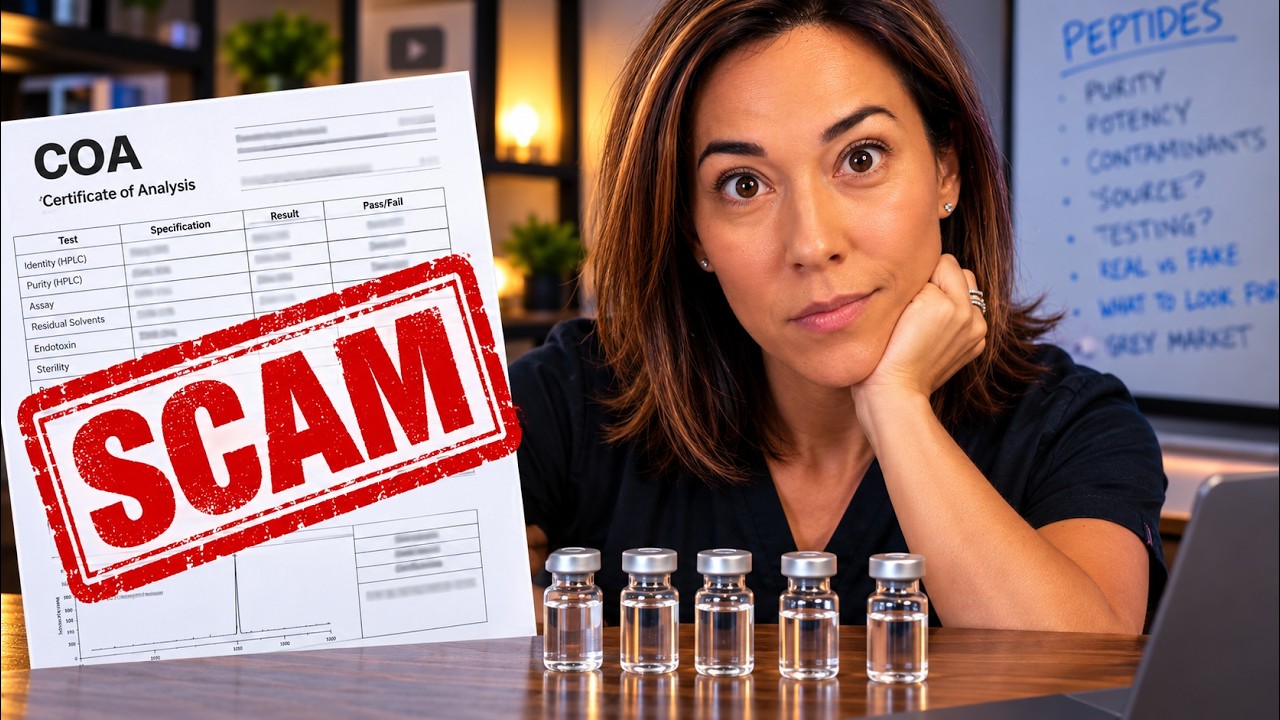
So I just got back from Washington, DC, where the FDA hosted a 2-day Pharmacy Compounding Advisory Committee meeting to evaluate whether 7 of the most heavily used peptides should be released from the do not compound list so that doctors can legally prescribe them through compounding pharmacies. And the reason why this was such a big deal is that people buy peptides on the internet, and oftentimes they buy things that were made with No oversight, meaning the thing they buy could potentially be mislabeled, impure, over or under potent, meaning there's more or less of the amount of the peptide in the vial that they think there is, or it could have toxins in it. Definitely not something you would want. So a lot of doctors and patients have been hoping that the FDA would allow most of these peptides back into pharmacies for prescribing. And the committee ended up voting yes on 6 out of the 7 peptides. But this video is less about the vote and what happens next than it is about something else. Now, going into this meeting, the outcomes were unclear to me because the FDA's briefings were unfavorable of approving all 7 of the peptides. But I definitely expected more of an adult conversation versus what actually happened. I didn't expect a masterclass in regulatory science, but maybe something like it. Data to prove the reasons why the peptides shouldn't be used in humans, well-reasoned answers, and maybe a high bar of evidence. And instead, to be honest, I walked away far less impressed with the FDA than I ever imagined I would be. Before this meeting, I thought the FDA could at least back themselves up. But, uh, no. And this is just my opinion, but to me they came across as totally unprepared, unable to do actual thorough research. And every time the panel hit them with a good, intimidating, or well-thought-out question, they flailed. They simply did not have two legs to stand on. I can't tell you how many times I raised my eyebrows and just whispered Wow. So here's what I saw happen. I thought you might be entertained by this. And if you watched the livestream or if you were at the meeting with me, feel free to comment, agree, disagree, or correct me. It was a very long meeting, and I'll be 100% honest with you. I, like half of the attendees of this meeting, left after the 6-hour debate on BPC-157. I stayed a little bit through KPV, but That's just how unimpressed I was with the FDA, and I was very, very tired. But I did sit there for the whole BPC-157 discussion, and in my opinion, it seemed that the FDA had looked at very little research on BPC-157, and they used that as an excuse to show that the evidence was thin. But at least a couple of physicians and peptide representatives had submitted real-world human studies. Maybe they weren't published, but they submitted them to the docket for the FDA's review. And the FDA representatives basically said that they didn't have time to go over that data yet, and so had not given any of those documents to the Pharmacy Committee for review. They did use a controlled human study to back up their mistrust of BPC-157, but they only read the abstract. And didn't have any more information to give regarding the study. They also used 3 FAERS reports, or adverse events reports, that were reported due to BPC-157. But these were literally 3 out of millions of uses of BPC-157 that we know about. And everyone seemed to agree that those millions of uses was a lot for just 3 adverse reports. And then they used some animal studies on dogs and rats to raise some concerns about BPC-157 causing increased liver enzymes and decreased PTT, which could potentially cause somebody or the dog or rat to bleed out quicker. But if you looked at the studies, the dosages in those animal studies were astronomical compared to the actual doses that people use and physicians recommend in real life. And this wasn't just happening with BPC-157. Granted, I had to skim through the livestream for the rest of this, but the story I gave you on BPC-157 basically became the FDA's blueprint for almost every single peptide on the docket. When it came to KPV, they tried to dismiss topical use by bringing up a study on dead cadaver skin. With TB-500, they used a petri dish study where you scratched fibroblast cells, and then they admitted under questioning that their historical data came from random Google searches on anti-doping forums. With Semax and Epithalin, they literally admitted on the record that they didn't review peer-reviewed clinical research from Europe and Russia because the FDA couldn't afford the translation costs. Meanwhile, panel members in the room were pulling up AI translation tools on their laptops during the meeting and reading the package inserts to the committee. It was embarrassing for them. Whenever the clinical doctors on the panel pressed the FDA on real-world dosing, patient outcomes, or mechanism of action, the agency just kind of fell back on bureaucratic technicalities. They didn't have good answers. And BPC-157 was the big headline topic of the day, and by the time the panel voted to override the FDA's recommendation, meaning it got more yes votes than no votes, Well, the energy of the room was pretty high, and after BPC-157 was voted on, the room got remarkably thin. The day had just gotten very long, but the many speakers who came to give a public comment kept holding their line. They kept hammering home one truth: banning these peptides from 503-licensed pharmacies doesn't stop people from wanting them or using them. It just drives desperate people into the unregulated gray market, whether you like it or not. And when the dust finally settled across both days, the Pharmacy Committee panel voted yes on 6 out of the 7 peptides that were up for discussion: BPC-157, KPV, TB-500, MOTS-c, Epithelin, and Semax. DSIP was voted no. Now, even though the FDA still has final authority on what happens with the peptides, Here's why this is already considered to be a win. Historically, recommendations from advisory committees like this one are granted by the FDA. It is exceedingly rare for the agency to go against the explicit majority vote of its own advisory committee when drafting the final rulemaking. However, this is peptides, and with the current regulatory climate, you never truly know what the FDA will do until the final rule is published. But today, I didn't think you wanted another video explaining what's going to happen next. I just personally got a taste of Who the FDA is, and my my. I have a lot more respect from the physicians who came up and stood up for their patients. Like one doctor on the committee said during their vote, "I understand the FDA does not dictate the practice of medicine, but myself as a physician, I have to make sure that I'm keeping patients as safe as possible." That's my mandate, right? Do no harm. So when I look at something like saying no to this and pushing it to the gray market. Am I doing greater harm? And that's what I lose sleep at night over. And that to me was the most important question asked during this entire meeting, because this really wasn't a debate over whether every one of these peptides has been definitively proven safe and effective, because they haven't. The question was whether forcing them out of licensed compounding pharmacies and into a completely unregulated gray market actually makes patients Safer. The FDA came prepared to tell us what evidence was missing, but they didn't seem prepared to seriously consider the harm their own restrictions creates. The physicians in that room did, and ultimately so did the committee. 6 peptides recommended yes, 1 recommended no. Now we wait to see whether the FDA actually listens. I'm Dr. Ashley Frazee. Man, that was a long meeting. I hope you have the best day.