#105 Gokul Rajaram of Doordash, Square, and Google: My Favorite Books, Tools, Habits, and More | ...
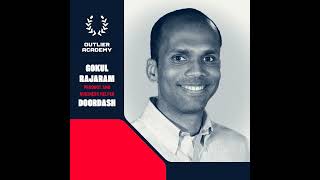
In this 20‑Minute Playbook episode, host Daniel Scrivener interviews angel investor and DoorDash executive Gokul Rajaram. Gokul discusses his recent fascination with crypto and the rapid rebuilding of Web2 infrastructure (analytics, CRM, marketing, email, messaging) on Web3 platforms, highlighting the opportunity to create new protocols. He identifies his superpower as the ability to deconstruct open‑ended business problems and devise structured solutions, a skill honed from engineering to broader product thinking. A key struggle he shares is saying no; he combats it by rigorously calendaring deep‑work blocks and limiting meetings. His most impactful habit is exercising six days a week, which he frames as the top priority in a hierarchy of health, family, then work. Gokul’s favorite books are Ben Horowitz’s The Hard Thing About Hard Things and Andre Agassi’s Open, chosen for their storytelling and insight. For task management he relies on the phone’s Notes app, keeping daily to‑do lists short (1‑2 top items) and using checkboxes. Success for him is defined by health, family, and being a helpful, globally recognized contributor to the tech ecosystem. He notes a post‑COVID shift to investing worldwide, observing that founders outside the US are equally hungry and face larger market opportunities per capita. Finally, he advises his younger self to stay curious, think from first principles, and prioritize people over patterns. The episode concludes with a call to follow Gokul on Twitter and references to related content.
Chapters
Hello, and welcome to another episode of our 20-Minute Playbook series, where each week we sit down with an elite performer from iconic founders to world-renowned investors and bestselling authors to dive into the ideas, frameworks, and strategies that got them to the top of their field, all in less than 20 minutes. I'm Daniel Scrivener, and on the show today, I'm joined by the one and only Gokul Rajaram. He's a prolific angel investor in over 300 companies and counting, and an executive at DoorDash, which he joined after DoorDash acquired Caviar from Square in 2019. I was fortunate enough to get to work with Gokul at Square, and I am beyond thrilled to have him on the show today. In this episode, Gokul shares what he thinks his investing superpowers are, why he loved Marc Andreessen's interview on the Good Times Show, why he loves Andre Agassi's book Open, and the advice he'd give his younger self if he could go back 20 years to the start of his career. You can find the notes and transcript for this episode at outlieracademy.com/105. That's 105. You can follow Gokul on Twitter, which I highly recommend, @gokulr. That's G-O-K-U-L-R. With that, let's dive into Gokul Rajaram's playbook.
Gokul, I'm thrilled to have you back on 20 Minute Playbook. Thank you so much for the time. Thanks so much for joining me again.
Thank you. Great to be here, Dan.
So this is a little bit faster paced than, you know, the long-form interview that we did. I'm going to ask you the same 10 questions that we asked every guest, and we're going to try to do this in 20 minutes. The first question is around a recent fascination. Is there anything that you've been fascinated or obsessed by recently?
I would say crypto, but it's been probably 2 or 3 years that I've been fascinated by crypto and confused. Yeah, I think it's just It's just the evolution of crypto. I think the NFT, the rise of NFTs, just the myriad ways in which essentially the Web3 world has just sprung right now. Right now I'm fascinated by— I'm seeing essentially that every Web2 infrastructure product, whether it's analytics, CRM, marketing, email, even messaging, is being rebuilt in Web3. So I'm trying to uncover what are the other Web2 protocols or infrastructure layers that have still to be built for Web3. So it's been really fascinating to me to see really the rebuilding of all of these things that have been built over 20, 25 years for Web2. Now within like 2 years or a few months, they're being rebuilt by entrepreneurs.
Yeah, it's a very short time, I know. And you're starting to see companies too that have this kind of hybrid Web2, Web3 model where it's like we have traditional cloud infrastructure but also blockchain. And it's going to be interesting, I think, to see those play out as well too. Exactly. Yeah, I love that. Second question is around your superpower, you know, and I think that what we're trying to get at there is, you know, we're all uniquely gifted in some ways. What do you think your superpowers are and how do you harness those? How do those show up day to day?
Ah, it's a good one. I, I don't know. I don't know if I have any, but if, if there is one, I think it is to be able to take almost any, uh, I would say business problem and be able to find a way forward to solve it. So I think it's problem solving, business problem solving, around taking a business outcome and being able to brainstorm a few different ways in which we can have customer behaviors. The other one is really breaking down a problem. I think I never felt that I— when I was an engineer, I would be given a very specific problem to solve. And I would solve it. And I really want to learn how to be given a more open-ended problem and figure out what are the ways to solve it versus just doing X. And I trained myself, I think, over several years, so I got better at that, which is taking open-ended problems and putting structure around how to solve them, maybe the best crisp articulation.
I think that definitely qualifies as a superpower. And I also love no one's given that answer before, so I love that. On the flip side, what do you struggle with? And this is just this concept that no matter how talented no matter what we've been able to achieve, we all struggle with some pretty fundamental things.
What do you struggle with and how have you worked around or improved those things over time?
Saying no. Saying no to people. I want to help people, so when anyone reaches out, my first reaction is to say yes. And the problem is there's only X number of hours in the day, X number of days in the week. And so I have started using, over the last few months, Calendar to really prevent me— I literally block off times where I need to do deep work myself. I can't be in one-on-ones with folks, I can't meet with folks. And I'm also putting guardrails around the number of hours I spend meeting with entrepreneurs or meeting with other folks versus working myself on stuff that matters. Because if— yeah, so I think not saying no, to be honest, has been the source of many incredibly serendipitous discussions, meetings, and, and, uh, you know, great things that have happened. But also leads to incredible amount of, uh, stress around time management and being able to be productive.
Yeah, well said. I identify with that, and I definitely agree it's a two-edged sword. Is there any book, is there anything you read or listened to that helped you get better at that? Like, you know, what comes to mind as you talk about saying no is The Courage to Be Disliked, which has been on my reading list for a long time. I haven't read yet.
I think it's— there was a podcast with Marc Andreessen, which was done on the Good Time Show, I think, by Sriram, who's now at Andreessen, and I think that really talked about how Mark essentially uses calendaring to completely manage his day. Everything, anything he needs to do is on calendar. So it inspired me. I was doing some soft version of it, but I became much harder core about saying, well, if I have to do something, if I'm doing meetings and they're on calendar, why does almost everything I need to do not be in calendar? So it should be half an hour block or 1 hour block on calendar if I have to do something. So I've started being much more aggressive with calendaring things and saying, well, you're going to do this now. You've got to eat the frog in the morning. So 8 to 9, you've got to write whatever it is you've got to write— this memo or document or performance review, whatever the case may be.
Yeah, thanks for sharing. Is there— I want to talk about habits and routines. And the, the way I'm going to frame this up is, as I've explored, you know, how people have, have incorporated habits and routines, what I found is there's a massive spectrum. And actually, most people I don't think are very focused on habits and routines. And so what I want to try to ask now is kind of scoping way, way, way down and just ask the smallest version of the question, which is what tiny habit or routine has had the biggest positive impact on your life? And this could be at work, at home, any, any angle.
For me, it's been exercising 6 days a week, 5 to 6 days a week has had the biggest impact because I've seen that I always believe the hierarchy of anyone, any individual should be health, then family, then work. Why not family before health? Because if you're not healthy, you become a burden to your family and you can't help them. And so your health is actually very, very important. Then your family, because you can't help you. And then finally work. And I think many of us who have families and who work quite a bit ignore health, and you don't realize how much just focusing on your health has a trickle-down effect on making you just happier, more productive, even things that are not you don't feel excited about. You feel more excited if you're healthy. So being able to just have some kind of exercise 5 to 6 days a week on a consistent basis has been the most transformative thing I've done. Probably a common thing I'm sure many people have said on your show, but for me, it started when I was starting to commute to Square 9 years ago, where I realized that my day, I would no longer just have a— I live in the South Bay area. I would no longer just have a 15-minute commute. I would have a 1-hour commute, which means 2 hours of my day was taken up, 10% of my day was taken up by commute. So I needed to really find time to exercise before, before getting into the car. And I started doing that, and that persisted, hopefully, thankfully, over the last 9 years.
Yeah, I feel like exercise is one of those things, counterintuitively too, that, you know, a lot of people don't have time for it. And yet what I find is when I make time for it, it actually gives me time back in the day, because to your point, I'm more productive, I show up just in a better version of myself.
Look, you're— it's a date with yourself, essentially. And so give yourself a treat and put— if you can do a one-on-one with someone else, why can't you do one-on-one with yourself? Half an hour.
Yeah, that's well said. Okay, I want to talk about, uh, favorite books. And what I'd be curious is if you find yourself sharing, you know, the same books, the same types of books with founders and investors, uh, that you work with. And just if you have any all-time favorites.
And this can also be—
these don't just have to be business books, it, it can be anything.
My favorite books are things that are written with a point of view and have more of a storytelling nature to it. In addition to teaching, they also entertain. And so The Hard Thing About Hard Things, which is Ben Horowitz's book, is probably my all-time favorite book because it just has such a— because people remember stories. That's why I tried to read a few years ago. I started to read book summaries, but book summaries take away the stories. That underlie the books. And so you don't remember it because you remember the stories and not the actual lesson. And so The Hard Thing About Hard Things. And then the other one I really like is a book called Open by Andre Agassi. And that book is just— he starts talking about how he hates tennis. He truly hates tennis. And having somebody who's one of the greatest ever to play a sport saying he hates the sport, and why he hates it was just incredibly powerful to see how overdoing something can lead to this love-hate. Everyone has a love-hate relationship with what they do in some ways. So it's given him so much, yet he hated it in many ways. He also loved it.
I love that you brought up the point about book summaries because I similarly have tried those as I think anyone who's pressed for time. And I think my experience of it reminds me of the quote of— I was listening to an interview with Tony Deaton, who's an investor I really like, and he talks about one of his— the thing he harps on a lot is, you know, man's constant search for getting something without expending any effort or any energy. And I feel like that's the perfect definition of book summaries because you're not, you know, you're not investing in it, you're not really going to get anything. I want to ask about tools now. And, you know, typically we talk about software tools. I don't see it today, but I know back in, you know, the Square days, you would keep a field notebook in your pocket all the time and just have this notebook that was with you constantly. So I would be curious, do you still have kind of paper and a notebook is a big part of the tools and the way that you do work and you kind of think and write down to-dos, and if there's any software components or any of those worth sharing.
I replaced— because I don't move around as much, I'm mostly at home and I sometimes go into work rarely. I use my phone and the Notes app as a substitute for that. So I basically update my Notes app basically on a constant basis. I don't use any fancy thing. So Notes is a— it's a closest— it looks like the Moleskine thing. You can kind of configure a little bit, and it has checkboxes, and I checkbox after I do it digitally. So it's basically the— it's become a proxy for, uh, for basically carrying around the book because I always have my phone on me. So I'll quickly jot something down. So basically I have a note that is the to-do for the day, and I— it's essentially the biggest discipline there has been to cut down the to-do to 2 or 3 versus to have 10, because you got to really know what the top 1 or 2 things are that you need to get done today. And then for everything else, I use just a different note. But really, every day, the biggest struggle is what are the top 1 or 2 things that if you do that, you feel you had a good day, you made progress.
Do you have, as part of your routine, doing that the night before? Do you try to make time to do that in the morning? Is there a specific time you do that kind of preparation?
In the morning when I wake up. That's one of the first things I do within the first half an hour of waking up. Exercise, deep brush, etc. And then basically what's got to be done. And exercise actually plays a good clarifying role because you can get a lot of stuff out and you can think about it and then you're determined and it actually gives you more determination to write down that big thing that you've been maybe dreading. I'm going to do it after a power back.
Then the rubber meets the road and you have to actually put down the list and start checking things off. I want to talk about, uh, success. And what I want to talk about there is your definition of success and how that's changed over time. And, you know, I think for you it would be really interesting just to talk about that at the highest level because you do a lot of things. You're an investor, you know, you're an operator, you have a family. What does success look like for you today, or how do you think about that? And then how has your definition changed over time?
Yeah, I think again, 15 years ago, I would have said success means to run a large organization and to essentially be an important part of an organization, et cetera. But now, as I've really crystallized that for me, the 3 most important things are health, family, and work. Success truly follows on that dimension. First is be healthy. All of us have gone through injuries or whatever it is, or had pain. And only when I've seen that we really don't think about how lucky we are to be healthy. Until we have some incredible pain or physical. And so it's really to be physically and mentally— I think mental health is just as important, I think, as physical health. So be physically and mentally healthy and active, number one. Number two is essentially make sure that I'm there for my family and see my kids succeed, do well, be happy in whatever they want to do and have a good relationship and have a loving relationship with my wife and parents and just general family. And the third one is, I think at this point, success at work for me is about being helpful and being known. I think if I were to distill it, it would be being known as a value-added, helpful part of the broader tech ecosystem globally. I think I would probably initially have said just the Valley a few years ago, but now I've worked with many entrepreneurs across the world. So I want to be known as someone who who's basically helpful. And Erika, every company I work with, I say my goal is not to make money off of you. My goal is to really make sure that you think of me as one of the top, most helpful people on your cap table.
Yeah, as someone that knows a few of the founders that you've invested in, I think you already have that reputation. So I think you've got a good, you've got a good head start there. I want to ask one follow-up question, which is, you know, I know that you alluded to it there, that you've been investing, working with more founders, entrepreneurs around the world. And I want to just stop for a second and ask this, the question of One, what are you seeing there? What excites you there? And then I think just for people that maybe don't spend as much time focused outside of the US as inside of the US, you know, just share a little bit of what, what that perspective gives you, what it shows you about the world and about founders around the world.
Yeah, and to be honest, till March of 2020, 95% of my investments were in the US. As soon as Zoom happened, COVID happened, literally the whole world opened up and didn't matter whether the founder was sitting in Bogotá, Colombia, or Jakarta, Indonesia, or Bangalore, India, or New York. They all were essentially the same at that point. And what I realized was two things. One, founders across the world, just because of the rise of internet and just information dissemination, they're just as hungry, just as now I would say aggressive, like visionary, and, and they work just as hard as the best founders in the US. The best founders across the world now are at par with the best founders in the US. Second, the market opportunity. I would say in the US there is like, there's tons of companies being started. I think still the number of companies per capita is much lower in these countries, so each company has a much bigger opportunity to win. In other words, For example, if you look at all of Latin America, there's 800 million people across these countries. Similarly, India has 1.1 billion people. In Southeast Asia, Indonesia itself has 300 million people, more than 300 million. So each of these regions is massive, but the number of companies attacking these problems are much smaller. So, and I think coming from the US, I think folks who are in the US, you don't know how much they value your lessons, your experience, et cetera. It's incredible. So competing with like thousands of investors and advisors to get attention of a Valley company versus it's— they're hungry, they reach out, they're much easier to kind of, I would say, get time with because they want that time. So I think there's a lot of benefits to having to work in there. It takes you back to simpler times. I mean, they're just focus on also the Maslow's hierarchy. There's many basic— in the US, I think many of the infrastructural challenges have been generally solved. I think many of the companies are doing more self-actualization kind of things, you would say. But in most of these countries, basic fundamental infrastructure things are being catered. So you also feel like you're truly having impact on the lives of people in foundational ways, much more so than in the US. That said, I mean, the US is still the center, epicenter, but these regions together, I think 50— I almost say that if you're an investor, you probably do 50% the US, 50% rest of the world.
Um, I love the points you made. Last question, I, I'd be super curious to know what advice you would give to your younger self. So if you could go back even to Gokul Rajaram in 2002 and whisper, you know, just a couple words either of encouragement or just a reminder to yourself Is there anything you would tell your, you know, kind of a younger version of yourself?
Be curious. Continue to be curious. I think curiosity and be open to new ideas. I think that's something that I need to keep reminding myself because as you get older, you sometimes get jaded and you realize that sometimes, well, this has been tried before. I think the danger with pattern matching— I'm an investor in enough companies that I'm like, well, I've seen that movie play out before. But every time it's a different outcome. Jack started a company, Jack and Jim started a company in payments, one of the worst areas to start a company in. Hundreds of collapses, graveyard, created one of the best companies, iconic company. And the same is true for something like grocery, where Webvan and Instacart a decade later. And so I think, think from first principles. Don't be influenced by patterns. Use the right lessons, but don't just ignore new ideas or ideas that have been done before just because they've been done before. Look at the entrepreneur. Always be people first.
Yeah, so well said. Thank you so much for the time, Gokul. For anyone listening, I highly encourage you to follow Gokul on Twitter. You can find him @gokulr, G-O-K-U-L-R. Thanks for the time, Gokul. This meant a lot.
Thanks again, Daniel.
Thank you so much for listening.
You can find the show notes and transcript for this episode at outlieracademy.com/105.
That's 105. For more from Gokul Rajaram, listen to episode 102, where he joins me on our Investor Spotlight series to go deep on how he thinks about product management and his incredibly popular SPADE framework for making transparent decisions as a company. In that interview, we cover what product vision and leadership looks like in action, the difference between product managers and analysts, how his SPADE framework came out of a failed meeting with Sergey Brin, Larry Page, and Eric Schmidt at Google, and his advice for teams, from how to test your hypotheses with no-code tools and no engineers, to why small teams win and why speed is the ultimate competitive advantage for startups. You can now also find all of our interviews on YouTube at youtube.com/outlieracademy. On our channel, you'll find all of our full-length interviews as well as our favorite short clips from every episode, including this one. So make sure to subscribe to get notified whenever we share a new video. Videos each week on YouTube. Thank you so much for listening. We'll see you right here next week on Outlier Academy.
More from Gokul

Gokul Rajaram on the 8 Moats Companies Need & Why Dropouts are "AI Maxing" the World





#80: Becoming an IC again is how products leaders will stay relevant in the AI era | Gokul Rajaram
#80: Becoming an IC again is how products leaders will stay relevant in the AI era | Gokul Rajaram


What I Learned Working for Coinbase, Pinterest, Facebook, & Google | Gokul Rajaram
What I Learned Working for Coinbase, Pinterest, Facebook, & Google | Gokul Rajaram