Gokul Rajaram: The Superpower of Being Helpful
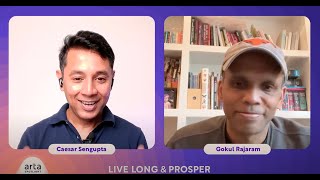
A May 2024 YouTube interview with Gokul Rajaram in which he reflects on career choices (notably leaving Facebook in 2013 to join Square), the common threads across roles at Google, Facebook, Square and DoorDash (serving consumers and small businesses; working for visionary CEOs; joining high-caliber teams), and his decision frameworks (regret-minimization; assessing worst-case scenarios). He describes his angel investing origins (first check ~2007), investing criteria ("why now" and founder–market fit), and operating style with founders (one-on-one cadence ~every six weeks, ~40–45 minutes, use of shared docs and on-demand availability). He explains how board roles tend to arise organically from helping founders, advocates focusing on where you can add value and being helpful as a "superpower," and shares a personal financial philosophy: use concentric-circle mental model for liquidity, prioritize freedom and impact (especially education), and give regularly. He closes with plans to continue supporting entrepreneurs (via vehicles like Firebolt) and brief personal lightning answers (e.g., key habits: walking with his dog and wife).
Questions this video answers
2013
Around 2007 (first angel check into a game called World Golf Tour)
About 2 million small businesses monthly
One-on-one every six weeks, about 40–45 minutes per meeting
About a dozen boards over ~12–15 years (he says 'part of 12 boards' and '12 or 15 years doing boards')
I've been part of 12 boards or something in my 12 or 15 in my 12 or 15 years doing boards. But it's all been a gradual process. Nothing is just going to be handed to you. You've got to figure out where you add value. You got to figure out what your superpower is and you've got to be helpful. If you do that, good things will happen. Board, company, job, all of those things. Selflessness and understand and being helpful is a perpetual superpower. Figure out how to be helpful. Figure out how to be helpful.
Kokul, thank you so much for joining us on arda. Live long and prosper. It's so wonderful to see you and to have you on the podcast.
Thanks, Cesar, for having me. It's great to be here. Very excited to have the discussion today.
Look, I'm sure our audience is going to be really excited hearing about your life and how you've made these decisions, navigating work, life, money, all the complex stuff that people deal with as they navigate their lives. I'd love to, you know, get into one of those moments in your life where you had to make a pivotal decision that involved you thinking about, you know, your career, your life, money. And, you know, you've made such incredible and amazing transitions through your career that I'm sure there'll be many, many moments to talk about. So any one or two that you, I'd love for you to first talk about that particular pivotal edition and the transition and then, then, then let's talk about what the thinking that went into it.
Awesome. I think the, the one that comes to mind immediately is about 10 years ago in 2013, I was at Facebook. Facebook had just gone public and we had worked really hard on, I was leading the ads product team at Facebook and we had worked really hard on figuring out how to make mobile ads work on Facebook. And it was the first quarter that mobile ads actually clicked and it was a blockbuster quarter about a year. The first year of Facebook's life as a public company was very painful. But that quarter we basically blew away the earnings and we knew that for the next several years we had a great roadmap and amazing stuff in store. Right then I was like, okay, great, I'm committed to Facebook. I'm going to proceed to for the next few years and all this hard work is now going to pay off. But then I just got an inbound from Square asking if I was interested in coming and leading product design and engineering at Square. And there were a few things which were interesting. One was it was very different from a domain point of view. I'd worked in advertising at Google and Facebook and Square was in a very different domain in payments. The second was it was managing or leading a multifunctional team. I had only led product before. This was basically opportunity to lead product design and engineering. And the third, which was strange life was it was in San Francisco and I lived in the South Bay in Los Altos, which is about one hour drive from San Francisco. So instead of a 15 minute commute, it would be one hour commute each way. So that's basically what made it really hard. And we can go into the decision, into the factors, but really ultimately decided to go for it and join Square and didn't look back when you were.
Trying to take this decision. I mean, this involved obviously a much longer commute. You know, you're going from a company that's just gone public, doing incredibly well to another startup. Like, how do you make that decision? Trying to go from essentially an established company to, I mean Square was, I mean very. It was a great company and well known and loved by many people at that point, but definitely nowhere close to the success that Facebook was at that stage in time.
It was a very small company. It was a very small company. It was, I think it had just signed a deal with Starbucks and so it was on people's map. And of course it was prominent because Jack Dorsey was a founder. Outside of that, it was de minimis compared to Facebook. In fact, I remember I talked to Sheryl Sandberg to tell her I was leaving and she was like, you're going to Square. I think I. She was super surprised that I would leave Facebook or Square versus something else. And I think the, and of course the icing on the cake was a commute. So the first thing I, I really used the 2:1 framework I used was one regret minimization. Because I always felt that in life you've got to have interesting and unique experiences. And one of the things I was always worried about because I had spent almost 10 years doing advertising, is that I was worried that the rest of the professional career would be the more I did advertising, the more advertising is the one thing I was good at doing and I really wanted to get out of it. So in some ways I Square offered something which was not just a derivative advertising product. All the other inbounds I was getting were to run ads at one of the large platform companies. And this was something that was completely different. Yet I was also worried that I might jump to a company just because it's not advertising and not look at the other factors. And the thing I liked about it was the product was remarkable. The people were amazing. Jack and the other people I met were just phenomenal. And then I think the final thing I said was if I always ask, ask people to think about the worst case scenario. Assume you join, assume you make the decision what happens in the worst case. So worst case, I said in two years, say assume Square dies for some reason something happens, you're not able to make a go of it. Well, what would happen in two years? Well, I would still have the opportunity. I worked at a, at a, you know, at a very prominent, at least startup in a space and build skills. So I would have at the end of two years that I have new skills, new domain expertise and a new network. Because I was generally my network was restricted to the South Bay with Google and Facebook. This would be a new group of very smart people I'd work with. And the people on the board, Vinod, Costa, Ro, etc. I felt basically I would have an opportunity to potentially join one of the portfolio companies that Square didn't work out. So I felt while if I stayed at Facebook I'd probably be content and happy, but I wouldn't necessarily build any new skills over the next two years. And both the. I think there are skills along multiple dimensions. One skill is domain. So I felt it was very important for me to like I said, build a new domain skill outside of ads. But the second one is functional skills. And I felt that I had essentially led one function and this was an opportunity to lead multiple functions and see what it felt like. Ultimately I had to talk to my wife because this would directly impact. I had young, pretty young kids back then. They're much older now, but they were quite young in kindergarten and elementary school and so on. So talked about what it would entail from us, sacrifices for them, et cetera. And she's like, look, you should take it. But the only condition she had was that I would not drive myself to San Francisco because it's a pretty. I got. I used to get many tickets driving even to Menlo park because I'd be constantly on my phone. And she was very worried that I drive to San Francisco. It's much more. There's a lot of, you know, it's not a great drive, especially as you get into the city. So I basically agreed to get a car service and so that basically the car service was a blessing in disguise because it gave me time to decompress on the way back and it really got me one hour more, two hours more to work. So I was able to do a lot of work in the car and so that compressed the amount of time I was working at home and so on.
One thing I wanted to kind of dig in a little bit on that thing. I think you talked about regret, minimization, new skills. I mean creatively solving for time for yourself. Right. I mean obviously it cost a bit more to do the car, but you managed to solve for it for quality of life and money. If I can dig a little bit into the second one, which is you deciding that you wanted to change not just the domain. I mean you were one of the foremost ads experts in the world. You'd build AdSense, you had built Facebook ads. Switching into FinTech, at what point do you feel for people like a lot of people come, maybe they don't have the same scale of choices as you've had. But you know, people often have a choice of like I've been in this industry for 10 years and obviously I can do incredibly well versus I could switch and then I, you know, how do I learn? Were there any, were there any like sort of learnings that you were taking from ads over? Like, like why go from ads to fintech and not ads to health tech? Right? Like what was, was it fintech that you were trying to and payments that you were specifically trying to be going into?
It's a great question. It gets to the heart of what my choices have always been around. I've always been focused on companies. I've realized that basically make things democratic for people or small. I think of at scale small businesses. Companies selling small businesses are similar to companies selling people. And because there is tens of millions of small businesses around the world, so Square at some point very early on had 2 million small businesses monthly. Small businesses using us. And that's not a huge consumer property, but it's a mid sized computer, probably 2 million, 2 million MAUs in terms of business. So I was always motivated by how do we build, how do I work at a company that either serves consumers or small businesses because I think of them as very similar. And Square was. So I was actually more than fintech piece. I was just, I felt that my experience I had only built. If you look at both Google's and Facebook's ad businesses, a lot of the business revenue came from small businesses. It's misperception that it comes from large advertisers. 80% is probably from small businesses. And so a lot of our work was on how to make light, lightweight, self serve tools that democratize access to advertising and other information content for small business. Square was the same thing. How do I build lightweight tools that make it easy for sole proprietors and small businesses to access financial services that were denied to them otherwise. So I was most motivated by that piece. And so you're right. Ultimately there has to be a thread that connects all of these experiences. And I think it's the thread is the mission of the company and, and it has to be a mission that you feel excited about because regardless, the space is more abstract, fintech, et cetera. Ultimately the day to day thing is who are you building for? Are these customers someone, you know, a type of customer that you are excited about? Because especially in product development or any, any kind of sales, any of these things, you're engaging with these customers. And so I've realized that enterprise, I would do agency pitches and so on at Facebook, but it was only part of it. The most exciting thing was building scalable products used by millions of business. And you've done that also. CESAR and this, this has been the common. Even DoorDash was the same thing. Essentially DoorDash builds products used by restaurants and small businesses, local business, and then consumers. So I've been lucky to be able to find companies that have basically met that. So that's what I would suggest. I think you got to think about what motivates you because after all the press releases that this person joined this company have gone down, it's you having to go to work every single day for the next X years and will you be happy doing that? Will you look forward to every day with excitement or with dread that you're going in?
That's fantastic. You know, a lot of people talk about being driven by the passion for what they're doing, but I love the filter you've put on it on who are you serving, right? And there's no value judgment. Some people like working with large companies, some people like working with pure consumers, some people like working with small businesses. And that thread is very interesting actually. This preempts one of the other questions I was going to ask you is you worked at some of the most iconic companies in the world, right? Started Google, Facebook, Square, DoorDash and in many ways you joined them very early and then grew them till they got to IPO and beyond, right? Was small business one of the primary threads? Were there other threads that you see connected this journey? If you can talk about the threads that you consciously did and then threads that you found later, right? When you reflected back on your journey?
Yeah, I think it's funny. The first ever company I joined was a company called Juno Online. It was a very early free email service and I chose it over many other well known companies and I didn't realize even that one was around making email fee for consumers. So it was literally my first job out of and the reason I chose that one was because the interview process was extremely hard. So hard that I felt I had failed the interview. And then after that when I got the offer I reflected that these were the smartest people I'd ever met in concentration. So really the decisions I've made at in time are based on where almost clubs that won't allow you in. Those are the clubs I want to join. In other words, the caliber of people is so high that you feel that your joining is going to pull them down. I dislike places where I am perceived to be the smartest person in the room. I want places where I'm the dumbest person in the room or person who can person who knows the least and can learn the most from everyone because that's how you maximize learning. They say that the so Google was the same thing. The interviews are so tough and so when you remember this so crazy the kinds of questions they asked for nothing like I'd ever heard before. I think Marissa my one of my interviewers she basically gave me a bottle of water was a cup or a bottle and she asked me to critique the product design of this bottle of water. And it was like I don't know how I got to that interview and how she almost like I was but either case all of these interviews and similarly each of these Google interviews similarly the same at Facebook the caliber of people and the mission were the two things I think as part of the caliber I was also lucky in all of those cases including Juno which is an early company at the Shaw where Bezos had just left a year ago to start Amazon. So Juno was actually a very, very pedigreed startup because all the folks of former D. Shaw folks which is a very well known hedge fund back then at least still is the CEO of the company was Juno. Basically where is Juno? And then I had a chance to interview with Larry and interview with Mark as part of Facebook and Jack. So I somehow have some sense of an ideal CEO. And they all met that because they all were able to paint a vision that was so massive that it was almost incomprehensible. And so I like that when the vision is so big that you can't Even easily stretch. And you feel like there's so much to do here and so much to build. And the vision tend to know all revenue. It just involved building an amazing ecosystem or product. Like Tony for example, many years ago, five or six years ago, before I ever joined DoorDash told me, Goku, you know, essentially our goal is to connect communities, restaurants, just the beginning. I'm like, our goal is to connect consumers with local communities, businesses. And he had this huge vision that he laid out. I was like, no way, it's not going to work. Restaurants is what people want to order. Why would people want to order from other things? And you can use Amazon one day delivery. Turns out many of these verticals are like some of the fastest growing verticals, whether it's retail, convenience, grocery or pharmacy. And so that thing he thought about six, seven years ago, where we were all competing, I was competing with him because I was building a business called Caviar. Competing with DoorDash. We were already focused on restaurants and he had already thought six steps ahead of us. And so that's the kind of CEO I want to work for whose aspirations are so big that you can't even fully keep up with them. And you're just, over the next 10, 20 years, you're just putting their roadmap is very clear. This is what you want to build. Where the North Star is so big, the vision is so big that there is no. You just feel inspired. So inspirational vision epitomized by the leader, the leader themselves, the CEO of the company. Smart, super smart people. And then like you said, there is a little bit of revisionist history. But I look backwards and felt that, my goodness, all these companies built democratized information, access to information products, et cetera for consumers and small businesses. But I started becoming more intentional around Square and DoorDash around that. But the first two have always been there. The CEO is someone I feel is pure and focused on the mission. Not focus on the monetary piece of it, but just focus on winning and building a massive institution, a generational thing.
It's amazing. I can see the. I can feel the excitement in your voice even as you talk about those, those experiences like the scale of the vision. Right. And that's actually great to have that level of that type of excitement because then that's what motivates you to do great.
Yeah. After you meet with these people once, you just come back with your head full of ideas. You come back inspired and wanting to walk to walls the same as entrepreneurs. And you meet with great entrepreneurs, you just Want to support them and help them. You just want to. Your head is full of those ideas after you meet with them, their vision.
So, Google, this is a good time to maybe do a slight segue into another part of your life where you've had extensive experience and people may not know about. You're a very active angel investor. You've run a very successful venture fund for a number of years. Can you talk a little bit about how you decided, in addition to having, obviously these incredible careers, to start investing, how do you manage it and, you know, balance your time and mental space and effort and all that kind of stuff. And of course, thank you for having me, an angel in Arta.
Thank you. Well, first of all, thank you for having me. It's my privilege to be an investor and support Arta and you and the team. It started, I think I always tell people, if you want to angel invest, I think don't do it with the point of view of making money, because that comes. If you do it from that point of view, you may not be happy because it's a very volatile asset class, it's very illiquid, and it takes very long periods of time. Instead, do it for one of three reasons. One, to support your friends, your family, the community. And second one is to learn. Learn. I think those are two. And the third one should be making money, but that should be much lower than the first two. So for me, it started because Satya, who was a person I worked with Satya Patel, he ran. He basically started Homebrew. Later with Hunter, he basically joined Battery. He left Google to join Battery, and the first deal he worked on, he was like, google, I'm working on this deal. Do you want to participate? I'd never been in it. It's 2007, 17 years ago. I'd never done any angel investing. I'm like, I don't know, seems risky. But then after I met the entrepreneur, it was a golfing game, of all things. It was a game called World Golf Tour. So I basically was really entranced by the vision that he painted. I never really met with entrepreneurs that I would read about them, but I'd never met entrepreneurs. And so when I met him and I heard him paint his vision, I got super excited and I put in a small check. And I realized that each time I met with entrepreneurs, I just came back with, even if there's something different than what they were doing, I just came back with more energy and excitement for my job. And so I started treating angel investing as a way to just Give me energy by meeting with entrepreneurs. And then it helped me learn. So many entrepreneurs have taught me so many interesting things, insights around how to run companies, how to be nimble, and how to even tackle problems in ways that large companies don't. So I feel like I'm bringing insights every time I meet with an entrepreneur into the large company or larger company I'm working at and vice versa that I'm bringing inside from how to operate at scale, these entrepreneurs. So it's been. And finally I feel it, it, it, you know, it's crazy to say it's a way to stay relevant because the reality is, you know, you work at a company, you work on a certain set of things, but there, there's technological evolution happening now. It's AI over the last few years, it's crypto, all of these things. It's a way for you to stay relevant, engage and participate in a much more tangible way than just reading about it. If you're an investor in an AI company and you see the founder go through things, you learn at a much faster rate what is happening with AI, because you can always have this expert that you can talk to who's living and breathing it, which is reading about it. So that's been a great source of. So I would say it's been an education, it's been pretty good from a returns point of view. But more than that, it's kept me part of the community and helped me support people I care about and I believe in. And the second one is it's helped me learn lots of things which never been possible just sitting back and reading TechCrunch or something like that.
Oh, that's a great perspective of angel investing and I love your perspective. How the returns haven't been obviously material have been great, but the returns to you as a person have been much wider.
It is. Returns over long periods of time are the best, but it requires extremely long periods of time. And there could be one volatile period where it's zero. And so you've got to be, you got to be comfortable with the occasional zero for long periods of time. But then. But one in every 100 could be huge. But I think investing in Altas Instruments is probably a better way for most people from a financial point of view. And I think do angel to learn and to support the community.
One question I wanted to get into was how do you pick the companies that you invest in? And did you start off as an angel and then start firewall ventures at some point or were they sort of happening Together, what was the transition point? At some point, yeah.
So the first question was picking companies. I think of it as two ways or two things to look for. One is the why now? Why should this company be started today versus five years ago or five years from today? Good example is a company called Deal D E E L. It's a pay. It's a company that does payroll for remote workers. And this was during the pandemic where I saw that obviously we all saw this remote work became pretty prevalent and 99% of everyone was remote at that point. So you basically then say, well is remote work going to be an enduring trend? Is it going to be ephemeral? And the bet, some bets fail, some bets succeed, but this bet was that remote work in some way is going to be enduring. And sure enough it was enduring and it continued to grow. I mean it's done well and so why now? The second one is founder market fit. Why is this founding team the right fit for this specific market? What unique insights do they have about this market that others don't have? And I think that's again, I think very qualitative but you got to I think hear the founders and part of this is understanding the founding story of the founders. I always try to understand. Tell me the founding story of the company is one of my first questions and really I'm trying to understand did they build this product out of lived experience and problems they faced themselves or either in life or work? Or is it something read about in TechCrunch or somewhere that says it's a big market and they basically came together to build it. And I think the former is what.
You want to look for.
Where they. If you look at all the four companies I talked about, Google was a research project in Stanford. It was just to solve their own problem. They were unable to find content. Facebook was again, Mark started to solve his own problem. Doordash started as a project at Stanford to basically order food and they were all toy projects. They were not. And then Square was truly to solve one of the co founders problem who was not able to get approved for credit cards. So based on a problem you face, because that can be a North Star. So I really want to understand what is the problem they're solving instead of the company they're building. Because problems you're solving and that you feel really passionate about will sustain you through ups and downs. If you're just building a company that can easily go away if the North Star disappears, if that can't be a North Star. And so I think Firebolt really came about through institutionalizing angel investing. And then the two other partners that I've known for more than one of them for 25 years, we worked together for many years and I was a venture partner and then finally became a partner. But it really, I think is just an extension and scaling of what we were doing in angel investing.
That's fantastic. And then once you invested in a company, like what's your, what's your methodology for engaging with them, supporting them, helping them? I know you've been very, very special to us.
Yeah. And I think it's true. To be honest. It depends on the founder. Right. Some founders are extremely self sufficient and so part of it is just asking the founder. My preferred methodology is, or my preferred technique is to actually do a one on one with a founder every six weeks. And I've seen six weeks is a good cadence. It's not too short, not too long, it's twice a quarter, do it about 14, 40, 45 minutes each time. That again is not 30 minutes, which I think 30 minutes is too compressed and one hour sometimes can be too long. So be efficient, 40 minutes and use a document, really use a Google document where we basically ahead of time, basically structure it in a few different areas and then basically almost run it like a one on one, like you would do with a colleague at work, and basically really do a problem solving method. What are the top problems they're facing in product, in business, in team culture, et cetera and miscellaneous. This could be fundraising, et cetera, and really spend 10 minutes on each of these areas, ideally process the top three problems and then I take action items from that, the founder will take action items on that and then we will execute on the action items in those six weeks and then we meet again six weeks from now. So it's basically a structure and then the other way is just availability through WhatsApp, SMS, et cetera. So for on demand, if founders have any emergent issues, they should be able to reach me instantly because as you know, as a founder, emergent issues come up. Could be engineers given us notice or you know, a partner partnership is falling apart or sometimes it's also good stuff. I got an inbound term sheet, what do I do? And so all kinds of stuff want to be available for the founder for all of those questions every second. And they need to know that availability is there because those are the relationships. You build them early enough in a company's life that endures. I mean, I've been on the board of a company for 15 years now. 15 years, maybe 17 years now. Learneo and that company is at pretty high scale. But I still, we still the founder and I still talk about the days when there were just three people sitting in a small office about to basically figure out what their first product should be and we were brainstorming on a whiteboard and now they are at a very, very large scale many years later. But it all starts with those relationships. So I really like building relationship with founders early in the journey because that trust is very hard to replicate later in the company's life.
I was going to ask a little bit about your third part of your life which is your board positions, right? You're on the board of Coinbase, Pinterest, Trade des, taken a set of these board positions and how have you thought about it as a career, like as a, I mean obviously clear from those companies perspective why they would want to have you on the board. But from your perspective, how have you made that decision to justify the time and the commitment?
What is interesting is none of the board positions were intentional. All of the board positions came about because I started helping the founders. The founders and I got connected each of the company CEOs or founders, I got connected with them and I think they wanted my help in one case on a CPO search. So I connected with a few candidates and then we worked through what they should look for in a chief Product officer. In another case it was, we had met in some context and I was helping them post ipo, something like that. And then after six, nine months they said oh, do you want to join the board? And so that was. It happened in a very organic way. A lot of people come to me asking how should we join boards? A lot of people, I mean it's many of our former colleagues from Google. You know, they're amazing but they're like oh, how do you join a board? I want to join a board. I think again if you're too intentional, just like starting a company, too intentional by saying I want to join a board, you will make the wrong choice. So I would say don't think of the goal as joining the board. Think of your goal as being working with interesting companies and helping them figure out where you can help. First of all to do that you have to self reflect. Where can you help? Many people don't fully understand what the superpower is. You've got to really truly understand what's the superpower and where you can help. I think once you understand that, just offer your help without any expectation of Any kind of reward or board or something. And I promise you as soon as you do that, things will start to happen. If you try to push too much, saying in order to help, I want this other stuff, zero will happen, it'll be much harder. But if you say I will help, if something works, great, if not, it's fine, don't even say that, just help. I promise you, some fraction of companies you help, they'll just say, hey, we'd like more of your time, we'd like more of your time. Join us as an advisor, join us as a board member, etc. And I think a lot of people are also like, they're too picky. In other words, they're like, I only want to join a public company board. The reality is no public company is going to want you to join their board unless you've been at a public company board, in many cases a self fulfilling prophecy. And so what you need to do is if you really want to join a board, like I said, start helping companies, any size company, one of them is going to ask you to join their board. Join their board. Join their board. The first two or three companies that joined the board have all died. They were all young companies, they all died. But I learned a lot. And then I joined the board of a slightly larger company that went public and then another company that was acquired by Yahoo and so on, so forth. And ultimately I ended up over. I think I've been part of 12 boards or something in my 12 or 15, in my 12 or 15 years doing boards. But it's all been a gradual process. Nothing is just going to be handed to you. You've got to figure out where you add value, you got to figure out what your superb is and you've got to be helpful. If you do that, good things will happen. Board, company, job, all of those things. Selflessness and understand and being helpful is a perpetual superpower. Figure out how to be helpful. Figure out how to be helpful.
I wanted to switch a little bit gears to talking from career to more about you and your relationship with money and finances. Like how do you do you think about it? Do you plan it? Are you intentional about it? Like how have your, how did you learn about investing money and what do you have your philosophies and principles in life evolved over the years?
It's funny, you know, I think one thing I've realized over time is that I think of money in two ways. One, it gives me freedom to do what I want to do. I think it's true if Money doesn't give you that. I think there's something wrong. And I think I see so many people who have money or who have some level of wealth, and they are still a prisoner of doing something which they really don't want to do. And what's the use of money if it doesn't give you the freedom to do what you really enjoy? That's one. And the second one is it should enable you to have impact. I think money basically helps you to have impact in the areas you want to have impact on. And so I think at Financial, I've had a few financial advisors over the years, and I work with the one I have for the last 15 years. He's been very influential in how I think. And so one thing he told me about money, which is interesting, is you think of your assets in concentric circles. The smallest concentric circle is your rainy day fund. It's liquid assets. If everything goes hell in a handbasket, you need say, one year of expenses, one to two years of expenses, liquid, fully liquid or close to liquid. Then the next circle around it is basically semi liquid stuff which you can liquidate, but it will maybe be at a loss. Public market, stocks, et cetera, et cetera. Then you have things like real estate and so on. And then outside of that, you have speculative stuff like cryptocurrencies potentially. But more than that, angel investing, I would put in there. I think those, you know, and so I think if you think about Life Vesa or your assets are concentric circle, then you really focus on making sure the core, the core, which is the innermost thing. Those, those need to be increasingly robust. And if you have that. I've never, I think I used to try to trade public stocks when I was young, but I realized that essentially it's all left to professionals. I mean, essentially I. I don't care about the public part of my, my assets at all or anything to do with that. I think I just let professionals do that. What I. Where I feel I can add value is essentially in the private markets with angel investing. And again, my goal there is not to make money. My goal there is to basically have impact and learn. So to come back to your original question, I always keep asking myself, am I enjoying what I'm doing? Almost any activity, it could be this activity, like doing a podcast. So I really try to push myself. If I'm not doing something, if I'm doing something, I'm not changing, why am I doing it? Am I learning something? Sometimes, of course, even things you don't enjoy can be very helpful if you learn something from them. So am I learning something or am I enjoying it? It has to be one or the other. And so if it's neither, then I should just stop it because I have earned the right to basically not do that. So that's one thing. And the second one is where do I want to have impact? Is the second one. I really believe that education is one of the most fundamental things and you and I both grow in middle class families and it's education that basically got us all these opportunities. And education doesn't just lift one person up, it lifts multiple people, multiple generations up. So we are very focused on figuring out how to leverage so all our giving. I think that's the other thing I think impact in many ways, angel investing, but also philanthropy, both at the university level, but also at the primary school level in the US And India. How can we really do focused giving to impact the lives of people? I think because we've both been product managers and working at these companies, the urge always is there to how to quantify the impact. How many lives can you impact and change? And that sometimes becomes harder. So trying to still figure that out, but have figured out that education is like literally it's because it is generational. I mean, it just doesn't just lift one person up, it lifts multiple people out of poverty into the next stratum of social class. But yeah, money gives you the opportunity to have impact this way on lives of people. And I think the culture of philanthropy, hopefully, I mean the U.S. one thing I have to say is one of the things I really admire about the US is I think philanthropy in general is practiced very widely and I think it's because it's ingrained. And I think India, you're starting to see that philanthropy is coming up. But I think it's very important, I feel if you have money or if you have wealth to at least give some chunk of it on a regular basis to have impact in the areas you care about. And the second one is it allows you to freedom, freedom to do and work on things that matter. Cesar, I could say the same thing for you, right? I mean, you're working on things that matter. Any of us, we basically, in theory don't need to necessarily work for a living. But we're doing this because we love what we do. And so we basically don't work to live. We live to work. In some ways we live because we enjoy the work we do.
So Gokul, what's next? You've had some incredible runs. You've just stepped away from doordash. Have you decided what's next?
I think basically continuing to support companies, still trying to figure out the right approach, right avenues, but I think through vehicles like Firebolt, support entrepreneurs across the world in their journey. Because I do feel almost every societal problem, everything that our country, our world faces, I think entrepreneurs are the solution. It could be social entrepreneurship, it could be commercial entrepreneurship, whatever the case may be. But I think supporting entrepreneurs, they are the ones who are going to bring change to society. And so finding and supporting great entrepreneurs is hopefully my life's mission over the next 25 years.
To close off, I have just three quick lightning questions, so I'm just going to statement and then you can fill in the blanks right after that. So.
Ready? Yes.
Ready to go. Okay. If you want to prosper, never underestimate.
The power of determination and consistency.
The three key ingredients for a long, fulfilling life are 1, 2, 3.
Mental peace, health, physical health, love of family and friends, and the simple joy.
That adds years to my life is.
Walking with my dog and my wife outside.
That's beautiful. Can't end on a better note than that. Kokul, thank you so much. Really, really appreciate you being on Arda. Live long and prosper. And all the best for the next journey.
Thank you. Cesar, thank you for having me again.
More from Gokul

Gokul Rajaram on the 8 Moats Companies Need & Why Dropouts are "AI Maxing" the World





#80: Becoming an IC again is how products leaders will stay relevant in the AI era | Gokul Rajaram
#80: Becoming an IC again is how products leaders will stay relevant in the AI era | Gokul Rajaram


What I Learned Working for Coinbase, Pinterest, Facebook, & Google | Gokul Rajaram
What I Learned Working for Coinbase, Pinterest, Facebook, & Google | Gokul Rajaram