Square Defangs Difficult Decisions with this System — Here’s How
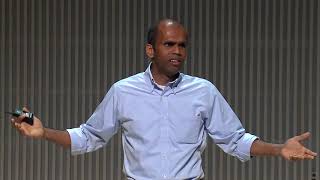
Gokul Rajaram presents SPADE, a five-step framework for making hard decisions: Setting the objective and timeline, identifying People with clear ownership, generating Alternatives, Decide via private votes, and Explain the choice widely. He uses examples from Google and Square to show why consensus fails and how unified responsibility with broad consultation produces better outcomes.
Chapters
Gokul Rajaraman. Thanks a lot. It's awesome to be here. Thanks for having me. Chai Labs was a first-round capital portfolio company, and so it's great to be back home. Let me start with a story, a story which fundamentally changed how I think about making decisions. The year was 2006. I was working in display advertising at Google. And we were doing a presentation to Eric, Larry, and Sergey about a particularly tough problem we were facing around our display ads business. The discussion got pretty heated. And at one point, Eric raised his hand and said, "Stop. Who's responsible for this decision?" And I kid you not, 3 people simultaneously, including me, raised our hands. 3 people. And he said, "I'm going to end this meeting right now. I do not want you to show up back in this room again until you figure out who the owner is, because three owners means no owner." And he literally ended the meeting and sent us out of the room. And so this story really stuck with me for the last decade. It really shows a lot of forward-thinking companies think of consensus as the way to make decisions, right? A lot of us come from companies that practice consensus. I do, in the past. Turns out, for important decisions, for hard decisions, consensus doesn't work. It is ineffective and impractical. Why? Because consensus means no ownership. What is important is not that everyone agrees on the decision. What is important is that everyone is listened to, but then that the right person makes the decision, the right person rallies everyone around the decision, even if they don't agree. And then everyone executes on the decision. So at Square, we developed a framework that we'll talk about, an alternative to consensus that we believe is much more effective in making high-quality, important decisions. But before we get there, let's talk about what a hard decision is. What is an important decision? Well, many of you have seen frameworks like this where you can classify decisions along two axes: importance and urgency. There might be different ways to think about this, but importance and urgency. My favorite one— you can read the slides— is It's the kombucha cell, which is the not important, non-urgent decision of which kombucha flavor to choose every day when you go to your micro kitchen. We actually jokingly refer to importance, urgency of decisions on the kombucha scale at Square. When do you use this framework? It is used for important decisions, that top row, decisions that are important. And I am therefore conflating the word "hard" with "important." Decisions that are so important that it could affect your company, they could affect your business unit, they could make or break. But not just at a company level, but at a group level, at a business unit level. So you know, every single one of you knows when a decision is important. It's like one of those things where you know it when you see it. But really, it's an important decision. It can also be used for urgent decisions. Once you start using this framework over and over again, you'll realize that it is not something that takes days. It can be done in an hour or two. So if you have an hour or two to make a decision, you can actually use this framework very quickly. So without further ado, let's get to the decision framework. It is called SPADE, and as you might realize, it's an acronym which stands for Setting, People, Alternatives, Decide, and Explain. So we'll go over each of these terms and give some examples of how we've seen it, I've seen it applied in various settings at Square and other places. So S stands for setting. Setting essentially contextualizes the decision. It sets the tone. It basically helps us figure out what the decision is, what the elements are, and puts all the other aspects into motion. Setting has 3 parts to it. One is the what, the second is the why, and the third is the when. The what is precisely defining the decision, and you will be amazed at how many people can't articulate what the decision is precisely. For example, I've seen decisions articulated in the following way: Figure out what the next country to launch in is. You know what? It's okay if you have exactly one product, but if you have multiple products, the decision is not just what country to launch in, but what product to launch in and what country to launch in. It's a binary— it's two axes, not just one. So being very precise about the decision to be made. The next one is the why. We'll come back to that. The third one is the when, determining exactly what the timeframe of the decision is, when the decision needs to be made by, and why. And the why is really important because, for example, you might say, "I need the decision to be made by October 15th, 2015." Why? Why does it matter? What is important is you say, "Explain why." "The product needs to launch by November 15th, 2015, and therefore I need the name determined by October 15th so that this name can flow through in the collateral into the website, into the app. I need 4 weeks for that." And so it helps people understand the when. On the why of the when. Let's come back to the why. Inarguably, the most important part of the setting is the why. The why defines the value function, the value metric. What are you optimizing for? Why does this decision matter? What are you optimizing for? What is the objective function? And to illustrate the importance of the why, let me give you an anecdote. I am an advisor to a startup that a couple of months ago had a massive blowup between the head of product management and the head of product marketing. Well, being a startup, the product manager and the product marketing manager who disagreed about how to price a product. So both product manager and product marketing were completely, completely disaligned, so much so that they had to bring me, an external advisor to the company, to try to debug what was going on. As we dug deeper in, we realized that the disagreement stemmed from a fundamental misalignment around the goals of pricing. The product manager was thinking of pricing as a way to maximize market share, while the product marketing team, the product marketer, was thinking of pricing as a way to maximize revenues. And neither of them had articulated that. As soon as we figured out that was the root, it became much easier to have the dialogue and we got to a decision, because then the founder, the CEO, had not articulated what the goal of the decision was. So very simple, yet something very basic. See this over and over again. People don't know why the decision matters, what we're optimizing for. How can you make a decision without knowing why it matters? So then the next part— so that was setting, S. The next part was P, people. The reality is I lied. Setting is not the first thing you need to determine for a decision. Number one is people. The first thing you need to choose is people. And again, it's probably less fun to name a framework PSADE, That's why we call it SPADE. But the reality is people first. This is the first thing you need to do. You need to figure out who are the people involved in the decision. And of course, the most important one is who's the person responsible for making the decision. We'll come back to this. The next one is who's the person who's approver, who's the approver for the decision. And then who are the people that need to be consulted for the decision? The responsible person is really interesting. Some decision-making frameworks, if you look at literature, have a responsible person that is different from the person that is accountable. At Square, we made the call that the person who's responsible for making the decision is the same person who's accountable for execution of the decision and success of the decision, because we believe accountability and responsibility are the same thing. Think of the last time you were handed a decision that you had to execute on, a decision where someone else made the decision, but you were responsible for success. How did that make you feel? If you're like me, it probably made you feel frustrated, powerless. And completely disengaged, and that's exactly what we want to avoid. We want the person who's accountable to also be the person who makes a decision. So that's responsible. So very, very easy way to choose. Who's going to be responsible for success? The other person who's responsible for making decisions. Second one, approver. Approver is someone who can veto the decision. And typically, this is not vetoing the decision itself, but ideally vetoing the quality of the decision. It is a check metric on the responsible person to make sure they are not abusing their privilege and making a low-quality decision. It's a superpower that needs to be used very sparingly. Approver. Third one is consulted. Very important and one many people ignore because people don't realize that a lot more people need to be listened to. Basically, consulted is a list of all the people who are active participants in the decision, who will give input, who will give feedback, who will provide their thoughts, and who will help the responsible person make a high-quality decision. Consulted. Let me tell you two stories. One— actually, one is more of an interesting thing which many of you probably face, a country-specific decision. Imagine a global company. Many of us work at companies that have many, many locations across countries. Who makes a decision around pricing a product in a country? Is it the global product marketing team, or is it the in-country general manager or country lead? Very, very common question. Who makes that decision? Very simple. In my opinion, it depends. It depends on what the role— there's no black and white. It depends on what the role— again, it depends on what the role of the country team is. What is the role of the country GM? Are they responsible for revenue or not? If they are responsible for revenue, they must own the pricing decision because how can you make them responsible for revenue when they don't control pricing? If on the other hand, they're responsible purely for operating the business but not responsible for revenue, their incentive structure, their goals are not revenue-focused, then it should be the global product marketing team. So very simple. Responsibility is what drives accountability. And responsibility for the success of a decision is what should drive who makes that decision. The next example is one from Square, one that shows the importance of consulting. This is around unit testing. Many of you in engineering know about unit testing. We had an engineering lead at Square who sent out an email about a change in policy to unit tests. He had consulted with a bunch of eng leads. He felt pretty comfortable with the decision. He sent it to all of engineering at Square. This is the policy around how unit tests are going to change. Within 10 minutes, a dozen people replied disagreeing vehemently with that decision, and it turned into a huge bike shed exercise. Within half an hour, the eng lead took ownership because, again, as a decision maker, you need to take ownership of the decision. He took ownership. He reverted the decision, and he invited every single person who disagreed with the decision or had anything to say to meet with him over the next week. He had open office hours every single day for the next week. And I think a dozen to two dozen people took him up on it and went to meet with him. A week later, he sent his new decision out by email. Guess what? It was exactly the same decision as the last time. But this time, nobody complained. Why? Because they had all been listened to. Listening matters much, much more than people think, which is why you need to consult, you need to listen to as many people as are willing to be consulted, as have a voice, as have an opinion, as have feedback, because people want to be consulted, even if the end decision is not something they agree with. Responsible, approver, consulted. Three facets of people. Now, you have the people, you have the setting again. People first, then the setting. The next part of the framework is A, which is alternatives. An alternative is a view of the world. It is a way that you can use to maximize the value metric, to figure out how to maximize the objective function. It is the job of the responsible person to figure out a— to come up with a set of alternatives that are realistic, which is feasible, that are different from each other, that is not just micro-variants, and that are comprehensive, that fully cover the problem space. And it's their responsibility to generate those alternatives. But once you generate these alternatives, you also need to evaluate them vis-à-vis the value metric. Again, when you get down to alternatives, a lot of people just forget that they had the value metric that they outlined. I get these questions all the time. How do we make a decision around X? Well, what is your value metric? What are you optimizing for? Oh, yes. Makes it much easier, right, when you know what you're optimizing for, which is why the Y is so important. But ultimately, you need to figure out how to evaluate and rank these alternatives against each other. There's no clear stack rank. Each alternative has its pros and cons. I prefer going to a whiteboard and getting the folks who are in the consulted group into a room and essentially doing a brainstorm. List out every alternative and list out the pros and cons of the alternative. As much as possible, try to get into numbers. It can be very hard for uncertain, ambiguous decisions to get down into the numbers. But it's really important to see, especially for pricing, revenue, or growth decisions, to get down into figuring out how you can quantitatively assign probabilities to events. Because ultimately, decisions are essentially a view of the world on uncertain things. And so you need to assign probabilities and doing sensitivity analysis on what's going to happen. But ultimately, you need to figure out what are the pros and cons and come up with a framework that you can use to apply to evaluate each alternative. This process, which is called will also hopefully generate new alternatives that you haven't considered, and it'll keep the folks who are consulted in the loop. It'll keep them feeling and really getting them engaged as part of the process. So very important to brainstorm, to make sure you're putting out all the alternatives, listing out the pros and cons, and getting to quantitative evaluation of each. The place where we see quantitative evaluation used the best is M&A decisions. Why? Because literally an M&A decision for most companies is make or break for the company. It is a really important company-level decision. So most great corp dev people do an amazing job of evaluating the build, buy, and partner scenarios and seeing what is the economic benefit to the company over 5 years or 10 years, looking at probability of success, looking at resources invested, looking at opportunity cost, all of these things together. But even if, again, you're not an M&A person, you're not a corp dev person, I strongly suggest that you try to use a quantitative technique to figure out the economic benefit or whatever the value metric is you've set as a success criteria for each of those alternatives. You don't need to be a Corp Dev person to put some numbers down, do some Excel around each of these alternatives. So now that you have the alternatives outlined, you have the pros and cons, you have the value metric, you have the success criteria, everything else, what do you do now? You decide. You decide, and the way you decide is simple. Now that you've figured out all the alternatives, my preference is again to bring all the consulted folks back into the room and lay out the alternatives, lay out the pros and cons to them, lay out the values from the quant model you've run, and ask them for their thoughts, their feedback. But really important, ask them to send you their vote privately by email or, my favorite, by SMS. So ask them— or Slack now. But in either case, ask them to send you their vote, their feedback privately with what alternative they would choose and why. And why is the private thing important? Because in many cases you see many decisions which are controversial or where there is an organizational hierarchy between people. Once someone says something, because of peer pressure, because of various org dynamics, people feel compelled to agree with someone who's spoken. So it's really important to have you get impartial feedback and votes from people without being influenced by others. So you get all of these things from people. You then need to sit down and decide. You need to make— you as the— if you are the responsible person, the responsible person needs to make down— sit down. And make that decision. And again, once you make that decision, you need to write it out. While the decision is fresh in your mind, you need to write out what alternative you chose, why you chose it, and then you need to explain it, which is the E part of the SPADE. And the way you explain it is 3 steps, actually. The first thing you need to do is to go to the approver. The approver most likely has not been involved as much in the process so far, and so you need to go to them, explain the decision, and get their buy-in, and hopefully, If you did a good job of creating a high-quality decision framework, they're not going to veto it. The next thing you need to do is to again get all the folks you consulted into a room or over Hangout if they're a remote team and explain the decision to them. You need to explain the decision to them and really take ownership of the decision. There might be grumblings. There might be disagreements. You need to take ownership. And then, really important, you need to go around the room and have every single one of them say, I disagree, I agree, and I support— well, actually, you don't need to say I agree, disagree. In case of private— I ask them to support the decision one at a time. Essentially, they need to commit to supporting the decision. This is called a commitment meeting. Andy Grove talks about this. But commitment meetings are really important because when you commit to supporting a decision in the presence of your peers, you're much more likely to support it because ultimately, as the responsible person, you are responsible for executing on that decision. And so you need their support, their help to execute on that decision. And so after the commitment meeting, You then need to not just leave after the meeting, but you need to figure out what the next steps are around execution and then delegate execution steps to them. The final thing, which is really important also, is to write all of this up, write the Spate framework in a succinct one-page document and send it out to the rest of the company or as broad an audience as you can, ideally over email. Why? Because the company broadly needs to see what decisions are being made and how they are being made because that's how more people get encouraged to make these decisions, to use a good framework to make them. At Square, we have an alias called notes@squareup.com, and we use that to send all kinds of meeting notes to the company. And so we've started sending Spades, Spade documents to the company over the last year and a half. And it's been really gratifying to see the number of decisions that are increasingly made using Spade and sent out to the company. And the company feels really good that high-quality decisions are being made about important topics and decisions across the company. So communicate. So that was it. Setting, people, alternatives, decide, and explain. Now to synthesize this all together, I looked for some important things at Square. Some of these are fairly confidential. I went back to my previous job at Facebook where we had a really interesting decision that really a lot of was provided impetus for Spade. And so in an advertising team at Facebook, we had a fundamental disagreement between the product engineering teams and the marketing and sales teams. It was about a pretty contentious topic, and we were unable to resolve that disagreement. And we were essentially at a standstill. We could not move forward, could not make a decision. So we decided at that point, since the ad business needed both the product engineering teams and the marketing sales teams to actually move forward, we decided to go to Sheryl Sandberg and ask her to be the responsible person to make that decision. And I think that was the single best thing we did. Because we needed someone who could take ownership and who was responsible. So Sheryl agreed to become the responsible person for the decision. She got all of us in her office around the table, and she asked us to first outline the various alternatives. She asked us to first outline what the success criteria was. So we didn't have SPATE at Facebook, but success criteria, the what and why of the decision, and when we need to make it by and why. But then she asked us to evaluate, to list out the alternatives, and to look at a 5-year impact on Facebook if each of these alternatives were followed. So we hadn't really done a 5-year analysis. We basically just focused on the immediate impact on Facebook. So we went back, did our homework, came back, and presented the 5-year plan. Then she did something really interesting. She asked us to take the other side. So the folks who were arguing for one side, she asked to see— she asked literally them to argue the other side and vice versa. So we literally spent 1 or 2 days preparing for that, where each side argued the other side, and then we came back to the room and again presented. And this actually helped several folks in the room switch their sides, because they saw some of the legitimacy in what the other side was doing. And then finally, she got all of us in a room the third time, and we went around the room. And this is again something that folks like Sheryl can do in general. She had built such a high level of trust in the room that everyone, including Sheryl's admin who weighed in, felt completely free to speak their mind, but I think in general I've seen it's very hard to do. We literally went around in front of everyone and said whether or not we supported the decision or which side of the decision we were on, which alternative we chose and why. And she essentially called an end to the meeting, and then a day later she told us what the decision was. And the reality is, the decision— every single person in the room who was involved felt good about the decision because they felt their voice had been heard. She had to choose one of the alternatives, so obviously half the people felt it was not the alternative they were espousing, but ultimately everyone felt good about it. So ultimately, that's the hallmark of a high-quality decision, that people feel they were consulted, they were listened to. People feel they understand why the decision was made. People feel they understand what drove the decision-making, and she did a great job there. So to summarize, Key takeaways are simple. Bullet 0 is that consensus doesn't work. Don't use consensus. Agreement is not ownership. Doesn't work. Second, clarify the why. It's very important to understand why we're making the decision. What is the value metric? What is the objective function we're optimizing? The next thing is ensure that the R, the responsible person, is accountable for the decision. Don't just be that company. Don't just be that person who makes a decision and hands it off to some poor colleague to go and implement, and they're not even involved in making the decision. Don't be that person. Third, consult maximally. Many, many more people want to be consulted than you think do, so please consult. Please invite people who have opinions to come and give your opinions. Remember, consulting doesn't mean agreeing. Consulting simply means listening and getting people's points of view. Fourth, brainstorm publicly but get feedback privately. And then finally, explain to a broad audience because again, I think Noah did a good job talking about culture. One of the tenets of culture at Square is transparency, and we want to make sure that decision-making is really transparent because I bet you if you survey people at your company today about decision-making and how happy they are, the number one thing they're going to say is, "I don't understand how decisions are made." The number one thing they're going to say is, so they don't understand who makes decisions, how they're made, and this framework allows you to communicate all of those things broadly to a company to allow them to even know how, decisions are made so that people who are joining the company or at the company can make high-quality ones. So communicate broadly. So again, to summarize, S.P.A.D.E. I firmly believe that making high-quality decisions can fundamentally transform work and the world of work, and I personally can't wait to live in a world where every one of us, every one of our companies is making amazing high-quality decisions and people are happy with that quality. Thank you.
More from Gokul

Gokul Rajaram on the 8 Moats Companies Need & Why Dropouts are "AI Maxing" the World





#80: Becoming an IC again is how products leaders will stay relevant in the AI era | Gokul Rajaram
#80: Becoming an IC again is how products leaders will stay relevant in the AI era | Gokul Rajaram


What I Learned Working for Coinbase, Pinterest, Facebook, & Google | Gokul Rajaram
What I Learned Working for Coinbase, Pinterest, Facebook, & Google | Gokul Rajaram