Adapting to Change in Venture Capital and AI with Pat Grady of Sequoia Capital | 2025 Upfront Summit
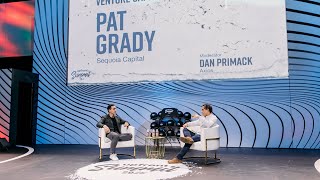
Pat Grady of Sequoia Capital says venture is shifting from founder support to asset management, and warns many firms will fail. Foundation models are lowering the cost of building apps, creating a golden age for founders. Sequoia's $200 million seed fund gets the same attention as billion-dollar deals.
Chapters
Pat, appreciate you being here today. So walking around yesterday with lots of venture capitalists and limited partners and I wrote about this a little bit this morning in my column. It seems there's two groups of VCs right now. There are VC optimists who believe, yep, lots of companies are gonna go public, everything is fine. And there are some VC pessimists who think the model, not theirs, they're okay, but everybody else, the model is broken. Are you a VC optimist or pessimist?
Well, thanks for asking. So first, and thanks for having me, by the way. First, first I want to disambiguate a little bit because the question of when are companies going to go public, that is one slice of a much broader system. And so I think if we look at the system as a whole, that is venture capital today, I am short term pessimist, long term optimist, and if I unpack that a little bit, why am I short term pessimist? Well, if you just kind of go back to the like origins of venture capital, it's been a cottage industry for most of its existence. Thanks to the last like 10 or 15 years of ZIRP coupled with the cloud and mobile super cycle, it's gone from being a cottage industry to being a business. When you're in a cottage industry, which is what we still like to think of ourselves as being, you get to focus on the quality of your product, you get to focus on the founder experience, you get to focus on generating returns for limited partners. When you're in a business, the business of business is business. Now you're focused on maximizing shareholder value. That takes you down a different path. That's about assets under management, that's about milking a fee stream, that's about raising.
Multi billion dollar funds.
That's where I think we're going to have a culling of the herd. Because people got away from the original spirit of venture capital, which is helping founders build legendary companies, and they got into an asset management business. Venture capital is not an asset to be managed.
So you think there's going to be, whether it be you think what firms fall by the wayside, firms scale back. I mean, we just had Bill Gurley up here and Benchmark was always known for holding the line when it came to fund sizes. In terms of focus, not Sequoia, I disagree.
So I would say Benchmark, Sequoia conviction. These to me are the canonical examples of small is beautiful. And when I say small billions of dollars, we have a $200 million seed fund we have people who dedicate their lives to making the most of that seed fund. When we talk about a seed investment on a Monday, it gets the same amount of time as an expansion stage investment. There is no asymmetry inside the partnership in terms of social currency, in terms of compensation.
I wasn't gonna ask about this, but I'm curious because I've heard this from other multi stage firms. So you have a potential seed investment of maybe a couple million dollars and then you're maybe gonna give $500 million to help Elon buy Twitter. Those really get the same amount of time. That's like saying someone spends the same amount of time deciding to buy a candy bar or a car.
That's exactly right. That's the only way that you can ensure excellence at the local level.
All right, so short term pessimists, long why a long term optimist?
Long term optimist. Because I don't think there's ever been a better time to be a founder. If you look at. There are two things that matter for the venture capital business or for the entrepreneurial journey. One is macroeconomic cycles. The other is technology platform shifts. Right now we have the most important technology platform shift of our lifetimes underway. We have foundation models that are getting better, faster, cheaper every day, which accrues to the benefit of any founder who wants to build an application layer company on top of. And so I think the possibility for the entrepreneurial journey has never been greater than it is today, I think for venture capital as an industry. If you're one of the true believers who really takes pride in helping founders become the best version of themselves and helping their companies reach their maximum potential, you have a wonderful opportunity.
And I know that Bill and Brad talked about this a little bit before us, but as you say, IPOs are a small slice. That said, those are usually the deals that help return funds. Traditionally, you know, if it's a, if it's a power law industry, those are usually, those are usually the big ones. Every now and then you'll get a massive acquisition. But we haven't been seeing major acquisitions either. So if there's no IPOs and there's no acquisitions, are we just in. Obviously the stripe tender this morning. Sequoia is a major investor in stripe. Are we just kind of in a private forever cycle with these companies? And I guess even long term optimists, some of these companies are going to run past their time to go out.
Yeah, I don't think there's.
Or do you think the Magnificent Seven is About to go on a buying spree. You've got a new administrator maybe. I mean, you need something to happen.
Well, there are a lot of questions wrapped up in there. So there's IPO, there's M&A. I think on the IPO front there will be a time when the public markets are open again and they're open now.
They were open last year. They were open at the end of.
23 and I think we'll see a few blockbuster tech IPOs in 2025. So I think that's coming down the pipe and I think once that happens, it'll open the gates a little bit for some more folks on the M and A front. People forget that this is the same administration that didn't like when Plaid tried to join forces with Visa. I don't think they're going to open the floodgates, but I do think they're going to be somewhere more toward the middle and I think we should expect a bit more M and A activity than we've seen for the last four years.
The IPO thing or the markets being open. And I was a little glib, but not completely. Why is there a perception that the markets are closed? And I guess I say we've had bull equity market for what, two and a half, three years now. You've got good GDP growth. The macro is all good. The relative handful of companies that have gone out even since the end of 23 priced well, performed well almost regardless of industry and sector. Venture backed, not venture back. Big, small. Why is there a perception the market's not open outside of cautious bankers?
Yeah, I think that most people are waiting for a few more proof points.
To be because someone needs to be brave and go.
There are a handful of companies that are billion dollar revenue scale still growing nicely, gap profitable market leaders in their respective industries who have it on the docket to go out this year. I think that's going to loosen it up for other folks.
Last kind of optimism question is your partner Sean McGuire was on the stage at the end of yesterday. He talked about this golden age kind of for America, slash America's economy.
Do you agree?
Are we entering a golden age of America?
I think we're entering a golden age, but probably for different reasons. I think we're entering a golden age because AI is now providing intelligence to everybody on the planet that can 10x or 100x your productivity overnight. All you have to do is go play with it. And I think that's going to be a massively powerful force for people.
How Much of your time right now, so you help run the growth business at Sequoia Capital. How much of your time is looking for on the. Is looking for new companies which are either, which are either fundamental AI companies are applying AI compared to how many existing portfolio companies are trying to figure out what existing ones you may be invested in? Four, three years ago, trying to figure out their AI stories.
I think you can kind of argue it either way and I think there's truth in either direction. So like, to one degree, if you are a startup focused on building something AI native today, you get the benefit of starting with a clean sheet of paper. And we've been very active in investing in those companies over the last couple of years. On the other side, if you're an existing company that has some data, some distribution, some scale, some customer base, you get the benefit of already understanding what workflows are going to solve important problems for those customers and trying to figure out where you can apply AI. I think we're seeing good examples of both. I mean, if you look at the AI native side, you know, you've got open evidence that's making life easier for doctors, you've got Harvey that's given lawyers superpowers, you've got Day that's reinventing the CRM. If you look at companies that are up and running, you know, you have notion that is now an even more powerful system for work than it was before. You have attentive, that's kind of redefining customer communication, like they're taking advantage of those benefits.
I'll ask one other golden age question, which is what does it mean? And maybe it doesn't mean anything practically, but when you think of venture, when you think of your business, what does it mean that the White House right now and kind of the D.C. establishment has so many venture capitalists in it and around it, I don't know what that means.
I think if you frame it a different way, is it a good thing for technology, is it a good thing for founders? Is it a good thing for our ecosystem that some of our best and brightest are engaging with Washington in a constructive way? Yeah, that's almost certainly a good thing.
Do you think it's the best and brightest of Silicon Valley that's engaging right now in Washington?
I think a lot of them are, yeah.
Fair enough, fair enough. One of the. On the AI side, one of the. When you look at your profile On Sequoia's website, OpenAI, as mentioned as one of your companies, you guys though, as a firm, haven't Stayed with. You have stock in OpenAI, you have exposure to it, but you didn't keep doing the subsequent rounds. Why not?
Well, if you look at. So first off, we've been in business with Sam Altman dating back to his first startup, which is looped. We were lucky enough to lead the Series A. Now we've been in business with Elon Musk going back to the late 90s when he offered our partner Ruloff his first job at PayPal. Right. And so for some of the Original founders of OpenAI, we just have a lot of history and we have a lot of institutional knowledge built up. I think if you look at their position in the market, obviously they are the front runner today. Have been the front runner for a very long time. The investment that we made in them. We tend to size investments proportional to our conviction in an opportunity. And every time a new round comes up we think about are there exceptional risk adjusted returns to be had from this round? The original investment we made in OpenAI was pre launch. Right. And so there was a lot of risk that we were taking. But it was very easy for us to imagine a future in which that's one of the most important companies on earth. I think that future has largely come to fruition over the last handful of years. The question as to why we didn't invest more money in subsequent rounds, if you look for example at the round that Josh led last summer, Josh Kushner led, I think there's a chance that ends up being an absolute home run investment. I think if it's a home run investment, in my opinion it's probably going to be more because the consumer property continues to scale as opposed to the enterprise and OpenAI becomes something of a next generation Google. I don't think it's going to be because of the API business.
Sequoia did very well on the first generation Google.
We did and hopefully we'll do well on this generation Google. But I think one place where people have a wrong mental model is around the API businesses for these foundation model companies. Because I think people want to analogize to AWS and say, oh, this is the next generation trillion dollar infrastructure provider. I don't think that's the right mental model. The nature of these products, it's more like a database business than an infrastructure business. If it's a database business, that means that there's less gravity associated with it. It means that you face pressure from the open source world. It means that exactly what we've seen over the last few years can be reasonably Expected, which is other people develop similar products, price is down 99% per token over the last 12 or 18 months. Those competitive forces will continue to persist. And so I think what you end up with, you end up with a MongoDB type business. MongoDB is a wonderful business, but we're talking about tens of billions of market cap, not hundreds of billions of market cap.
Then why do xai?
Xai? So first there's a question of why does the world need another foundation model?
Yeah. Based on what you just said. Yeah.
And I think the answer to that, the genesis of XAI was the need for a maximally truth seeking foundation model. And if you get into the question of AI alignment, what is the thing that you want AI to do? The most important thing is you want AI to actually seek truth and try to be as unbiased as humanly possible. And so that's the reason why XAI has a reason for being. What sort of unfair advantages does it have? Well, we're getting into this phase where the limitation on scaling a lot of these models is data center capacity. And when we talk about data center capacity, we're literally talking about construction, we're talking about moving steel.
Right.
We're talking about energy, we're talking about things that the Elon complex, by virtue of their experience with Tesla and SpaceX and Boring Company and others, they are the best in the world. And so there's a fundamental advantage that XAI has by virtue of their, quite literally construction capabilities in their.
But on the, on the, on the. I hope he's not here on the mongodb side of it, like. But that said, doesn't it still have the same ultimate call a customer problem that you think OpenAI has?
Sure, sure. But I think, I think all of these companies, the value is going to be in the application layer. So the question for all these businesses is what are you doing in the application layer? OpenAI is already established in the application layer. Like ChatGPT is a wonderful property.
Would you bet on Grok over Llama?
Would I bet on Groko over Llama?
Yeah, I know they're not comps exactly, but in the same concept, when you talk about the way it kind of jumped the scaling wall because data keeps coming in and keeps getting constructed on X.
Well, so would I bet on Grokka over Llama? I think if you go to. Would I bet on Elon over Zuck?
Yeah.
Hard to take either side of that. They're both.
No, but you have Francisco take a side out.
Not going to take A side transcendental talents. Both of them also just coming into their own. If you look at the business model, I think Grok has a much more straightforward business model. I think Llama is still trying to figure out what the long term business model is. And so from that standpoint, maybe you'd bet on Grok over Llama.
Let me ask you, since you're on the growth side, and this was, I think, the only real buyout you guys have ever done, which is not that Sequoia has a majority stake or anything, but participated in a buyout, the Twitter buyout. How do you judge where that is today? I know Sean talked about this a little bit today. I know there was this report that the EBITDA is fine, but the D and EBITDA matters a lot for this company. They're getting money from, you know, they're getting money from X, they're giving money to open to Xai. How do you judge the Twitter buyout right now? From an investment standpoint?
I would say it's roughly proceeding according to plan.
The plan was to have it be way overpriced and to be trying to get back.
Yes, that's generally how we try to make money. No, the, the basic plan was Twitter hadn't innovated for a very long time. And so step one is to break things. Step two is to build things back. And I think they ripped a lot of cost out of the system. They broke down a lot of the architecture of it and started to build it back. They're now innovating faster than they had before on the feed and on some of the business aspects of the company. And I think it went into a trough during the break things phase. It is coming back out now and that's sort of what they set out to do.
Do you have any. And I appreciate, and this is kind of Sean's argument that you guys had been with Elon going back to PayPal days and through a variety of iterations. Do you have any concern, and honestly, this is almost an FTX question. Do you have any concern that there. Well, it is. So one of the issues with FTX in the end, outside of the massive fraud, was that that's probably the main issue. That was the main issue. But one of the reasons it was enabled was there was no board of directors, there was no CFO Twitter, there's no BOR or X, there's no board of directors, there's no oversight. You guys have, I think, one of your biggest checks ever, if not your biggest check ever in this thing and you don't really have great visibility into it.
Well, visibility and board oversight are two different concepts.
Okay, well, there's no board oversight.
So your point is correct. Like not having board oversight is a risk that we are taking on that investment, and it is a risk that we have taken before and had it not work out so well. That being said, we are incredibly close to those companies. We know all the numbers of those companies. We know all the people at those companies. I would say we probably have better visibility into those companies than we do into the vast majority of the rest of our portfolio. And so understanding what's happening in the company and being on the board are related, but somewhat distinct.
That's interesting. Let's talk kind of venture in general. There's been so much talk about kind of the barbell of venture capital. The firms that have so much and then the firms that have so little and then kind of the unwashed middles. Sequoia is one of the ones that has so much. You talked at the beginning about how you think some firms will go away. Do you believe that it is good overall for kind of the tech ecosystem to have a relative small handful of firms which kind of are sucking up so much of the money?
I don't know if the amount of money is the right variable to think about. So zoom out for a second. Why does the venture capital industry exist? The best reason for the venture capital industry to exist is to take founders who have these wild ideas for how they can solve an important problem and build a better future, and to wrap around them all of the resources they need to turn crazy ideas into enduring impact. That is a great reason for the venture capital business to exist. Does that get better when you throw more money at the problem? No. Does that get better when you throw more people at the problem? No. It actually gets worse because then you take the experience and you dilute it across a bigger base of people. This is something we fight very hard against. When I joined Sequoia in 2007, we had 14 investors. Today, in 2025, we have 22 investors. 14 to 22 in 18 years, that's a 1.5x. The industry has gone from about 3,000 to about 30,000.
How much of that then is a reflection on just larger check sizes? In other words, so like, you know, if you take the amount of money and you divide it by the number of partners or number of investors, is the reason that you think your growth, your person growth, hasn't kept up with your dollar growth is just because the average investment sizes are so much bigger.
Has nothing to do with kept up, right? When you look at the market and you say, okay, well, there used to.
Be a philosophy that the average partner would only want to have X number of portfolio companies, certainly X number of board seats, thus they'd only write a certain number of checks per year.
Still true. Most of the dollars we invest go into our existing portfolio companies. So there's no incremental time associated with most of the dollars we invest. But then the challenge has been, okay, well, the opportunity in the industry is scaling because tech is permeating every nook and cranny of the world. How do we keep up with the opportunity without scaling the people? And the answer is we scale the platform. That's why invest in engineering and product and data science and programs and things that scale in a different way and provide unfair advantages to the investors who are lucky enough to reside on top of that platform. The other thing that's important, by the way, which I didn't get to earlier, when we talk about the way we approach this business, why do we have 22 people and some of our competitors have 80 or 90 or 100 investors? We actually think you're more productive with 22 people than you are with 100, because those 22 people get supercharged by concentrated knowledge, concentrated experience, more reps. You have to be focused because you don't have the time.
Better economics. Too much better economics.
Maybe you got to do your job right. But one of the colloquial expressions we use is, if you're hunting deer and a rabbit crosses your path, don't go chasing the rabbit because you're going to scare off the deer. Similarly, in our business, there are a million opportunities you could pursue if you put an artificial constraint on team size. You only have the bandwidth to pursue the absolute best, and it keeps you focused.
Sequoia has been known historically that you guys have investments from on the limited partner side, since there's a lot of limited partners here from some of the top, most historic endowments in terms of the ones who invest in venture capital going back to the 70s and Don Valentine, et cetera.
Do you.
And I don't know if this is something that gets discussed internally at Sequoia, and I know you're not the IR person there, but are there any concerns that there's a lot of pressure right now for endowments and that there's some questions what that's going to mean for venture. There's a proposal right now in D.C. to significantly increase the Taxes on large endowment profits. You obviously have the NIH cuts, which every university, or at least every research university is freaked out about. Understandably, it's definitely going to. If not, it won't necessarily cut the amount of money they can give to venture, but the endowments are probably going to be asked to provide more to the actual universities, which thus they'll have less to invest. Has there been any talk about concern on what's kind of happening to the endowment world and how that could impact venture?
Well, I'll answer that in two ways. One, a lot of the limited partners we've been in business with, it's a multi decade relationship. They've done well with us, we've done right by them. And so I think if they were to stack, rank the places they invest and figure out what they're going to cut, we're probably not going to get cut. The second answer is this is one of the reasons that we moved to the permanent capital vehicle a few years ago. And so for anybody who's not familiar, the Sequoia Capital Fund is a permanent capital vehicle. It sits on top of all of our investment activities. It is one of one, it's the only one that exists in the venture capital world as far as we know. One of the benefits of that vehicle is, is that LPs can now have liquidity on demand. Historically, LPs were at the mercy of public markets or the M and A environment, or when we make decisions to distribute cash. Now our LPs can actually get cash on demand. So if you're one of those endowments or philanthropies and you're under pressure, you actually have a liquidity mechanism built into your relationship with Sequoia Capital. That didn't exist before.
I was on stage recently with Bill Ford, who runs General Atlantic, which is also a growth equity firm of sorts, and he mentioned to me that they now have an AI on their investment committee. It doesn't have a vote, but it does have a voice. Does Sequoia or could you conceive of.
That happening not on the investment committee, but thanks to technology, we know more about a company we've never met today than we knew about a company we were about to invest in 15 years ago. We can assemble a more comprehensive investment memo programmatically on a company that we have never met than we would have been able to put together 15 or 20 years ago based on full due diligence. And so the power of this stuff is pretty amazing. We don't use it to make the final Investment decisions. We do use it to streamline the funnel.
Could you see a time in which you start to use it to actually inform the actual decision? Again, not make the decision. It does not just inform in terms of research, but give opinion on whether sequoia should invest 100%?
Yeah, we use it to inform the investment decision, but then we apply our.
Judgment should there be any worry. There seems to be two groups of venture capitalists, which are. You've got some people who come straight from industry, straight from tech companies and become. And there's been a lot more of that than there was say, 20 years ago. You started your career, Summit Partners. Kind of a junior person at Summit Partners. And I'm wondering if the job you were asked to do at Summit, back whenever that was 20 years ago, if given AI and the advances, if Summit's even going to be hiring someone like you, if not, maybe today, but not in five years, Is AI maybe going to kill the apprenticeship model of venture capital?
Well, so will AI eat into the value chain 100%. So if you think about our value chain, sourcing, picking, winning, building, harvesting, are kind of the five steps in the value chain. I think at the front end of that, which is the sourcing and the picking piece, you can imagine sourcing being 90% programmatic. You can imagine picking becoming 50% programmatic. You know, we had this off site in 2017, 2018, sometime around that, where we did this exercise called Sequoia 2030. Each investor had to write a memo that articulated their vision for Sequoia in 2030. Then we took all the names off so that there was no bias, and we read them all and tried to crystallize our strategy. A big part of that was, did.
Yours win, by the way, I know you don't want. I know your names are off, but did yours win?
I'm not going to answer that. But there was one of the pieces that came out of that was imagining a future in which a lot of the sourcing was done programmatically. And we've actually built a lot of that today. Will it kill the apprenticeship model? Absolutely not. Because when you get down to the essence, the two things that AI cannot do, the two things that a human being has to do, number one, the relationship with the founder. Because people don't like to admit this, but the single greatest value that we can provide to founders is to be there for them personally.
So you don't believe, then we have to run. You don't believe in this future where basically your agent is going to talk to the founder's agent and they'll make a deal on their own.
I think they'll get started. I do believe in that. But I think eventually people want to do business with people. Those personal relationships can't be replaced. And then, number two, I still think you will always have to have a human making the decision. And it's because we're in an outlier business. So by definition, you cannot build an algorithm to back test for that. By definition, I think you need a little bit of human intuition to do that.
Pat, thank you very much.
Thank you.
More from Pat
Sequoia Capital’s Pat Grady on Building Enduring Companies, the Sequoia Values, and AI’s Next Wave
Pat Grady: Sequoia Partner on Investing Lessons from Doug Leone, Roelof Botha and Alfred Lin | E1174
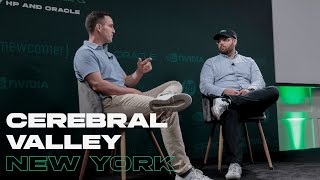
Lessons from Past Technology Waves: Pat Grady (Sequoia) in conversation with Eric Newcomer