In this interview, Sequoia partner Pat Grady discusses the firm’s investment approach through the lens of its early backing of Zoom. He highlights founder Eric Yuan’s tenacity and the dual pillars of trust—competence and intention—that underpin Zoom’s product advantage and market adoption. Grady explains Sequoia’s willingness to hold high‑multiple software companies for the long term, citing examples such as Zoom, Slack, ServiceNow, Palo Alto Networks, and Snowflake, and describing the extraordinary earnings power and free‑cash‑flow generation of these businesses. He outlines Sequoia’s mission to help daring founders build legendary companies from idea to IPO and beyond, emphasizing early‑stage (seed and Series A) investments worldwide, including in China, India, and Southeast Asia. Grady addresses why Sequoia has raised larger funds in recent years, attributing it to founders staying private longer rather than pressure from SoftBank. He characterizes SoftBank’s massive capital deployment as an extreme but inevitable response to ever‑larger market opportunities, positioning Sequoia’s capital as a “weapon” for deeper, earlier partnerships rather than a competitive threat. The conversation also touches on valuation trends, arguing that high multiples are justified for high‑quality, re‑platforming software businesses, and warns that investors often err by failing to see the future value behind those prices. Finally, Grady reflects on the broader impact of capital‑intensive competitors in sectors like ride‑sharing and food delivery, noting the potential for diseconomic competition to erode returns.
Chapters
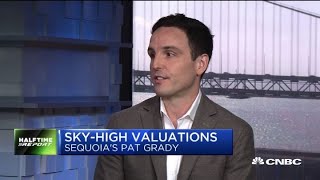
Pat Grady is a partner with Sequoia, joins us here exclusively at One Market. It's great to meet you. Great to welcome you to the show.
Great to be here.
So Zoom, you fell in love with them, what, four to five years ago?
We did.
And the rest is history. Tell us about it.
We did. Well, Eric Yuan is a pretty special character, as some people know. He tried eight times to get into the US before his visa application was finally accepted. And so that shows you a little bit about the tenacity of the founder. And a lot of people look at Zoom and kind of underestimated it over the years and wondered, what is it that makes this company special? And I would almost encapsulate that in a single word. Trust. Trust has a component of competence, and trust has a component of intention. When it comes to competence, Eric was the founding VP of Engineering at WebEx from 1997 to 2011. He knows all of the architectural tricks of the trade, and it is just a better product. And when it comes to intention, Eric is almost a cartoon character in how much he talks about making customers happy, but he really, really means it. And, and all of his employees understand that. And so they deliver a delightful end to end experience, which means that people default to using Zoom, and when you default to using it, it just changes the way you work.
We mentioned the amazingly successful ipo. They leave money on the table, you think, by virtue of just what that stock has done.
You know, Eric's not concerned about that. What he's concerned about is the relationship that he has with the public market shareholders, and he hopes they'll be in business together for many years to come. So he feels great about it.
Well, I mean, you.
One of the things we're talking about a lot today is just valuations. There are many people out there listening to think Silicon Valley has lost its mind. Zoom's trading at a 30, 40 times revenue forward revenue multiple. So help us understand when you invested and today, like, can you own this stock today at 30 to 40 times forward revenue and still earn a return?
So Silicon Valley may well have lost its mind, but that's probably nothing new. I think when it comes to software company valuations, you get what you get what you pay for. These are incredibly high quality businesses. Zoom is certainly one of those. Slack appears to be one of those. ServiceNow, which we partnered with in 2009 when nobody had really heard of the company, and last week announced earnings with close to 40% free cash flow margins and close to 40% growth with more than $3 billion of run rate revenue. The earnings power of these businesses is astronomical. And when it comes to the replatforming of the enterprise, we're still in the early innings. So to answer the question, we intend to hold Zoom for many years to come.
You do, because I was going to ask you that next, how long you plan on sticking around and, and whether that's part of sort of what the Sequoia model is and maybe how it sets you apart from some of your competitors.
Sure. When you look at a company like Palo Alto Networks as an example, when we partnered with Nirzuk, it was just Nirzuk. We actually introduced him to his co founder Rajiv. And from idea to IPO and beyond is what we aspire to do with founders. In the case of Palo Alto Networks, our partner Jim Goetz is still on the board. Our partner Carl Eschenbach is still on the board. We held the stock for more than five years after the ipo.
Snowflake is another sort of high flyer in the business software space that you guys are in. Tell us about it.
So Snowflake, one of my partners, refers to it as the killer app for the public cloud. Aws, gcp, Azure, these are wonderful places to house your data. If you want to make use of that data, you need something like Snowflake. There's a last generation of these companies that people referred to as data warehouses. If you have $1 million in nine months to spare, you might be able to get a data warehouse up and running. If you have a laptop and 60 seconds to spare, we can get going on Snowflake in the next minute. So it's a fundamentally different sort of product that really expands the market for.
Data analytics, the cloud data warehouse, for people who, you know, may not know what exactly the company does.
Talking a little bit about Sequoia, this is one of the interesting investments. We, we actually were investors early in Snowflake and Pat, even though they weren't Series A or B investors in Snowflake had the wisdom, I think, to co lead the last two rounds in Snowflake in a company that we think will still be a 10x from where we are today. But talk to us a little bit about the decisions Sequoia's made, which are quite different, stand in contrast to Benchmark and Kleiner in terms of building a multi strategy firm. And you know, I think it's been said that Sequoia has raised more money in the last three years than in the previous history of Sequoia combined. Just talk to us a little bit about that decision as a partnership, sure.
So our mission is pretty straightforward. We want to help the daring build legendary companies from idea to IPO and beyond. Increasingly, those founders are international, which is why in 2005, we went into China, we went into India, we went into Southeast Asia. And increasingly, those founders choose to stay private for longer, which is why it's not enough to make seed investments. And by the way, we were seed investors in Stripe when it was a couple of brothers from Ireland who had yet to process a single payment. We were seed investors in Airbnb when it was three guys who were literally staying on air mattresses and selling boxes of cereal to pay the bills. And so we're still very focused on seeds and Series A and partnering with founders as early as we can get. However, as they stay private longer, if they come to us and need support for a much larger investment, we would hate to turn them away. And so the only reason you've seen us raising more money is because founders are looking for more support as they stay private longer.
Some might suggest that one of the reasons you're raising money, and large sums of it, is because Softbank has forced people like you to raise a lot of money. And they've completely had a dramatic effect on. On venture capital. The Vision Fund we just had a report on not that long ago about the Latam fund that. That they're raising. So is there a softbank effect for Sequoia?
I think Softbank is an extreme example of something that was inevitable in Silicon Valley anyway. There are more and more companies chasing bigger and bigger markets. The menu of opportunities is longer than it's ever been before. I think Softbank just took that to the logical extreme. Instead of creeping their way up from a couple billion to slightly larger funds, they just said, we'll go all the way to 100 billion. As far as Sequoia versus SoftBank, we don't see them as competitors. We'll never out SoftBank. SoftBank. SoftBank strategy is to use capital as a weapon. We should be able to out Sequoia Softbank all day long. And for us, that just means getting the companies earlier and building deeper partnerships and helping them build their business.
Think they're blowing out valuations, though, by virtue of what they're doing?
You know, since 1972, which is when Sequoia got into business, it's been a constant refrain that there's too much money chasing not enough opportunities, and the impact of that is always increasing valuations. And so I don't think that high valuations are an issue. I think lack of an ability to see the future and appreciate where paying those valuations is really worth it is where investors make mistakes.
Let's double click on this idea of, you know, kind of a weapon of. Of both capital defense, but also destruction or disruption. In zoom, you had amazing capital efficiency, which was why the return was so extraordinary. But when we look at areas like banking with Robinhood, or when we look at areas of ride sharing, or we look at areas of food delivery, where SoftBank has moved in with massive checks and now you have competition that is diseconomic on a unit level.
Right.
What is this going to do to the overall returns of these businesses that now have to raise dramatically more capital to compete with diseconomic behavior? We've seen this with Meituan in China, which has been very destructive to their overall value.
So I think there's a quirk of human nature. If somebody says the share price is $100 versus $10, the average person thinks that $10 is cheaper, even though it's all relative. I think we see the same thing playing out in the fundraising environment, where it seems like hundreds of millions of dollars going into a company is a lot of money. But if the scale of the market opportunity is a couple of orders of magnitude larger than it is for your average software company, that may well be worth it. And so DoorDash is one example where we have partnered with Softbank. We led the Series A and a couple of rounds after that. SoftBank has led some more recent rounds. DoorDash is a company that is actually unit economic, very healthy, and scaling into a gigantic market. So it's all relative.