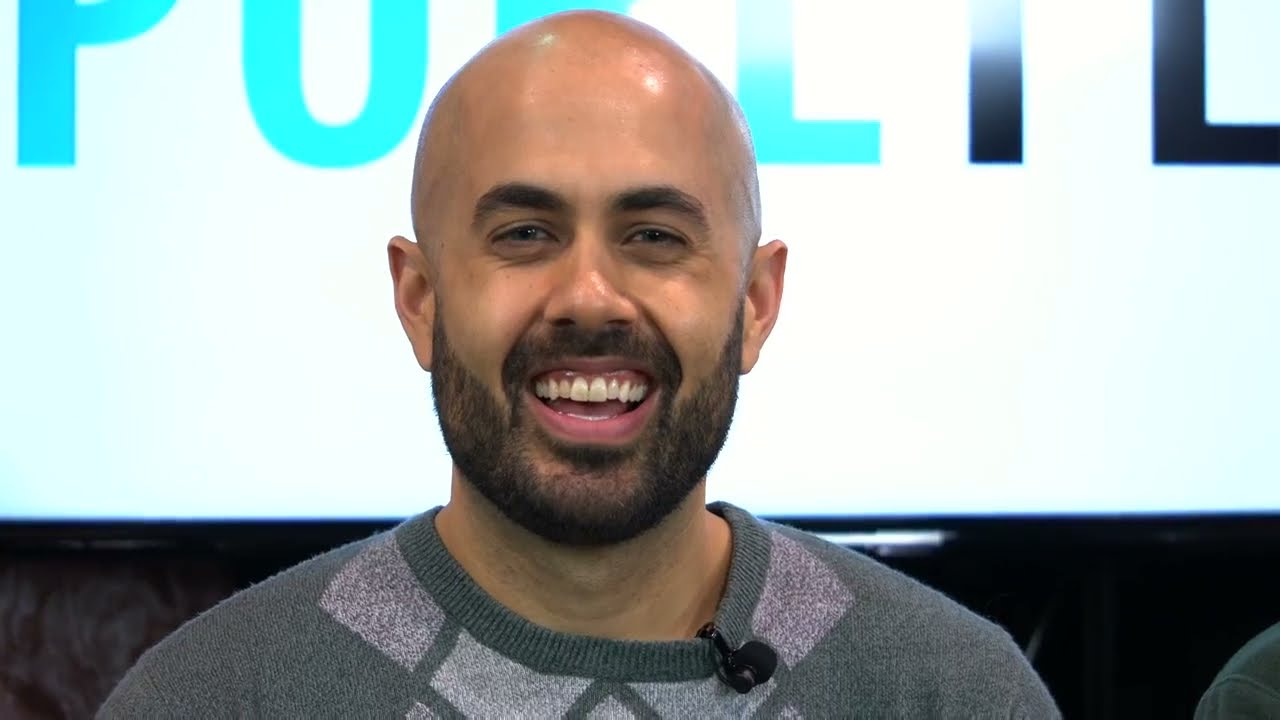
Millennials in Leadership 08 11 2017

Billy Hallowell, Greg Gudorf, Lauren McAfee, and Lisa Anderson discuss why churches are losing millennials. Only 26% are married, 39% are unaffiliated with faith, and 55% have children before marriage. The panel urges older leaders to mentor younger ones and build authentic community.
Chapters
I'm Kirsten Haglund and I want to welcome you to Pure Talk, brought to you by Pureflix and Faithwire. We're going to cover a lot of different topics, everything from culture to faith, all through a Christian lens. That's the whole goal. So we're going to have a great panel discussion today about millennials and millennials in leadership, and we're joined by a super fantastic panel, so I'm going to introduce them to you. We've got Faithwire senior editor Billy Halliwell. We have Pureflix Digital CEO Greg Gudorf joining us, Lauren McAfee, Corporate Ambassador for Hobby Lobby, and our special guest for this episode of Pure Talk is Lisa Anderson from Focus on the Family, joining us from Colorado Springs. So before we launch into our discussion, Greg, why don't you kick us off in prayer?
Be glad to. Lord, thank you for bringing this group of people together here today for what we hope is a forum that starts lots of conversation. Conversations, important conversations about how we can best serve your will in the world and work and our personal lives. Let your Spirit guide us today. We ask for your blessing in the name of Jesus our Lord. Amen.
Amen. Thanks so much, Greg. So, you know, I want to jump to Lisa first because you have this great podcast called The Boundless Show, and it's a national radio program. You speak directly to young adults all the time. So you are our millennial expert here. So if you can, even though millennials hate labels, can you give us a profile of today's Christian millennial?
Sure, I'll try. It's funny being a Gen Xer myself but a millennial expert. In fact, I did one of those "How Millennial Are You" quizzes and tested as more millennial than my millennial staff members. So that was kind of weird. So we were all a little bit stymied by that. But so first, I think we have to define the generation in general. And so those that were born in 1982, '80 or '82, it's debated, fall on the older end of the spectrum, leading all the way up to obviously the Millennium. So that generation, which is now incidentally the biggest generation, they've outpaced the Boomers in size and strength, probably. So that said, this is a generation that is extremely— it's interesting because actually many of their values reflect the values of two generations prior. So even the Greatest Generation, you'll see a lot of parallels between the Greatest Generation and millennials, which seems kind of weird, but valuing family, valuing faith, valuing personal commitment, valuing volunteerism and stick-to-itiveness. And so a lot of this idea that millennials are entitled and don't know how to commit, you know, is probably not entirely true, even though there is a little bit of that trophy child syndrome. But I tend to blame their parents for that. So millennials tend to get a bad rap when it comes to that. So when we take that into the church, we're seeing a body of folks that is kind of weird because we're not seeing in all churches across all spectrums the same size and volume. We're finding a lot of millennials who have become— they're kind of wondering, trying to find their place within the church. What does that look like? Are they being utilized? Is there a place for them to land, especially if they're still single? And at this point, only about 26% of millennials are married. And so We're largely talking to a single population there. But they're dealing with a lot of fears and wrestling with a lot of things. They're saddled with immense student debt coming out of school, and they're having to process, you know, many of them have high, they've been taught to aspire to and to value calling. And so they want to follow their calling, but they also have to pay bills. And so they're, how do I reconcile the two of these things? And how can I serve within the church? How can I lead within the church? How can I contribute? Contribute, they want to contribute, they want to be part of something that matters, but they feel the weight of the responsibility on them as well. And so they're a little bit torn.
Yeah. Lauren, I know you travel across the country and speak to a wide variety of different audiences, both young and old. What's been your experience as someone who has seen both the experience of millennials in the big city as well as those all over the country? Can you, you know, back up some of what Lisa said about millennials and the challenge in the church? Especially, you know, I think we have an issue with a lot of millennials not knowing where to land, and so they gravitate toward millennial churches. So they're around other people in their same life stage, but they're maybe not necessarily getting the benefit of having multiple generations in a church. So, you know, is that a growing issue? Do you think it's a bad thing, or is it a good thing?
You know, it's a good point, and I've had experiences in both the church where it's mainly millennials, kind of led by millennials, and all the congregants are that, as well as kind of churches that span a broad spectrum of ages. And I think that millennials often are seen as impatient, and that goes to what Lisa was saying of wanting to, you know, we have these large dreams and really want to pursue calling and things we're passionate about. So that can lead us to be impatient with things. And so I think that millennials— and as a millennial, I speak this to myself and my own generation— we need to be humble enough to be in churches where we may not be leading yet, but realize that that is valuable to have the— be able to have the mentorship aspect of sitting under leaders that are older and generations above us that can speak into their experiences and the wisdom that they've gained by doing ministry and being in a church. For many years longer than we've been alive even. So I think that it is very significant to be able to find a church where you can, as millennials, have that older generation to look to and to be willing to be humble, to sit under leadership and wait for our turn.
Yeah. No, now Greg, I just want to pop this over to you real fast and then Billy will grab— get you in here. Because Greg, I'm sure as someone who's not a millennial, that you have the opportunity to work with all generations and to mentor a lot of young people coming up. But millennials are ultimately like disruptors. Right? They like to get in, they've got lots of fresh ideas and lots of new ways to innovate. And I think I've spoken to a lot of millennials who, on the one hand, appreciate that mentorship, but also have a lot of really phenomenal ideas. And they're met with this culture from Gen Xers and from baby boomers that are like, no, wait your turn, no, wait your turn, and kind of push them down and stymie their voices when they actually do have some great ideas to contribute. So how have you experienced that at Pureflix.com? And how have you kind of navigated that landscape?
Well, no, at Pureflix.com everything is just smooth and happy, it's no problem. You know, I think one of the tricks to this is this desire to innovate and drive new things, kind of be that disruptor, is such a positive force. I mean, so many things that we rely on in the technology world, and I'm a technologist formerly, or currently, you know, are about disruption. So the trick I find is always to figure out how to welcome that disruption and yet give it a way to fit within a framework that can survive in the world that's maybe a little more structured than the millennial may want. It's certainly a challenge. I, I think one of the tricks is— and Lisa, I'm really curious on, on your view for this— you know, you've got I'm the tail end of the baby boomers, right? So definitely not a millennial. You've got this huge baby boomer audience, you've got this even larger millennial audience now. And to a certain extent, within a business world, there's a limited number of chairs, if you will, at the table, right? Is it just a natural tendency of these two large groups, one that's on its way out but holding on, and one that's wanting in, wanting a seat at the table? Is it just a natural collision of those two forces?
Yeah, I mean, I would hope it wouldn't have to be a collision because again, I think what was mentioned about mentorship is just key, and there's opportunities for both generations to be learning from one another and serving one another. And I mean, you know, if we ever got to the day where there were just, you know, not enough service opportunities within the church, well then it's just time for the Lord to return. And so, you know, I think there's going to be enough room at the table. Now it depends It depends on how you define that. You know, for the millennial that wants to come in and, you know, I talk to millennials every day and I hear from the ones that say, you know, okay, well, I'm 22 now, so I'm pretty sure that by the end of the year I'm going to be on stage at Passion, or I'm going to be, you know, it's this idea that, oh, I'm just ready to go, I'm ready to go. And so they're equating it with platform or prominence or being famous, you know, at its worst. But those that are really willing to dig in and learn from those who have gone been before are going to find that there are plenty of opportunities that not only they can join, but they can actually self-generate, which I think there are ideas in millennials' heads that the boomers aren't even thinking about. And so what does it look like for them to dig in and apply it?
Is part of the message that we need to get boomers and to a lesser extent perhaps Gen Xers to tune into that mentorship opportunity and kind of sell them on the value? Of helping stoke that passion and stoke those capabilities from the millennials?
Oh, absolutely. In fact, I tell my radio and podcast audience all the time, I'm constantly saying, go out and get a mentor. Find empty nesters in your church who can take you under their wing and walk you through life. They're doing that and the boomers and others are not giving them the time of day. And so it's really sad. They're coming back to me and saying, Lisa, I'm asking, but they're saying, oh no, I don't have anything to offer, or I don't quite have time, or I don't know what to say to you people. So just a lot of misunderstandings. And I, so I go, when I go out and speak to churches, I talk directly to those empty nesters, to the boomers, and say, this is your opportunity for legacy and investment and taking what you have now to give and pass it on to the next generation. So do not, do not let that pass you by.
Billie, can you just talk about the cultural divide between the generations? Because I It's not going away and it is real. I know you write a ton about culture in your book especially, so why don't you give us your take on this?
Sure, yeah, I was about to ask Lisa, you know, not to be the Debbie Downer, but I'm going to be the Debbie Downer. You know, when you look at— I'm just going to do it. When you, when you look at the statistics and you dive in, and then I'll close with something in this question and proclamation that's a little more positive. But when you look at the numbers, I mean, there are some really concerning statistics out there. We know You know, some studies are saying 39% of millennials are nuns, not Catholic nuns, but unaffiliated with faith. We know that, I mean, that's almost 4 out of 10, and that's not just a generational thing. There are actually more of them than there were in past generations, more of us, I should say, who are nuns. And then you have, you know, the statistic that I know Focus on the Family was actually looking at recently. I think it was 55% of millennials are not getting married before they're— who have children are not getting married before they have children, and there are big economic effects of that. So there are so many values, right, on the negative side. But then on the flip side, for those who are evangelicals and who are Christians, they seem to be more devout in some ways. So it almost seems— and I guess this is a long proclamation, but also a question for you, Lisa, and I would love for you to even disagree if you do— but it seems like millennials are split. It's almost like two generations in one. And so while there are concerns, there are some positive things on the flip side. So I don't know, how would you respond to that?
Yeah, I mean, I would say it's providing an opportunity for millennials to truly not only ask the right questions but also evidence in their own lives what faith— cutting the clutter, which I think my generation got caught up in, and, you know, what makes a great church, how do you build church, the numbers, the stats, all this kind of stuff. And it's coming down to authentic faith is evidenced in that relationship with the person next door or the person in the pew next to you. And so it's causing us almost— I mean, not that we're in the Sudan or something where being a Christian is very clear what that means, but almost in some, you know, some parallels of like, if you're going to stand up and be counted and be known for what your faith is and what you truly believe, you will have an opportunity to do so, which is why I'm so passionate about, you know, whenever I get into conversations about leadership and millennials, I always say, you know, you can go to conferences, you can go to leadership seminars, you can build all these traits, you know, 12 steps to XYZ, but until we get this generation back into the Word of God and understanding the supernatural power of the Holy Spirit on their lives for calling, for equipping, for understanding, God's purpose in the world and how he actually works when the rubber hits the road. That's going to be the foundation of where folks have to be in understanding, separating the culture and even cultural Christianity from true, true faith.
Yeah, Lauren, yeah, really great. I was just going to say, can you talk a little bit about— because I know you work with Museum of the Bible, and Lisa just mentioned about the Word and getting this generation excited about the Word. Can you talk a little bit about that?
Yeah, I was going to say, I think that Lisa is exactly right in saying that millennials do need to have kind of that foundation of God's word. And I think that a lot of millennials are disenchanted with the idea that we've got to make church entertaining, or the youth pastor has to wear the right outfit and the pastor needs to be trendy, but really are looking to authentic relationship and valuing that in a church setting, and to looking for pastors that are actually teaching from the Bible. And going back to the richness that we have in that heritage instead of trying to come up with, I don't know, fun entertaining stories to draw us in. So I think that that is important for the church to consider. And I was gonna ask you, Lisa, you know, a lot of millennials, if they're not in church— and there are a lot of millennials that are not in church— they are still religious or spiritual. They'll consider themselves spiritual. So I think that there's a lot of millennials out there that could easily be drawn back into church? And what do you think are some ways that leaders of the church could create strategy for reaching out and re-engaging millennials that have maybe stepped away from the church for now?
Yeah, well, I think definitely Christian leadership across the board, whether it's within churches or parachurch ministries, we have to elevate the value of the local church and what it means to be, you know, blood, flesh, sweat, tears within a community. I have to do that at Boundless. You know, we have young adults Adults that come to us by the thousands and they're like, oh, I just love, you know, listening to podcasts and it's so great. I feel like I have community here, whereas my church has kind of disenfranchised me. And I say, you know what, we are here to root for you. We have got our arm around your shoulder. We are providing resources and insight for you, but we are not your church. You need someone who is in your business, who's going to get up in your grill every day, every week, and be teaching you, mentoring you, walking you through life. Telling you what is nutty about your ideas and just the way you're walking out your faith. I mean, and correcting you. And so I say, you know, we've got to be able to do that. And maybe it's by, you know, if millennials aren't just flocking into the churches saying, you know, hey, let me sit in a pew. Maybe it really is by going out and finding them. I love it when older believers go. In fact, I had one of my friends who, you know, he had kind of started, you know, he was checking out the churches, testing out a few, and he went to a church for a little while and one of the older guys in the church came up to him and said, hey, I actually have seen you around and heard a few things about you and I would love to get to know you a little more. I have breakfasts on Wednesday or Friday open, pick one. And this guy was so flabbergasted that some guy actually said singled him out and reached out to him. He took him up on it and they've been meeting for 9 years every Friday. And so through that, this guy took him under his wing. This guy's now ushering alongside the older dude. They served together. He joined the church. I mean, church membership. What craziness is that to actually commit to a church? So it's just bred great things all around.
Incredible. Billie, do you— I know that you obviously are on the older end of the millennial spectrum. You have a family, which is something that a lot of millennials are not necessarily doing right away. Can you just talk a little bit about— give us a way that you think and you have seen in your own life that, you know, the church can come around young people and we can encourage them to get married, that there is benefit in marriage, there's benefit in having families. You know, all of this. How do you make that idea cool? Because obviously, I mean, I try to make it cool. You try to make something cool, coolness. I understand this, but how can we encourage more young people to, you know, see the benefit of family? Because that's the foundation of the church ultimately, and society at the end of the day.
Yeah, I would say, you know, it's simple, at least in my eyes, and it's sort of modeling, you know, like looking at other families and seeing what they're doing, how they're interacting with their kids, how their children are learning, how they're teaching them, you know, in talking to other parents, you know, being, being those examples, I think, for millennials, you know, even if you aren't married yet, or you are, and maybe you are thinking about kids, you're not sure. I think the best way to sort of create a path for people and to help them is to sort of show them and model it for them. And so just the way that we all live, I think, and the way that we, you know, live aligned with our faith as we carry that through into our families I think for generations that might be a step or two ahead, you know, it's important for them to model that for all of us. And, you know, we have most of my friends, you know, I live in New York City, just outside New York City, so most of my friends, they might be married but they don't have kids. I mean, we have very few friends who are our age and we have a 5-year-old and a 2-year-old, so, you know, there's like even a disconnect with us and our friends, you know, because of that. But, you know, it's helpful to us to see people in our church and to see others around and just get those positive examples.
Yeah, the diversity of community is so important and we touched on that earlier. And you know what I think is so neat that I see millennial parents doing on Facebook, you know, of course millennials on Facebook, but is even as parents being vulnerable and being real and showing their authenticity. You know, millennials so love that, that's how we engage, that's what we desire. And so when I see Christian parents like yourself, Billy, or our friend John, and you know, many other parents just being super open and vulnerable continually throughout their life, none of us is perfect. Millennials love that authenticity and vulnerability and that's what connects connects them not only to other parents, their friends, but the church as well. So such an amazing conversation. Lisa, you're so incredible. Thank you for your ministry to our generation. Thanks for pouring into our lives and mentoring so many young people like you do. Greg as well, your example at Pureflix.com. Lauren and Billy, my fellow millennials, thanks for your input and insight. Love you all. Thanks so much for joining us for this episode of Pure Talk, and we will see you next time.
Ciao.