Proclaim 17 PureFlix

Michael Scott and Greg Gudorf from PureFlix explain how digital disruption has fragmented film distribution, creating a dangerous middle-budget gap where many films fail to recoup costs. They advocate a lean-startup approach: start small, measure granular metrics like view-through and re-watch rates, then iterate based on data rather than launching as a one-time event.
Chapters
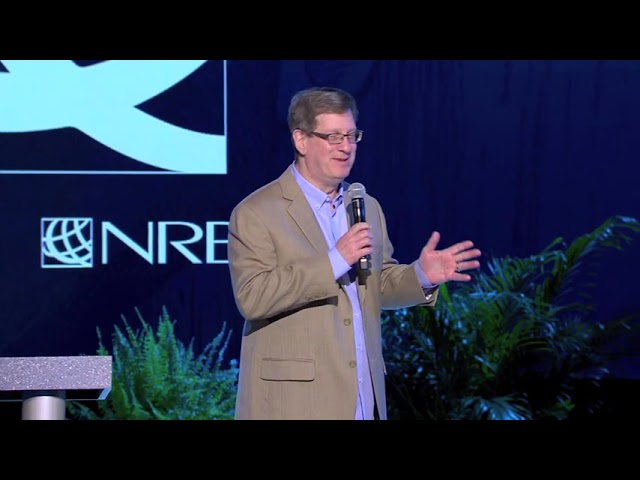
This is going to be one of the most— if you miss the next two sessions, somebody didn't hear clearly what I said. What I said before is if your movie is a Hollywood movie and if it's not in profit before you go in theaters, you don't understand some of the back end of the film industry. Now, if you don't understand what that means, you need to know more. And you need to talk to people like Sam Haskell and Devon Franklin and everybody else. And you need— if you want to make a great movie, you know, to this wonderful Michael Scott, I knew him when he bought me lunch. No, I think I bought you lunch at Denny's. We've known each other for a long time. But I'm so proud of Pureflix that after their last win at the Movie Guide Awards, I sent David and Michael a note and said, I love you guys. I just love Pureflix because they're doing great Hollywood movies. They're going to get bigger. I'm waiting for them to get $13 billion. When they get $13 billion, I can pass on to glory. I don't want any part of it, okay? I'm a ministry. Ministry means service. Devon and everybody who spoke talked about service. Now, there's a movie tomorrow. I can't remember what time it is. Is it 10 o'clock? The movie at 10 o'clock. Is the movie at 10 o'clock, Molly? 11 AM. Where is it screening? Who knows where Molly's screening? Anyway, Molly was submitted as a script to the Kairos Prize, and we actually analyzed Molly, and it's become a very good movie, and it's screening tomorrow. And it's set in Kenya about a man who was down and out, and just, it's an incredible story of overcoming. So you gotta go watch it tomorrow, 11, Canary, Canary, 3 and 4. Now I wanna introduce one of my favorite people, Michael Scott, and one of the people he says I should know, Greg Gudorf, who's just doing great work. Their streaming is doing great, everything they do is doing great. They are men of excellence, fill up the room, and welcome Michael Scott and Greg. God bless you guys. Thank you, sir.
Well, well, thank you. Is this on?
Yeah.
There we go. Well, we're so happy to be here at NRB and just to get a chance to speak with you. It's a small crowd. I want you guys to feel friendly. Why don't you guys— you can come forward, fill in up here. We can make it a little bit more intimate if you want.
Just like a church.
That's right. Just like a church. Come forward. And get in here. We maybe will have a few that will trickle in in the back. Well, this first slide here, I want to let you know this is not a true slide. I'm not the CEO of PureFlix. I actually run a little paper company in Scranton, Pennsylvania called Dunder Mifflin. So, you know, I got two kind of alter egos here.
The real Michael Scott.
Yes. And the, you know, for those of you that don't know it, go watch The Office and Next year you'll find this funny. Well, today I want to— we want to talk a little bit about content distribution and marketing. I think it is one of the fundamental things that we as filmmakers need to understand, whether— whatever aspect you are in this, distribution is key. You can make a great film, but without understanding the distribution and marketing side, you really made a home video that your family will love and you will love no matter what you spent on it. So really understanding how that works, what's happening in the industry, is really crucial to making a successful film that ultimately is going to impact lives around the world and it ultimately is going to generate revenue because it costs money to make these things. And if you can't find a way to make it cash flow positive, you're probably not going to make too many of them. And if you're super rich, let me know and I'll talk to you afterwards. And you don't care about the money side. But with that, I think what's key is we're seeing is the traditional distribution model is in a massive shift, a paradigm shift across the board. And we're gonna really talk about that today. I think there's a big dilemma going on with the content producers overall. Do I go for a wide-scale theatrical distribution type model, or do I tip, dip my toe in the water in a low-cost, maybe YouTube form or something really small to see what's going on. And I think those are some of the key things that we'll try to unlock today in this short session and kind of go from that. And Greg's going to hit a little bit on the marketing side and what you're going to be talking about.
Yeah, absolutely. The change— one of the things that's changing is it's no longer just about an event, a launch, a new movie release. We all focus around that. There's a lot of drive and advertising to it. There's a party usually. It's an event. The thing in the new distribution beyond theatrical in the streaming world is it's an ongoing conversation with the customer. And that ongoing conversation starts way early in the process via email, tweet. You heard— for those of you here at the last session— a great primer on social media. That conversation starts very early in social media and then carries on through. And it's much more of a relationship rather than a pitch when it comes to marketing nowadays.
Well, let's, let's kick this off. Let's talk about some of the windows. Those of you that are maybe new to this, we in the distribution side, we window everything. And what a window means is there's a certain period of time for a certain distribution channel. It typically— the traditional model is it goes theatrical for 90 days, then it goes to DVD for 120 days, and that same DVD windows there's VOD as well, video on demand. Then it goes to your pay-TV window or SVOD window, such as your Netflixes or HBOs, and then on to free TV and stuff like that. But that— there's a massive shift right now going on inside the industry, and it's really a digital disruption. These windows that have been very traditional in how the revenue flows and what's going on are dramatically changing. We're seeing pre-theatrical things such as Fathom Event. Or movies going to churches first. We're seeing also day-and-date theatrical VOD. It's a very popular thing that we're seeing right now where a movie will end up in theaters and then go on VOD, video on demand, or what we would call transactional video on demand. That's not streaming. What that means is you pay $4.99, $2.99, $5.99 to watch a movie for a 24-hour period or one watch or whatever it is. And so we're seeing that they'll go theatrically and VOD at the same time. Typically those theatrical footprints on those movies that do that are about 50 screens. There's a reason why don't we see wide theatrical distribution and VOD at the same time? Well, the theaters are resisting against that. You're seeing that the theaters want to protect that window. So there's only a handful of theaters in the country that will allow you to go theatrical and VOD. Well, why not just do VOD? Instead of theatrical. One of the things is in the revenue models is if you hit so many screens, it triggers some VOD deals that will pay out more lucrative, more lucrative on you. But this model, I think, is, is an interesting model. But typically it's driven in films that are cast driven. They got some sort of A-lister in them and they can advertise that A-lister on the VOD platform. Whoever it might be. And that's what's really driving these things. These small movies that typically go theatrically and VOD at the same time without a cast do not perform well, or they can't really find the VOD distribution footprint that they need to be successful. So it's understanding that this is typically in cast-driven models. You'll see this model going where it may not be ripe for a 3,000-screen release, but we got a great cast. Or a great one name that's really good that we can sell this movie from here. You're also seeing the, you know, the windows. You're seeing digital now VOD start before DVD. There's a lot of shifts there. You're seeing things like Netflix saying, I want this to go to SVOD first and I want it for worldwide rights and distribution. And that's definitely upsetting everybody because then the DVD players sometimes say, Well, we don't want it. Or the VOD players, the transactional video said, we don't want that film. So you got to really navigate the windows very carefully because if you go out of order or you choose the wrong window first, you may be not able to take other revenue streams in payment, get on those platforms, or you may lose revenue in them because one is already gone first. So you got to really understand where you're going and what you're doing and have good guidance in that. You know, these are great things to talk together if you're a content maker with your distributor or a potential distribution partner to say, what is the best route for my film as these things kind of go forward? I think we're also seeing a big paradigm shift with VOD where they wanna release VOD on the wide theatricals almost day and date with the theatrical. They're talking about a new window, You pay $50, you can watch it like 2 weeks or 17 days after it goes in theaters. So if you want to watch Avengers 17 Days Later, great. They're talking about figuring out how they can break that down and work that together with the theatrical side of things.
You know, the change is really being driven not by the business at the top level. That's how it got established. It's being driven now by the demand of the consumer. How many here have used Uber or Lyft? Yep, right? Taxis were the old window for how you got from one place to another. Your Uber and Lyft is the streaming and the new technologies that are forcing these changes to come through. It's really an interesting thing to struggle with and figure your way through, but if you don't take your eye off the consumer, you can be sure that you won't follow the trend properly.
And that's what Hollywood's fighting. Is the consumer right? Do we need to protect our windows? Everybody's in the different points of the distribution, and they're fighting this natural shift. Eventually it's gonna shift. You're probably gonna see all these windows collapse, and it's gonna be released nationwide on every platform day and date. When is that in the future? I don't know. Could that be in a year from now? Could it be in 10 years from now? I think at some point that's what you're gonna see. The consumer wants to get it where they want, when they want, at any time they want, on any device they want. And I think that's coming in the future. It's not there yet. And so now you gotta understand some of these windows to be educated to make sure you maximize your streams of payment. I think this next slide, we're gonna talk about this slide here, I think is particularly interesting. DVDs versus streaming. We saw 8.5% $4.42 billion in DVD and $6.62 billion in streaming revenue that came in last year. Streaming hasn't made ops— DVDs obsolete yet by any means. I think that DV— what you'll also see in the thing is faith-based content typically performs much better on DVD than normal Hollywood or general market content. So we're seeing the digital revenue of the streaming and everything catch up, but it still outperforms a lot on that side. I think the, the thing that's— it's key to understand here too in this, in the new world here, especially I see a lot of faith films at this event and what's going on is what am I making? I think so many of us make passion projects. Projects, right? But did you really think about who's going to watch it? Okay. Is it really a wide theatrical that you— it can really— how many times I've heard this, my movie can do $100 million. I'm like, you made it for $100,000. That's a good investment. If you knew that all the time and every time, this would be an easy job to do. But, you know, 1 out of a million does something like that. And so, you know, you got to really examine Who is my market in this? How big of a footprint is it? And can I really get to the numbers I'm talking about? You know, it used to be you could make movies under $1 million, take them theatrically, and they would be very successful in this space. There wasn't a lot of product that the consumer demand in terms of the quality of the project wasn't as high, and therefore they came out. That is changing. These— this genre between movies that are made between $100,000 and probably $1.5 or $2 million is a very difficult place to make movies in right now. In my opinion, this is a nonprofit venture. I know a lot of you probably like, "Oh, how—" You know, it's a little bit shocking. But the problem is most of these films, not all, but the majority of them are not big enough to be a wide theatrical distribution. When you put them directly to VOD or DVD, there's not enough revenue to make it no matter how good the film is. That's one of the issues. And people say, well, it's a great film. I say the problem is when you go directly to VOD, nobody knows it's a great film. All they can look at in Walmart or on their service is a 15-second trailer and a DVD box cover, and they have to make their sole decision based on that whether they buy it. They don't know whether it's a great film. I'd rather spend more money on the artwork than the film because that's what's going to sell it. I know that's a really hard statement, but it's a true statement. And so you need to understand those fundamentals. That price range, what we've seen is the DVDs slide drastically down in this direct-to-DVD product. Places like Walmart and other retailers across the board are not as apt to take in DVD product. So there's less places to sell them, which means less revenue and all that. Even the distributors such as us are saying, man, can we even just make back our marketing dollars on a direct-to-DVD product? Not alone whether the producer can make any money on it. And so that is something that you guys need to understand. If you're making content, you know, if you're going to make that lower budget content, I recommend you make it for under $100,000. Find maybe some alternative audiences, whether it's YouTube or new innovative platforms, or we might be interested in it from the streaming side of things and stuff like that. But from a business model standpoint, that middle ground is really, really tough. And I think it's something that everybody in this room should consider as they're, they're in it. And the distributors are running away from this product. They don't really, really want it. And then if you're asking for that big theatrical ticket, take it out. It's a multimillion-dollar venture typically on these films. And is that product justified to take it out? Does it have the cast or the production values that really justify, you know, I hear about, oh, I got this celebrity in this. What movies did they star in theatrically recently? Did they do any box office? Really ask yourself the hard questions. Don't be sold into your own hype. I've been there. I did it for years and I learned some very hard lessons along the way. So I think there's a lot as we go from there. But I do think it's important the consumer is really driving this, this change in product as we look at it. You— what you're seeing is the consumer's getting more sophisticated in the faith-based market. They're seeing better products. So they're demanding higher production value. Films that are $3 million plus, maybe $10 million, maybe even $20 million. Is what they want at the theatrical level. And so that's where you're seeing that shift to. So, and there's a lot more of those theatrical films coming, which means that they're not as interested in the direct-to-DVD product. It doesn't have as much appeal to them anymore. So it's a very difficult, a difficult thing that's happening.
So that means you really have to aim high, which is really tough because so few can break through. Or you have to go much lower cost and concentrate in the areas of the over-the-top or the internet-delivered aspect of it where the consumer can react directly— much more directly with you.
That's exactly right. I think it's low or high. The middle is dangerous. If you want to try there, my recommendation is you figured out all the distribution patterns before you make that movie. You've partnered it with a TV station that says, "I'll pay for half the budget." of this movie and you got other tax credits and other things so that you know that your exposure on that film is maybe no more than $100 grand on it. That maybe is a model you can work, but it's very difficult. The TV partner, the streaming partners typically don't want to dive in deep in picking up a large chunk of that, of that revenue as it kind of moves forward in what's happening. I think that this slide here, we'll talk a little bit is the opposite of the previous slide. It says streaming surpassed DVD, and together they surpassed all the box office. I put— we put this up there because it's interesting. There's a lot of debate. Is streaming bigger or is it not? One, Newsweek says it is. Digital Entertainment Group says it is, or vice versa. And so you're seeing that not only is the content windows shrinking, expanding, and nobody knows what's going on. But they're not even sure from an industry metric standpoint which one's bigger or which one's not. So the point is, though, I think from this is streaming's coming up.
Absolutely. Any way you want to look at it, streaming is coming on strong. You can see how it's challenging DVD, as Michael's already covered. But together, they're challenging box office as well. So you can't ignore it. The good news about if you go low, in that OTT, internet streaming space, the rules are different too, and the types of content you can do, right? So there's a different way to think about it in total, not just in market position.
And we're going to talk a little bit about that. But, you know, everybody thinks movies, movies, movies. There's lots of other forms of content as we'll look at that. But I think also just, you know, some high-level things here. You know, what you're seeing is in the DVD market, this is some interesting statistics. You may want to take out your pen and write them down. Let me give you some of the revenue streams of what it looks like on a wider theatrical, um, uh, faith-based distribution of a movie. Um, you'll see that streaming revenue accounts for 20 to 30% of box office. So the box office is $10 million, you'll probably get $2 to $3 million for your streaming, for your, for your SVOD or Netflix pay TV window, HBO. That's what they'll pay for that window. You'll see DVD sales probably be about 50% of box office. So $10 million, you might do $5 million on DVD. You'll see VOD revenue in probably that 15 to 20% of box office. Um, these are the averages that I'm seeing in the larger theatrical windows related to Christian movies. If it is a secular movie, you tend to see the digital revenue such as the VOD revenue be higher and the DVDs a lot lower. Streaming will remain the same. As the box offices get lower, maybe in that $1 to $2 million category or down on that side, what you'll typically see is this, the DVD revenue even shooting up higher into the 70% range on this. So just to give you a little math of where it kinda sorts out, and where it's at, you can kind of run your scenarios from that. Just some things as you take a movie theatrically, you need to be thinking in terms like this. Every screen you go to, you're spending at least $7,000 to $10,000 to make that successful between marketing, cost to get it there. They call it DCPs and in-theater marketing and all that. $7,000 to $10,000 screens. You wanna go to 1,000 screens, you're gonna spend $7 to $10 million. That's simple math on how that works. I think that with that, as we turn to the next slide, I think, you know, we talk about what's going on in the world. We talk about the Netflixes, the binge watching. You're seeing Netflix pour a ton of money into movies and series, especially on the series side. What they are seeing, it's all about the binge watching. So that means episodic type content, content that's That's coming again and again, week after week, or in this case, binge, where we put 13 episodes on the platform day one, you watch them, and then 6 months later, a year later, we'll come with another 13. That's where Netflix is going. It's not that they're shutting off the movie pipeline, but that's where they're gonna be spending more and more of their money at in this thing. We see it on our platform. People want series. They like movies, but they want series more. It feels more like a TV show. TV series. They like getting invested in the characters and what's— and what's going on. I think that just a couple little stats here as we're looking through here. I think that story is what we hear. Story. When we make content, it's all about story, story, story. And I believe in story is so important. But in making a faith-based movie, especially one that maybe is more overt than covert, I find that story is important, but message really is the story. You need to understand what your audience wants, okay? If they want a great story and you're making a $2 million movie or $100,000 movie or a $10 million movie, that's wonderful, but you're gonna compete then against, in the story category, against Avengers, Guardians of the Galaxy, Jurassic Park, Blindside— I mean, Manchester by the Sea, whatever the movie is, and they're telling great stories. You may not like them from their content or morals perspectives or values, but they are great storytellers. And so what we see is the demographic in the faith, it's— they're seeing those movies as equally as they're seeing faith movies. But the faith movies that are doing really well are typically movies that are driven highly by message. They have a strong point of view on message. They put message first and then the movies that do well, they organically wrap the story around that message. Can you make that crossover movie? That's, that's what I hear all the time. Is it possible to make it? And I think that it is. But those movies are bigger movies. They're $10 to $20 million production movies tied with an A-list cast. That is maybe faith-lite that can cross over. I think it's very difficult in the lower budget movies. Not many families go to many independent movies in Hollywood or in the Christian market. They're looking for more of that mainstream appeal that has an identifiable cast or whatever it is to really drive that. So you understand that if you're making a movie that doesn't have strong cast, when I say A-listers, you know, you're, you know, whoever that might be. You need to be driving the message. That's what's gonna drive them to the theater. Not how— you could bank on winning an Oscar, but that's a pretty big gamble. You know, I think you gotta drive what the consumer really wants in this space.
Yeah, that makes sense. We've been talking about theatrical, but let's shift a little bit to video on demand.
Absolutely. And I think this statement, "It's video in demand," is the truth.
Exactly. Exactly. You know, we launched PureFlix.com about 18 months ago or so, and it was launched as a streaming streaming video service for consumers, a faith and family-oriented streaming video service. The media called us a Netflix for Christians. So, that's the model, a $7.99 a month kind of model. And it was our attempt to move beyond the theatrical and DVD into this space Michael has been talking about that's coming on so fast and furious, and that's causing all the issues and disruption in the windows and other kinds of things that we've been talking about. I should clarify one point. We call it a subscription video on demand system, SVOD. But if you're around the video on demand world, you're going to hear lots of different acronyms—FVOD, TVOD, AVOD, FreeVOD, transactional, pay for one watch, or A being advertising, and then of course SVOD. It all falls into this streaming space regardless of the business model that comes to be. Our choice was to focus on the SVOD thing. The Netflix model works well. Hulu's moved that way, as you know. And we've been driving forward from that perspective. It's an interesting thing because the consumer in the OTT— another acronym which simply means over-the-top internet-delivered streaming— the consumer in that space has more than doubled what they've spent in 2012 to 2016, more than doubled their monthly amount of money that they're putting to their on-demand streaming services like this. They're now pushing over $8 in on-demand monthly purchases like that. So that's that start of that growing business. And remember, because it's monthly, it's every single month. So that subscription just continues to drive forward right from the start. Let's take a look at some numbers though. Everybody gets excited when they start to focus on streaming. You know, it's kind of that, oh, wow, gosh, the theatrical market sounded tough, and DVD didn't sound all that promising. What about streaming? And they get excited about the reports that talk about the global size of the on-demand streaming market— almost half a billion homes by 2021 or so. Very near-term, lots of growth. But if your message and your stories and your market are really more US, US and Canada-centric, you have to pull those numbers back a bit. Netflix, people talk about it as 100 million households. It's 50 million households in the US. It's nothing to sneeze at, right? That's not quite half, but it's a lot. It's 50 million. Amazon, Amazon Video via Amazon Prime, about 30 million. Hulu, 12 million. Those are the 3 biggies when it comes to streaming within the US market. Netflix, Amazon, and Hulu. If you go down to the next tier and you look at who is number 4, 5, and 6, there's a big fall-off. If you're looking for movies and entertainment type TV programming, you drop down into the HBOs, the Slings, the Showtimes, the CBSs. They're all in that 1 million to 2 million range. So you can imagine if you're targeting a product, a movie, a title you've been working on, you're swinging for the Amazons, you don't hit that, the next bucket is way smaller. And the issue with being way smaller is there's way less dollars to help pay for the content that you're trying to sell to them. And in fact, if you were to put a third bucket on here and if we constructed that bucket around people in the kind of faith and family space like Pure Flix, a VIX, or a Phelan, or a Dove Channel, whoever. It's another step down, right? We're now to the point where we're reaching hundreds of thousands of consumers on a user base, so we've got a good strong position in this faith and family space. But there are literally dozens of video-on-demand suppliers trying to develop consumer audiences that are in the 10,000, tens of thousands of space. It really is a tough difference compared to an Amazon market. So just as Michael was saying, you've got to think about how you position your theatrical and your DVD. You got to think about when you go to an SVOD space or a TVOD, FVOD, AVOD, you have to think about what market you're targeting for. Are you really strong enough to make it at that Netflix level? Will an HBO take your product in? Do you need to focus on an even smaller part of the market?
And what I want to say this though, that third bucket and that second bucket and all the buckets are growing. So we're seeing that gravitation of the customer. Absolutely. That bucket. And as we develop services like PureFlix and other ones out there, Feelings, Dove, I think all, all of it's going to help to be able to support the content you guys are making. It may take a while to get there till you get the licensing licensing fees that you guys need to make product at X, Y, and Z levels. But I think over time we are going to see that happen, which is going to be a new outlet to create TV content, documentaries, and other type of content besides just film.
Yep. You know, you talked about theatrical, and if you are going to be in X number of screens, it is $7,000 to $10,000 a pop you have to think of. And you boiled it down to a math play, right? Right. You know, this is our passion story, right? This is our film product, and it's a math calculation. It's true even in the SVOD world. So when you look at the SVOD or any of the on-demand worlds, you have to adjust yourself, your thinking to the math of that industry. If you're an SVOD subscriber, subscription service, up and coming 10,000 subs, and you charge $10 a month, Well, you do the math. Their top line revenue, you can understand that. Before you even approach them, you know what that kind of revenue estimate is. And then you have to realize that they're going to spend well more than half of that in their operational cost. And then they've got their cost to acquire a customer. Anyone know what it costs to acquire a typical SVOD customer nowadays for most of these services? It's typically in the $20 to $50 range to get a customer to to give it a try in the on-demand business. So they've got all these costs in this on-demand world that you have to play off in your mind against before you're able to put forth a business proposition that's gonna make sense. As it grows, as Michael's saying, it's all lifting. As it grows, that's good, but the order of magnitude jumps, you know, it's gonna be more incremental or linear growth, not those exponential jumps. To where a subscriber service at 10,000 has suddenly got 10 million. It just doesn't work that way. So when you come around to thinking about the content on these platforms at these lower dollars, I hope I haven't depressed you. But the beauty of this is you don't have to follow the format of a theatrical release when you're creating content for this. Nothing says it's got to be a 90-minute or 100-minute or whatever minute mindset you might have for it. You can experiment with shorts. We're seeing great playback from consumers and feedback from consumers on shorts, 12 minutes, 20 minutes. Michael mentioned the series piece on one of the earlier slides. Episodic really resonates in the on-demand space. Yes, we're binge watchers, the consumers are binge watchers, and they like that. But that's a whole different thing to produce, right, than an hour and a half worth of a movie or a 2-hour movie. So you can change your thinking about what you're producing and how you tell your story to match the economics of the changing platforms and windows. I think that's something we're going to have to—
And I think that's good. If you're a new content maker, everybody wants to swing for the fences and make a wide theatrical. I wish I could have done that out of the gate. But you know what? I'm glad I didn't. Because I wouldn't have made some of the mistakes I made. I wouldn't have understood some of it, and I would have made a big blunder on a big budget that would have probably put me out of business, or I would have never been able to get money from another investor. So starting small is not a bad thing. It's dipping your toe and understanding how, how do I make content? What sells? What doesn't? It's better to do that on a smaller level than make a huge blunder at the top, you know, in that side. So I think there's There's a lot of opportunity here for content makers, students, people that are new to this business, even people that have been in it for a while to reformat what they're doing and how they're thinking to make— to shift with the times of what's happening. You know, if you don't shift and you continue to make movies in the ranges that don't work, you're going to eventually be out of business. That's right.
Two more points we want to make. I don't want to go into detail on the social media side. Rob's presentation before us was just phenomenal on social media, for those of you who were in here. But I do want to emphasize, it is— we're storytellers, we're thinking in stories. You got to have your marketing thinking stories as well. Rob gave a great primer on the basics, the reach, the numbers, how that world works. But it is a storyteller's world. So that's the key there. You got to drive— into social media. You can't be afraid of it. You don't have to do it yourself. You do have to understand it. Get other people to help you do it and implement it, because they live and breathe it. I'm a little too old myself to be there, although as much as I try. You gotta understand it, because that's where the audience is. And if you think about it, a streaming consumer— we mentioned the Pureflix.com— about half of our users are watching a movie on a mobile phone. I mean, growing up, I could never have imagined that. My job was always a bigger and bigger TV, right? That's what the deal was. I wanted a bigger screen to better give me a theatrical-like experience. But in the streaming world, half or better of the consumers are watching on small devices. So you've got to be where they are. They're on that small device. You've got to be on the social world without a doubt. I think, Mike, maybe we leave the folks with this slide for a minute and then take some questions if we still have some time for that, right? So the question is if the theatrical message that Michael talked on earlier was go big with all the inherent risk in it and the financing required, et cetera, or stay small, stay out of the middle, right? If you're staying small, Smaller investment doesn't mean, oh, it's no risk. There's still risk, right? So here's a way to work with the on-demand world. I said the SVOD world because that's what we're about, and we'd love to work with you in that regard. We think— we take a page from the startup world, and we think about lean startup principles. And in lean startup, there's a principle called the minimum viable product, the MVP. So think about what your MVP is. You may have an epic idea, message, story that you want to tell, but get it boiled into something that's small, short— not a trailer, but, you know, maybe it's 12 or 20 minutes, something in that area. Boil your thinking down to an MVP process. Step 2 is get it out to the consumer so that we can get metrics on it, because in the on-demand space Even more so, quite frankly, than theatrical, because theatrical tends to be event-oriented, right? Metrics really matter. The on-demand space is a 24-hour, 7-day-a-week, 365-day-a-year business.
It's so true. The metrics to drive, um, so much more— distributors want stuff and they can see the metrics behind it. We know that there's 50,000 consumers engaging, a million, 10, whatever. Whatever it is, that's gonna tell us, do we think there's something here? You have nothing in the metrics world, we're like, ooh, do we wanna, that's a big gamble to go test something.
Yep, and by the way, in the on-demand world, the tools are there for all of us to use, not just a few specific people, but all of us to use tools that tell us when the consumer paused, when they backed up and rewatched, when they left completely, completely, when they hit pause and took too long of a break, not just the short bathroom break. All those kinds of metrics are visible in the on-demand world in a way that you can't really get at in the theatrical side. So the business— the metrics matter not just from the business perspective, but for giving you clues about the content, where you might want to increase pacing or stretch something out or make a change. And once you get through step 1 and step 2, you've got your MVP, you've got it out there, you got those metrics facts in hand, as Michael said, distributors and others want to know, okay, what are the consumers doing? Only then, after you've learned that, do you iterate. And that iteration may come in, okay, now I've got this idea, I'm going to widen this idea, I'm going to blow it up, I'm going to think bigger. Or it may come in, that really worked well, it resonated, it was 20 minutes, now we're going to create a series and we're going to have a whole bunch of episodes. Episodes like that. That's where the scale comes from. And of course, enough scale, then the dollars are there to go with it for you.
Yeah, no, I think— I hope this helps you today a little bit to understand. I mean, we could spend hours up here talking about distribution. But the final thing before we take a couple questions here is really, you know, everybody has a passion project, but can you separate your passion from what's really going on in the market market space. Your family will tell you it's the best thing ever. Nobody's going to lie to you, or when I say lie to you, they're not going to tell you, oh, that's terrible, we can't believe it. They're going to all tell you what you want to hear. But you got to really be able to look at things objectively. I always say, we don't do passion projects, but we're passionate about every project. Because what we do is we design them and say, look at the marketplace first. What the consumer wants, what our end product is, how wide is that consumer base, and then we build it from there. If you make that passion project and it's about whatever, football for instance, you know, that's a wide— it's a wide market. But if it's a faith-based Christian football movie, maybe it's not wide enough. You know, you got a primarily female audience and now you're separating that down to a male —male-driven audience that's— it's football. It's smaller, the footprint. What we see in these wide theatrical— last thing I'll leave you with— the wide theatrical films is you gotta make a film that the Catholics to the charismatic, from men to women, nobody can have a disagreement. 90-plus percent of the people are on board with that film. As soon as you start taking theological issues or anything that might be divisive and you start taking slivers of that, forget it. The film's over. It's too small. It's hard to get it out there wide and it's hard to get the backing. Everybody will always point to, well, this film made it. That film made it. That defies what you just said. But for every film you say that made it, I can show you 100 that didn't. If you want to gamble and be that one, that's up to you. But that's a risky venture.
Well, That's all you have to do. It sounds easy. Any questions?
Well, we're gonna— we're gonna pass a mic over there for you. Maybe it's easiest if you have a question, maybe just come down here, then she won't have to chase you down, or she'll be in the front here. And just come on down and we'll answer it. First, thank you for an excellent presentation. And then, Michael, I was curious, can you apply the case for Christ in terms of the last summation you just gave. How did both of you, from Pure Flix's perspective, make the decision on this is a, this is a particular film that we want to fund, create content? And then the second one is, how do you effectively interpret metrics that way you can ultimately scale? I'll let you take the second part. I'll take the first part. Case for Christ, it was a simple decision for us. I love the book, but that's just passion. But what we looked at is the metrics behind it. The series had sold 14 million books worldwide, almost 7 million here in the US, the book alone. So it was a wide market. It was a beloved book by the Christian community as a whole, whether you're Charismatic Baptist, anybody in between, wherever you're at in that spectrum engaged with that book. So it was a wide platform that was well established up front that we saw that we could really discuss some key issues in the— in our faith side of things and explore that similar to like a God's Not Dead or something like that. We knew from God's Not Dead that the apologetics worked. So we thought with the apologetics and the marriage story, I think a lot of people are married or know somebody that's struggling in a relationship that maybe is not right. Between those two things, we said this is a wide enough platform. An idea that can go out to the masses. So—
You know, and on the metrics side, metrics that matter are what you want to track. There's tons of different things you can track. One of the key things from our standpoint is we think about what's the reach of something, you know, how far, how many people will we reach. And then just as people will tell you, then great, you've reached the audience, now can you spur them to action? That conversion metric. Metric is something that's really key. Michael said it before, you want honest feedback. You don't want just feedback from your friends and family. Don't name any of your metrics after your mother, your brother, or your sister. You want hard fact type metrics that you can look at and say, "Yes, this is working," or, "It's not." Yes, my name is—
Ted, how many more questions? One more, two more, or— This is it. This is it, last question. I'm sorry.
Hello, my name is Randy, Randy Harden. My wife's name is Michelle Harden. We have a movie that came out in Houston, did real well. And my question is, when a movie is— could be noted to be great— good, let me say good. And then if you add, if you add Ice Cube to the movie as the lead person, would that change it and be a factor The answer is yes.
Any, you know, a great, a good movie and then adding A-list cast. I mean, obviously when you're adding cast, it creates probably a better movie in terms of the artistic value of it and the quality of that acting. But it also, they come along with a massive following. Anytime you're adding cast, look at their social media following, how well, how many books or albums or movies have they, have headlined in box offices and stuff like that? Is this a character actor that's been in a lot of big movies, or is this a theatrical name that is a leading man or woman? You know, things like that make a difference to understanding, you know. And then you got to look at the dollars. Does it make sense to add Ice Cube? Is he a million dollars? Is he $10 million? Is he $500,000? You know, some of those things also pay, because you can overpay for someone, and that doesn't work either. You know, the other thing, there's a lot of considerations that we look at, not only from the U.S. market, but does an Ice Cube or whoever it is play overseas? Maybe they're super popular here and they're not so much in the overseas, or we've done it the opposite way. They may not be as popular here, but in the overseas market they're huge. So it justifies it from an economic standpoint to put X or Y actor in a movie, or, or someone else, whether it's based on a book or whatever it is. So you gotta really look at the underlying metrics to that actor, how much they cost, are they— do they really have this appeal, are they willing to help me market the film, you know, all of these things are there. Do they line up with the message of the film, you know? You put somebody in it that's got a great name but they're— it's so opposite or different from what they play, you may not get their audience that would normally watch them. So do they really fit in this film? There's a lot of questions to answer. You gotta ask yourself question after question to try and get to those matrix or those numbers underneath the metrics that will allow you to make educated decisions. That's why I also recommend, as you guys have films out there, you know, distributors typically get inundated with responses and questions. Do my movie. Do you wanna fund it? The answer is it's tough. We got big slates. We're looking for big projects. And a lot of times we hear a lot of passion projects. But what I would say is, as you guys are looking at your footprint, if you got the funding for it, the film is real. It's not just we're talking about it. That's a good point to maybe come to a distributor and say, here's what I'm doing. Would you— would you be willing to help with your expertise to say, Is the cast that I want to get the right cast? Is— is— should I be making this for this budget or there's no way I can recoup. You should be making it for half that budget or maybe twice that budget and we'll go bigger with it. Those are key questions that maybe a distributor or someone that you can seek out that has that knowledge to be able to help you navigate these waters before you go spend all the money and realize, gosh, I thought Ice Cube was great. But he was totally the wrong guy to get. And I don't know, so there's a lot of factors in there. So you gotta really, before you just pull the trigger on someone, understand all of those things going forward. Thank you so much for your time. Thank you. I wanna thank NRB, thank Ted for all of his hard work for years being here. Thank you so much, Ted, for all your help and support.
Love you, Ted. See, I actually walked on stage. Oh wow, look, you've got some water left. I can handle that.
If you guys need any paper, I have paper in the back to sell. This is under Mifflin, right?
This is why I love Pureflix, because they actually look at it as a business and they make it a business that works.