PureTalk 2017 03 01 Ep1

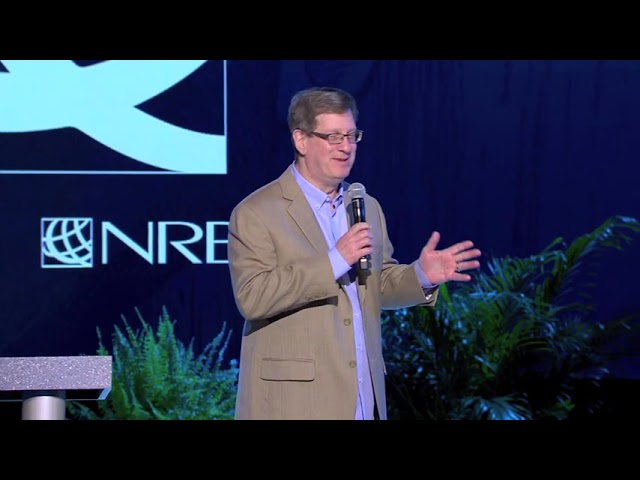
In the inaugural episode of Pure Talk, host Raj Nair introduces a new faith‑oriented talk‑show concept produced by PureFlix and Faithwire, broadcasting live from the NRB convention floor in Orlando. The panel features Greg Gudorf (CEO of PureFlix), Billy Hallowell (senior editor at Faithwire), and authors Lee and Leslie Strobel, whose book The Case for Christ was recently adapted into a feature film. The conversation covers the purpose of Pure Talk—bringing culture and entertainment discussions through a Christian lens—followed by an in‑depth look at the Case for Christ movie: its production challenges, how the story was compressed for a three‑act format, audience reactions at a recent NRB screening, and the emotional impact on the Strobel family. Lee Strobel shares his personal conversion narrative, family dynamics, and the film’s effect on his granddaughter’s missionary work. The panel delves into apologetic evidence, highlighting the early resurrection creed, recent archaeological finds in Nazareth, and the cumulative case for a Creator. They discuss the role of social media (especially Twitter) in connecting believers, promoting the film, and fostering community. Billy raises the difficulty Christian journalists face in secular newsrooms, and Lee reflects on his own newsroom experience after converting. Greg emphasizes the business side, explaining why the opening weekend (April 7) is crucial for theatrical expansion of Christian movies. The episode closes with a call to action for viewers to support the film’s opening weekend and share it on social platforms.
Chapters
Well, hey there, I'm Raj Nair and welcome to Pure Talk. So what's Pure Talk? Well, it's an innovative new talk show brought to you by Pureflix and Faithwire. We're going to talk about everything from culture, entertainment, all the stuff in between, but through the lens of faith. And today we are coming to you live from the floor of the NRB convention here in Orlando, Florida. And by Orlando, Florida, I mean, I think Disney World's like quarter mile that way. We have an incredible panel for you. Let's get right to it. My man Greg Gudorf, the CEO of PureFlix.com. Mr. Billy Holliwell, the senior editor of Faithwire, also my good friend, and a couple that needs absolutely no introduction, Lee and Leslie Strobel, the inspiration behind the book and the movie The Case for Christ. So, Billy, what exactly is Pure Talk?
So Pure Talk, as you were saying, it's a show where we're going to talk about entertainment. We're going to talk about culture. And so it's exciting to have you two here. And we've talked many times before, but we've never met, which I think is so funny. You could talk to people in this era, modern era, and never meet them for years. But we're going to be doing this, and we're here at NRB testing it out. And it's a conversation we've been having. It's a conversation Raj and I were having about doing this sort of, you know, streaming talk show through a faith lens for a long time now. So we're excited to be doing it.
Yeah, PureFlix.com, it's one of the things we've been focused on, how to get people to come together and talk just about a wide variety of topics from their faith to daily events. And that's what we're hoping to do here today.
Great idea. And to think deeper.
Think deeper on these things. There's a lot of fighting and screaming and yelling over all different issues, right? Like, how can we talk about the issues and try to figure out, even if we don't agree, even as Christians, if we don't agree, how do we kind of get there? So that's what we're going to be doing.
Great.
Excellent.
In longer than 140 characters on Twitter.
Yes. Oh, yes, yes, yes.
I met Billy on Twitter.
That's how he is.
Exactly.
Can I tell you a quick Twitter story? Yes, you can.
I'm on Twitter.
I love Twitter. So there's a woman named Sheila Walsh, famous Christian singer, and we met on Twitter somehow. We got— we followed each other and follow a bunch of people. Leslie's met her. I never met her. But, and to this day, I've never met her. But, you know, she prays for me and I pray for her. We'll tweet and say, hey, I got something big coming up. But I was very ill 5 years ago. I almost died. And they were going to put me in a machine. It's called the MRA. It's like an MRI except for your kidneys. And it's a scary experience because they're sliding you into a tube and they give you earphones and they flip to a radio station because it's so noisy. So they put on these earphones, they slipped me in. I had tweeted Sheila Walsh, said, "Hey, would you pray for me? I'm kind of nervous about this test I have to do." And she said, "Yes, I'm praying for you." So I go in the machine. The random station they had picked for me to listen to happened to be a Christian station. And a Sheila Walsh song came on while I'm in this machine. And I thought it was God's way of saying, I'm hearing the prayers. You're going to be okay.
I got this.
I got this. You're going to be— I thought that's the wonder of Twitter. I've still never met her.
I still never—
I've never met her. I never met you till today. Well, we know each other. So I love social media.
I love it, too. I love it, too. Well, the reason you guys are here at NRB, right, is to talk about The Case for Christ, which I love the book. I think I've told you many times this was a book for me when I first read it in college that had a huge impact. For my wife, it had a huge impact. And now there's a movie. And so I gotta ask you guys, just to start, what is it like to watch your story, your life, be presented on the big screen and have people, you know, play you?
Yeah.
And play that out.
It's humbling, first of all. It's a little nerve-wracking also, because this was back in 1980, and so a lot of years have passed and we've moved on from that era. So seeing it played out on the screen has been revisiting all those emotions in that time in our life. On the other hand, last night we had the screening here at the NRB, and the reaction was just phenomenal. It brought me to tears. People stood up and cheered and clapped. And it, you know, it just, it's just the testimony of God's grace, you know, in a couple people's lives and how now he's chosen to use our story in a big way. In a big way.
You know, we trusted Pureflix. Pureflix called us and said, we'd like to make a movie out of your book. And I thought, you know, as someone who likes to see people come to faith, I thought, you know, some people won't read a 300-page book, some people won't go to a church, but they'll come to the movie. So I said, I I'm all for it, but I'm kind of putting myself in your hands because, you know, there's no— you don't sign a contract that says if I don't like it, it gets pulled. They don't do that, right? So we trusted Pure Flix and they delivered. They not only treated our story with integrity and honesty, but they, they created a great motion picture that's just entertaining. And, um, uh, we're just so proud of what they did. And what I love about this is since we didn't do it, we can brag about how good the movie is. I didn't do it, they did it. But done a phenomenal job. There's a guy named Greg Steer. Greg, I don't know if you know Greg, but Greg has a huge national ministry. He trains and equips youth leaders around the country. And I called him, I said, "Greg, they're going to show a screening of the film to some leaders in Denver. Would you want to go?" He said, "I don't do Christian films." I said, "What do you mean?" He said, "Ah, you know, sometimes the trailer's so good, but the film's kind of cheesy, and I just don't do films." I said, Greg, as a friend, go to this.
Please, gosh.
Yeah, he went to it. He did a little video afterwards. Tremendous, tremendous. He just wrote a review on his website gushing about the film, encouraging people, take a risk, bring your friend to come to this film. He's now probably gonna be one of our greatest advocates because you know what? And Pureflix is largely responsible for this. We're seeing better and better films. Every film gets better. Every You know, and there have been some great ones that have been made, but I think the ones coming next year and the year after are going to be that much better. And you know, cinema is the language of the 21st century. It's the language of young people. So if we can have that kind of presence in motion pictures, I think we're going to reach a lot of people that aren't going to darken the door of a church.
I know at last night's screening it touched hearts. You could hear it in the people. I could hear the sniffles and the little sobs and sighs. So I know it was touching hearts. It was interesting to me though afterwards afterwards, you guys did a little bit of a Q&A. Yeah. And people were, is this real? Yeah. Can you speak to that?
Yeah, you know, when you try, and I'm new to, you know, I didn't write, as I say, Brian Byrd wrote the script. But as he taught us, he said, you know, your story basically goes over a couple of years, the meat of the story. He said, to do a film that's perfectly accurate, you'd have to make a 2-year film. You can't do that.
Right.
So you have to compress it, you have to put it into a 3-act format. And to do that means you have to time shift some things, and you have to sometimes make a composite character out of two who were an influence and so forth. So there's some things you have to do. They're all based— it's all based on truth. But I'd say 80-85% of the film comes right out of our lives. In fact, there are some scenes that, you know, we get emotional about because, you know, this is ripped from our lives. So this is like a transcript of when she told me she became a Christian and I freaked out, that happened when we were in the car and she's talking and I told her, "Look, I can't do this for 5 more years. I can't do it for 2 more years." I mean, our marriage was hanging by a thread.
How long did that go on for?
It was a year and 9 months.
I mean, that's almost a 2-year— and a lot of people would throw in the towel earlier. I mean, that scene that you're talking about, I thought was really— it was like, whoa. I mean, this is— you have this date night, you come back and it's like, wow, this is a really— this could divide them. And you feel that watching it.
Yeah.
The first word that went through my mind when she told me she became a Christian was divorce. I was just going to walk out. I didn't want to be married to a Christian. I felt like it was a bait and switch. I married one Christian, the agnostic Christian. Now all of a sudden—
Christian?
Person. Person, yeah. Yeah, agnostic person. And then what's she going to become? You know, some holy roller or something? Going to spend all her time on Skid Row serving the poor? I didn't sign up for this. So, you know, those emotions were very raw and very real.
I can imagine— I can't imagine, although you describe it well, of trying to see your own life play out on screen like that.
But you have a family.
How does your family— how have they taken to this?
Yeah, well, our daughter in the movie is like 5 years old. She's now 41. She'll be thrilled that I'm telling everyone that. But, you know, it's emotional for her too because she has some vague memories of that that era. And she doesn't remember the fact that because she saw differences in us, she accepted Christ about 6 months after her dad did. But she remembers some turmoil and some arguing. And now she's got children. And she just remembers, or is grateful that her children have not grown up in that situation. And so God has been so gracious to allow our family, our son and our daughter, who are both married to wonderful Christian spouses, and now their children are growing.
Generational. It is.
It's changed everything.
The one thing that happened recently with our little— she was 10, now she's 11— but our granddaughter Abigail went on her first missions trip, and they slept on air mattresses in the basement of a church in a very poverty-stricken town and did ministry to the children in the neighborhood. And we actually have a picture of her leading a little kindergarten girl to faith in Jesus. So here's my granddaughter. Yeah, so you talk about generations being affected. Yeah, it's amazing. Yeah, God rescued our family. We were headed down a path that would have been self-destructive ultimately.
What was—
I want to ask you first because I've never had a chance to ask you, and I have asked you, but I want to ask you again. What was your moment? I mean, was it gradual or was there a moment that just it clicked for you, faith?
My faith? Well, for me it was interesting because in the movie it's Alfie, but in real life her name is Linda. Who was the friend, she befriended me, answered my spiritual questions, and helped me step over the line of faith. But immediately after that, Lee received his scholarship to go to Yale. So we left town, I didn't see Linda, and for almost a year I just didn't believe I was a believer. I kept feeling like, gee, I don't feel different, something, I don't think I'm a believer. So I went for a year praying to receive Christ over and over and over again. We moved back, I got reconnected with Linda, and one day over tea we were talking right after we'd gotten back and she said, "How have you been doing?" And I said, "You know, I don't think I'm a believer." And she said, "What do you mean you don't think you're a believer?" I said, "I just don't think it took." And she looked at me and she said, "So let me get this straight." She kind of played Columbo on me. She said, "Let me get this straight. So you prayed to receive Christ, but you're calling God a liar because he just decided not to do that for you." And I said, "Well, no." And she said, "Well, honestly, that's what you're saying." If you were sincere when you prayed that prayer, he changed your life, and you don't have to feel different. It happened. So she said, but we're gonna do it again.
Let's just make sure we got this down.
I never had any doubts after that.
I love it.
So I don't know what my date was. It's like, you know, 9 months later I got it nailed.
And for you, I mean, an atheist journalist, which makes me laugh for a lot of reasons where we are right now.
Yeah, it's not redundant.
Yeah, right, exactly. You know, you went through this whole process, which we all know, and this amazing process of trying to sort of disprove disprove and understand, and then you end up on the other side of it.
Yeah.
What was—
was there a final moment for you where it just clicked?
Yeah, you know, it was a cumulative case for me. I did look at science evidence, cosmology, physics, biochemistry, genetics, human consciousness, and realized that points— especially discoveries over the last 50 years— point powerfully toward the existence of a Creator who looks a lot like the God of the Bible. But then I realized the linchpin of Christianity is not just Jesus, but the resurrection of Jesus. Because he clearly, explicitly and implicitly made divine claims about himself. But I could do that, you know, Greg could do that, you could, Bill— well, maybe not Billy, but—
Probably not me.
But anybody can make divine claims. But if Jesus claimed to be the Son of God, died, and then 3 days later rose from the dead, that validates his claim. So the resurrection is the key. So that really was the focus, and that's what we do in the film, is really focus on the resurrection issue. And I think for me, the key bit of evidence for the resurrection that convinced me was the fact that we have a report of the resurrection in the form of a creed from the ancient church that has been dated back by scholars to within months of the death of Jesus. Within months. Now think about this. This is a statement that talks about Jesus died, why? For our sins. He was buried, and the third day he rose from the dead Then it mentions specific names of eyewitnesses and groups of eyewitnesses to whom he appeared. Now, we can date this back to within months. James D.G. Dunn, one of the great scholars in this area, said this came into existence within months of the death of Jesus. Now, you look at Alexander the Great. The first two biographies of Alexander the Great by Arrian and Plutarch were written 400 years after his life. And they're generally considered reliable. Here we have a news flash from ancient history. This is historical gold. You just don't get this in ancient history. So that, if I could isolate maybe one thing, that was a powerful bit of evidence. And if people are interested in reading that report, the Apostle Paul later reports it in 1 Corinthians 15, starting in verse 3. So if they want to read it for themselves, it's right there, preserved in scripture. But it predates, you know, he wrote Corinthians, 1 Corinthians, about 20, 22 years after the death of Jesus. But we can date back that creed, that part that he reports there, to within months.
Within months. Wow. Amazing.
It is amazing, yeah.
So let me ask you this. I absolutely love apologetics. Yeah, let's talk. I spend hours on YouTube watching this kind of stuff. Since this happened in the '80s, what evidence has come to light in the past few decades that would have even enhanced your understanding?
Yeah.
You know, one of the things we did in the new updated and expanded version of the book is update the archaeological discoveries. I was told as an atheist, and there are many atheists who propagated this belief, that Nazareth did not exist in the first century. Therefore, the references to Nazareth in the Gospels must be later done when they didn't realize this, and so they're inaccurate and incomplete. Just within the last few years, a team of archaeologists from the University of Reading in England discovered in Nazareth not only a home from Jesus' era, from the 1st century, but a home that had limestone pottery. And why that's significant is because the Jews of that day believed that limestone pottery would not make your food impure. So this is a Jewish home—
Wow.
—from Nazareth through Jesus' time. And here's the thing. It could very well be Jesus' home. We don't know. We'll never know for sure. But it was a Jewish home in Nazareth And then they later discovered another one nearby. So this, this claim by atheists that Nazareth did not exist is out the window because now we have a new archaeological discovery. And that's just one of many discoveries that have confirmed the essential reliability of the Gospels.
Do you think if you brought an atheist into the film, they would kind of open their eyes? That's kind of my question has always been like, there's so much evidence for this. Yeah. Is it just, do you think, a hard thing or what's the, what's the trigger?
Yeah, I think a couple things. People need different kinds of evidence. Some people, that may not be convincing to one person, it might be to another. But here's the key thing, and the film gets into this. Rarely is it merely an intellectual objection. Often there is a psychological, emotional, moral underpinning to the skepticism. In the film, it talks about my relationship with my father. If you study the stories of all the famous atheists of history— Camus, Sartre, Nietzsche, Freud, Feuerbach, Wells, Voltaire— just go down the list. Every one of them had a father who either died when they were young, divorced their mother when they were young, or with whom they had a terrible relationship. Wow. Well, my dad looked at me on the eve of my high school graduation and said, "I don't have enough love for you to fill my little finger." after an argument that we had had. And so I had a difficult relationship with my dad. Was my atheism all about the intellectual side? I think there was an emotional underpinning to that. And so, you know, and often there's a moral issue. Ravi Zacharias says there's always a moral issue, and he's probably right. I happened to love my sin when I was an atheist. I liked to get drunk. I just enjoyed it. I was the friendliest guy in the bar. I'm the guy who would buy beer for everybody.
I would take pictures.
I'd walk around filling up. I was just—
so I enjoy it. I didn't want to give that up. So there's a lot of reasons why people don't want to believe. I think the questions and the intellectual questions are part of it, but not always all of it.
That's why I love what you said. It's a heart thing that this film is able to produce. Yep.
It has to touch the heart. Yeah.
Can I ask a totally unrelated question because I have to ask this.
And because that's your mind.
Yeah, because my mind's all like this.
No, seriously, you always come up with interesting angles on things.
Well, why do you think, because you were obviously, and you still are, you're always a journalist. You trained as a journalist, worked as a journalist, and I'm trained as a— why is there such a difficulty in understanding these issues and almost just an unfamiliarity with it in so many newsrooms, you think?
With Christianity? Yeah. You know, words that frankly were underrepresented in the mainstream media. That's just truth. And surveys have shown this. That people in daily journalism tend to be more secular in their worldview than the population at large. And it's true of universities as well. Harvard study recently showed that, that the professors— and that is not a surprise, but it's been statistically shown.
But nobody talks about those numbers, so it's nice to actually talk about them because they are out there.
When I was at the Chicago Tribune, this was in the heyday of journalism. So I became a Christian on November 8th, 1981. The next day I walk into the newsroom. We had 1,000 people in our newsroom. I looked around as a new Christian and thought, "Oh, I know he's a Christian." The religion editor was a Christian. I knew because he tried to witness to me. And I recognized a few. But out of those 1,000 people— now I'm sure there were others who kept their faith really because that wasn't a good environment to talk about this stuff. I recognized about 4 or 5 people who I knew were Christians. Beyond that, If they were Christians, they really kept it in, probably out of fear of their professional advancement. So that's why I wanted to stay in journalism as a new Christian and be a voice. But God called me out of that.
Do you think that's our fault? I mean, this is sort of like— It is in a sense, yes.
You know, I had a friend I went to high school with. His name was Bob. Bob grew up in a pretty fundamentalist Christian home. He wanted to go into journalism just like I did. Well, I was an atheist. I did go into journalism. Bob's parents talked him out of it. That's a worldly endeavor. You're going to be sheep among the wolves. Don't do that. And he ended up going directly into ministry. He could have been a great journalist, but, you know, I don't think we're necessarily training our kids to go into the fray and to uphold the Christian worldview against the tide of a more secular viewpoint.
And maybe part of it is parents' desire to to protect.
I think it is.
Because you know how the media and secular world in general will just beat you down when you try to speak out like that.
Yeah, that's true. Especially now. Especially now. Right. Yeah, yeah. It's true. I mean, it was— people, you know, somebody asked me, how did your colleagues respond when you became a Christian? And they were very nice. And then I heard from one guy, he said, yeah, I was on the elevator the other day and one of the reporters said, Yeah, here's Strobel found God. Like, oh man, what happened?
Shocked? Yeah, what happened to that guy? Well, now they got to really be shocked seeing all this, right?
Yeah, that's true. Well, this has been great.
This has been really good. I really appreciate you guys coming down here. This is fun.
Always good to hang out with you. Now on Twitter.
Now he's on Twitter. Yeah, it's great to meet you as well.
Nice meeting you. 40 characters at a time has become 7 minutes. There you go. I do want to say before we close though, your movie and the way it touched hearts, I'm looking for it to really reach a lot of people. And one of the things that people don't know, and it's something we deal with in Christian films in particular, is that opening weekend— Yes. —April 7th, is so important. And someone would ask, "Well, why is it so important? You just want the business." The way the world works in theatrical, that opening weekend determines whether the screens expand and your message gets to more people, or not. So that opening weekend is really a critical thing, and we really hope people reach out to that opening weekend and hit theaters.
And invite a friend, even if they're spiritually confused or a skeptic. Invite them and talk about it on social media. The tough part in our background noise of our culture is just letting people know about the film. Right. That's right. It's really hard, but people have social media access, and people would tweet about it or tweet the trailer. That'd be great.
That's right. Well, thank you guys so much. Raj, thank you.
Yeah, thank you to both of you. You're an absolute hero of mine. Again, thank you so much.
And that does it for this episode of Pure Talk.
Go to PureFlix.com and Faithwire.com for more news and entertainment.