10 Lessons From $100M Offers That Changed My Life
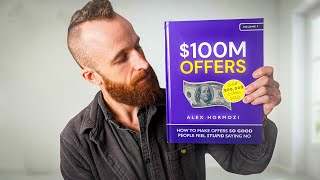
Greg Faxon breaks down Alex Hormozi's $100 Million Offers into ten lessons for building offers customers can't refuse. Find a starving crowd with real pain and money to spend, charge high while delivering outsized value, and stack bonuses instead of discounting. The core move: reverse the risk with a bold guarantee so the buyer feels stupid saying no.
Chapters
In this video, I'm going to review $100 million offers by Alex Hermosi. I'm going to share with you the 10 big lessons that I took away from this book. Because, oh my God, this book is so legit. This is the book that put Hormozi on the map. And I'm going to take you into this mind map that I created with my 10 lessons so that you can take away those lessons whether or not you read the book. All right, Grand Slam offers. This is the first lesson I took away from the book. And this is what the whole book is based on, is this idea and this story that Hormozi tells about when he was just starting off in marketing and he went to a sort of an ad workshop where he was learning how to run ads. And he was the new guy, the young guy in the room, and between breaks, the presenter pulled him aside and was like, you know what the real key is to succeeding in business? It's to make an offer so good that people feel stupid saying no. That's the subtitle of this book, right? So this is what we're trying to achieve. And Hermozi calls it a grand Slam offer. That's what we're trying to create. It's an offer you present that it can't be compared to any other offer in the marketplace. It combines an attractive promotion, unmatchable value proposition, premium price, unbeatable guarantee, and payment terms that allow you to get paid to get new customers. And if you do that, you're in a category of one. That's our goal in this book. So he says the offer is key to selling because you need to believe in what you're selling. And a lot of the trainings that Hormozi puts out around sales, and I know he trains sales teams. He said the one thing that you can't teach is conviction for someone to believe in the offer that they're selling. And whether you have a sales team or whether it's just you selling, you need to feel that this is actually an offer that's gonna help people, or you're gonna subtly sabotage yourself and not grow the business past the point where it provides because you don't really believe in it. All right? And there's an example of a grand Slam offer in the book for an ad agency. Most ad agencies will just have like a fifteen hundred dollar retainer. They'll run your ads and you pay them whether or not you get good results. So he shares this example where it's pay one time. So there's no recurring fee, like 4 or $5,000 up front. Then you just cover the ad spend. And they only get paid when people show up. And there's a guarantee around 20 people showing up. So the interests are aligned here, Right? Because if you hire an ad agency, what you really want is them to get you leads. And so if they're only paid when you get leads, aside from that one time setup fee, then there's not a lot of risk for you. Right. And only someone who believed they were good at running ads would put together that guarantee. So this is the type of thing we're shooting for, something that's different from the other offers in our marketplace. Number two is to find a starving crowd. And Hormozi tells this hot dog stand story where there's a marketing professor standing in front of the class and he says, hey, you have a hot dog stand and you get to choose just one attribute to make this stand successful. What would you choose? And the students say, you know, I would choose the best buns, the best hot dogs, a quality product, or I would choose like a great location. And the professor says, no, what you really want is a starving crowd. You want to be there when people flood out of the stadium. You want to be there at the right time to have the crowd that just wants to eat. It almost doesn't matter if your hot dogs are good. You want to be in the right market. Hormozi says here that a starving crowd, your market is more important than your offer, which is more important than persuasion. You don't have to rely on persuasion, copywriting, sales skills as much. If you really have an offer that sells itself, like in the hot dog stand example. At the end of the day, if there's a ton of demand for your solution, you can be mediocre at business, have a terrible offer, and have no ability to persuade people, and you'll still make money. And Hirozi says, don't be romantic about your audience. Serve the people who can pay you what you're worth. So the entire book is based upon the assumption that you have at least a normal market. You might not have a starving market, but you have a market that works. And there's four indicators of a good market. So the first is massive pain. So they must not want, but desperately need what I'm offering. And the degree of pain in your potential clients is proportional to the price you're able to charge. So that's number one. Are they in pain? The second criteria of a good market is purchasing Power. We want to make sure we're marketing to people who can actually pay for a solution. So there's an example he gives in the book or in one of his podcast episode of a career coach who came to him and said, hey, I help people who are unemployed find a job or but they're not even paying like $300 for a one off consult. And Hermosi is like, yeah, because they're broke, because they're laid off. So make sure you choose a market that can actually pay for it. And one tweet that I really love by Hermosi is solve rich people's problems. They pay better. So ideally you're choosing a market that's rich, that's wealthy, that has money to pay you. Easy to target. That's criteria number three. And he says, I make my life easier by looking for easy to target markets. Examples of this are avatars that have associations. They belong to mailing lists, social media groups, channels they all watch, et cetera. Right? So driven professionals is not a market you can target. Right. A lot of coaches will use that language. I work with, like ambitious, high performers. Hard to target that group. Right. The fourth criteria is a growing market. And he says, if I were a relationship expert looking for clients, I would actually choose senior citizens as my market because there's more people turning 65 each year than turning 20. It's a growing market. He gives another example, I remember of a friend who's in the newspaper business who'd gone to Y Combinator, done all of this great stuff. He knows business, right? But he's like, Alex, like, we're not growing, right? The business isn't growing. I'm trying all this stuff. And Hermosi is like, yeah, because you're in the newspaper business, right? It's not a growing market. My third big lesson from this book is the grass isn't greener, right? So all businesses, all markets have unpleasant characteristics. And he says, the grass is never greener once you get to the other side. So he said he has a saying when he's coaching entrepreneurs, which is don't make me niche slap you. Too often, a newer entrepreneur half heartedly tries one offer in one market, doesn't make a million dollars, then mistakenly thinks this is a bad market, but really they just haven't found their grand slam offer. He also talks about the importance of niching down. So he says for most, if you're under 10 million a year, Niching down will make you more money. It's not going to get you less clients. It's going to get you more clients. He says you want to be the guy who serves as this type of person or solves this type of problem. And even more niched, I solved this type of problem for this specific type of person in this unique counterintuitive way that reverses their deepest fear. He says that's why a fitness program for generic weight loss might be priced at $19, but a program designed and marketed to shift nurses might be priced at about $2,000. Even though the message is similar, which is eat less, move more. That's the power of niching down. He says, if you find a good market, ride it hard. And if you pair that with a grand slam offer and a crazy market, you're not gonna have to work for the rest of your life. So that's inspiration to go find that niche, find that market, and not keep jumping around thinking the grass is always greener. Number four is make it an expensive bargain. What does that mean? So he recommends charging more and offering more in order to create that value gap. And the reverse doesn't work. It reminds me of this quote from Seth Godin, which is, you don't wanna be in a race to the bottom, right? Race to the bottom in terms of pricing, because you can always go to zero, right? That's limited. You can only decrease your price so much, but you can always increase the value that you provide. Hormozi says the goal is to be so much higher that a consumer thinks to themselves this is so much more expensive. There must be something entirely different going on for your price to signal to them they are in a different category. And he makes a good point here too. He says those who pay the most pay the most attention. And I've definitely seen this as a business coach, when clients get something for free, they don't take as much action as if they're paying tens of thousands of dollars for the thing now. They're committed. So in the book, he talks about the virtuous cycle of price. And I want to show this to you. So this is the virtuous cycle of price. And he talks about how when you raise your rates, the commitment of the potential clients goes up, they get more value, you create better case studies, and then you can charge more, right? And it's a virtuous cycle going up and up. He also talks about outworking your self, doubt that it's scary to charge a high end price. And you have to be able to look yourself in the mirror and say, I can ask for someone's yearly salary as payment. But I believe so much in what I offer that I'm unshakable. I'm still going to do that and that I know I'm in integrity doing that. He says, in a real way, we're charging on a fraction of what our clients made using our system. This is important. Our clients still got a deal. The gap between what they paid and what they got was massive. As a result, the virtuous cycle continued to spin. We charged the most money. We provided the most value. And here he's talking about Gym Launch, the business that he brought to, like, millions, tens of millions, hundreds of millions of dollars in, you know, before he became an investor. So he says you should never charge more than the product is worth, but you should charge far more for your product and services than it costs to fulfill. Don't assume just because it's cheap for you to deliver that you should charge a cheap price. You should charge based on the value the results that clients are getting. All right, so that's number four. Make it an expensive bargain. Let's dive into number five, which is to reduce time and sacrifice. So this is where we get into the part of the book where he shares the value equation. This is what made Hormozi blow up. This, I think, is probably the best part of the entire book. And I'm gonna show it to you in the book itself. So this is the value equation. Okay. And we're gonna walk through each component one at a time. The first part of the value equation is your dream outcome. The dream outcome for your clients or customers. And. And the goal of this is to increase. Is to increase the size of the result that you can help get people. And Hormozi shares some, like, timeless needs that people will always want to satisfy. He says people generally, and our clients specifically, want to be perceived as beautiful, to be respected, to be perceived as powerful, to be loved, to increase their status. And in general, the dream outcome that most directly increases a prospect's status will be the one that they value most. He says, talk in terms of things your prospect believes will increase their status, and you will have your prospects drooling. When writing copy, you can make it much more powerful by talking about how other people will perceive the prospect's achievement. I think this is a great copywriting tip here. So as an example, if you buy this golf club, your drive will increase by 40 yards. Your golf buddy's jaws will drop when they see your ball soar 40 yards past theirs. They'll ask, what changed? Only you will know okay, so talking about how other people perceive your clients accomplishments is powerful. And when he talks about his original fitness coaching business, he says I wasn't selling my membership anymore. I wasn't selling the plane flight, I was selling the vacation. Okay, don't sell the flight, sell the vacation. He says when you're thinking about your dream outcome, it has to be them arriving at their destination and what they would like to experience. So that's number one, the dream outcome. That's the first part of the value equation. And then we add that where we multiply it by the perceived likelihood of achievement. And the goal of this is to increase too. This is where things like case studies, testimonials come in, social proof messaging and guarantees. We want to be able to say not only will I help you achieve the dream outcome, but there's a very high likelihood that I'll help you achieve it. I'm not just saying I'll do it. I actually have proof that I can. Number three is the time delay. And we want to decrease this. Now we're at the bottom half of the value equation because you can have a high likelihood of success, you can have a big dream outcome, but if it takes a lot of time for them to achieve it, it's less valuable. So he says we want clients to have a big emotional win early, as close as possible to their purchase. This gives them the emotional buy in and the momentum to see it through to their ultimate goal. And when he's talking about gym launch, he says it takes a while to add an extra 239,000 per year to a gym. I think that was the average that they actually added in revenue to their clients. He says, but that's what they're buying. So once they've purchased, we need to create an emotional whim fast. One way do we do this is to get their ads live and get them to close their first $2,000 sale within their first seven days. So he's saying even if you have a long length of program to the ultimate outcome, try to create a big win in the first week or first month of working with your client or where your customer gets your product. He says for a weight loss customer, we get them to meet someone else. So they immediately had some social benefits from the program. And we usually gave them a more aggressive diet in the beginning so they could see results quickly. Okay, so that's number three is the time delay. The fourth part of the value equation. This is also underneath. Right. So we're taking away from the outcome and the perceived Likelihood of success is effort and sacrifice. We want to decrease the effort and sacrifice that our potential clients have to make in order to get the result. He says this is why when you sell fitness, you have to spend an hour arm wrestling a client to give over 110 or 11 hundredth of the amount of money they pay for a surgery for a weight loss surgery. Why? Because if they're working with you as their fitness coach, they know they have to do the exercise, they have to give up these foods they love. They go into surgery, they just get the surgery, recover and they've lost weight. I love this too. He says in an ideal world, a prospect would want to simply say yes and have their dream outcome happen with no more effort on their behalf. This is why done for you services, right, like someone doing your copywriting or running your ads are always more expensive than do it yourself because the person doesn't have all the effort and sacrifice. He also says that's why Xanax is a multi billion dollar product. While I know of almost no multi billion dollar meditation businesses, it's because of the value. There's more time and effort required when it's a meditation habit that you need to build. Talks about the same thing in the supplement industry. Supplements, you just take the pill, right? It's more attractive than following the exercise routine. And sometimes this can be easy to say, well, yeah, but that's really not right because supplements don't work as well as exercise. And he says, you can either be right or you can be r. Do whatever business you want, but acknowledge that when you're in one with a lower effort and sacrifice amount that you're probably going to make more money with that. Okay, that's the value equation. We went deep into that. And here's the key. He says, in the beginning of my career, I focused all my attention on dream outcomes and the perception of achievement. The top part of the value equation. And that's where beginners marketers make bigger and bigger claims. It's easy and it's lazy. The harder and more competitive are the time delay and effort and sacrifice. The best companies in the world focus all their attention on the bottom side of the equation, making things immediate, seamless and effortless. Amazon is an example here, right? That's why they make so much money, is because you just click the button, your credit card's already in there, the package comes fast and it's there. It's the effort, sacrifice, time delay that really has set them apart. They're not saying we offer something no one else can we offer a product no one else has? Right. It's because it's quick and it's easy. Okay, so reduce the time and sacrifice when you help someone get a result with your product or service. Number six, the sixth big lesson I learned from $100 million offers is perception is reality. Hermosi says the Grand Slam offer only becomes valuable once the prospect perceives the increase in likelihood of achievement, perceives the decrease in time delay, perceives the decrease in effort and sacrifice. And he gives an example, which is why I have this train here, of the London tunnel system. He says the biggest increase in rider satisfaction value was not from faster trains to decrease wait times. Instead, it was from a simple dotted map that showed them when the next train was coming and how long they had to wait. All right, they made it visible. Same thing with the Dyson vacuum cleaners. Have you ever seen those, Those vacuum cleaners where you can see through and see all the dirt collect? Well, that was pretty innovative. When, before all the dust was collected in, like, a vacuum bag. So, yes, you would empty it eventually and see all the stuff come out. But what Dyson did was cool. Is as you're cleaning, you're seeing all the gunk that was on your floor. So you're seeing the benefit that you're getting. And you can apply this to, for example, a coaching business by actually going through with the client, where were you at the beginning? What was the most valuable part of this session or this engagement? If you never do that, they might not perceive all the benefits that they've had because people forget when they were struggling and. And they get used to what life is like now. Okay, so that's number six. Perception is reality. Number seven is we want to list all the problems that our clients have or potential clients have, and we want to try to create solutions for all of them because that's what's going to help us sell our offer and make the offer effective. So once you've listed all the problems, and he literally says, like, list out if it's weight loss, like, all right, they need help shopping for food. They need to know what to do when they're working out, they need to get better sleep. All of these challenges we need a solution for in our offer and then find a way to solve every problem as cheaply as possible. So he says you must resolve every obstacle. A buyer believes they will have to convert the highest amount of people. That's not to say that if you don't, you won't sell people, not at all. But you won't sell as many as you otherwise could have. He says, what could you do that someone would immediately say all that? Seriously? Yes, I'm in. When they saw your offer, it was so complete that they were going to say yes. He says, don't get romantic about how you want to solve the problem. Find a way to solve every problem a prospect presents with. And in that weight loss example, there's a lot of different ways you could solve the problem of shopping for health, healthy food, right? You could just give someone a shopping list, right? Then they don't have to think about it. That's better than teaching them overall principles because it's immediately usable. You could literally take them like on Zoom or in person to the grocery store and tour them and show them where everything is on the shopping list. Right? There's different ways that you could do it to solve that problem. So we want to find the cheapest and the most effective solution for each problem on the list. He says the trick and the ultimate goal is to find a sweet spot where you sell something very well that's also easy to fulfill. If you think you can accomplish the same value with a lower cost alternative, then do that instead. And I think this is very important, especially for coaches and consultants or people in the education, online education business. If there's one type of delivery vehicle to focus on, it's creating high value, one to many solutions. These will be the ones that typically have the biggest discrepancy between cost and value. Says these types of solutions require a high one time cost of creation. For example, if you need to make the course curriculum that they're going to go through, but infinitely low additional effort after because it's already created. Okay, so that is number seven. We're listing all the problems and finding cheap ways to solve them. Number eight, make them beg for it. We talk about scarcity and urgency in this part of the book. So he says people want what they can't have. People want what other people want. People want things only a few, select few have access to. So if we seek to increase the demand or desire, we must decrease or delay satisfying the desires of our prospects. We must sell fewer units than we otherwise can. And this is very counterintuitive. But think about what fashion brands do when they have a drop of a new product and they quickly sell out. You're going to be in line the next time that they release something new. So if you're a coach or consultant, service provider, think about what does your full roster actually look like. A lot of People don't define this, they just try to get more. But if you can say, hey, I only take on six clients at a time, that creates a sense of scarcity, and it's honest scarcity because you, you can't help everyone. You know, you can't help everyone. At the same time, there is a natural cap, so get clear on what that is. He says, when demand increases, cut supply. This is probably one of the best quotes of the entire book. When demand increases, cut supply, it's better to sell it consistently than over order and fail at creating that scarcity. When using this tactic, you have to let everyone know that you sold out. That's what makes it work so well, because that gives you the social proof of the people who are on the fence. And they didn't buy, but now they know I better buy next time because it'll sell out. Okay, so that's that piece of make them beg for it next piece. True scarcity means being the only one who can solve their problem. So this is not a gimmick. This is just saying if you're the only person in the world who can do this, you're going to get paid more. So there are many people who can solve the problem of how do I make $10,000 per month? But far fewer who can solve how can I add 5 million in profit without adding any extra product lines to my business? So if you're the person who solves this more specific, bigger, unique problem that other people can't solve, you're in a blue ocean, right? You're an n of 1 in terms of the options they have. Specialized consultants are paid millions of dollars to solve problems worth tens of millions to clients. The client pays for all the experience and expertise the expert has and avoids the cost of errors, time and money. In short, they skip the bad stuff and go straight to the good stuff, more quickly and for less money than it would cost to figure it out their own. He says you can try and fake it, but there's a special type of zero fucks given vibe that's hard to replicate when you truly do not need a person's money or even want it. And this is when we get into more powerful selling, right? Being detached, not coming off as needy in front of a potential client. And so how do you create scarcity? There's a few different ways, and I've only shared a couple examples or a few examples from the book. You can have a total business cap. You can say, I'm only accepting X amount of clients and you create A waiting list for people. Beyond that, a growth rate cap. I'm only accepting X clients per week, so we only accept five new clients per week and we already have the first three spots taken. Or I only accept X clients per class or cohort. Another one I like, which I hadn't heard of before, is once you're out, you can never come back. So you can create scarcity by capping your service level and saying that if they leave, they can't return, right? So if the six months are up and you're trying to transition to someone to a retainer, saying, hey, you don't have to keep working with me, but this retainer option is not going to be available later. If you leave, you can't get access to this option. And that makes people pause before saying, hey, if I might come back in the future, I should probably just stay on. He says, if you want to immediately make a lot of money, create a very exclusive service level based on access to you and this is unscalable, and then cap that at a tiny number, price it very high, then tell people you'll make more money than you ever thought possible. These also tend to be some of the best clients and limit your delivery to something that you don't hate. For me, I hate email and messages, but don't mind zoom calls. Make it work for your working style. The cream of the crop, the 1% of 1% will adjust and take action. I've found the same thing. It's why I still sell one on one coaching 10 years into my business. It's very expensive. I only take on six clients at a time and it makes me a lot of money. So always worth considering, even as you get into more scalable models like courses and things like that, to keep that premium offer on the table. So we talked about scarcity. You can also create urgency with your offer. So he says, never raise your prices without letting people know. It shows a position of strength and will give you a nice little influx of cash from people in the pipeline who are on the fence. So I work with a lot of coaches. One of the things I recommend that they do is if you raise your prices each year, for example, or each time you fill your roster and create a waiting list, send it out to your email list and let people know, hey, this is the end of the year, on January 1st, my prices are going up 10%. So if you've been thinking about working with with me, then send me an email or reply and we'll hop on a call in a digital Setting actually having a signup date countdowns is very useful, but make sure they're real. If they aren't, you'll lose credibility and just look like every wannabe marketer. So using online counters in integrity in your marketing or your course launches, the biggest sales on a week long campaign or launch happen in the last five hours of the last day, up to 50 to 60%. I've seen the same thing with my course launches and it's good to know because otherwise you get pretty nervous when it's like three days from the deadline because you don't realize, oh, this is normal, almost everyone buys at the end anyway. So that was number eight. Make them beg for it. We got two left. So number nine is to break your offer out into bonuses. And I put a little toolbox here because think about me saying, here, I'm going to sell you a toolbox versus I'm going to sell you a wrench, I'm going to sell you a drill, I'm going to sell you a hammer. If you can break your offer out and make it more specific, it becomes more appealing. Says a single offer is less valuable than the same offer broken into its component parts and stacked as bonuses. So I want to show you this image of what it looks like to break an offer out from the book. And he also gives an example in the book of infomercials that sell knives. You remember those old commercials and they say, look, it's $75 or it's $35 for this beautiful knife. But you won't just get that knife, you're also going to get 20 more knives and a sharpener and all this stuff. So once you've pegged that price to that one knife, any bonus above that makes it seem like a really amazing deal versus just saying you're going to get a 30 knife set for $37. Hermozi says whenever you're trying to close a deal, never discount the main offer. It teaches your customers that your prices are negotiable, which is terrible. Adding bonuses to increase value to close the deal is far superior to cutting prices. It puts you in a position of strength and goodwill rather than weakness. Okay, so if you want to help bring someone over the fence in a sales call, don't offer a price discount, offer a bonus. He says when you're selling one on one, you ask for the sale first before offering the bonuses. So if you're selling online coaching one on one, say, hey, you're gonna get two calls a month for the coaching package. With me it's $6,000, whatever your price is. Then once they raise concerns, then you can introduce. We also get email support in between calls. You also get access to my online courses and. And that will help move them over the finish line. Hormozi says tools and checklists are better than additional trainings as the effort and time are lower in the former, so the value is higher. The value equation still reigns supreme. Okay, this is what we talked about with having a shopping list versus saying, here's the general principles that you have to learn about shopping. All right, so we've gone through the first nine lessons. Number 10. The final one is to get creative with your guarantees. In my opinion, this is one of the best sections of the book. He goes super deep into how to add a guarantee to your offer. Reversing risk is the number one way to increase the conversion of an offer. He says experienced marketers spend as much time crafting their guarantees as the deliverables themselves. It's that important. He says you must always hit your guarantee hard, even if you don't have one. Say it boldly and give a reason why. If you have a tremendous amount of cost associated with your product or service, you will likely want to employ a conditional guarantee or an anti guarantee, as you'll have to eat the cost of the refund and the cost of fulfilling. Okay, so think carefully about what type of guarantee you offer, and let's talk about conditional guarantees and anti guarantees. So he says, while guarantees can be effective for sellers, people who buy because of guarantees can become very shitty customers. So when you add a condition to your guarantee, you're saying, here are the things you need to do in order to qualify for the guarantee. So a conditional service guarantee example would be, we keep working for free for you until you've achieved this goal, but you're going to have conditions on that guarantee. Conditional guarantees include terms and conditions to the guarantee. These are the ones you want to get very creative on, okay? Because if they're going to make an investment, you want to match their investment psychologically. So an example of a conditional service guarantee is you might say, hey, if this is a coaching offer, you know, you got to attend all the calls, right? You got to watch these specific modules, and I can see if you watch them. And then you got to take these specific actions that we found our best clients take in order to get results. He says conditional guarantees, you can get really creative on because you can say, not only will you get your money back, but you know, we'll give you more than your money back, we'll give you an extra $5,000 because of the time and effort that you put in. He has lots of other guarantee examples in the but he says start selling service based guarantees or setting up performance partnerships. This makes all sales final. So you don't work with someone for six months and then they ask for their money back at the end and you don't have that money in your account. If you know the key actions someone needs to take to be successful, make those a part of your conditional guarantee. I love this. He says in a perfect world, 100% of your customers would qualify for a conditional guarantee but will have achieved their result and therefore will not want to take it. That's what we're going for. So this is the first one he really likes is we keep working with you for free until you've achieved your goal. Also an anti guarantee which is all sales are final. And the thought process here is you're saying, look, this is such a powerful thing that once you see it, you can't unsee it or once you use it, we can't take it away. And so we can't guarantee this because it's too good. It's like insider secrets that we're giving you. He says this works really well on high ticket products and services that require a lot of work and customization. And you can say, hey, if you're the type of customer who needs a guarantee before you take a jump, you're not the type of person we want to work with because we want to work with motivated self starters. This is an example of hit the guarantee hard. Even if you don't offer one, still give a reason for it. To explain why, he also says unconditional satisfaction based money back guarantees to say just no questions asked, we'll just give you your money back. Those work in lower ticket B2C situations versus higher ticket, you know, B2B stuff that requires a high cost of fulfillment. He gives examples of the type of guarantees you can offer. So he says will get you 20 clients. Guaranteed is one way to say it. But a better example would be we get you 20 clients in your first 30 days or we give you your money back plus the advertising dollars that you spent with us. So think about how much more powerful and persuasive that second guarantee would be. He says you can stack guarantees, right? You can have more than one. He quotes Jason Fladlian who's kind of like an online webinar guy, helps people sell courses and services through webinars and basically the Thought process here is when you present your guarantee, you can say, but don't make the decision right now to buy this product or service. Don't make the decision for the same reason you wouldn't buy a house without looking at the inside of it, whether it's 29 minutes, 29 days from now. If you're not happy, I'm not happy. So the logic here is we're using a guarantee to reverse the risk of, hey, just go and give this thing a try, knowing that if they do that, they're going to want to keep it. Name your guarantee. Something cool. He has these examples like 30 day money back guarantee. Kind of boring versus saying in 30 days, if you wouldn't jump into shark infested waters to get our product back, we'll return every dollar you paid. My client, Gemma Gilbert, she has a love it or leave it guarantee. I think she might have gotten this from talking more. Who teaches this? But it's like, hey, if two months in or three months in, you haven't achieved this result or you're not satisfied, you don't have to continue to pay for the next, you know, year with me. And that helps reverse the risk without her having to give a refund. She just says, hey, there's sort of an escape hatch. You can guarantee the upfront payment plan only and incentivize that. So if you have a monthly payment versus an option to pay up front, if you want more people to pay upfront, you can say, hey, we offer guarantee, but only on the upfront plan. So finally he says the key is to identify a client's biggest fears, pain, and perceived obstacles. What do they not want to have happen? If they pay you, what are they most afraid of? Reverse their fears into a guarantee. Think of the time, emotion and outside costs associated with any program or service. The more specific and creative the guarantee is, the better. Okay, so that's $100 million offers by Alex Formosi. If you want access to the mind map that we just went through together, then go click the link in the description and I'll give that to you for free. And what's cool about this is you can even convert it into an outline format. If you want to pull some of these quotes out for yourself or just go over it in more detail. So thank you for watching the video. Before you go, here's another video that I think will be really relevant for you and I think you'll like. So go click that next video once you get the mind map and I'll see you in the next one.










