How to Become a $20k/mo Coach (Copy This Formula)
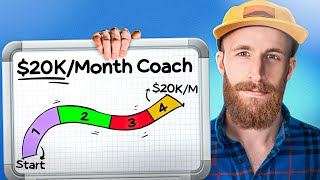
Greg Faxon outlines a four-step system for coaches to hit $20k monthly: price one-on-one offers at $3k–$20k, use direct outreach and content to find clients, convert 25–50% of consultations into paid work, and build case studies and referral loops instead of asking for testimonials.
Questions this video answers
$20,000 per month.
About 25 hours per week.
$3,000 to $20,000.
25% to 50%.
One to two hours each weekday.
Chapters
In this video, I'm going to share with you how to go from zero to $20,000 per month as an online coach or consultant. And if you want to make 6 figures, you need to make 20k per month consistently because half of that is going to go to expenses, taxes, etc. For context, my business has averaged over 20k per month for the last 2 years, working about 25 hours a week. And I've helped a bunch of other coaches do the same. Like Andrew, who doubled his old tech salary working for himself. Gemma who started with zero clients and ended up making over 20k per month and retiring her husband. Or Ryan, who went from $0 to $20,000 per month as a financial coach and now he generates over 100k per month. There are really only four things that you have to get right if you want to make 5k, 10k, even 20k per month as a coach. It has nothing to do with running ads or being all over social media or marketing in a way that feels pushy or inauthentic. You don't even have to build a course or a group program. You just have to do these four things. Before we begin, a quick disclaimer. It took me over 10 years, hundreds of thousands of dollars to learn these four lessons and I'm going to share them with in this video. But if you don't have enough focus to watch this video through the end, you should just click away now because this journey probably isn't for you. Are you still with me? Alright, let's get started. Self surgery, not prevention. I was in middle school when they found a tumor in my dad's spine. Spinal tumors are one of the most difficult and dangerous things to remove. I remember putting my face next to my sisters and crying into my dad's shirt. When they first told us. I asked my mom, like, is dad going to die? And she says, we don't really know, but we got one of the best neurosurgeons in the country for this type of operation. And they were right. The neurosurgeon actually did a perfect operation. He removed the entire tumor and my dad made a full recovery. But let me ask you a question. Do you think my parents found this neurosurgeon on Facebook? Do you think this guy reached out to them and asked if they would let him do the surgery? Do you think he had to negotiate with them on the price? No, of course not. It was a life or death situation. My dad was lucky to even get on this guy's roster. And you might be Thinking, well, okay, Greg, I don't sell surgery, but that's exactly the point. Most coaches try to sell prevention and they try to help everyone with everything. In other words, they're not the go to expert for a specific problem. And that's why they're always having to chase clients instead of clients coming to them. It's also why they usually don't charge as much as they need to be charging. Look, the coaches who are making the most money right now don't act like coaches. They act like surgeons. They become known for one specific type of operation, they become the best in the world at it, and they charge a ton of money. No matter what's happening in the economy, your life will become so much easier if you can start selling surgery. In other words, choose one problem to solve with your coaching that's painful, urgent and obvious. When you get this right, you can charge way more. Marketing is way easier. And clients basically sell themselves on working with you. And you don't necessarily have to be a business coach to make this work. I know a lot of people think, well, I don't sell getting clients, I don't sell making money, so maybe I can't charge that much. I'll give you an example. A while back, I built a fitness coaching business business on the side. I wanted to help people build healthy habits, start strength training, et cetera. But it turns out most people don't care about that stuff until it becomes a problem. And I realized there was one type of client that would pay more than anyone else for fitness coaching. It was the person who had tried to lose weight their whole life and nothing had really worked. My first high end client for fitness coaching was a guy who had gone to his sister's wedding the month before, heavier than he had ever been. Like, he didn't fit well in his suit, he felt really insecure, and he had his brother's wedding three months later. And he was like, I'm not gonna let that happen again. I wanna look good in my suit. I wanna feel confident. I helped him lose 20 pounds over those three months and look great at his brother's wedding. So it doesn't really matter what you think about body positivity or building healthy habits or any of that. People pay to lose weight. Once I had this insight of what a surgical offer meant for my niche, I was able to generate 10k in 30 days on the side of my main business. That's the difference between selling surgery and selling prevention. You don't wanna be in the business of trying to convince someone that the coaching you do matters. So the question is, how do you find your version of selling surgery? I recommend making a list of all the painful problems you've already solved in your own life, or all the results you've gotten that someone else would be envious of, and then narrow down that list based on how much pain, frustration or desire there is around getting that result. If you can choose a niche that helps people make more money then I would focus on that. It's not essential, but it's easier to show a return on investment that way. Now create a coaching offer around that result that you can sell for between 3k and 20k. If you if you've never worked with clients before, obviously you might want to get some free or cheap clients under your belt before you raise your rates, but we want to get to that 3k to 20k range as quickly as possible. So what are you actually offering in this package? I'd recommend starting off with one on one coaching. Keep it really simple. Don't worry about creating a group program or a course. Right now you can charge more for one on one and you don't have to have a huge audience to pull from to reach your income goals. It also doesn't really make sense to scale beyond one on one until you've built a system, a process that you're confident and you don't have a constraint on your time at this point if you're not working with a lot of clients, if you don't have a full client roster. So we don't really need to solve that problem yet. So put together a three to six month package or however long it takes you to actually get someone results and meet with clients two to three times a month with email support in between. When the initial package ends you can actually re enroll these people into a monthly retainer at a lower investment level meeting one to two times per month. But we'll talk about that later in the video and you're probably thinking at this point I don't want to pigeonhole myself into just doing one thing. It feels too narrow. Don't worry about niching your overall brand or business right now we're just creating one niched thing to offer. You can create new offers later if you get bored or you want to expand what you're doing. And don't worry about niching to a specific avatar or target market yet. I just want you to focus on the problem you solve. Get some clients and then over time you'll be able to see what are the types of Clients that I help get the best results for. You'll know you're done with this step when you've put together an offer you can sell for between 3k and 20k. Here's why it's so much easier to focus on a high end, high value, one on one offer versus like a lower end course group program. Let's say my coaching package costs 5k and my revenue goal is 10k. That means I only need 2 clients a month. I realize 5k might seem like a lot to you right now, but it's really not if you have the right offer put together. And so maybe you need to have eight consults to get those two clients each month. So every week you need to have a couple consults. What I want you to do is block off one to two hours each weekday just to focus on marketing. What are you doing to generate those consults? And that brings us to our next step number two, hunt and farm. If you want to get clients now, you can hunt for them. You can go to networking events, you can join Facebook groups, and you can reach out directly to people that you can help. But the problem with hunting is that it's tiring. If you offer to help enough people, you're eventually going to get clients. So it's a good skill to learn, but it takes a lot of emotional labor. If the word hunting seems aggressive to you, that's because it sort of is. An alternative to hunting is farming. You're building goodwill, you're building relationships, you're preparing the soil, you're planting the seeds, and then you're eventually reaping the harvest. But farming is slow. That's the downside. It takes time to create content for free and build an audience. And you might have to do this for months or even years before you build a reliable flow of clients. Everyone wants a farm. They want clients that show up on a predictable schedule each month. But not a lot of people have the patience and the discipline to plant the seeds, water them, and then wait. Now, some people are lucky enough to build their business and they already have a farm. They've already spent years in their career building a network, building trust with people. And all they have to do when they start their business is just harvest the trust that's already there. But most people aren't in that position. I definitely wasn't. I was 23 when I started my life coaching business and no one took me seriously. So what did I do? I started a farm on day one and I hunted in the meantime to get clients. So to clarify, hunting means going to the client. If you never hunt, you're going to run out of cash. And in a slow season you're not going to have that skill of getting clients quickly. Farming means getting clients to come to you, attracting clients, growing your audience. If you never start your farm, you'll work just as hard a year from now to get clients as you do today. So let's get really specific here. The first thing you want to do is get some clients from your existing network. These are people who already know, like and trust you. If you already have an email list built, great, we're going to start there. Otherwise you're going to reach out to your existing network on social media, text, individual emails, and the overall message is pretty simple. We're going to basically say, hey, I got this new thing that solves this problem. Do you know anyone who would benefit? And that approach allows the person you're reaching out to to let their guard down, even if it's them that would be the one who would benefit. If you have past clients, you can reach out to them with the same message. Re enrolling past clients is actually pretty easy. Even if you've raised your rates, you have some trust built in. These people have already PA paid you once. If you don't have an existing network, you don't have past clients. You can go to what Pam Slim calls watering holes. These are places that your ideal clients are already hanging out trying to get their problem solved. And it's easier to hunt if you go to where the people are already gathered. So in the weight loss example, maybe there's a wellness retreat, some high end retreat where you can go to, you can build relationships with people, follow up with them after and offer to support them one on one. Hate. Events like this are great because people have already shown that they're willing to invest in solving the problem. Okay, so that's hunting. The goal is to spend some time time each weekday reaching out to people or posting to your existing network, inviting people to a consult. Remember in the 5k example where your goal is to make 10k, the goal is to book 2 consults per week. So keep reaching out to people until you hit that goal. Okay, let's talk about farming. So if I was starting from scratch, the first thing I do is figure out what I call your coaching archetype. And this allows you to actually play to your strengths. So I choose one to two proven tactics for attracting clients based on my archetype and I would just stick to those. There are three coaching archetypes mavens connect, connectors and salespeople. This framework I took from Malcolm Gladwell's book the Tipping Point. So mavens focus on content on teaching, connectors focus on referral partnerships and building relationships, and salespeople focus on direct outreach and ads. My coaching archetype is maven. So I'd focus on creating content that my ideal clients were already searching for. And I'd either do this via my blog or YouTube, depending on if I would prefer to write or record video, since it takes some time to build up traffic on a blog or to get views on YouTube. In the meantime, I'd start going on guest podcasts, guest blogs. So I'd go to where there already is an audience and I'd use that audience to build my audience. Each time I went on a podcast or I wrote an article, I would link to a specific lead magnet, what's called a content upgrade. This would be a checklist, PDF, a cheat sheet, a quiz, something to make what I just taught them even more actionable. And they could get it for free by entering their email address. Once they enter their email address, they'd automatically be redirected to a thank you page that invited them to apply for a strategy session to talk with me directly. And even if they didn't book a strategy session right away, way now I have their email. So I'd follow up with more content, build the relationship, and periodically I'd invite them to a strategy session again. Another example of hunting and farming is my client, Gemma Gilbert, the one who retired her husband. So Gemma is interesting because when she started out, she didn't want to reach out to her existing network. She was like, Greg, I don't want to talk to friends and family or do any of that. So what she did is she went to Facebook groups that already had her ideal clients, and she added value there. And then she created her own Facebook group. Right? So now she gets clients via ads, her Facebook group, the content she puts out, and anytime she has a new offer or wants more clients, she just posts to that audience. Okay, so in step two, we're spending one to two hours every day hunting or farming, trying to generate those consults. If you want some more ideas on how to book consults, I put together a free guide for you with 21 ways to find potential clients. So if you run out of ideas or if you're not sure exactly how to spend that time, you can go get that PDF in the description of this video. And this brings us to the next step, which is how do you actually enroll people in those consults? Number three, clarify the cost of inaction. Sales is like sex. Everyone thinks they're good at it. Most coaches I talk to assume they're already amazing at sales and they just need more leads or better leads. And sometimes that's true, but usually when I actually ask how many consults they're having, one of three things ends up being clear. So, number one, maybe they think they're good at sales, but they don't actually know because they're not having any consults. Number two, they're having consults, but they're converting less than 25% of the people they talk to, so actually they suck at sales. Or three, maybe they're converting more than 25% of the people they talk to, but it's only because they're pricing is super low, and if we raise their rates, that conversion rate would change in order to enroll people at the higher prices we're talking about at 3k, 5k, 10k. It's not enough just to book consults. You need to know how to convey the value of what you're offering without being pushy or sleazy about it. That way you can actually turn those consults into clients. If people are telling you that they can't afford it or they need to think about it, it doesn't necessarily mean that you need better leads. Right. No one's going to drop 5k without thinking about it, without working through some concerns. What you need to do is learn to overcome those concern concerns, help them through the concerns. This isn't about convincing someone to work with you. It's about asking the right questions. So what are the right questions? I have this whole process I teach. It's called the 3C Sales System. And we're not going to go too deep into it in this video because that's a whole video in and of itself. But the key takeaway for you is you need to ask questions that help people understand the cost of inaction, of not changing the status quo. If they perceive the cost of inaction as higher than the cost of working with you, they'll find the money. And if they don't, they're not going to find the money, even if they're wealthy, even if they have money to spend. So this calculation is at the core of every sale. Is the cost of an action higher than the price this person is charging? This is why we want to sell surgery instead of prevention. It's much easier to sell when people come to you already recognizing I have A problem, there's a significant cost to continuing with it. But you're still going to need to help people commit to getting support from you with the thing. So help them clarify where they are, where they want to go, and then the obstacles that are getting in their way. If you can help them with those obstacles. Consoles propose working together. The goal is to get 25 to 50% of consults to turn into clients. Okay. Not everyone is going to say yes to working with you. If you're converting less than 25%. So it takes more than four consults to get a client, then you know that you still have some work to do either on the offer or improving your sales skills. If you're getting more than 50% of consults converting, Right. So like everyone you talk to is becoming a client, it actually means that your price probably isn't high enough. My client Andrew was getting a lot of consults booked when he came to me. He already had leads, but he was only converting around 10 to 15% of those people into clients. Think about how much work that is. You have to have 10 calls to get one client. So I taught him my 3C sales system when we bumped up his conversion rate to between 30 and 40%. So that means he's getting three times the amount of clients without having to change anything about his marketing. All he needed to do was to improve his sales skills. And one of the big things that we worked on together was how he handled objections. A lot of coaches and consultants are really bad at this. They'll share their price. The potential client says, I need to think about it. And then the coach says, all right. And they just go to email and then they never hear back from the person. What I want you to do instead is make sure you have enough time. There should be at least 15 minutes left in the call after you share your price so you can talk through some of their concerns. Again, we're not trying to convince them to work with us. We're just asking them questions that help them see the cost of an action. If they're a yes, yes, get the money on the call. If they're a no to working with you, say thank you and close the loop. Hang up. And if they still need to think about it, book a second call to follow up with them. Okay. Don't just go to email. Book a second call before ending the first call. And this is the rule. Break this rule at your own risk. Okay, so at this point, we have a high end offer that we're selling for at least 3K. We're spending one to two hours every morning working on booking consults, and we're enrolling 25 to 50% of the people that we talk to. At this point, you should be making good money. Okay, but your job is not done yet. Getting started. Number four is to stop asking for testimonials. A lot of coaches think that they should ask for testimonials from clients at the end of the engagement, and they're almost right, but it doesn't really work. One of two things ends up happening. Either the person procrastinates on doing the testimonial because they're not sure what to say, and then they don't send you one, and then you feel bad about yourself. Or number two, they send you this, like, weird, vague, formal testimonial, and it doesn't really work well in your marketing. I want you to take a different approach. But before I explain what that is, let's get one thing really clear. Most important thing you can do for your marketing and your business is to actually help clients get results. You can't just take the money from the new client and then put your attention back on getting more clients. You need to do everything in your power to help that new client win. That way, each client you get ends up staying longer, and then they refer more people to work with you. The real goal here isn't to get some testimonial that says how great you are. The goal is to get a case study where you can actually show the person started here and then they ended up here. Here were the actual results that I helped them get. Here's how they made more money, they lost weight, or they landed a new job, whatever it is that you help people with. So instead of asking for a testimonial when you're done with clients, I want you to invite them to a bonus call, an additional call after their final call of the contract. And on that call, you're going to do an interview, and you're going to use that interview to create a case study. So here are three questions that I want you to ask them on that call. Number one, what was happening before we started working together, and how did that affect your business or your life? Number two. Two, how did working with me help? What specifically did I help you with that made the difference? And three, what results have you gotten? And how is life different now? If you absolutely hate video, you can do this as a written form, but I really recommend video. It tends to be a more powerful medium. Either way, you're Gonna take their responses and you're gonna edit them to create a case study, to create a narrative arc of where the person was and where they got to. With your help, these case studies become your most powerful marketing asset. They're the things that help you raise your rates even more. Because people can trust that it's a good investment going to help them. And you've made it easy for the client because you've just scheduled a call, you've asked them the questions. All they need to do is answer the questions. But we're not going to stop there. Once we interview the client, we're going to invite them to continue on in a monthly retainer, if that makes sense for them. So make it super easy for them to say yes, to keep working with you by making it a lower investment than the initial package with slightly less support. The idea here is we're saying, all right, you've accomplished this goal. We want to make sure we lock it in, we want to make sure you keep momentum. So let's keep working together month to month, no long term commitment. And let's say if you, you did three sessions a month with them before for, you know, 5K, we're going to do two sessions a month and it's only $1,000 a month, something like that. And finally, you can ask for referrals. You can say, hey, is there anyone else who you think would benefit from working with me? But notice all this hinges on the results they got in the initial package. If they got great results, it's going to be easy to create a case study. It's going to be easy to re enroll them, it's going to be easy for them to refer you to other people. If you didn't get good results, it's not going to be easy. So you need to start paying attention to what your most successful clients are doing in those engagements and then recreate those things for your other clients. One of my clients, Ryan Roy, has done a great job with this. He's a financial coach for tattoo artists. And he went from having made like a total of $350 when he started working with me to now he generates over 100k a month in his business. And the reason he makes so much is because he gets results and he captures those cases studies on his website. You can see all these case studies of clients who used his program, used his process to save tens of thousands of dollars. And the reason he gets such great results is what we talked about in step one. He's created a specific surgical offer that gets a specific result for a specific type of person. Look, you can stay general, you can get okay results for the people you work with, but it's going to be a house of cards. If you keep bringing clients in and they're not getting good results and you're charging high prices, it's not sustainable. But if you create a process and you keep improving it, business gets easier and EAs because the majority of your clients are repeat clients or their referrals. So you don't have to spend all your time marketing and getting new leads. All right, so let's cover what we've learned so far. There's four things you need to focus on to reach 20K per month as a coach. Number one, create a coaching offer that people will pay high prices for. Self surgery, not prevention. Number two, attract those people in a way that utilizes your strengths. Right. We talked about hunting and farming. Number three, enroll 25 to 50% of those consults into clients. And we're going to do that by clarifying the cost of inaction. And number four, stop asking for testimonials. Instead, focus on creating case studies, getting repeat business, getting referrals. You basically want to optimize each part of this process and keep going through it until you have a full roster of clients. Then you can go back to step one, look back at your packaging and either raise your one on one rates or focus on building a scalable group program or course. But that's a video for another day. First, I just want you to build consistency by mastering these four things. Because here's the deal. There's a huge difference between having one 20k month in revenue versus repeating that month after month for years. And we're talking about 20k cash collected. A lot of people will say, oh, I made 20k in sales. But what they're really talking about is that's projected revenue that someone's going to pay based on their contract. They didn't make that money that month. If you follow these four steps, you're definitely going to be on the right track to making six figures as a coach. But there's one thing that a lot of coaches get stuck on when they go to implement these four steps. Steps they don't know exactly what to do each day to book consults. They run out of ideas for ways to find potential clients. So to help with that, I've put together that PDF, 21 Ways to Find potential clients. And you can give that a scan and make sure you're not missing any obvious ways to book, consults it's completely free. So pause the video, go click the link in the description, go get it and give it a look. And one more thing. If you're hesitant to raise your rates, if you're hesitant to charge the rates we're talking about in this video, I want you to watch this next video. And this video will help you understand how to raise your rates in integrity. A lot of coaches assume, well, if I charge more, I'm going to get less clients. And they're scared of losing those leads that they have. But in this video, I explain why that's not necessarily the case. So go watch this next. Get that pricing to where it needs to be. Thanks for watching.










