How To Create A "Work With Me" Page That Gets You Coaching Clients
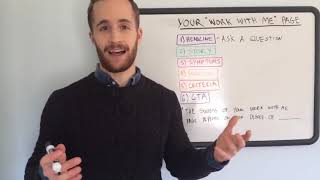
Greg Faxon breaks down a six-part framework for a 'Work With Me' page: headline as a question, your story or case studies, symptoms your clients face, your solution, deal-breaker criteria to filter prospects, and a call to action like a free strategy session.
Chapters
How's it going, everyone? Greg faxson here from gregfaxson.com and in this video, what I want to talk to you about is how to create a Work with Me page on your website that can help you get clients this week. Now, it's really important to have a Work With Me page and if not a Work with Me page, some other call to action on your website that helps people know how to take the next step with you. Because you can have a great website with really valuable content, you can be creating awesome connections with people every single day. But if nobody knows how to get started with your coaching, then it's going to be really hard to actually have long term paying clients, which is obviously the fuel for the transformation you cause and for the money that you make in your coaching business. So there's really six elements to an effective Work with me page and I'm just going to walk you through them one by one today. Now, if you want an example of this, you can go to my website, Gregfaxon.com workwithme and those are dashes between the words. So work with me. I'll link it up underneath the video, but that will give you an example of this type of flow. Obviously, there's lots of different templates you can use, lots of different formats that a Work with me page can take. But I'm going to walk you through one of my favorites today, the one that I'm using right now for the coaches that I'm working with who want to go beyond six figures this year. So that's for my specific offering. Let's get started. First thing that you want to have in a Work with me page is a headline. Now, the headline shouldn't just say work with me. That might be what the tab says on your navigation, but every piece of real estate on that page is valuable. So we want to create something that's a little bit more compelling than just Work with me or services. So for the headline, we want to ask a question. And we want to ask a question that's related to the desired result that the person looking at this page is wanting. So on my current Work with Me page, it says something like, do you want to double your coaching business and break six figures this year? Because for my specific ideal client for that offering, that's what they want. So the answer to the question that you ask should obviously be, yes, that's exactly what I want and make them want to read further. So we want something to hook them in, get them interested. If they don't Read past the headline. You don't get a chance to help persuade them to take the next step anymore after that. Part two is a story, and you have two options here. The first part of the story can be a case study of one of your clients. That's the best. If you have some sort of, not just testimonial, but actually, this person started working with me. She was having these challenges, and here's the results that she got from working with me. If you don't have a compelling case study for this specific offering, or maybe you're a new coach or you're in a new niche that you haven't had case studies yet before, then what I would suggest is use your own story, right? So story you or your clients. So tell your story or tell your client's story. And the basic format should be, hey, this was the situation when I or they started off. This is what we were struggling with. This is what changed. This is, you know, the action that they took, and this is the result that they got, as, you know, as a result of working with me. Number two is your story. So you've got headlines story. And then three is symptoms. We want to talk about the three most painful symptoms. The three most painful symptoms that your ideal client is experiencing right now. And the reason that we target what's frustrating and painful for them is not to be manipulative, and it's just to meet them where they are and say, hey, here's what you're struggling with right now. I feel the pain. I feel where you're at. And, you know, my client or I experience the same thing. And we're trying to get empathy, and it's really an integrity check for us of do we understand what our ideal client is going through at the point where they might invest in coaching with us? So headline story, symptoms. We want to go into depth. You know, you're having this specific symptom. So, for example, I talk about how, you know, as a coach, if you're trying to break six figures, you might feel like you're working really hard, but you're not seeing the income gains that you'd expect from that hard work and all of the different impacts that that's having on their business and their life. So you want to go into depth on the symptoms, because that's when they realize, oh, this is, for me, this is something that I need to pay attention to right now. Number four is the solution. And depending on how you're using the work with me page as part of your flow of getting A new client, and this might be different for different coaches. What I'm recommending you do as a solution is some sort of strategy session or a clarity session. People call it different things, but essentially we want to get in conversation with this person, just complimentary, for free, but to explore a little bit more about where they're at, make sure they're a good fit for us, offer some value, serve them, and then if they're a fit, propose a longer term coaching package for them. So I'm recommending, unless you're all the way booked out, you already have all the clients you can handle, then what I'm suggesting in this solution phase, assuming you're not in that boat, assuming you want more clients and you want to have more conversations, is offer a free session. So as the solution, what we want to position as the solution to those symptoms is getting a conversation with us so that we can help them develop a game plan to help overcome some of those challenges that they're having. So we don't want to just position it as a free coaching session. Right. Which isn't really that valuable when I think about it. That's actually a cost to me if I have to take 90 minutes, 60 minutes to speak with you privately. So you want to highlight the benefits of having that strategy session, the clarity session with you and how those are related to the symptoms they're experiencing. Now, in number five, I wrote criteria here. What I mean by that is we want to say, here's who this is for this offer and here's who it's not for. Here's who I can best serve and here's who we're not going to be a good fit. I'm not going to be able to help you so much. So talk about your criteria. And I like to choose three deal breakers. And start with that. Where do you get the criteria? Well, think about clients who were potential clients, they approached you and you realized you really want a fit for them. What would you have needed to see in order for them to be a fit? So, for example, some of the things I talk about on my page right now is you have to be at least at 5k per month as a coach, because for this specific offer that I've launched, it's for people who are at 5k, they've already had some success, they're looking to break six figures for you. It might be totally different. It might be you've already started your weight loss journey. If you don't want people who are kind of indecisive, not sure, if they want to start. If that's your niche, it could be you have to be single or you have to be in a relationship. It all depends on who do you want to be talking to. What are just the base level criteria that need to be present for you to be able to serve this person? And what this does is it just filters. So if we're offering a free strategy session, that's great, but it can be a little bit dangerous if you're not filtering at all because you might have a lot of conversations with people who are never really going to be a good fit for your long term services. And that's not a great use of your time necessarily. So the final piece is the CTA and that stands for Call to Action. And again, depending on how you're using this Work with me page in your sales flow, it might be different for you. But assuming you're offering a free session, and assuming your goal is to get in free conversations as a way of converting people into a potential client, then that call to action is to schedule a session. Alright? So you can also send them to an application. You can have just a short inquiry form where you say, if you're interested in doing this, just submit your name and a quick note and I'll get back to you. There's lots of different ways to do a call to action, but make sure you really clearly tell them if you're interested, this is the next step. Don't give them multiple things to do, just say, here's the one thing I want you to do right now. So for example, on my site there's a little box that pops up and they have to enter their email in order to see my availability on my calendar and book themselves in. The reason I do that is because I have a little bit more automation on the back end so I can follow up with people who were interested but didn't end up scheduling. Maybe they got busy or they decided not to do it at that moment. I can follow up with them an email and say, hey, I noticed you were looking at my schedule for availability, but you didn't say schedule a session. I just want to send you a reminder to make sure you do that. Okay, but you don't need to have all that automation. All you need to have is a link to your calendar, a link to an application, or just a short form that emails you when someone's interested. So those are the six criteria, guys to a compelling Work with Me page, Headline, story, symptoms, solution, criteria and Call to Action. If you have all Those you're in good shape. Now, if you have, you might say, where should I put testimonials? Well, if you have some testimonials, people who have had free sessions with you or former clients, you can put them after the call to action, or you can put them right before the call to action. I like to put them up in the story section because I like to have one or two detailed case studies right up front. Just lead with the results that you get your clients and base your marketing off of that. You can distribute testimonials throughout the page if you'd like. Final things I want to mention the success of your Work with Me page really depends on your degree of clarity. Okay. Because if you have never worked with this type of client, if you don't understand your ideal client at all, it's going to be really hard to discuss, you know, what are the three symptoms they're experiencing. It's going to be really hard to tell a story that will resonate to position your free session as something that's valuable for them if you don't know what's going on in their mindset, in their world, and what results they want, what problems they have. So a really important step is to make sure you're clear. You can't write any compelling copy, any compelling work with me page if you're not clear on where your ideal client is at. So make sure that you're using the words that they would use. Not coach speak, not marketing jargon. Make sure you're talking like your potential client wants to hear you talk and in words they'd understand in words that they'd use. So one of the things you can do is look at intake forms from clients who have paid you. Look back to session notes of free sessions you've had in the past with this type of client. What's the language they're using? How are they describing their problems? That's what we want to leave with. We don't want to have to just figure out something clever in our head. Clear is always better than clever. So with the headline, that's true with the symptoms, that's true with the criteria. I'd rather you be clear than try to be clever and gimmicky in this page because we just want to give it really up front. We're giving a ton of value, saying, hey, we're willing to spend 60 or 90 minutes with you helping you get clear on what your actual challenge are and create a game plan to solve it. But if we don't position this clearly, even though you're offering a free session, no one's going to take you up on it. So make sure you're clear. Follow this framework, adapt it as needed, and let me know if you have any questions. Take care, y'. All.










